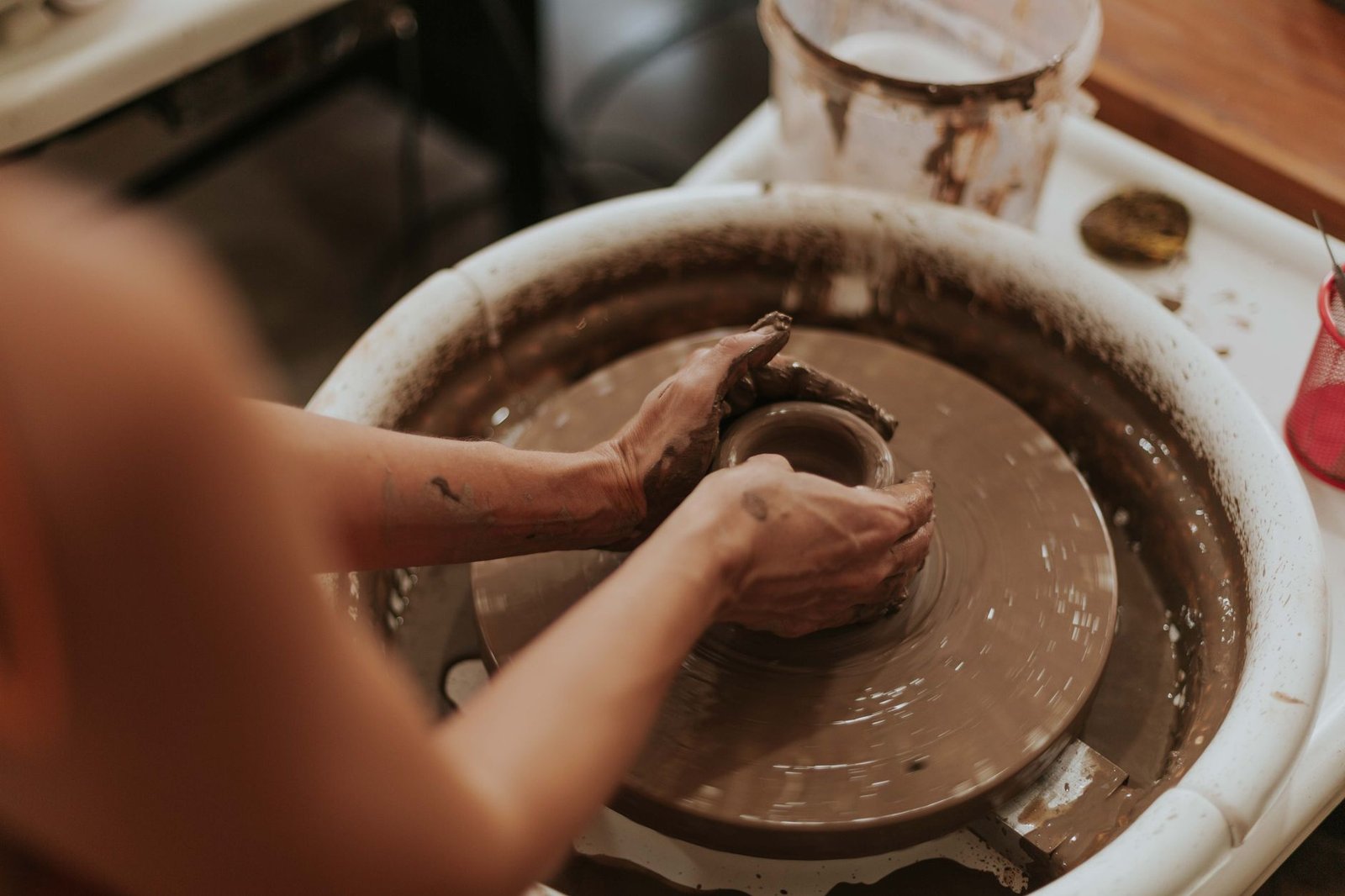
Sitting down at a pottery wheel for the first time is equal parts thrilling and humbling. Clay that looked so obedient in your teacher’s hands suddenly has a mind of its own. If you’re thinking about trying wheel-throwing pottery in Mordialloc, or you’ve had a go and want to get better, here are five things that make the biggest difference early on.
1. Centring is everything
Almost every wobble, tear or collapse later in the process traces back to clay that wasn’t properly centred at the start. Take your time here. It’s tempting to rush to the fun part of opening and pulling up walls, but a well-centred lump of clay makes everything after it easier.
2. Keep your hands wet, not wet clay
New potters often flood the wheel with water thinking it helps. What actually helps is keeping your hands consistently damp and using just enough water to stop friction. Too much water weakens the clay wall and makes it collapse.
3. Pressure comes from your body, not your fingers
Your fingers guide the clay, but the real pressure should come from bracing your arms against your body or the wheel tray. Tired, shaky hands are usually a sign you’re trying to muscle the clay with your fingers alone.
4. Start smaller than you think
A small, well-formed bowl teaches you more than an ambitious vase that collapses halfway through. Build confidence with smaller forms before taking on height and volume.
5. Every failed piece is still practice
Wedge it up and try again. Pottery wheel practice is muscle memory, and the clay that ends up back in the reclaim bucket taught your hands something, even if it never leaves the wheel as a finished pot.
Want to try it for yourself? Le Studio’s ceramic studio in Mordialloc is equipped with nine pottery wheels and three kilns, and Will McCanless runs pottery classes for complete beginners through to experienced potters looking for wheel time. See our ceramic studio page for details, or check out current workshops and classes.