Food safe glaze claims are not all equal because the label rarely tells you how the claim was tested, whether it applies to your exact firing conditions, or how consistent the standard is between manufacturers. A glaze can be genuinely reliable and still leach if it’s underfired, applied unevenly, or fired on a clay body it wasn’t designed for.
Every potter who has ever glazed a mug or a bowl has stared at a bottle labelled food safe and wondered exactly what that word is actually guaranteeing. At Le Studio Art Space, this is one of the more common honest questions that comes up in a glazing session, especially from members who are getting ready to sell or gift their first functional pieces. The short answer is that food safe glaze claims are not all equal, and understanding why takes a bit more than reading the front of the bottle.
What Food Safe Actually Means On A Glaze Label
When a manufacturer prints food safe on a glaze, they’re generally referring to leaching, meaning how much of the glaze’s chemical makeup can transfer into food or drink once the piece is fired and in regular use. A stable, well matured glaze forms a glass-like surface that resists this kind of transfer.
The problem is that stability is a spectrum, not a single fixed outcome. A glaze can be broadly considered food safe under ideal firing conditions and still behave differently if those conditions are not met exactly, which is part of why the label alone rarely tells the whole story.
Most potters never see the underlying testing data behind a food safe claim. They see a short phrase on packaging or a product page, and reasonably assume it means the same thing every time it appears, even though the testing behind it can vary considerably from one manufacturer to the next.
It also helps to remember that food safe describes chemical stability, not durability in general. A glaze can be perfectly food safe and still scratch, craze, or wear down over years of use, which is a separate question from whether it leaches anything harmful into what you eat or drink from it.
Why The Same Label Can Mean Different Things
Different glaze manufacturers use different testing standards, and not every company publishes exactly what testing was done or under what conditions. Some rely on independent lab testing, others on internal formulation knowledge built up over decades, and both approaches can produce a genuinely reliable glaze.
Self-declared claims are common across the industry, and in our experience that doesn’t automatically make them untrustworthy, but it does mean the word food safe is doing a lot of work without much visible backing. A reputable, long-established brand with a strong track record generally carries more weight than an unfamiliar one with no history.
This inconsistency is exactly why the same phrase on two different bottles can represent two genuinely different levels of confidence, even though both bottles look equally official sitting on a studio shelf.
Regulatory frameworks also differ between countries, and a claim compliant with one region’s standards is not automatically compliant everywhere else. A potter working with imported glazes should be aware that food safe as printed on the packaging may be referring to a different country’s testing framework entirely.
What Affects Whether A Fired Glaze Is Actually Safe
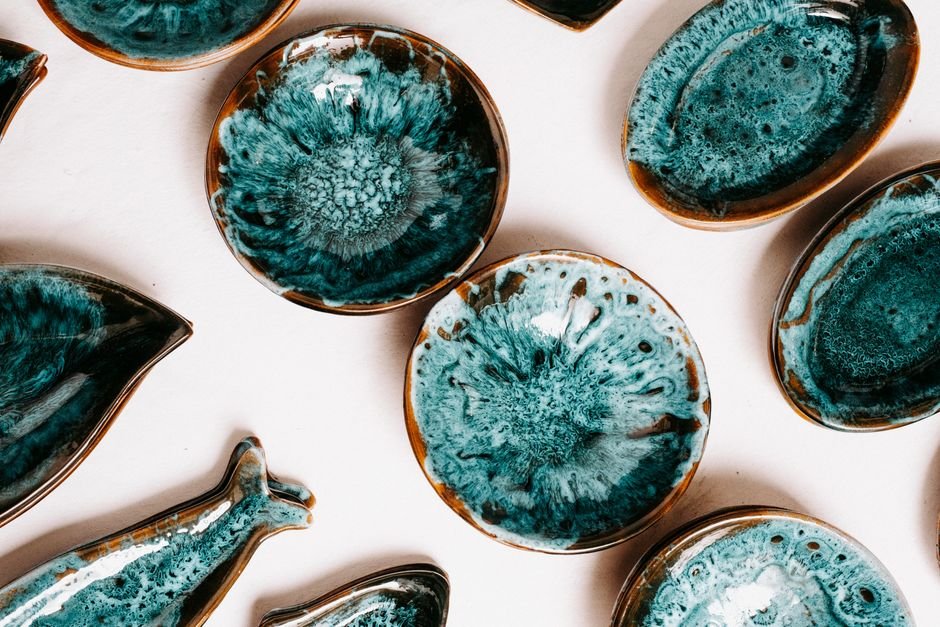
Even a genuinely well-formulated food safe glaze depends heavily on how it’s actually fired. Reaching the correct cone temperature is essential, since an underfired glaze often remains more porous and chemically reactive than the same glaze fired correctly, regardless of what the label promises.
Glaze maturity matters just as much as peak temperature. A kiln that reaches the right cone but cools too quickly, or a firing schedule that doesn’t hold long enough at temperature, can leave a glaze technically fired but not fully matured into its most stable state, which is exactly why a properly managed firing service matters as much as the glaze choice itself.
Application thickness plays a real role too. A glaze applied too thin can leave weak or uneven spots in the fired surface, while one applied too thick can crawl or pool, both of which create inconsistencies that a food safe rating on the bottle was never designed to account for.
The clay body underneath the glaze matters as well. A porous, underfired stoneware or earthenware body can allow moisture to work its way beneath a glaze layer over time, which is part of why matching glaze and clay body correctly for the intended firing range genuinely matters for functional ware.
Questions Worth Asking Before Trusting A Claim
It’s genuinely reasonable to ask a supplier whether a glaze has been independently lab tested for leaching, rather than only self-certified by the manufacturer. Many reputable suppliers are happy to share this information when asked directly.
Checking that the cone rating printed on the bottle actually matches your kiln’s firing schedule is a simple but often skipped step. A glaze rated food safe at cone 6 was tested under cone 6 conditions, not cone 04 or cone 10, and firing it outside that range changes the picture entirely.
Buying from a supplier with a genuine, long-standing reputation in the ceramics community also matters more than it might seem. Most studios report that established brands with decades of formulation history tend to be more transparent and consistent than newer, unverified sellers.
It’s also worth asking what the glaze was tested on. A leaching test performed on a flat tile doesn’t always reflect real-world use on a curved mug handle or a bowl with pooled glaze in its interior, so results can vary between a lab sample and an actual finished piece.
What Competing Guides Leave Out
A gap many general glazing guides skip entirely is how much home hobbyist firing conditions can affect food safety, even when a genuinely reputable glaze is used. A home kiln with an inconsistent thermocouple or an untested firing schedule can produce real variation compared to a commercial or studio kiln that’s regularly calibrated.
Independent testing options are another area rarely covered in enough practical detail. Lead testing kits exist for home use, and some ceramic supply companies and university extension programs offer lab testing services for potters who want a more rigorous answer than a bottle label alone.
Vintage or secondhand glazes are also worth flagging, since older formulations may predate current lead and cadmium restrictions entirely, and a food safe claim printed decades ago doesn’t necessarily reflect what would be approved by today’s standards.
Cost is another gap worth naming honestly. A cheaper, unbranded glaze isn’t automatically unsafe, but it usually comes with less transparency about testing, which shifts more of the responsibility onto the potter to verify firing conditions carefully rather than relying on the label alone.
How A Working Studio Approaches Food Safety
At a working studio, food safety is treated as a practical, ongoing habit rather than a one-time checkbox. That means firing to the correct cone consistently, calibrating kilns regularly, and choosing glazes from suppliers with a genuine track record rather than chasing the cheapest option available.
It also means being honest with members about uncertainty. Many potters find that a non-alarmist, informed approach, rather than either blind trust or unnecessary anxiety, is the most sustainable way to think about food safety over years of studio practice.
This is exactly the kind of practical, grounded guidance that comes from actually running kilns and glazing functional ware day to day, rather than from reading a label once and assuming that settles the matter for good.
New members are also encouraged to ask questions rather than guess. Whether it’s checking which glazes are rated for functional ware, confirming a firing schedule, or just talking through a specific piece, that kind of open conversation is exactly what a working studio like Le Studio Art Space’s Workshops and Classes is genuinely built around.
Curious which glazes at Le Studio Art Space’s ceramic studio in Mordialloc are food safe rated? Ask us directly, or explore it hands-on in a class or through our firing service.
Frequently Asked Questions
Is it actually true that some food safe glazes are safer than others?
It’s more accurate to say the confidence behind the claim varies, rather than one glaze being definitively safer. A glaze independently lab tested and fired correctly generally offers more reliable evidence than one relying purely on a self-declared label.
Can a glaze be food safe at one firing temperature and not another?
Yes, this is genuinely common. A glaze’s food safe rating is tied to a specific cone range, and firing it outside that range can change its stability and leaching behaviour significantly.
How would I even know if my home kiln is firing accurately?
Using cone packs alongside your kiln’s electronic controller is the most reliable home method, since it confirms actual heat work rather than just the displayed temperature. Many studios, including Le Studio Art Space, calibrate kilns regularly for exactly this reason.
Should I be worried about older pottery I already own?
It’s worth being cautious rather than alarmed. Older or vintage glazed pieces, especially handmade or imported ones without clear documentation, may predate current safety standards, so treating them as decorative rather than functional is a reasonable, low-anxiety approach.
Is there a simple way to test if my own glazed pieces are food safe?
Home lead testing kits exist and can offer a basic first check, though they have real limitations. For a more thorough answer, some ceramic supply companies and university programs offer proper lab testing for potters who want a definitive result.
This article is provided for general educational purposes by Le Studio Art Space and reflects publicly available information and common studio practice. It is not a safety guarantee for any specific glaze, product, or piece.