Ceramic sculpture is three dimensional art made from clay and permanently hardened by firing in a kiln. Unlike functional pottery, it’s created mainly for its form, expression, or meaning rather than for use. Sculptors typically build it by hand using coiling, slab building, pinching, modelling, and carving, and must design around drying and firing so the piece survives the kiln.
Most people’s first experience of clay involves making a bowl or a mug, something useful. Ceramic sculpture takes the same material in a completely different direction. It asks what clay can say or become when it doesn’t need to hold soup, and the answers range from tiny figurative pieces to monumental abstract works in major galleries.
At Le Studio Art Space in Mordialloc, ceramic sculpture is a regular topic in our gallery and hand building conversations. This introduction explains what ceramic sculpture is, the techniques involved, what makes clay unique as a sculptural material, and how you can start exploring it yourself.
Ceramic Sculpture As A Distinct Practice
The key difference between ceramic sculpture and pottery is purpose. Pottery generally starts from a function, such as holding, pouring, serving, or storing. Ceramic sculpture starts from form, idea, or expression. It may reference a vessel, a body, a landscape, or nothing recognisable at all.
That doesn’t mean the line is always sharp. Many artists work in the space between, making vessels that are clearly sculptural or sculptures that nod to pottery traditions. A large, closed jar that can’t hold anything might sit firmly in sculpture territory, while a beautifully shaped teapot might still be admired as art.
Historically, clay has been used for sculpture for tens of thousands of years, from ancient fired figurines to the terracotta armies of China and devotional figures in many cultures. In the twentieth century, artists increasingly used clay for abstract and conceptual work, helping establish ceramic sculpture as a respected fine art practice in its own right.
Today, ceramic sculptors show work in galleries, public spaces, and exhibitions, and many started exactly where you might, experimenting with hand building in a community studio. Our article on what sets sculptors apart looks at that artistic mindset further.
Techniques Commonly Used In Ceramic Sculpture
Hand building is the foundation of most ceramic sculpture. Coiling lets you build up tall, curving, or organic forms gradually, adding rolls of clay and blending them together. It’s ideal for hollow figures, bulbous abstract forms, and anything that grows upwards.
Slab building uses flat sheets of clay, which can be cut, bent, and joined to create architectural shapes, boxes, and forms with crisp edges. Slabs can also be draped over forms or textured before assembly, adding surface interest from the start.
Modelling and carving are central too. Some sculptors model a solid form and later hollow it out from underneath or cut it in half to scoop out the inside, then rejoin it. Others carve details into leather hard clay with loop tools and knives, much as a stone carver would, but with far more forgiveness.
Pinching, press moulding, and even wheel thrown parts can all be combined within one sculpture. Many artists use whichever technique suits each section of the piece. Our overview of coil, slab, and pinch methods is a helpful starting point.
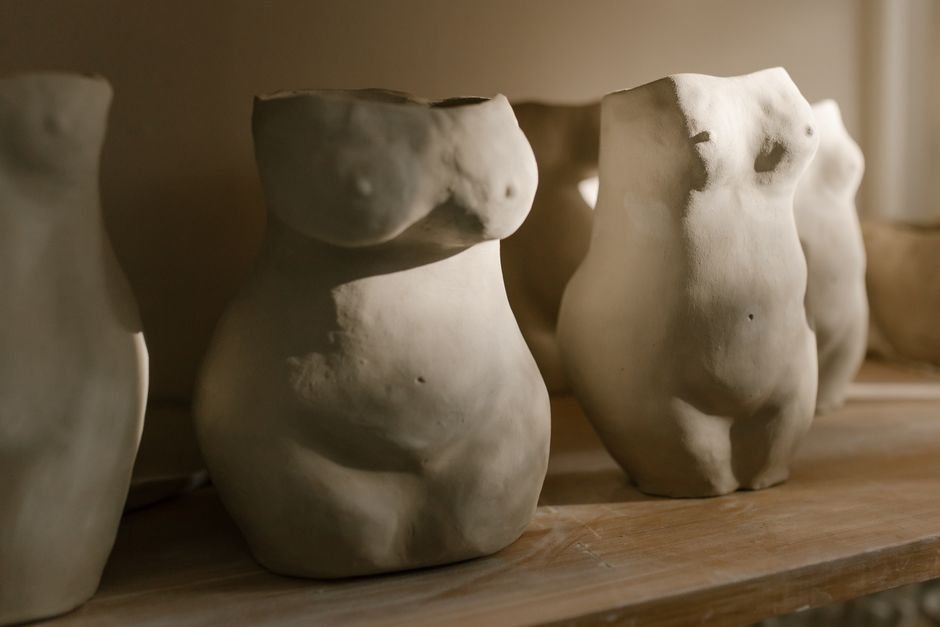
How Ceramic Sculpture Differs From Other Sculptural Materials
Clay is additive and subtractive at once. You can build it up, push it, stretch it, and carve it away, which makes it one of the most responsive sculptural materials there is. Stone and wood are subtractive only, while metal usually needs casting or fabrication.
Clay also records touch in a way few materials do. Fingerprints, tool marks, and the pressure of a hand can all be preserved permanently through firing. Many ceramic sculptors deliberately leave these traces as part of the work, giving pieces an intimate, human quality.
The surface possibilities are enormous. Glazes, slips, oxides, terra sigillata, and alternative firings like smoke or raku can give ceramic sculpture colours and textures that are hard to achieve with paint on other materials. Because these surfaces are fired, they’re also very durable.
The trade-off is that clay must be fired to become permanent, which introduces technical constraints. Unlike bronze or stone, a ceramic sculpture must survive drying, shrinking, and intense heat before it’s finished.
Clay also brings a practical advantage for learners. Mistakes are rarely final while the clay is still soft. You can squash a form, reclaim the clay with water, and start again, which makes experimenting far less costly than carving an expensive block of stone or casting metal. For many people, that freedom to fail cheaply is exactly what makes ceramic sculpture such an inviting way into three dimensional art.
Scale And Structural Considerations Unique To Clay
Scale is where clay gets challenging. Wet clay is heavy and soft, so tall or wide forms can slump under their own weight while you’re building them. Sculptors often build in stages, letting lower sections firm up before adding more on top.
Wall thickness needs to be as even as possible. Thick solid sections dry more slowly than thin areas and can crack or even burst in the kiln if moisture or air is trapped inside. That’s why most ceramic sculpture is hollow, with walls of fairly consistent thickness and small vent holes to let air escape.
Armatures work differently too. In other sculpture you might build around a permanent metal frame, but anything left inside clay will cause problems in firing. Ceramic sculptors often use temporary supports like newspaper, foam, or removable props, or design self-supporting forms from the start.
Large works may be built in sections and joined after firing, or designed to fit a specific kiln. Knowing your kiln’s size and shelf layout before you start is a very practical part of planning a bigger piece.
What Competing Guides Leave Out
Most definitions of ceramic sculpture skip over how firing constraints shape what’s structurally possible. Clay shrinks as it dries and fires, often by around ten percent or more, and different parts of a sculpture can shrink at different rates if their thickness varies. That’s a common cause of cracks at joins and thin extensions.
Long horizontal elements, like outstretched arms or cantilevered shapes, can sag or droop at peak temperature, since clay softens slightly in the kiln. Sculptors often support these areas during firing or adjust designs so weight sits over a solid base.
Firing temperature also affects the look and strength of a piece. A sculpture fired to stoneware temperatures will be denser and more weather resistant, while low fired pieces may be more porous and best kept indoors. If you’re planning outdoor work, it’s worth discussing clay and firing choices early.
Finally, kiln access matters. A studio with an experienced firing service can advise on how to load and fire sculptural work safely, which is often the difference between success and disappointment.
Drying deserves a mention here too, since it’s where many sculptures fail before they ever reach the kiln. Bigger pieces can take weeks to dry fully, and thin parts like ears, fingers, or delicate edges dry faster than the body, pulling away and cracking. Covering vulnerable areas loosely with plastic and letting the whole piece dry slowly and evenly is one of the most valuable habits a ceramic sculptor can develop.
Getting Started With Ceramic Sculpture Yourself
You don’t need a grand plan to begin. Start with small, hollow forms that fit in your hands, like a pinched creature, a coil-built abstract shape, or a small head built over a paper ball. These teach you about wall thickness, joins, and drying without the stress of scale.
Choose a clay with some grog, which adds texture and strength and helps thicker sections dry evenly. Plenty of sculptors find groggy stoneware or sculpture clay much more forgiving than smooth throwing clay. A few simple tools help too, and our guide to essential clay sculpting tools covers what’s worth having.
Look at work you admire and notice how it’s built. Visiting exhibitions and following ceramic artists, like those in our piece on how clay artists develop their style, can spark ideas and show you what’s possible.
Most importantly, give yourself room to experiment. Hand building classes and time in a shared ceramic studio offer guidance and space to try things, while our workshops and classes can help you build solid foundations.
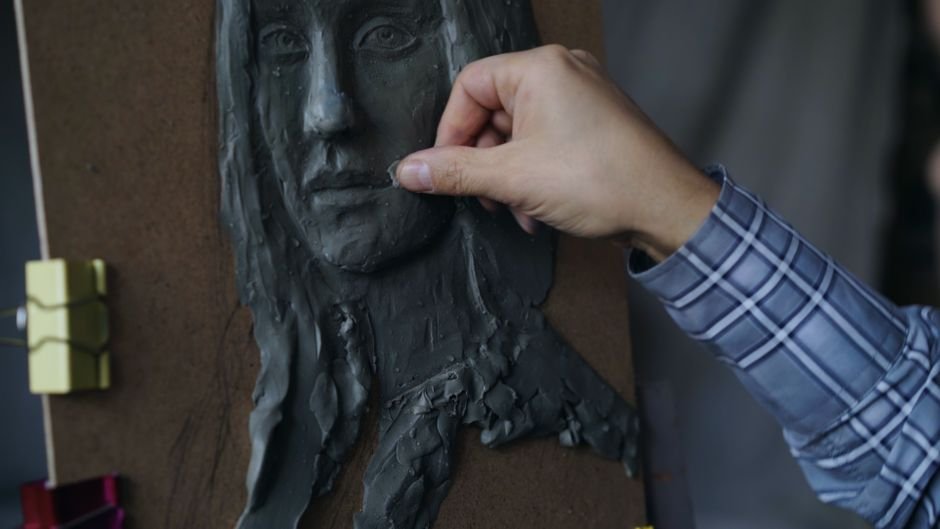
Curious to try ceramic sculpture? Explore coiling, carving, and modelling during a hand building session at Le Studio Art Space in Mordialloc, with support to get your work safely through the kiln.
Frequently Asked Questions
Is ceramic sculpture the same as pottery?
Not quite. Pottery usually focuses on functional vessels, while ceramic sculpture is made mainly for form and expression, though the two often overlap.
Why does ceramic sculpture need to be hollow?
Thick solid clay dries unevenly and can trap moisture or air, which may cause cracking or bursting in the kiln. Hollow forms with even walls fire much more reliably.
Can I make ceramic sculpture without any art background?
Yes, many people start with no formal training. Hand building classes teach the practical skills, and your ideas can develop naturally from there.
Can ceramic sculpture be displayed outdoors?
It can, if it’s made from a suitable clay and fired to a high enough temperature to resist moisture and frost. Low fired pieces are usually safer indoors.
Where can I see ceramic sculpture in person?
Galleries, museums, and local exhibitions are great places to start. Le Studio Art Space also hosts exhibitions and pop-up shows in our Mordialloc gallery.
This article is provided for general educational purposes by Le Studio Art Space. Clay behaviour and firing results vary with materials, construction, and kiln conditions.