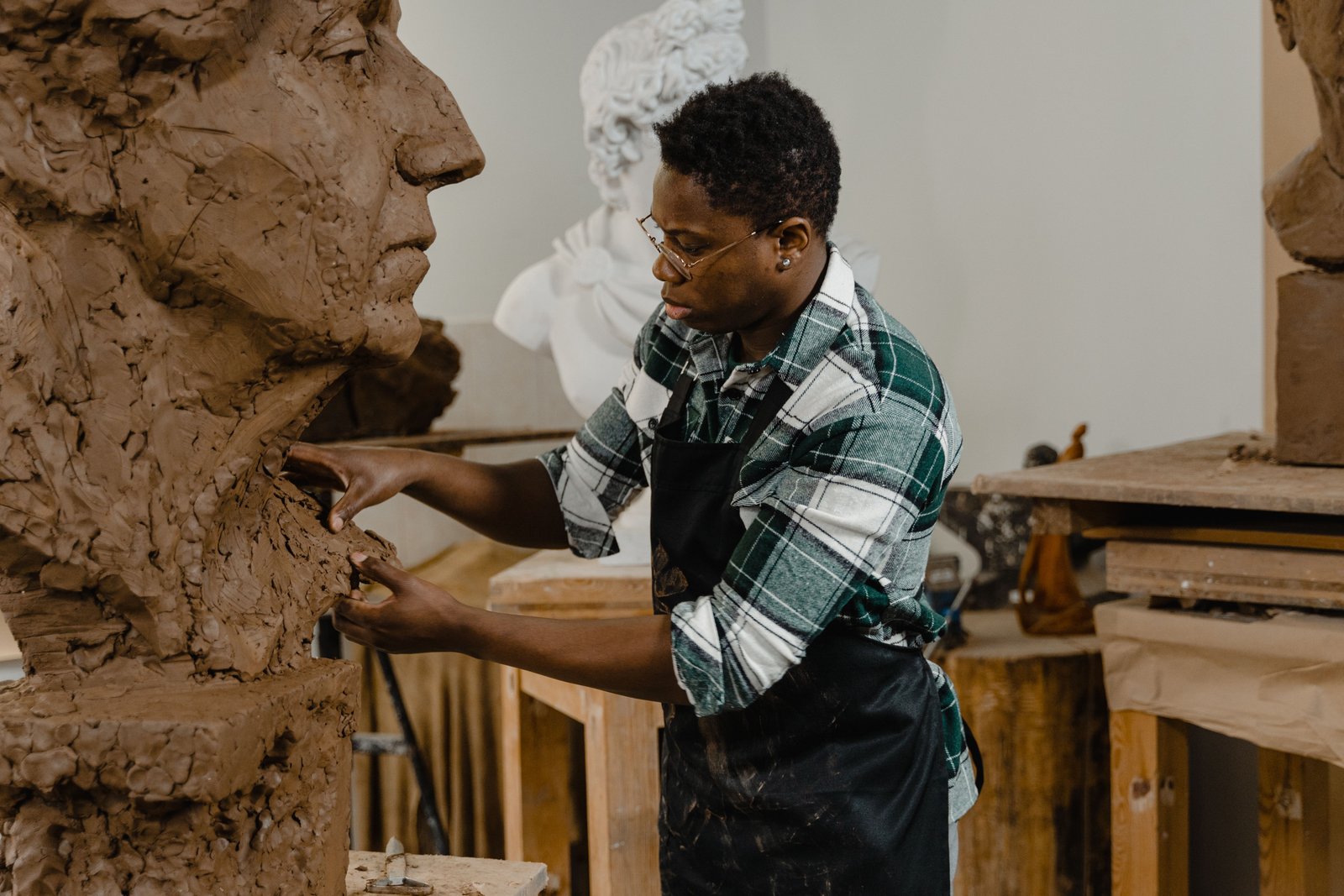
What sets sculptors apart from other artists is mainly the shift to working in three dimensions, thinking about space, weight, and how a piece is experienced from every angle rather than from a single fixed viewpoint. That core difference shapes almost everything else about how sculptors approach their work.
Painters, potters, and sculptors all work with visual ideas, but sculptors are solving a genuinely different kind of problem than someone working on a flat surface. At Le Studio Art Space, this distinction comes up often when members with a painting or drawing background start exploring hand building and ceramic sculpture for the first time, sometimes finding it a bigger mental shift than expected.
Understanding what actually makes sculptural thinking different helps explain why moving into three-dimensional work, even for an experienced two-dimensional artist, genuinely feels like learning a new discipline rather than simply extending an existing skill.
Working In Three Dimensions As The Core Difference
A painting or drawing is experienced from essentially one fixed viewpoint, while a sculpture exists in real space and can be walked around, viewed from multiple angles, and experienced differently depending on where the viewer stands.
This means a sculptor has to consider every angle of a piece during the making process, not just a single front-facing composition, which genuinely changes how decisions about form, balance, and detail get made from the very start. It often means physically walking around a piece dozens of times during a single working session.
Negative space, the empty area around and within a piece, becomes a genuinely active design element in sculpture in a way it rarely functions the same way in two-dimensional work, where it mostly just frames the subject. A sculptor often shapes what isn’t there just as deliberately as what is.
Physical weight and structural integrity also become real, practical concerns for a sculptor in a way they simply aren’t for a painter, since a three-dimensional form has to physically hold itself up under gravity, not just look convincing on a flat surface. A form that looks balanced in a sketch can fail entirely once actually built at full scale in a heavy material.
The Range Of Materials Sculptors Work With
Clay is one of many materials sculptors use, sitting alongside stone, metal, wood, and increasingly mixed and found materials, each bringing genuinely different physical properties and technical challenges to the sculptural process.
Stone and wood carving involve subtractive processes, removing material to reveal a form, while clay and metal casting are typically additive or formative, building or shaping a form up from a starting mass of raw material.
Each material demands different tools, techniques, and even different ways of thinking about a piece before starting, since a sculptor working in stone approaches planning quite differently to one starting with soft, malleable clay. A carver has to plan a final form in advance since material removed can’t be added back, while a clay sculptor can add, remove, and reshape freely throughout the process.
Many sculptors specialise in one primary material while still understanding the basics of others, since cross-material knowledge often deepens appreciation for the specific challenges and possibilities each material offers. Some sculptors also deliberately combine multiple materials within a single piece to contrast texture, weight, or finish.
How Ceramic Sculptors Fit Into This Broader Category
Ceramic sculptors sit within the broader sculpture world while bringing clay-specific considerations that other sculptural materials don’t share, particularly around drying, firing, and the structural risks unique to working with fired clay.
Unlike stone or metal sculpture, a ceramic sculpture has to survive an entire firing process intact, which introduces genuine engineering considerations around wall thickness, hollow construction, and even weight distribution that don’t apply the same way to other sculptural materials.
Scale presents a particular challenge for ceramic sculptors, since larger clay forms often need to be built hollow, sometimes in sections and reassembled after firing, to survive both drying and the kiln without cracking or warping. Planning that sectional construction in advance is itself a genuine skill unique to ceramic sculptural practice.
Despite these material-specific challenges, ceramic sculptors are engaging with the same core sculptural questions around form, space, and viewer experience as sculptors working in any other material. The extra technical burden clay adds doesn’t change the underlying creative discipline being practised.
Skills That Are Unique To Sculptural Practice
Structural thinking is genuinely central to sculptural practice, since a sculptor has to constantly consider whether a form will physically support itself, an issue that simply doesn’t arise the same way in two-dimensional work.
Spatial reasoning, the ability to mentally rotate and consider a form from angles you aren’t currently looking at, is a skill that develops specifically through sculptural practice and doesn’t necessarily transfer automatically from drawing or painting experience.
Working at different scales, from small maquettes to larger finished pieces, requires its own learned skill set, since a form that works beautifully at a small scale doesn’t always translate directly to a larger version without real adjustment, both structurally and visually.
Patience with a slower, more physically demanding process is another genuine skill many sculptors develop over time, since three-dimensional work often takes considerably longer than an equivalent two-dimensional piece. Physical stamina itself becomes a genuine factor too, particularly for larger works built over multiple sessions.
What Competing Guides Leave Out
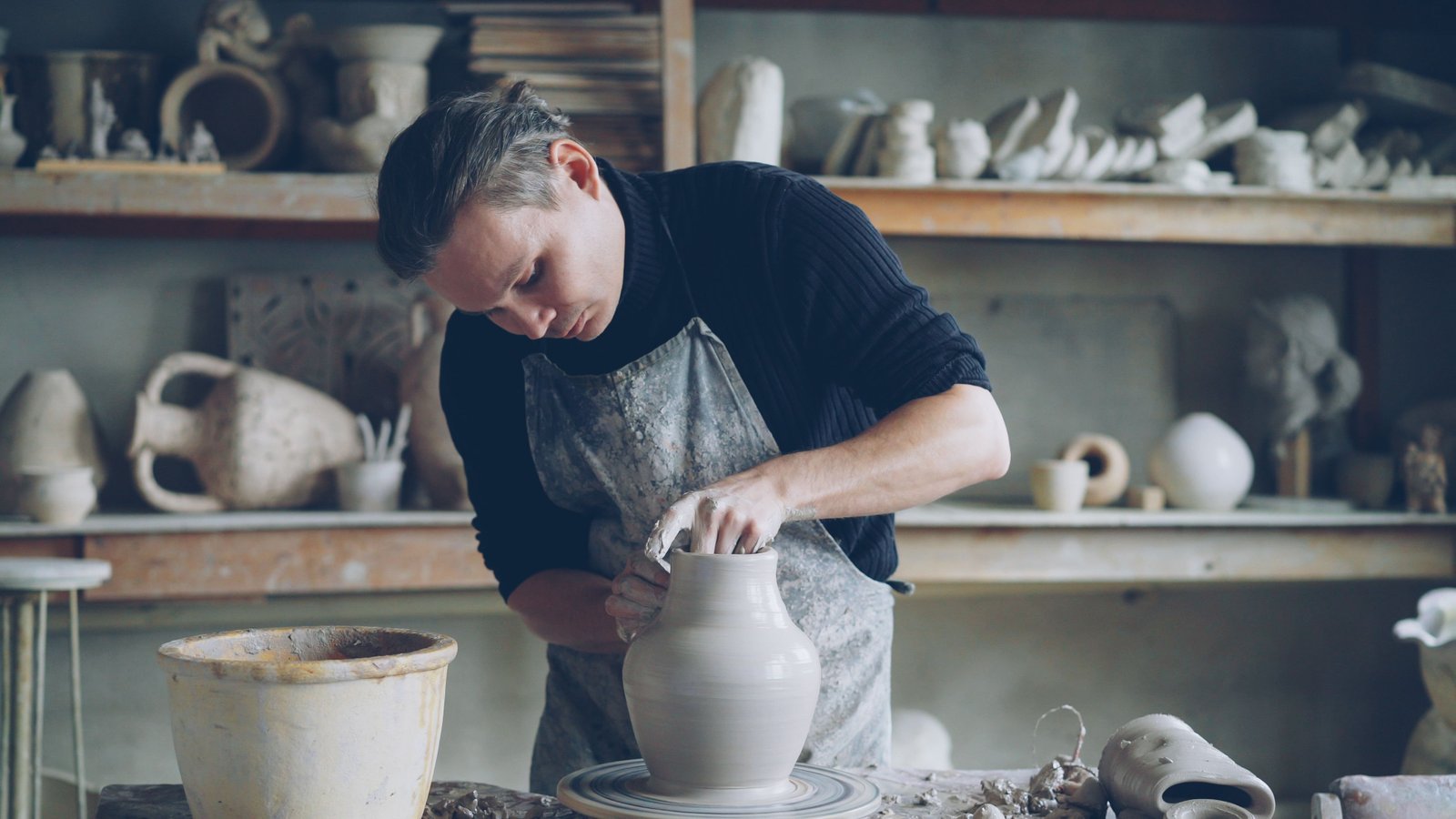
A gap many general articles on this topic skip is how a potter can genuinely start moving from functional work into more sculptural practice, since the two are often treated as entirely separate paths rather than a natural progression many potters actually take.
Starting small, perhaps adding sculptural elements to an otherwise functional piece, is a genuinely practical way to begin exploring sculptural thinking without abandoning familiar functional technique entirely. A decorative handle or an unusual foot shape can be a gentle first step into three-dimensional thinking.
It’s also worth mentioning that plenty of skilled potters never feel drawn to purely sculptural work at all, and that’s a completely legitimate choice rather than a limitation, since functional ware is its own genuinely rich creative discipline with its own depth and challenges to explore.
Community and mentorship matter more for this transition than many guides acknowledge, since learning sculptural thinking from someone who’s already made that shift can significantly shorten the learning curve compared to figuring it out entirely alone. A supportive studio environment genuinely makes this kind of experimentation feel lower stakes.
Sculptors Versus Potters And Painters In Practice
Potters and sculptors share genuine technical overlap, particularly in hand building, but potters are typically solving for function alongside form, while sculptors are usually focused purely on form, concept, and spatial experience.
Painters and sculptors share a concern with composition and visual impact, but a painter works within a fixed frame, while a sculptor has to consider an essentially unlimited number of viewing angles around a single piece.
None of these distinctions are rigid boundaries, and plenty of artists move fluidly between disciplines, sometimes within the same body of work, blending functional, sculptural, and even painterly approaches together in ways that resist any single tidy category.
Understanding these differences isn’t about ranking one discipline above another, it’s simply about recognising that each genuinely demands a different way of thinking, even when the underlying creative impulse is similar. Respecting those differences also helps explain why moving between disciplines can feel harder than expected at first.
Curious to explore sculptural clay work yourself? Join a hand building session at Le Studio Art Space in Mordialloc and start experimenting.
Frequently Asked Questions
Do I need painting or drawing skill before trying sculpture?
Not necessarily. Sculptural thinking is a genuinely different skill set built through hands-on practice, so a background in two-dimensional art helps in some ways but isn’t a prerequisite.
Is ceramic sculpture harder than sculpting in other materials?
It presents its own unique challenges, particularly around surviving drying and firing intact, but it’s not inherently harder, just different from working in stone, wood, or metal.
Can a potter genuinely become a sculptor, or are they separate paths?
Many potters do move into more sculptural work over time. It’s a genuine, common progression rather than two entirely separate, unrelated disciplines.
Why do larger ceramic sculptures need to be hollow?
Solid clay forms are prone to cracking or exploding during firing due to trapped moisture and uneven drying, so larger pieces are typically built hollow, sometimes in sections, to fire safely.
Is it normal to find three-dimensional thinking harder than expected at first?
Yes, genuinely common, even for experienced two-dimensional artists. Considering a piece from every angle is a real mental shift that takes practice, and studios like Le Studio Art Space can help guide that transition.
This article is provided for general educational purposes by Le Studio Art Space and reflects general observations about sculptural practice across different artistic disciplines.