Handmade ceramics are having a moment because people increasingly want objects with character, a story, and a connection to the person who made them. Mass produced ceramics are consistent and affordable, while handmade pieces carry small variations, the marks of the maker’s hands, and the time and skill that went into each one. Many buyers now mix the two, choosing handmade for the pieces they use and love most.
Walk into almost any Melbourne cafe and there’s a good chance your flat white arrives in a speckled, slightly uneven cup that clearly didn’t come off a factory line. Scroll through social media and the same pieces keep appearing. The debate over handmade vs mass produced ceramics has moved from craft circles into everyday kitchens, and it’s not hard to see why.
At Le Studio Art Space in Mordialloc, we see this shift up close, both in our studio, where more people than ever are learning to make their own work, and in our gallery, where local makers show pieces that people genuinely want to live with. Here’s what’s actually going on, and how to think about it for your own home.
What Actually Separates Handmade Vs Mass Produced Ceramics
The biggest difference is process. Mass produced tableware is usually made by pouring liquid clay into moulds, pressing clay with machines, or using automated jigger and jolley systems that shape hundreds of identical plates an hour. Glazes are often sprayed on, and pieces travel through large tunnel kilns on conveyor systems.
Handmade pieces are shaped by a person, whether thrown on a pottery wheel, built by hand from coils and slabs, or carefully cast in small batches. Each step, from wedging the clay to trimming the foot to dipping the glaze, involves a decision and a touch that leaves its trace on the finished object.
That’s where variation comes from. Two handmade mugs from the same maker will be close, but not identical. A handle might sit at a slightly different angle, or a glaze might pool a little more thickly on one rim. For many people, that variation is exactly the point.
Materials can differ too. Large factories often use highly refined, consistent clays and glazes engineered for speed and uniformity, while studio potters might choose speckled stonewares, local clays, or glazes that react unpredictably in the kiln. Our guide to stoneware, porcelain, and earthenware explains how clay choice shapes a piece.
Why People Are Drawn To Handmade Pieces Right Now
Part of the appeal is a broader interest in slower, more tactile living. After years of screens and fast everything, many people find real comfort in an object that’s heavy in the hand, warm to touch, and clearly made with care. A handmade cup can make a daily coffee feel just a little more intentional.
There’s also a story attached. When you buy from a maker, you often know who made the piece, where, and sometimes even how. That connection is hard to get from a shelf of identical bowls, and it’s a big part of why handmade work feels personal.
Social media has played a role as well. Videos of clay spinning on a wheel and glazes coming out of the kiln have introduced pottery to people who’d never seen it done. Many of our newer students tell us that’s exactly how their curiosity started. We wrote about that wider trend in the rise of clay as a mindfulness practice.
It’s worth being honest, though. Handmade isn’t automatically better, and the trend has its own fashions that will come and go. What seems to last is the underlying desire for objects with character and a human connection, which has been around as long as pottery itself.
What You Pay For In A Handmade Piece
A handmade mug might cost several times more than a supermarket one, and it’s fair to wonder why. The answer is mostly time. A single mug can involve wedging, throwing, trimming, pulling and attaching a handle, drying, a bisque firing, glazing, and a glaze firing, spread across a week or more.
Not every piece survives. Cracks, warping, glaze faults, and kiln mishaps mean some work never makes it to sale, and that loss is built into the price of the pieces that do. Factories absorb losses across huge volumes, but a small maker feels every one.
Firing is a real cost too. Kilns use a lot of electricity, need regular maintenance, and every load carries some risk. Many makers rent studio space and use shared kilns or a firing service, which adds to their overheads.
Then there’s skill. Making a set of bowls that match closely, with a comfortable weight, a clean foot, and a glaze that’s both beautiful and durable takes years of practice. When you buy handmade, you’re paying for that experience as much as the clay itself.
Where Mass Produced Ceramics Still Make Sense
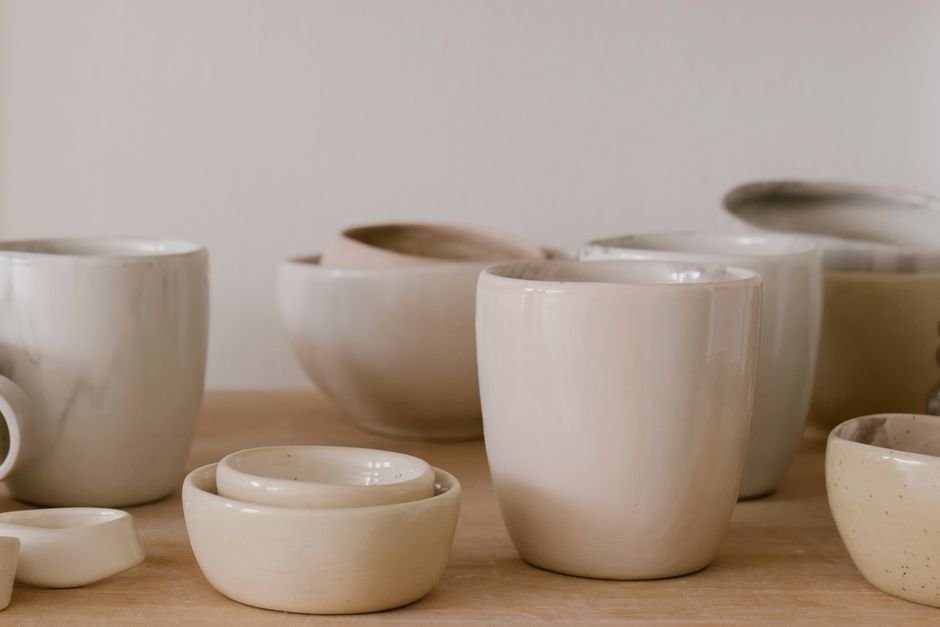
To be fair to factory ware, it does some things very well. If you need twenty identical plates for a big family, a cafe, or a rental property, mass produced ceramics offer consistency and replaceability that a small maker usually can’t match.
Cost and availability matter too. A full dinner set from a homewares store is far cheaper than a handmade one, and you can replace a broken bowl easily. For households with young children or a high breakage rate, that practicality is a genuine advantage.
Industrial ceramics can also be very durable. Modern factory porcelain is often fired to high temperatures and designed specifically for commercial dishwashers, microwaves, and heavy daily use. Plenty of restaurants rely on it for exactly that reason, and it would be unfair to treat it as second rate.
It’s also worth remembering that factory ware isn’t the opposite of design. Many mass produced ranges start life as prototypes thrown or modelled by skilled ceramic designers, then get turned into moulds for production. The human touch is there, it’s just one step removed from the object you’re holding.
Many people end up with a mix, and that’s perfectly reasonable. Everyday basics might be factory made, while the mug you reach for every morning, the serving bowl you bring out for guests, or the vase on the windowsill is handmade.
What Competing Guides Leave Out On Handmade Vs Mass Produced Ceramics
Most articles on handmade vs mass produced ceramics stop at the philosophy and don’t explain how supporting local makers actually works. In practice, it often means buying directly at markets, open studios, gallery shows, or a maker’s own website, so more of what you spend goes back to the person who made the piece.
Another gap is spotting quality, and spotting imitation. Some factory ware is now designed to look handmade, with printed speckles or deliberately wobbly rims. Signs of genuine handmade work include slight differences between pieces in a set, throwing lines inside a cup, a trimmed foot with visible tool marks, and a maker’s stamp or signature.
Quality in handmade work is about more than looks. A good piece should sit flat, feel balanced, have a smooth rim, and a handle that’s comfortable to hold. Glaze should be even where it matters, and the base should be clean and sanded so it won’t scratch your table.
Finally, ask about use. A good maker will happily tell you whether a piece is food safe, dishwasher safe, or best kept for display. If you’re thinking about buying more sculptural work, our guide on what to know before buying sculptures covers that side.
How To Start Choosing Handmade Pieces For Your Own Home
Start small. A single mug, a little dish, or one serving bowl is a great first handmade purchase. Choose something you’ll use often, so you get to enjoy it daily and get a real sense of how handmade work feels to live with.
Pick it up if you can. Weight, balance, and how a handle fits your fingers are hard to judge from a photo. Galleries, markets, and studios are ideal because you can hold pieces, compare a few, and talk to someone who knows how they were made.
Don’t worry about matching everything. Many people enjoy building a collection slowly, mixing pieces from different makers that share a colour or mood. It often looks more personal than a matched set.
And if you find yourself fascinated by how these pieces are made, you might enjoy trying it yourself. Our workshops and classes are a relaxed way to start, and our ceramic studio gives members access to wheels and kilns. Our guide to how clay artists develop their style is also a lovely read before your next gallery visit.
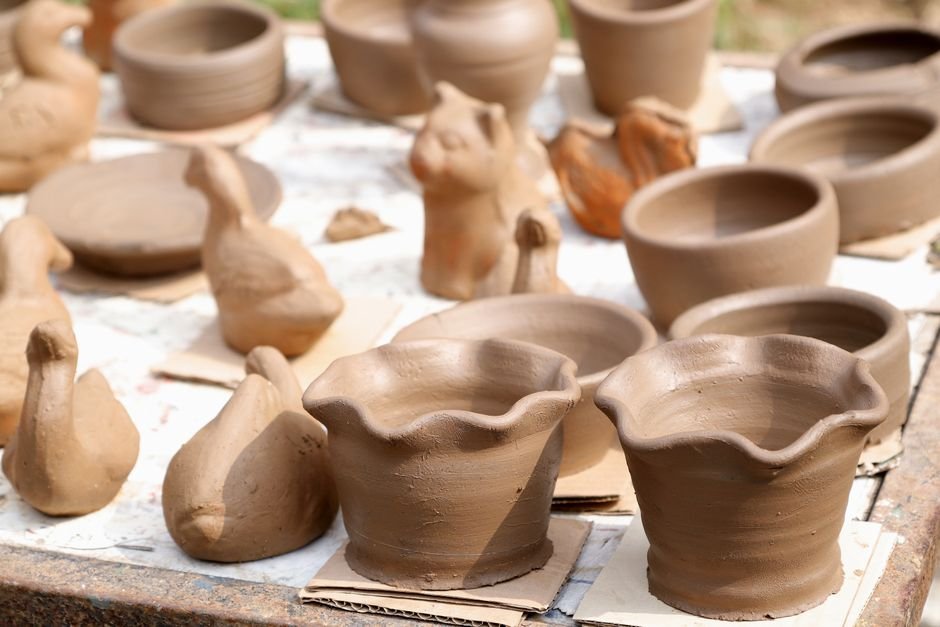
Curious to see handmade ceramics up close? Visit the gallery at Le Studio Art Space in Mordialloc, where local makers show work you can pick up, compare, and talk about with the people who make it.
Frequently Asked Questions
Is handmade pottery really worth the higher price?
It depends on what you value. You’re paying for time, skill, firing costs, and pieces that didn’t survive, plus a piece with character that many people enjoy using every day.
How can I tell if a mug is actually handmade?
Look for small differences between pieces in a set, throwing lines inside, tool marks on the foot, and a maker’s stamp. Factory ware that imitates handmade usually looks identical from piece to piece.
Are handmade ceramics as durable as store bought ones?
Many are very durable, especially well fired stoneware and porcelain. Ask the maker whether a piece is dishwasher and microwave safe, since it varies with clay and glaze.
Is the handmade ceramics trend just a fad?
Some styles will come and go, as trends always do. The interest in objects with a human story behind them has been around for a very long time, though, and doesn’t seem to be fading.
Where can I buy handmade ceramics from local makers in Melbourne?
Markets, open studios, and galleries are great places to start. At Le Studio Art Space in Mordialloc, our gallery regularly shows work by local makers, and you can often meet the artists at exhibitions and pop-up shows.
This article is provided for general educational purposes by Le Studio Art Space. Care instructions and durability vary between makers, clays, and glazes.