Clay as a mindfulness practice has grown in popularity because working with your hands on a slow, tactile material naturally encourages presence and a break from screens, without requiring any prior artistic skill. Many people find the physical, sensory nature of clay pulls attention into the present moment more easily than other hobbies.
Pottery classes have seen a genuine surge of interest from people who aren’t necessarily chasing artistic skill at all, but something closer to a break from constant digital noise and daily stress. At Le Studio Art Space, this shift shows up regularly in why new members say they signed up, often citing wanting to slow down rather than wanting to become a serious potter.
Understanding why clay in particular seems to encourage this kind of presence helps explain why it’s become such a popular option among slower, more tactile hobbies in recent years.
Why Working With Clay Naturally Encourages Presence
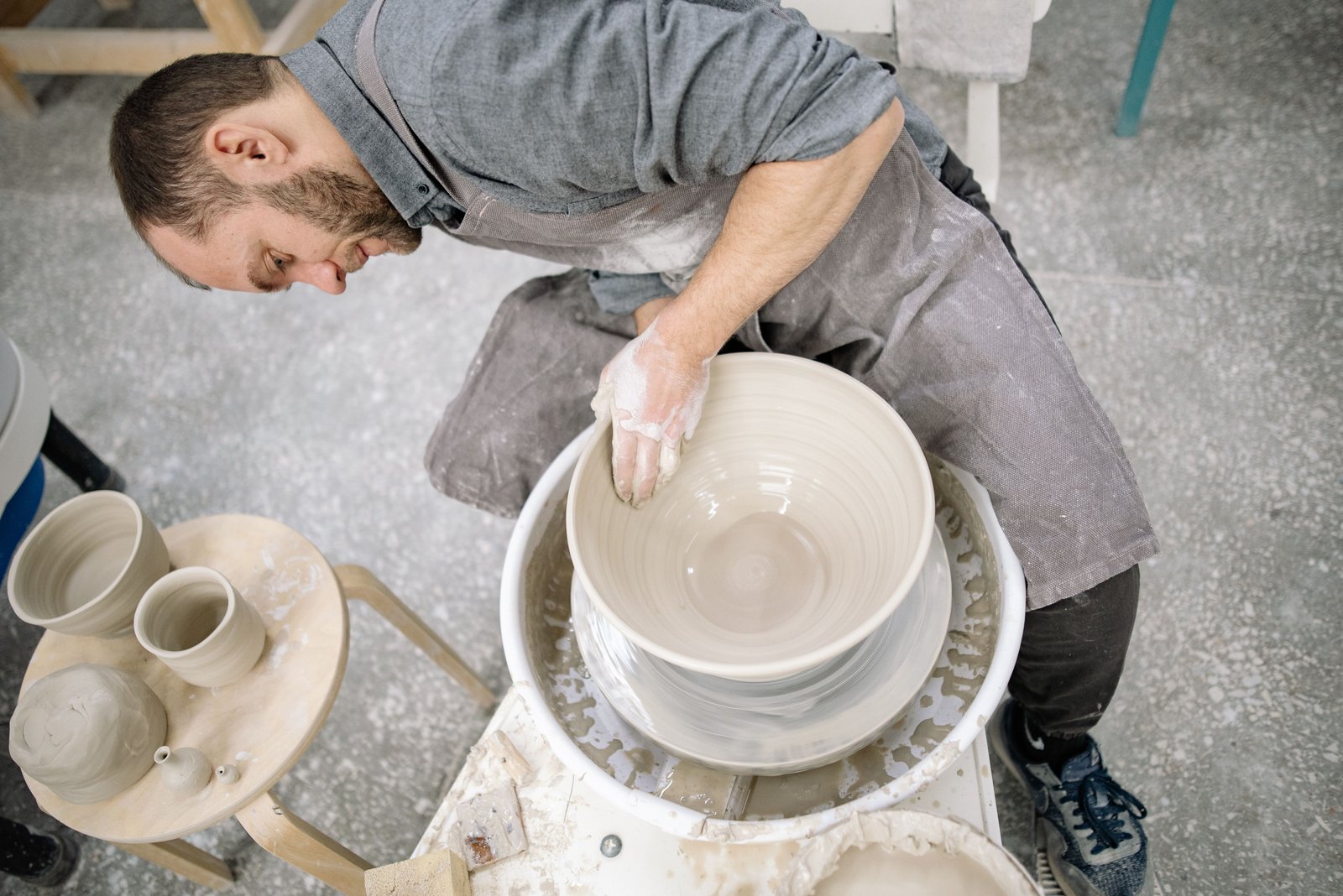
Clay demands a genuine level of physical attention that’s hard to multitask around, since centering on the wheel or shaping a hand built piece requires your hands, eyes, and a fair amount of focus all at once.
The tactile, sensory nature of wet clay itself seems to play a real role too, engaging touch in a way that screens and most modern daily activities simply don’t, which many people find genuinely grounding.
Unlike activities you can do while thinking about something else entirely, clay work tends to pull your attention back to the present task almost automatically, since losing focus for even a moment can show up immediately in the clay itself. A wandering mind while centering, for instance, often shows up instantly as a wobble in the spinning form.
This immediate, tangible feedback loop, where your hands directly shape a visible result in real time, is part of what distinguishes clay from more passive or less physically engaging mindfulness activities. Watching a shapeless lump slowly become a recognisable form under your own hands has a genuinely satisfying, grounding quality to it.
What People Commonly Report Experiencing
Many potters describe a genuine sense of focus and calm settling in once they get a few minutes into working with clay, often mentioning it feels different from other creative hobbies they’ve tried.
A break from screens and daily stress is one of the most commonly mentioned benefits, with many members at Le Studio Art Space specifically citing this as their main reason for trying a class in the first place, often after a particularly demanding stretch of work or study.
It’s worth being careful not to overstate this though, since experiences genuinely vary between individuals, and not everyone finds clay work calming in the same way or to the same degree. Some people notice the effect immediately, while others only recognise it in hindsight after a few regular sessions.
Some people find the early learning curve genuinely frustrating rather than calming at first, and that’s a completely normal response too, with the more meditative quality often developing once basic technique starts to feel less effortful. Patience with that early stage tends to pay off once the physical movements become more automatic.
How This Differs From Other Creative Hobbies
Compared to painting or drawing, clay work involves a much more physical, full-body engagement, particularly on the wheel, where your whole posture and hand positioning matter in a way a seated drawing hobby simply doesn’t require.
Compared to digital creative hobbies, clay offers a genuinely tactile, screen-free experience, which is part of its specific appeal for anyone deliberately seeking a break from constant digital engagement in daily life.
Compared to other tactile hobbies like knitting or woodworking, clay offers a uniquely immediate, malleable material that responds instantly to touch, without needing tools or complex setup to start shaping something. There’s also a forgiving, undo-able quality to soft clay that fewer other tactile crafts genuinely share.
None of this means clay is objectively more mindful than other hobbies, different activities genuinely suit different people, but its particular combination of physicality, immediacy, and tactile feedback does set it apart in a genuine way. Trying several tactile hobbies before settling on one that genuinely resonates is a perfectly reasonable approach.
Why This Trend Has Grown In Popularity Recently
Broader interest in slow, tactile hobbies has grown noticeably in recent years, partly as a genuine counterbalance to increasingly screen-heavy daily life and constant digital connectivity for many people.
Social media has, somewhat ironically, played a real role in spreading interest in pottery specifically, with process videos of wheel throwing and hand building attracting genuine fascination even from people who’ve never tried it themselves, drawn in by the satisfying, slow visuals alone.
Wider recognition of the value of hands-on, screen-free downtime has also grown, with more people actively seeking hobbies that offer a genuine break rather than simply another form of passive entertainment.
Accessibility has improved too, with more studios like Le Studio Art Space offering beginner-friendly classes that don’t require any prior experience, lowering the barrier for people curious about trying it for this specific reason rather than out of any artistic ambition.
What Competing Guides Leave Out
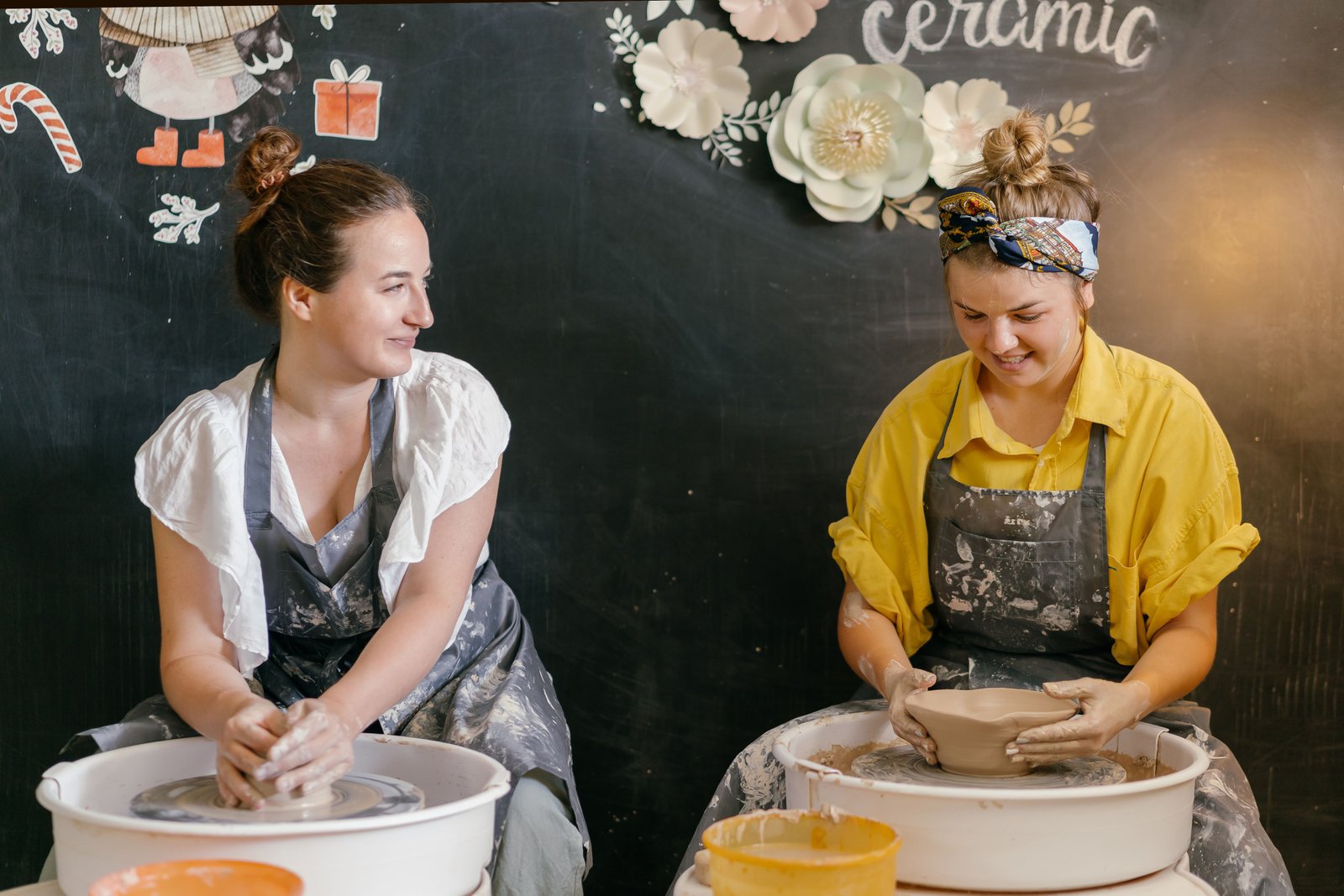
A gap many general articles on this topic skip is how a shared studio environment adds a genuine social element to what’s often framed as a purely individual, calming practice, which some people find adds to rather than detracts from the experience.
Working quietly alongside other people, without necessarily talking much, can offer its own genuine sense of calm community that solitary mindfulness practices at home don’t always provide in the same way. There’s a particular comfort in shared, quiet focus that’s genuinely hard to describe until you’ve experienced it firsthand.
It’s also worth mentioning honestly that clay work isn’t a substitute for addressing genuine mental health concerns, and framing it as purely therapeutic without qualification oversells what a creative hobby can reasonably be expected to provide.
Cost and access are practical considerations rarely addressed directly either, since regular studio time does involve an ongoing cost that not everyone can commit to purely for the mindfulness benefit alone, which is worth weighing honestly against other lower-cost mindfulness options available.
Approaching Pottery For This Reason Without Pressure To Be Good At It
If you’re coming to pottery specifically for the calming, mindful aspect rather than to develop serious technical skill, it’s genuinely fine to let go of any pressure around how technically good your finished pieces turn out.
Focusing on the process itself, how the clay feels, how your hands move, rather than fixating purely on the outcome, tends to reinforce exactly the kind of presence that draws people to this practice in the first place, session after session.
Many studios, including Le Studio Art Space, genuinely welcome people attending purely for this reason, without any expectation that everyone is working toward becoming a skilled, exhibition-ready potter. Regular members and casual visitors sit comfortably side by side in the same open studio sessions.
Giving yourself permission to enjoy an imperfect, rough first piece, or even a dozen imperfect pieces, is completely reasonable if the actual value you’re getting from the practice is the time spent present and focused, not the final result. That shift in mindset alone often makes the whole experience considerably more enjoyable.
Curious to experience the studio atmosphere for yourself? Join a relaxed session at Le Studio Art Space in Mordialloc and see how it feels.
Frequently Asked Questions
Is this whole mindfulness thing about pottery just a marketing trend?
There’s genuine substance behind it, since many people do report feeling more present and calm while working with clay, though experiences vary and it’s not guaranteed to feel that way for everyone.
Do I need to be good at pottery for it to feel calming?
Not at all. Many people find value in the process itself rather than the finished result, and studios like Le Studio Art Space welcome people attending purely for that reason.
Can pottery actually replace therapy or other mental health support?
No, it shouldn’t be treated as a substitute for professional mental health support. It can be a genuinely enjoyable, calming hobby alongside other support, not a replacement for it.
What if I find my first class stressful rather than calming?
That’s a completely normal response, especially early on while you’re still learning basic technique. Many people find the calming quality develops once the initial learning curve feels less effortful.
Is a shared studio less peaceful than practicing alone at home?
Not necessarily. Many people genuinely enjoy the quiet, shared focus of working alongside others in a studio setting, finding it adds a comfortable social element rather than detracting from the calm.
This article is provided for general educational purposes by Le Studio Art Space and reflects general observations, not medical or therapeutic advice. Individual experiences vary.