When buying pottery clay for sale, the main things to check are that the clay body suits your project, the firing temperature matches your kiln, the clay feels fresh rather than dried out, and the bag size fits how much you actually plan to use. Getting these right up front avoids a lot of frustration later in the process.
Standing in front of a shelf of clay bags, or scrolling through an online supplier’s catalogue, can be surprisingly overwhelming the first time you actually go looking for pottery clay for sale. There are stoneware, earthenware, porcelain, and countless branded blends, each labelled with numbers and terms that mean very little if nobody’s explained them yet. At Le Studio Art Space, this is a question that comes up constantly from members getting ready to buy their own clay for the first time.
The good news is that once you understand the handful of things that actually matter, choosing the right clay becomes a lot less intimidating and a lot more straightforward.
Checking The Clay Body Matches Your Project
Different clay bodies behave differently depending on what you’re making. A clay suited to smooth, fine detail work on the wheel isn’t necessarily the best choice for chunky, textured hand building, and vice versa, so it’s worth thinking about your intended technique before choosing a bag.
Grog content, meaning small particles of pre-fired clay mixed into the clay body, affects both texture and strength. A clay with more grog tends to be more forgiving for hand building and large forms, while a smoother, low-grog clay is often preferred for wheel work and fine detail.
Colour is another practical consideration, since clay bodies range from bright white porcelain through buff and speckled stoneware to deep red earthenware, and that base colour will show through or interact with any glaze you apply later.
It’s genuinely fine to ask a supplier or studio directly which clay body suits a specific project if you’re unsure, rather than guessing based on packaging alone. Most experienced potters are happy to share a quick recommendation.
Trying a small test piece in a new clay body before committing to a large project is also a smart habit, since it lets you get a feel for how the clay handles before you’ve invested significant time into a bigger piece.
Confirming Firing Temperature Compatibility
Every clay body is formulated to mature at a specific firing range, usually described using cone numbers, and firing a clay outside that intended range can lead to problems ranging from underfired, weak, porous ware to overfired, warped, or even melted pieces.
It’s essential to check that a clay’s stated firing range matches what your kiln, or your studio’s kiln, is actually capable of and typically set to. This is especially important if you’re buying clay from a new supplier or trying an unfamiliar clay body for the first time.
Stoneware clays typically fire at a higher range than earthenware, while porcelain often sits at the higher end again, though exact ranges vary between specific product lines, so checking the packaging or product listing directly is always worth doing rather than assuming based on the general category.
If you’re working within a shared studio, this step is largely handled for you, since the studio’s kilns are generally set up around the clay bodies they stock, removing a lot of the guesswork for members using in-house clay.
Mixing clay bodies with genuinely different firing ranges within a single piece is also worth avoiding, since uneven firing behaviour between the two can cause cracking or separation during the kiln process.
Freshness And Moisture Content
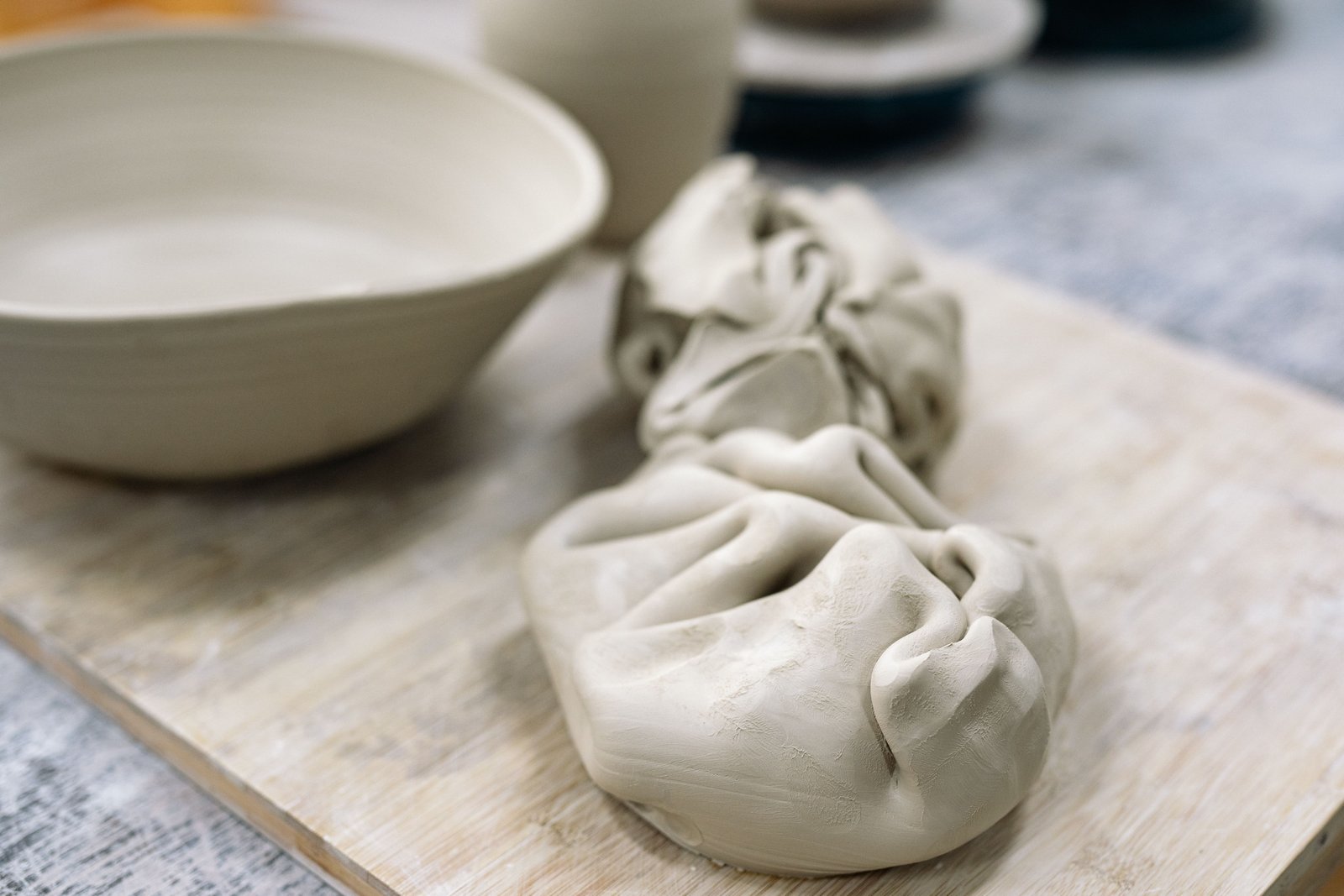
Fresh clay should feel pliable and slightly cool to the touch through its plastic packaging, without any hard, dry patches when you gently press the bag. A bag that feels stiff or crumbly through the plastic has likely dried out to some degree.
Clay that’s partially dried out isn’t necessarily ruined, since it can often be reclaimed and reworked with added water, but it does mean more preparation work before you can actually use it, which is worth factoring into your decision if you’re buying in a hurry.
If buying in person, it’s reasonable to gently check a bag before purchasing, and most suppliers understand this as normal practice rather than something to feel awkward about doing.
Storage conditions at the point of sale matter too. Clay stored somewhere hot or in direct sunlight for long periods is more likely to have dried out prematurely compared to clay kept in cooler, more controlled storage.
Bag Size And Cost Considerations
Clay is typically sold in a range of bag sizes, and buying in bulk generally brings the price per kilogram down, which makes sense if you’re a regular, established user of a particular clay body.
For anyone still experimenting or trying a new clay body for the first time, a smaller test bag or sample size is usually the smarter choice, even at a slightly higher per-kilogram cost, since it limits how much you’re committing to before you know whether you actually like working with it.
It’s also worth factoring in how quickly you’ll actually get through a bag, since unused clay that sits too long can dry out even in its original packaging if it isn’t sealed properly between uses.
Shipping costs for clay bought online can add up quickly given how heavy it is, which is part of why many potters prefer buying locally or through a studio that already stocks clay in bulk, avoiding that extra cost entirely.
What Competing Guides Leave Out
A detail many general buying guides skip is how much a shared studio setup actually simplifies this whole decision. When a studio already stocks a small, curated range of clay bodies matched to its own kilns, members avoid a lot of the research and risk involved in buying independently.
Trying a small sample before committing to a full bag is another point rarely emphasised enough. It’s a low-cost way to genuinely test how a clay body handles on the wheel or in hand building before spending more on a larger quantity.
Shelf life and storage advice is another gap. Properly sealed clay can last a genuinely long time before use, but once opened, it needs to be kept airtight and ideally in a cool space to avoid drying out faster than expected.
It’s also worth mentioning that clay reclaiming, meaning reworking dried or leftover clay scraps back into usable material, is a normal, widely practised part of working with clay, not a sign that something has gone wrong with your original purchase.
Where Most Potters Buy Their Clay
Specialist ceramics suppliers, whether local shopfronts or dedicated online stores, remain the most common source for potters buying clay independently, offering the widest range of clay bodies and firing ranges to choose from.
Working studios that stock clay in-house are another common source, and often a more convenient one for members, since the clay is already matched to the studio’s own kilns and firing schedule, removing a lot of the decision-making described above.
Some art supply stores carry a limited range of clay too, though usually a narrower selection than a dedicated ceramics supplier, which can be fine for a simple beginner project but more limiting for anything more specific.
Whichever route you choose, buying from a supplier with a genuine reputation in the ceramics community tends to be more reliable than chasing the absolute cheapest option, particularly when you’re still learning what to look for yourself.
Not sure which clay body to try first? Ask about the clay bodies stocked at Le Studio Art Space’s ceramic studio in Mordialloc during your next visit.
Frequently Asked Questions
Is it actually a big deal if I buy the wrong clay body for my kiln?
Yes, it can be a genuine problem, since firing a clay outside its intended temperature range can lead to underfired, weak ware or overfired, warped pieces. Always check the firing range matches your kiln before buying.
Can I still use clay that feels a bit stiff through the bag?
It’s usable in many cases, though it may need reclaiming with added water before it’s fully workable again. It’s not necessarily ruined, just less convenient than a genuinely fresh bag.
Is buying a bigger bag always the better value option?
Not necessarily, especially if you’re still experimenting with a clay body for the first time. A smaller test amount is often the smarter choice until you know you like working with it.
Do I need to worry about this at all if I’m working at a shared studio?
Much less so. Studios like Le Studio Art Space generally stock clay bodies already matched to their own kilns, which removes a lot of the guesswork involved in buying clay independently.
What’s the difference between stoneware and earthenware clay for a beginner?
Stoneware typically fires at a higher temperature and produces a more durable, less porous result, while earthenware fires lower and tends to remain more porous, though both are genuinely fine starting points depending on your project.
This article is provided for general educational purposes by Le Studio Art Space and reflects common studio and supplier practice. Always check a specific product’s stated firing range before use.