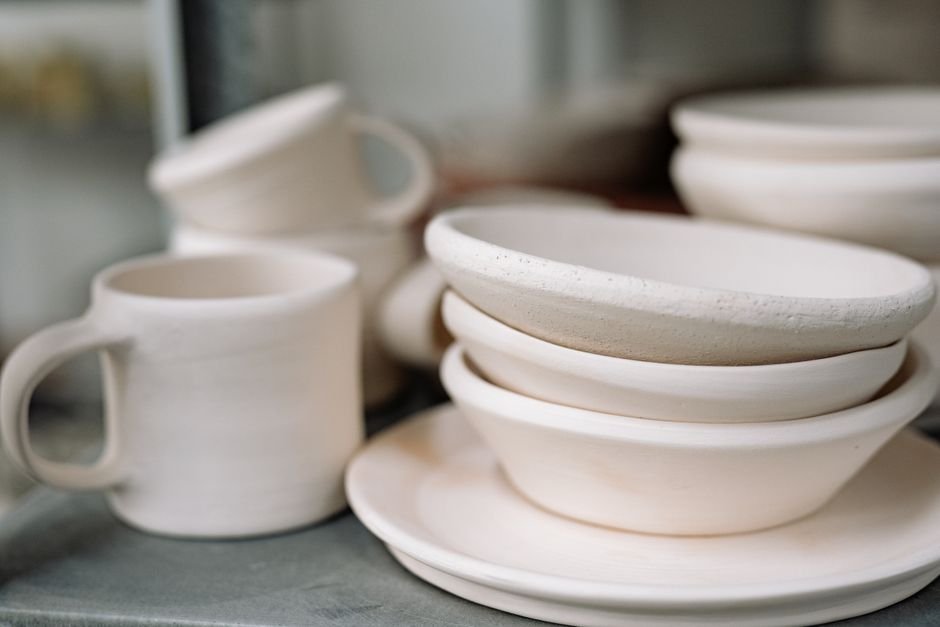
Porcelain pottery is different because it’s made from a very fine, white clay body high in kaolin, fired to high temperatures until it becomes dense, glassy, and sometimes translucent. That same fine texture makes porcelain smooth and beautiful but less forgiving to work with than stoneware or earthenware, since it slumps, cracks, and warps more easily.
Porcelain pottery has a reputation that goes before it. People picture delicate teacups, glowing white bowls, and pieces so thin they let light shine through. Potters, meanwhile, often talk about porcelain with a mix of love and mild frustration, because it can be as tricky as it is beautiful.
At Le Studio Art Space in Mordialloc, we often have members curious about trying porcelain pottery once they feel settled with stoneware. This guide explains what porcelain is made from, why it looks the way it does, why it’s considered difficult, and how it compares to other clays, so you can decide whether it’s worth a go.
What Porcelain Is Made From
Porcelain is built around kaolin, a very pure, white primary clay named after the Gaoling area near Jingdezhen in China, historically the heartland of porcelain production. Kaolin contains very little iron or other impurities, which is why porcelain fires so white rather than cream, buff, or brown like many other clays.
A typical porcelain body blends kaolin with feldspar and silica. Feldspar acts as a flux that melts at high temperature and binds everything together, while silica adds structure and helps the body fit its glazes. Because kaolin on its own isn’t very plastic, many modern porcelain bodies also include a small amount of ball clay or bentonite to make them easier to throw.
The particle size is extremely fine, and porcelain bodies usually contain no grog at all. That’s what gives porcelain its buttery, silky feel when wet and its smooth, glass-like surface after firing. It’s also the source of many of its challenges, which we’ll get to shortly.
Historically, Chinese potters combined kaolin with a material called petuntse, or china stone, to achieve their famous translucent wares. European potters spent centuries trying to discover the recipe before finally succeeding in the early eighteenth century.
Why Porcelain Pottery Fires So White And Translucent
The whiteness comes from the purity of the ingredients. With very little iron in the body, there’s almost nothing to tint the clay as it fires, so porcelain stays bright white or a very soft blue-white depending on the kiln atmosphere and recipe.
Translucency comes from vitrification. Porcelain is usually fired to high temperatures, commonly above 1200 degrees Celsius, at which point the feldspar melts into a glassy phase that fills the spaces between particles. The result is a dense, almost non-porous body with a structure that’s partly glass, which allows light to pass through thin walls.
How translucent a piece becomes depends on wall thickness, the specific clay recipe, and the firing temperature. Very thin porcelain can glow when held up to a window, while thicker pieces look opaque but still have that characteristic smooth density and clean, clinking ring when tapped.
That same vitrification is why porcelain is so strong for its thickness and so resistant to absorbing water. Fully fired porcelain is well suited to functional ware when made and glazed well.
Why Porcelain Has A Reputation For Being Difficult
Porcelain’s fine particles and lack of grog mean it has very little internal structure to hold it up. On the wheel, it can feel wonderfully smooth one moment and suddenly go floppy the next if it absorbs too much water. Walls that would stand happily in stoneware can twist or collapse in porcelain.
It also has what potters call memory. If you bend, dent, or stretch porcelain during making, it may try to return toward that distortion in the kiln, which can cause warping or rims that go slightly oval. Many potters learn to handle porcelain gently and avoid reworking a form too much.
Drying needs extra care too. Porcelain shrinks more than many stoneware bodies and is prone to cracking if one part dries faster than another, especially at the base or where handles join. Slow, even drying under plastic is often recommended.
Trimming adds its own challenge. Porcelain goes from leather hard to bone dry faster than many clays, and the window for clean trimming can be short. Leave it a little too long and it becomes brittle, chipping instead of peeling away in smooth ribbons. Many potters check porcelain pieces more often than stoneware and wrap them closely overnight to keep them workable for the next session.
Finally, porcelain can slump or warp at peak temperature because it gets so close to melting. That’s why wide, flat forms and thin, unsupported rims are more challenging than they look.
What Porcelain Pottery Is Typically Used For
Porcelain pottery is prized for fine tableware, including teacups, small bowls, espresso cups, and plates where a refined, bright finish is wanted. Its whiteness makes glaze colours look especially clean and vivid, which is why it’s popular with potters who work with celadons, clear glazes, and bright colours.
It’s also a favourite for decorative and delicate forms, such as thin-walled vessels, lighting, jewellery, and small sculptural pieces that show off translucency. Some artists carve or pierce porcelain so light shines through patterns once it’s fired.
Porcelain works beautifully as a surface for drawing and fine decoration. If that interests you, our guide to drawing on porcelain before firing covers techniques that make the most of that smooth white canvas.
Industrially, porcelain is used in everything from bathroom fixtures to electrical insulators and laboratory ware, thanks to its density and resistance to heat and chemicals, though studio potters mostly focus on its beauty.
What Competing Guides Leave Out
Most articles praise porcelain’s beauty without being honest about what a beginner’s first attempts usually look like. Realistically, many potters find their first porcelain pieces come out thicker, smaller, and less refined than their stoneware work. That’s completely normal, and it’s worth expecting a few collapses before things click.
A few practical tips make a big difference. Use less water than you would with stoneware and sponge out any water pooling inside the form. Keep your throwing sessions shorter, since porcelain tires quickly. Compress rims and bases well, and dry pieces slowly and evenly under loose plastic.
Hand building with porcelain is often easier than throwing it at first. Pinch pots, small slab pieces, and press moulded forms let you enjoy porcelain’s surface without fighting its tendency to slump on the wheel.
It’s also worth knowing that porcelain can contaminate other clays. Many studios ask members to clean wheels, tools, and splash pans carefully when switching between porcelain and darker clays, so specks of brown don’t end up in a white piece.
Cost is another honest point. Porcelain clay usually costs more per bag than everyday stoneware, and because loss rates are higher while you’re learning, the real cost per finished piece can be noticeably higher. That’s not a reason to avoid it, but it is a good reason to practise small forms first rather than committing a whole bag to ambitious pieces straight away.
Porcelain Versus Other Clay Bodies
Compared to earthenware, porcelain fires much hotter, becomes far denser, and stays white rather than terracotta or red. Earthenware is more forgiving and suits bright, low fire glazes, but it remains more porous and less durable for daily use.
Compared to stoneware, porcelain is smoother, whiter, and more translucent, while stoneware is sturdier to work, more tolerant of mistakes, and often has more visible character and speckling. Many potters build their skills on stoneware and treat porcelain as a special project once they feel confident.
There’s also a middle ground worth knowing about. Some suppliers make porcelaneous stonewares or porcelain-like bodies with a little more plasticity and tooth, designed to be friendlier on the wheel while still firing pale and smooth. These can be a lovely stepping stone if pure porcelain feels like too big a jump, and many potters happily stay with them for years.
For a fuller side-by-side comparison, our article on stoneware vs porcelain vs earthenware goes into more detail on all three.
If you’d like to try porcelain with support, our workshops and classes are a good place to start, and members of our ceramic studio can talk with us about firing porcelain through our firing service.
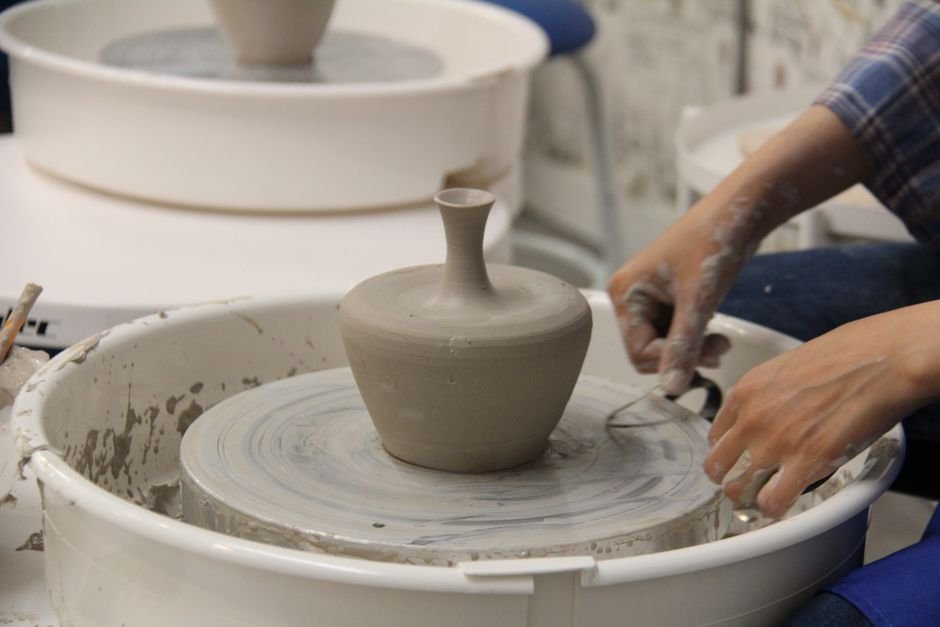
Curious to feel porcelain for yourself? Try working with it during a class at Le Studio Art Space in Mordialloc, where our team can help you handle its quirks and get a piece through the kiln.
Frequently Asked Questions
Is porcelain too hard for a beginner to try?
It isn’t too hard to try, but it is less forgiving than stoneware. Many beginners enjoy starting with small hand built porcelain pieces before attempting it on the wheel.
Why does my porcelain keep collapsing on the wheel?
Porcelain absorbs water quickly and has very little structure, so it softens fast. Using less water, working more quickly, and keeping walls a little thicker at first usually helps.
Is porcelain stronger than stoneware?
Fully vitrified porcelain is very strong for its thickness and non-porous. In practice, a well made stoneware piece and a well made porcelain piece are both durable for everyday use.
Why is porcelain more expensive to buy?
The refined materials cost more, and porcelain has a higher loss rate during making and firing. The extra skill and care involved also add to the price of handmade porcelain pieces.
Can I use porcelain at Le Studio Art Space?
Yes, porcelain can be explored in classes and in the studio. Chat with the team at Le Studio Art Space first so we can advise on clay choice, cleaning, and firing.
This article is provided for general educational purposes by Le Studio Art Space. Porcelain bodies vary in recipe and firing range, so always follow the supplier’s guidance for the specific clay you use.