Ceramic is made mostly of clay, a natural material formed from weathered rock, usually mixed with minerals like silica (quartz) and feldspar. When this mixture is fired in a kiln at high temperatures, the particles fuse and permanently change into a hard, stone-like material. The exact recipe varies, which is why earthenware, stoneware, and porcelain all look and behave differently.
It’s one of those questions that pops up mid-class, usually while someone’s hands are covered in slip. What is ceramic made of, really? The short answer is clay plus a few minerals, transformed by fire. The slightly longer answer is surprisingly interesting and genuinely useful once you start making your own pieces.
At Le Studio Art Space in Mordialloc, we like giving students a clear, simple picture of their raw materials, because it explains so much about why clay behaves the way it does. Here’s a plain English breakdown of what goes into ceramic, and why it matters when you’re at the wheel or the hand building table.
Clay, The Core Ingredient Ceramic Is Made Of
Clay is the backbone of almost every ceramic. It forms over very long periods as rocks, especially those containing feldspar, are broken down by water, weather, and time. What’s left are extremely fine mineral particles, mostly alumina and silica bonded with water, that are far smaller than grains of sand.
Those tiny particles are flat and plate-like. When wet, they slide over each other while still clinging together, which is what gives clay its famous plasticity, the ability to be shaped and hold that shape. Ordinary garden dirt contains some clay, but it’s mixed with organic matter, sand, and debris, so it rarely behaves the same way.
Clays are grouped by where and how they formed. Primary clays, such as kaolin, stay close to the rock they came from and tend to be pure and white but less plastic. Secondary clays, such as ball clays and many red earthenware clays, have been carried by water and picked up other minerals, making them more plastic and often darker in colour.
Iron is one of the most common impurities, and it’s the main reason some clays fire to warm terracotta orange or deep brown while others stay pale. Even small amounts can noticeably shift the colour of a finished piece.
Other Minerals Often Mixed Into Clay Bodies
Potters rarely use a single clay straight from the ground. Instead, they use clay bodies, which are blends designed to perform well. The most common additions are silica, feldspar, and sometimes grog.
Silica, usually in the form of finely ground quartz, adds structure and helps control how much the clay shrinks and how it fits with glazes. Feldspar acts as a flux, meaning it melts at high temperatures and helps glue the other particles together into a dense, strong body.
Grog is clay that has already been fired and crushed into small granules. It adds texture and tooth, reduces shrinkage, and helps thicker pieces dry and fire without cracking. Sculptors and hand builders often love a groggy clay for exactly those reasons.
Other ingredients can include talc, which helps certain low fire bodies, and small amounts of colourants like iron or manganese for darker clays. Commercial suppliers balance these carefully, so the bag of clay you buy behaves consistently from one batch to the next.
Why These Ingredients Matter
Composition affects almost everything about how clay feels in your hands. A body rich in fine, plastic clay throws smoothly on the wheel and stretches well, but it can shrink more and warp if dried too fast. A body with more grog or silica feels firmer and grittier, holds its shape better, and handles thick sculptural work well.
The balance of fluxes decides the firing temperature. More flux means the body matures at a lower temperature, which is typical of earthenware. Less flux means it needs higher heat, as with stoneware and porcelain, to become dense and strong.
Ingredients also influence how glazes look. Iron-rich clays can darken or speckle a glaze, while white bodies keep colours bright and clean. That’s why the same glaze can look quite different on two clay bodies side by side.
Understanding this helps you choose the right clay for a project rather than fighting against it. If you’re curious about how different materials compare, our guide to ceramic materials goes deeper.
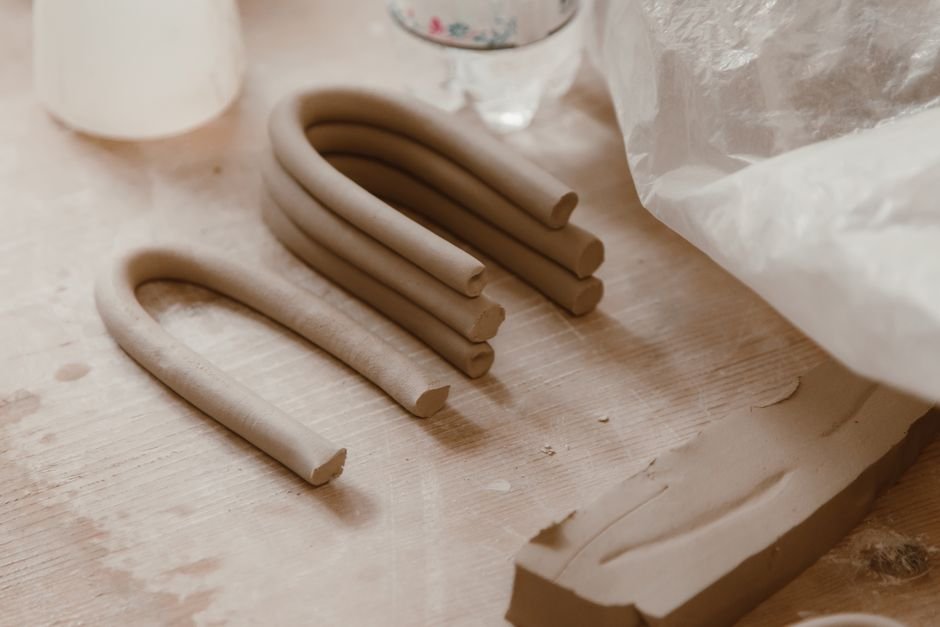
What Happens To These Materials During Firing
Firing is where clay stops being clay and becomes ceramic. As the kiln heats up, remaining water evaporates first, then chemically bound water is driven off at higher temperatures. Once that happens, the material can never return to soft, workable clay.
As temperatures climb further, organic matter burns away and the minerals begin to react. Fluxes like feldspar start to melt and form a glassy phase that flows between the particles, binding them together. This process is called vitrification, and the further it goes, the denser and less porous the finished ceramic becomes.
Different clay bodies reach maturity at different points. Earthenware stays fairly porous, stoneware becomes dense and tough, and porcelain vitrifies so fully that thin pieces can let light through. Firing too hot for a body can cause slumping or bloating, while firing too low leaves it weak.
That’s why studios keep careful track of what clay goes into which firing. Our firing service checks the clay body and temperature before any piece goes into the kiln.
It’s worth knowing that most studio pottery is fired twice. The first, lower bisque firing turns clay into porous ceramic that’s easy to glaze. The second, hotter glaze firing melts the glaze and, for stoneware and porcelain, completes the vitrification of the clay itself. Both steps matter, and skipping or rushing either one is a common cause of disappointing results for beginners working without guidance.
What Competing Guides Leave Out
Most quick answers stop at clay plus heat, but clay bodies vary a lot in composition, and that has real consequences when you’re choosing one. Two bags both labelled stoneware can feel and fire quite differently depending on their mix of plastic clay, silica, feldspar, and grog.
Earthenware bodies tend to have more iron and flux, so they fire lower and stay slightly porous, which suits decorative pieces and colourful glazes. Stoneware bodies are balanced for mid to high firing, giving strong, practical ware. Porcelain bodies lean heavily on kaolin, which makes them smooth, white, and famously less forgiving to throw.
Another gap is shrinkage. All clay bodies shrink as they dry and fire, commonly somewhere around ten to fifteen percent in total, but the exact figure depends on the recipe. If you need a lid to fit or a piece to reach a certain size, knowing your clay’s shrinkage rate is genuinely handy.
Finally, composition affects safety and suitability. Some bodies are designed for sculpture and aren’t meant to be fully watertight, so it’s worth checking with your supplier or studio before making functional ware from an unfamiliar clay.
Why Knowing What Ceramic Is Made Of Helps You As A Potter
You don’t need a chemistry degree to make lovely pots, but a basic sense of what ceramic is made of makes you a more confident maker. When a piece cracks, warps, or glazes strangely, you’ll have a better idea of whether the clay, the drying, or the firing might be responsible.
It also helps you communicate with your studio. Asking whether a clay is mid fire or high fire, smooth or groggy, or suitable for functional ware tells staff exactly what you’re trying to achieve, and they can steer you toward the right bag.
Many potters find this knowledge makes the craft more rewarding, too. There’s a real satisfaction in understanding that the mug in your hand began as weathered rock and was transformed by fire, just as people have done for thousands of years.
A simple habit that helps is keeping notes. Jot down which clay body you used, how thick you made the walls, and how the piece came out of the kiln. Over a few months, patterns appear, and you’ll start to recognise which materials suit your style. In our experience, potters who track their clays this way tend to improve faster and troubleshoot problems with far less frustration.
If you’d like to explore different clay bodies hands on, our ceramic studio stocks a range for members, and our workshops and classes cover materials as part of learning the craft.
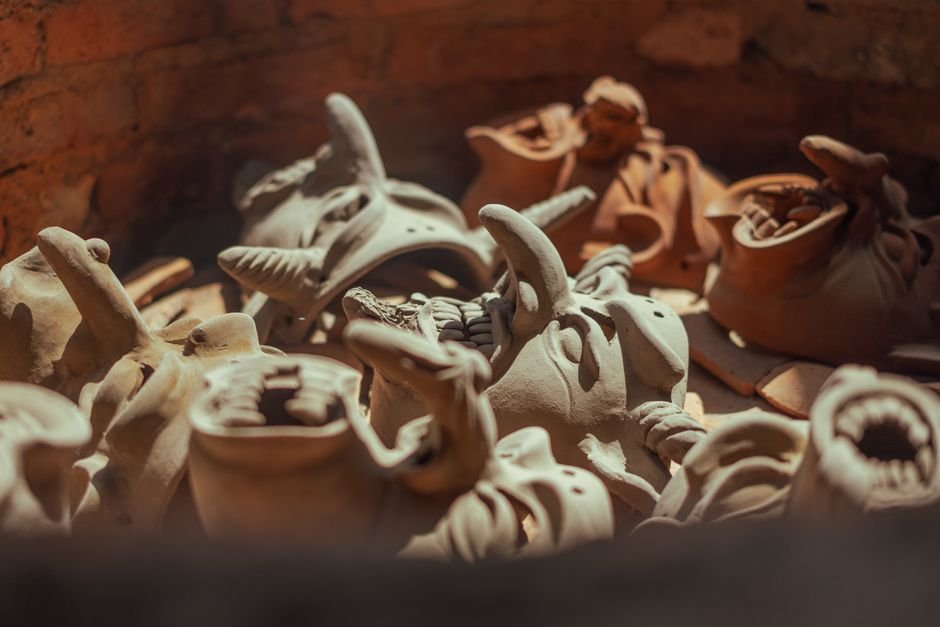
Want to know which clay bodies we use and why? Pop in and ask the team at Le Studio Art Space’s ceramic studio in Mordialloc, and we’ll happily show you the clays on our shelves and what each one is best for.
Frequently Asked Questions
Is ceramic just baked clay?
Essentially yes, though fired is more accurate than baked. Kiln temperatures are far higher than an oven, and that heat permanently changes clay’s structure into ceramic.
Can I make ceramic from clay I dig up in my garden?
Sometimes, but garden clay usually contains sand, organic matter, and unknown minerals. It often needs cleaning and testing before it will fire reliably, and results can be unpredictable.
Is porcelain made of different stuff than regular pottery?
It uses the same basic ingredients but in different proportions, with a lot more kaolin. That recipe, plus a high firing temperature, gives porcelain its whiteness and density.
What does grog actually do in clay?
Grog is pre-fired, crushed clay that adds texture and strength. It reduces shrinkage and helps thicker pieces dry and fire without cracking.
Does it matter which clay I use for mugs and bowls?
Yes, it does. For functional ware you’ll want a body that becomes dense and durable at the right temperature, and the team at Le Studio Art Space can help you choose one suited to your project.
This article is provided for general educational purposes by Le Studio Art Space. Clay body compositions and firing ranges vary by supplier, so always check product information for the specific clay you’re using.