The main parts of a pottery wheel are the wheel head where clay sits and centers, the splash pan that catches water and slip, the foot pedal or speed control that manages rotation speed, and the motor and frame that power and support the whole setup. Understanding each part helps you troubleshoot common beginner problems faster.
Sitting down at a pottery wheel for the first time, it’s easy to focus entirely on the spinning clay in front of you and never really think about the machine you’re actually sitting behind. At Le Studio Art Space, understanding the basic parts of a pottery wheel genuinely helps new students troubleshoot common early frustrations, from wobbling to inconsistent speed, far more effectively than technique alone.
Here’s a straightforward breakdown of what each part actually does, and why knowing this matters even as a complete beginner.
The Wheel Head
The wheel head is the flat, circular metal plate where clay is centred and shaped, rotating as the core working surface of the entire wheel throwing process.
Most wheel heads have small holes or a bat pin system, allowing a removable bat, a flat disc, to be attached on top, which lets you remove a finished piece without needing to lift wet clay directly off the metal surface. This is especially useful for taller or more fragile forms that would easily distort if handled directly off the bare metal.
Keeping the wheel head clean and free of dried clay buildup matters more than beginners often realise, since debris on its surface can throw off how evenly a bat or a piece of clay sits and centres.
A wobbly or poorly seated wheel head, though rare on well maintained equipment, can make centering considerably harder regardless of your technique, which is part of why studios regularly check and maintain this part. If a wheel ever feels genuinely off compared to usual, it’s always worth flagging to an instructor rather than assuming it’s your own hands.
The Splash Pan
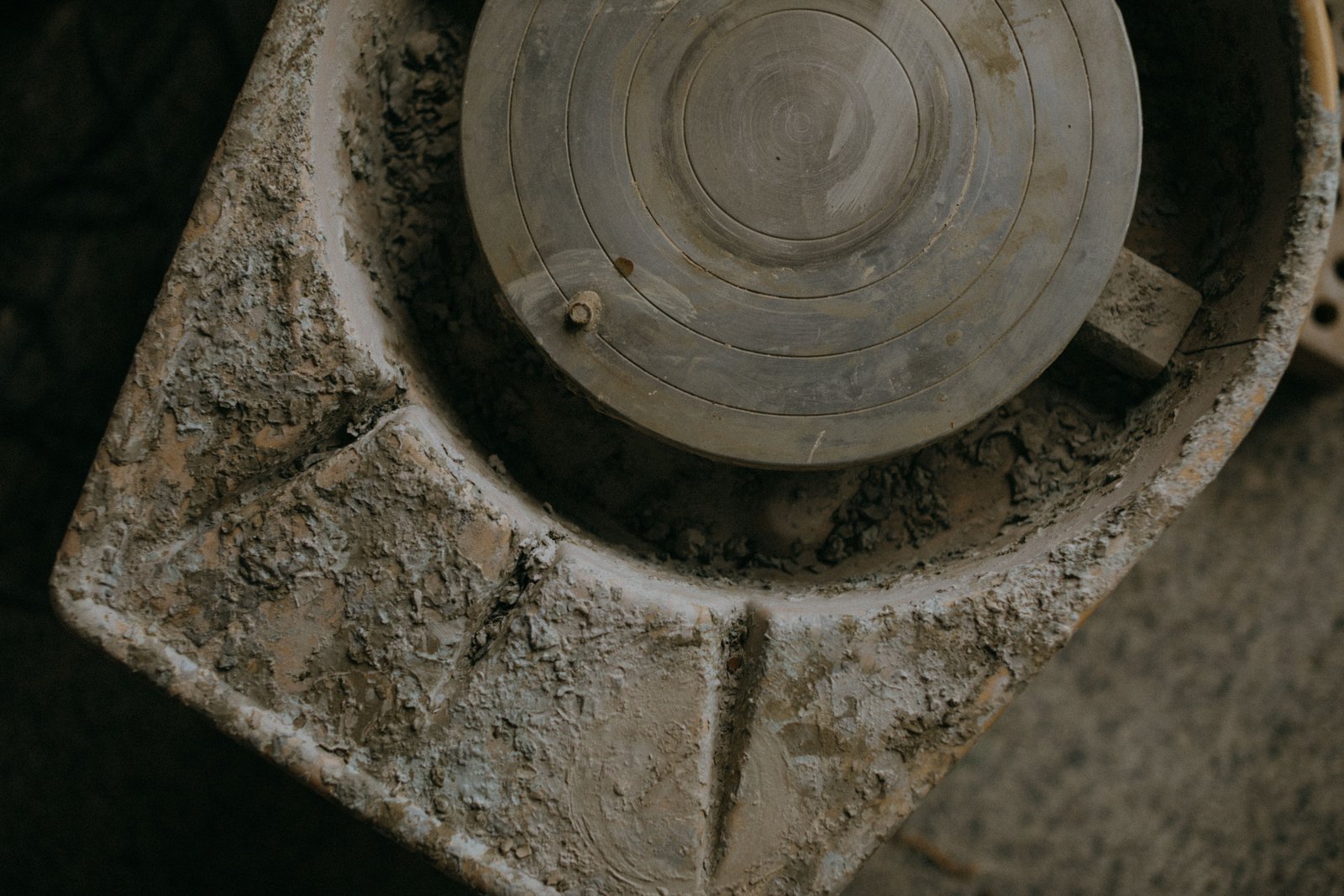
The splash pan is the surrounding basin or tray around the wheel head, specifically designed to catch water, slip, and clay debris that inevitably flings outward during throwing, especially at higher speeds.
Without a splash pan, wheel throwing would make an even bigger mess than it already does, since the centrifugal force of a spinning wheel genuinely sends water and slip outward in every direction during normal use, particularly at the higher speeds used for centering.
Splash pans need periodic cleaning too, since built-up clay and dried slip can accumulate over time, and a genuinely dirty splash pan can eventually interfere with smooth wheel operation if left unmaintained for too long.
Some wheel designs feature a deeper splash pan than others, which can affect how much reclaimed slip and clay scraps accumulate there over a session, worth knowing if you’re interested in reclaiming that material afterward. Scraping out accumulated slip regularly also keeps the pan lighter and easier to clean thoroughly between sessions.
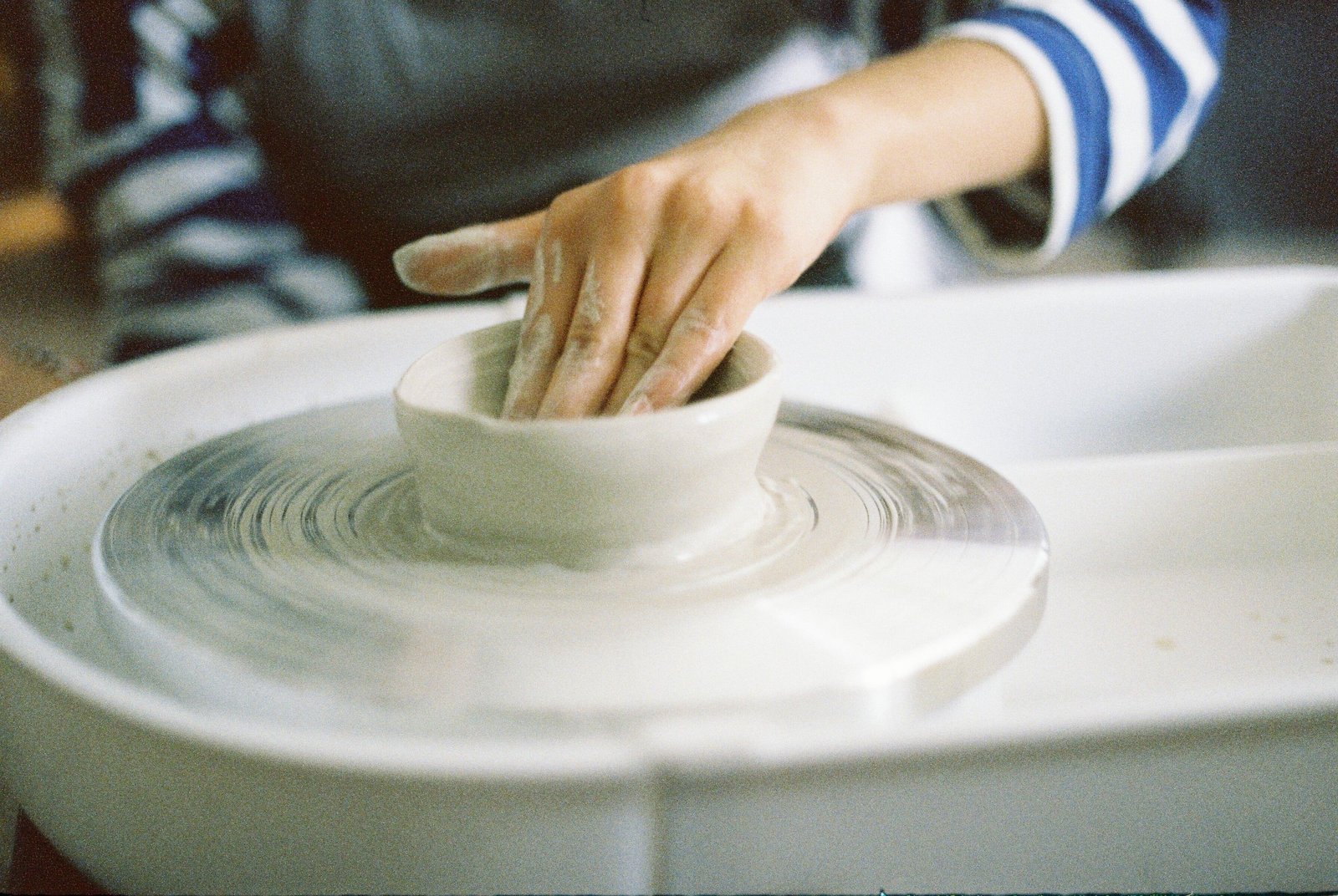
The Foot Pedal Or Speed Control
The foot pedal, found on most electric pottery wheels, controls rotation speed, letting you adjust how quickly the wheel head spins without needing to take your hands off the clay to make an adjustment.
This hands-free speed control is genuinely essential to wheel throwing technique, since different stages of the process, centering, opening, pulling walls, and trimming, typically call for different speeds to work effectively. Centering generally happens at a faster speed, while pulling walls upward usually calls for something noticeably slower and more controlled.
Some wheels use a hand-operated speed dial instead of a foot pedal, though foot pedals remain more common in most studio settings specifically because they free up both hands for the clay itself.
Learning to modulate speed smoothly with the pedal, rather than in sudden jumps, is a genuine skill in itself, and inconsistent speed control is a common early source of frustration for brand new wheel throwing students. It genuinely becomes second nature after enough repetition, much like using a car’s accelerator without consciously thinking about it.
The Motor And Frame
The motor powers the entire wheel, and its strength genuinely affects how well a wheel handles larger amounts of clay or bigger, more ambitious forms without straining or slowing down noticeably.
Studio wheels typically use more powerful motors than home hobbyist models, since they need to handle frequent, sustained use across many students throwing larger amounts of clay throughout a typical class day. This durability difference is part of why a studio wheel often costs considerably more than an entry-level home model.
The frame provides the physical stability the whole wheel depends on, and a sturdy, well-built frame minimises unwanted vibration or wobble that could otherwise interfere with centering and throwing consistency, especially at higher speeds.
A wheel’s overall build quality, motor strength and frame stability together, genuinely affects the throwing experience, which is part of why professional studios invest in solid, reliable equipment for their members. Cutting corners on wheel quality tends to show up as frustrating inconsistency for every student using it.
What Competing Guides Leave Out
A gap many general guides skip is how understanding these parts genuinely helps you troubleshoot wobbling or centering issues as a beginner, rather than assuming every problem is purely a matter of your own technique. That distinction alone can save a beginner a lot of unnecessary self-doubt during the early, frustrating stages of learning.
A wobble during throwing, for example, could stem from an improperly seated bat, debris on the wheel head, or genuinely just inconsistent hand pressure, and knowing the difference helps you fix the actual cause rather than guessing.
Inconsistent speed control is another common beginner frustration that’s sometimes a pedal technique issue and sometimes related to how the wheel itself responds, which is worth mentioning to an instructor if it feels persistently off. Describing exactly when the inconsistency happens, rather than just saying it feels wrong, helps an instructor diagnose it faster.
It’s also worth knowing that different wheel brands and models genuinely have slightly different feel and responsiveness, so a wheel that feels unfamiliar at a new studio isn’t necessarily a sign anything is wrong with your technique. Give yourself a session or two to adjust before assuming something has gone genuinely wrong.
Why Knowing These Parts Helps You Learn Faster
Understanding what each part does gives you a genuine mental framework for diagnosing problems as they come up, rather than feeling helplessly stuck when something doesn’t go as expected during a session.
It also helps you communicate more clearly with an instructor when something feels off, since being able to describe a specific issue, like inconsistent pedal response, is more useful than a vague complaint about the wheel feeling wrong overall.
Many students at Le Studio Art Space find that this basic mechanical understanding genuinely builds confidence at the wheel, making the whole machine feel less mysterious and more like a tool they actually understand and can rely on session after session.
Ultimately, this knowledge supports faster technical progress too, since troubleshooting genuine equipment issues separately from technique issues means you spend less time confused about what’s actually holding your progress back and more time actually practising.
Ready to get hands-on with a pottery wheel? Join a first class at Le Studio Art Space in Mordialloc and start learning the fundamentals.
Frequently Asked Questions
Do I really need to understand the wheel’s parts before I start throwing?
Not strictly before your first class, but it genuinely helps once you start noticing specific issues, giving you a better framework for troubleshooting than assuming every problem is purely technique related.
Why does my piece keep wobbling even though I centred it carefully?
It could be an improperly seated bat, debris on the wheel head, or inconsistent hand pressure. Mentioning this to an instructor helps narrow down the actual cause rather than guessing on your own.
Is a foot pedal hard to learn to use?
It takes some practice to modulate speed smoothly, and inconsistent pedal control is a common early frustration, but it becomes noticeably more intuitive with regular practice over time.
Do all pottery wheels feel the same to use?
No, different brands and models genuinely have different feel and responsiveness, so a wheel that feels unfamiliar at a new studio isn’t necessarily a sign of a technique problem on your part.
Why do studio wheels seem more powerful than home ones?
Studio wheels, like those at Le Studio Art Space, typically use stronger motors built for frequent, sustained use across many students throwing larger amounts of clay throughout a class day.
This article is provided for general educational purposes by Le Studio Art Space and reflects general pottery wheel mechanics. Specific wheel models may vary in design and features.