A wedge tool in pottery is any tool that helps you prepare clay by wedging, the kneading process that removes air bubbles and evens out moisture. The most common is a wire clay cutter, often mounted on a wedging table or board, used to slice clay, check for air pockets, and recombine it. Beginners don’t strictly need one, as a handheld wire and a sturdy canvas covered table work well.
In your first class, someone will hand you a lump of clay and tell you to wedge it. Then you might notice a taut wire stretched across a wedging table, or see a wedge tool listed in a pottery supply catalogue, and wonder whether it’s essential. It’s one of those simple bits of studio equipment that’s easy to overlook, but understanding it helps you prepare clay properly.
At Le Studio Art Space in Mordialloc, wedging is one of the first skills we teach, because good clay preparation makes everything that follows easier. This guide explains what wedging is, what a wedge tool is, how potters use one, whether you actually need one, and how to wedge well with or without it.
What Wedging Is And Why It Matters
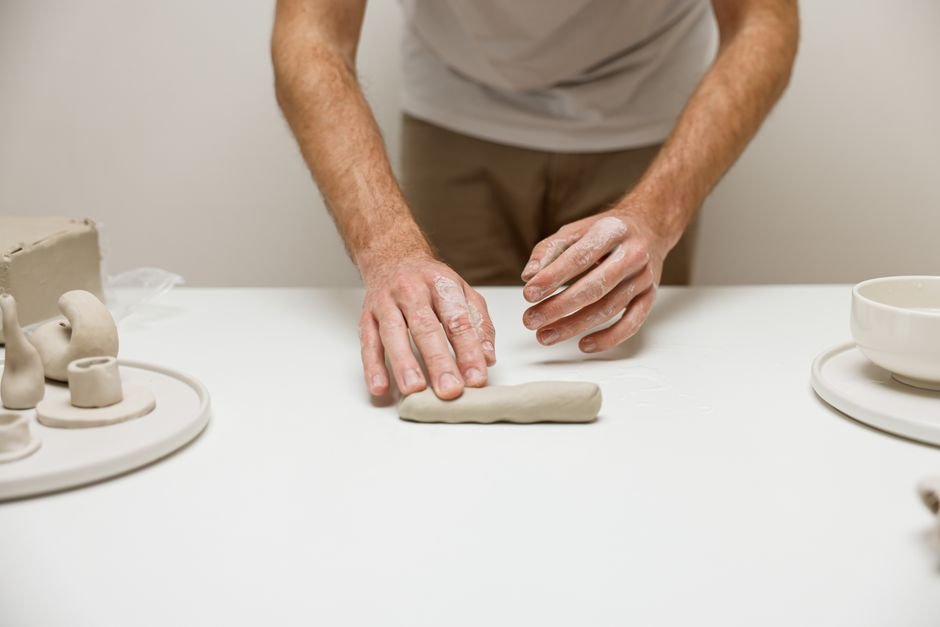
Wedging is how potters prepare clay before using it. It involves pushing, folding, and turning the clay on a firm surface, a bit like kneading bread dough, though the technique is different.
The first goal is removing air bubbles. Trapped air can cause problems on the wheel, making the clay wobble or forming lumps, and in the kiln, where air pockets may contribute to bloating or cracking.
The second goal is evening out moisture. Clay can be softer in some places and firmer in others, especially near the outside of a bag. Wedging blends it all into a consistent texture, which is essential for centring and throwing evenly.
Wedging also aligns clay particles and warms the clay slightly, making it more responsive. Many potters find well wedged clay simply feels better to work with.
Common wedging techniques include ram’s head wedging, which rocks clay forward in a shape that looks a little like a ram’s head, and spiral or cone wedging, which rotates clay into a spiral. Both work well once you’ve practised. Our guide to ceramic terms every beginner should know explains wedging alongside other studio words.
What A Wedge Tool Is
The term wedge tool isn’t completely standardised, and it can mean a few things. Most often, it refers to a wire clay cutter used during wedging. This might be a simple handheld wire with wooden or plastic toggles at each end.
In many studios, the wedge tool is a wire stretched tightly across a wedging table or board, fixed at one end and anchored at the other. You push a block of clay through the wire to slice it cleanly in half, making it quick to cut and check clay during wedging.
Some suppliers sell wedging boards or wedging stations, which combine a firm, absorbent surface with a mounted cutting wire. These are designed for home potters who don’t have a dedicated wedging table.
Wedging surfaces themselves matter. Studios often use canvas covered tables or plaster topped surfaces, because they absorb a little moisture and stop clay sticking. Plaster bats can help firm up overly soft clay during wedging. Our guide to how pottery plaster is used in the studio covers this.
Whatever the form, the purpose of a wedge tool is to make wedging and checking clay faster, cleaner, and more accurate.
How Potters Use A Wedge Tool
A common approach is to cut a block of clay in half with the wire, then look closely at the cut surfaces. Any air pockets or uneven patches show up as small holes or changes in texture.
If you spot air pockets, you keep wedging. Some potters then slam the two halves back together, with the cut surfaces facing different directions, and continue wedging. This cut and slam method, sometimes called wedging by cutting, is especially useful for combining clays or evening out very uneven clay.
The wire is also handy for blending. If you’re mixing a soft clay with a firmer one, or adding reclaimed clay to new clay, you can slice both into slabs, stack them alternately, and wedge them together. Cutting and checking along the way helps you see when the mix is even.
Cutting clay to size is another everyday use. Many potters weigh clay balls for throwing so pieces in a set start the same. A wire makes it easy to slice off portions cleanly.
Finally, the wire helps at the wheel too. A cut off wire is used to release a thrown piece from the wheel head, so the same simple tool shows up at many stages.
Do You Actually Need A Wedge Tool
Honestly, for most beginners, not as a special piece of equipment. What you need is a simple wire clay cutter, which is usually included in beginner tool kits, and a firm, slightly absorbent surface to wedge on.
A sturdy table covered in canvas works well. Some home potters use a piece of plaster, a concrete paver, or a canvas covered board. The main thing is a stable surface at a comfortable height, ideally a little lower than a normal table so you can use your body weight.
Mounted wire wedging tables and boards are lovely to have if you wedge a lot of clay, especially at home. They make cutting faster and keep the wire taut and steady. But they’re a convenience rather than a necessity.
If you’re building a tool kit, our guides to building a starter tool kit on a budget and whether a pottery starter kit is worth buying can help you prioritise.
In a shared studio, you’ll usually find wedging tables and wires ready to use, so you may not need to buy anything at all.
What Competing Guides Leave Out About The Wedge Tool
Most guides describe the wedge tool and move on, but they rarely explain how a wire cutter actually checks for air pockets. When you slice through well wedged clay, the cut face should look smooth and uniform. Small holes, pockets, or streaks mean there’s still air or uneven moisture inside.
The trick is to cut in a few different places, not just once. Air pockets can hide anywhere, so slicing a block into several sections gives you a better picture. If one section has holes, keep wedging and check again.
Another gap is what a studio typically provides. Most teaching and community studios provide wedging tables, mounted wires, and handheld wire cutters for members and students. Some also have pug mills, which mix and de air clay mechanically, reducing the amount of hand wedging needed. Our guide to how clay is actually made explains how pug mills work.
Competing guides also skip care. A loose, kinked, or rusty wire cuts poorly and can drag clay. Keeping wires taut, clean, and dry helps them last.
Finally, few guides mention body care. Wedging uses your arms, shoulders, and back, so a good table height and using your body weight rather than just your wrists makes a big difference.
Wedging Well With Or Without A Tool
Start with clay that’s not too wet or too dry. Very sticky clay is hard to wedge, and very firm clay is hard on your hands. Our guide to signs your clay is too wet or too dry can help.
Use your body weight. Stand close to the table, lean into the clay, and push with your palms rather than your fingertips. Keep movements rhythmic and steady.
Don’t overdo it. A few dozen good turns are usually enough for bagged clay. Over wedging can fold air back in or dry the clay out.
Check your clay with a wire cut. If it looks even, you’re ready to go. If not, a little more wedging should fix it. Then shape it into balls or blocks and keep them covered until you’re ready to use them.
Our workshops and classes teach wedging hands on, members of our ceramic studio have wedging tables and tools ready to use, and our firing service takes care of the kiln once your well prepared clay has become a finished piece.
Want to get wedging right from the start? Learn wedging and studio tool use in a hands on class at Le Studio Art Space in Mordialloc, with real wedging tables and friendly guidance.
Frequently Asked Questions
Do I really need to wedge bagged clay?
Usually, yes. Bagged clay can have uneven moisture and small air pockets. A short wedge makes it more consistent and easier to throw.
Is a wedge tool the same as a wire cutter?
Often, yes. Many people use the term for a wire clay cutter, either handheld or mounted on a wedging table.
Can I wedge on my kitchen table?
You can, but clay is messy and sticky. A canvas covered board or a dedicated surface is easier to clean and works better.
How do I know when clay is wedged enough?
Cut it with a wire. If the cut surfaces look smooth and even, with no holes or streaks, it’s ready.
Does Le Studio Art Space provide wedging tables and tools?
Yes. Le Studio Art Space provides studio equipment for classes and members, including wedging surfaces and basic tools, so beginners don’t need to buy much.
This article is provided for general educational purposes by Le Studio Art Space. Use tools carefully and follow studio guidance on safe technique.