A pottery starter kit can be worth buying if you simply want to play with clay at home at low cost. Most kits, though, include air dry clay or clay you can’t fire without a kiln, so they can’t produce durable, waterproof pottery. If you want real ceramic results or to learn the craft properly, a first studio class usually offers better value and a far more satisfying experience.
Scroll through any online marketplace and you’ll find pottery starter kits promising everything you need to begin. Some include a bag of clay and a few tools, others feature a tiny tabletop wheel, and many come with glowing photos of finished mugs and bowls. It’s easy to see the appeal, especially if you’re curious but not ready to commit.
At Le Studio Art Space in Mordialloc, we meet plenty of beginners who tried a kit first, some happily and some a little disappointed. Our aim here is to give you an honest verdict, covering what a typical pottery starter kit includes, what it does well, what it can’t do, and how it compares to a first studio class.
What A Typical Pottery Starter Kit Includes
Most pottery starter kits contain a quantity of clay, a small set of basic tools, and some instructions. The tools are usually a needle tool, a wooden modelling tool, a loop tool, a rib, a sponge, and a wire cutter, often in plastic or lightweight wood.
The clay is the key detail to check. Many kits use air dry clay, which hardens as it dries without firing. Others include genuine pottery clay, but without access to a kiln, that clay can’t become true ceramic. A few kits use polymer clay, which is cured in a home oven but is a plastic, not a ceramic.
Some kits include paints, usually acrylic, and sometimes a varnish. More expensive kits feature a mini pottery wheel, typically battery or mains powered, designed to sit on a table. These are fun but generally far smaller and less powerful than studio wheels.
Instructions range from a printed leaflet to links to online videos. Quality varies a lot between brands, so reading reviews and checking exactly what’s in the box is worthwhile before buying.
Look closely at the amount of clay too. Some kits contain only a small block, enough for two or three little pieces, while the photos suggest a whole collection. Check the weight in the listing, and remember that air dry clay starts to firm up once the packet is opened, so it needs to be wrapped tightly between sessions or it may dry out before you’ve had a chance to use it all.
What These Kits Do Well
The biggest strength of a pottery starter kit is low commitment. For a modest price, you can try handling clay at home, on your own schedule, without booking anything. That can be perfect for someone who’s simply curious or wants a relaxed creative activity.
Kits are also great for kids and families. Air dry clay is easy to clean up, doesn’t need special equipment, and lets children make small sculptures, ornaments, and trinket dishes they can paint afterwards.
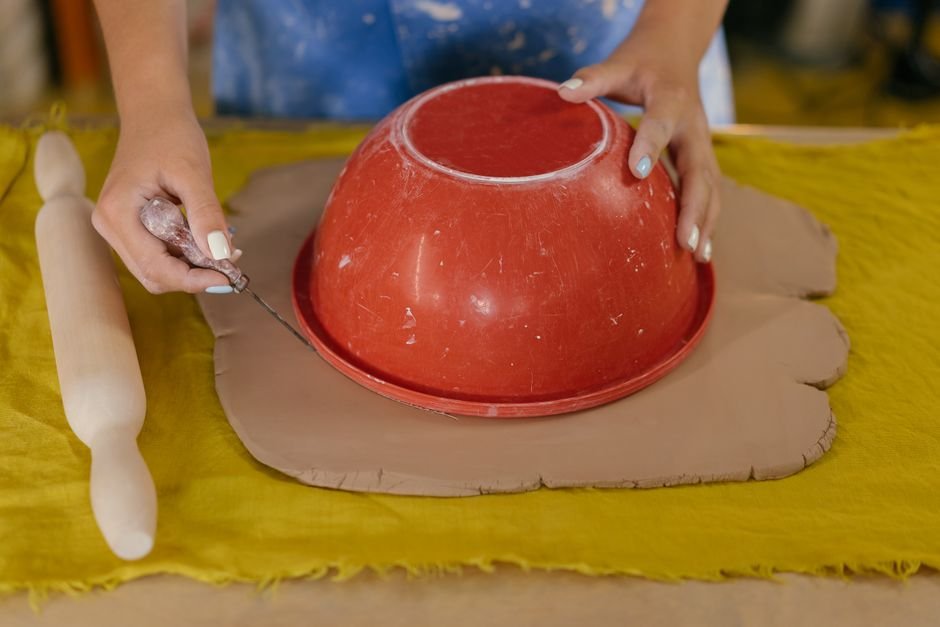
They can help you practise basic hand building skills too. Pinching, coiling, and slab building all work with air dry clay, so a kit can introduce you to the core hand building methods before you ever step into a studio.
Finally, the tools themselves can be useful. Even if the clay isn’t ideal, a basic set of tools often carries over into studio sessions later, although many studios provide tools anyway.
What They Usually Cannot Offer
The big limitation is firing. Real pottery becomes ceramic in a kiln at very high temperatures, often above 1000 degrees Celsius, which permanently changes the clay. Most home kits have no way to do this, so the finished pieces remain air dried clay or cured polymer.
That means pieces from most kits aren’t waterproof, food safe, or particularly durable. Air dry clay can soften if it gets wet and may crack or chip over time. Even when painted and varnished, it’s best treated as decorative.
Mini wheels have limits too. They’re often lightweight and low in power, which makes centring clay difficult, even for experienced potters. Many beginners find them frustrating and assume they’re bad at throwing, when the equipment is really the problem.
Kits also can’t offer guidance. Learning pottery from a leaflet is tough, because so much of the craft is about feel, pressure, and timing that’s easier to understand when someone shows you in person.
There’s also the question of mess and space. Real pottery, especially on a wheel, involves water, slip, and clay dust, and a kitchen table isn’t always the best place for it. Dry clay dust shouldn’t be swept up and left to build up around the home, so anyone using genuine clay at home needs to plan for regular wet cleaning. Studios are set up for exactly this, with washable surfaces, proper sinks, and clay traps.
Who A Pottery Starter Kit Genuinely Suits
A starter kit suits someone with casual curiosity who wants to play with clay at home without spending much. It’s also a lovely gift for creative kids, and a good fit for anyone who enjoys crafting decorative objects rather than functional pottery.
It can suit people who can’t easily get to a studio, too, whether because of location, schedules, or other commitments. In those cases, a kit with air dry clay offers a creative outlet, even with its limits.
It’s less suited to anyone who dreams of making real mugs, bowls, and plates, or who wants to learn wheel throwing properly. For those goals, a studio with proper wheels, kilns, and guidance will almost always give a better start.
It’s also worth being honest with yourself about motivation. If you know you’ll want real ceramic results quickly, a kit might just delay the experience you’re really after.
What Competing Guides Leave Out
Most reviews of pottery starter kits rate the tools and clay but skip over the firing problem. Without a kiln, a kit simply can’t produce the pottery shown in many product photos. That glossy glazed mug on the box was almost certainly fired in a kiln, not made with the kit’s air dry clay.
Some kits include real clay and suggest finding a local kiln to fire it. That can work, but only if the clay type is known and compatible with the studio’s firings. Many studios, including ours through our firing service, need to know what clay you’ve used before firing it, so unlabelled kit clay can be a problem.
Cost comparisons are also often missing. A mid-range kit with a mini wheel can cost about the same as, or more than, a beginner studio class. The class usually includes quality clay, full-size wheels, tools, instruction, and firing, which makes the per-piece value very different.
Lastly, reviews rarely mention the learning experience. Many people who struggle with a kit decide pottery isn’t for them, when a single guided class might have shown them otherwise.
If you do decide to buy a kit, a few checks help. Choose one that clearly states the type of clay included, look for sturdy metal and wooden tools rather than thin plastic, and skip mini wheels unless you’ve read reviews from people who actually used them for throwing. Treat it as a way to explore shapes and textures, and you’re far more likely to enjoy the experience.
Starter Kit Versus A First Studio Class
If you want an inexpensive, at-home activity and you’re happy with decorative results, a starter kit is a reasonable choice. Just go in knowing it’s a craft introduction rather than true pottery.
If you want to feel real clay on a proper wheel, make something functional, and learn with guidance, a first studio class is usually the better start. You’ll use professional equipment, get hands-on help, and your pieces can be kiln fired into genuine ceramics.
Many people find that one class tells them far more about whether pottery is right for them than any kit could. If it clicks, you can continue with our workshops and classes or explore membership in our ceramic studio. Our guide to what to expect in a beginners ceramics class can help you feel ready.
And if you already bought a kit, don’t worry. The hand building practice you’ve done at home will make your first class feel more familiar.
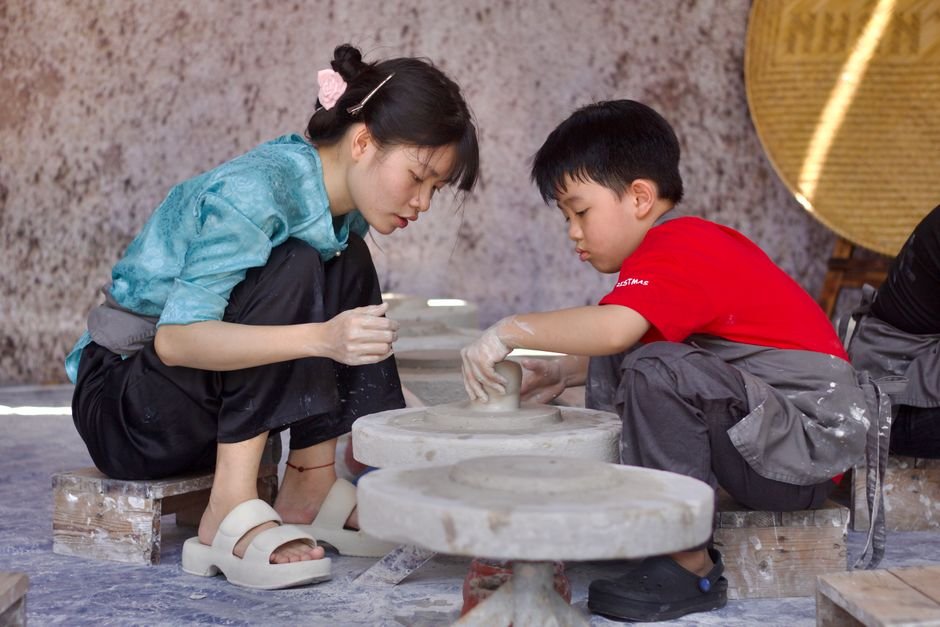
Want to try real pottery before buying anything? Book a class at Le Studio Art Space in Mordialloc and work with proper wheels, quality clay, and kiln firing, with friendly guidance every step of the way.
Frequently Asked Questions
Can I make real mugs with a pottery starter kit?
Usually not ones you can drink from. Most kits use air dry clay, which isn’t waterproof or food safe without kiln firing.
Are mini pottery wheels any good for beginners?
They can be fun, but many are low powered and make centring hard. Beginners often find a full-size studio wheel much easier to learn on.
Can I bring clay from my kit to a studio to fire?
Only if it’s real, kiln-firable clay and the studio knows exactly what type it is. Air dry and polymer clays can’t be kiln fired.
Is a starter kit a good gift for someone curious about pottery?
It can be a fun gift for casual crafting. A class voucher is often a better choice for someone who wants to learn real pottery.
Is a first class at Le Studio Art Space suitable if I’ve never touched clay?
Absolutely. Our beginner classes at Le Studio Art Space are designed for complete newcomers, with all materials and guidance included.
This article is provided for general educational purposes by Le Studio Art Space. Kit contents vary by brand, so always check product details and manufacturer instructions before buying.