Wheel throwing shapes centred clay on a spinning wheel and suits round, symmetrical pieces like mugs and bowls, but it usually has a steeper early learning curve. Hand building uses pinch, coil, and slab methods without a wheel, and suits sculptural, irregular, and flat forms, with quicker early results for many beginners. Neither is better, and many potters end up enjoying both.
You’ve decided to try pottery, you’ve found a studio, and now you’re faced with a choice on the booking page: wheel throwing or hand building? It’s one of the most common questions new students ask, and the wheel throwing vs hand building decision can feel bigger than it really is.
At Le Studio Art Space in Mordialloc, we run both kinds of classes, and we see beginners thrive in each. This guide gives you an honest side by side comparison of how each method works, what it feels like to learn, what each is best for, and how to choose where to start without worrying about picking the wrong one.
How Wheel Throwing Works
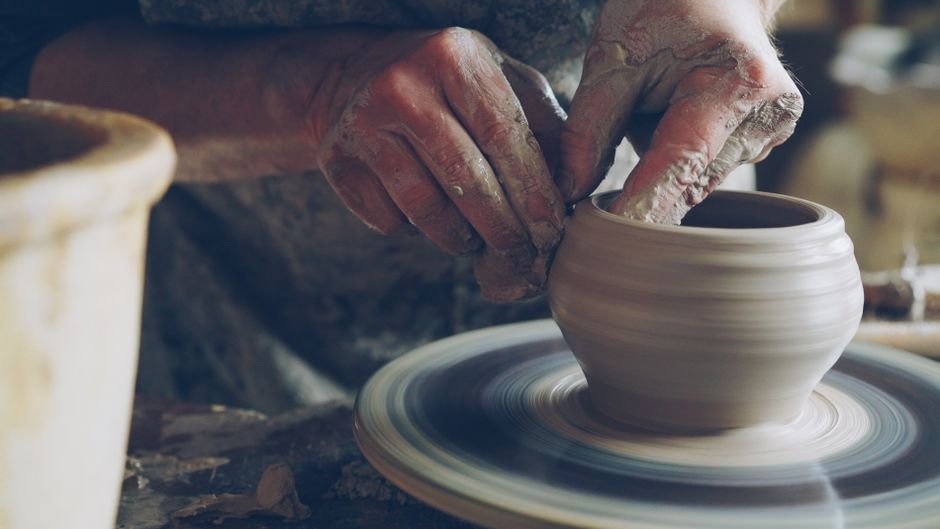
Wheel throwing uses a motorised pottery wheel with a flat, spinning wheel head. You place a ball of wedged clay in the centre, wet your hands, and use steady pressure to centre the clay, so it spins smoothly without wobbling.
Once centred, you open the clay by pressing down into the middle, then pull the walls upward by squeezing them gently between your fingers as the wheel turns. Shaping comes next, where you push the walls outward or inward to make a cylinder, bowl, or vase.
After a day or two, when the piece has firmed up to leather hard, it goes back on the wheel upside down for trimming. This is where the foot ring is carved and the base is refined. Our guide on centering, throwing, and trimming explains each stage.
Wheel throwing is rhythmic and absorbing. Many people describe it as almost meditative once they get the feel for it, because it demands steady focus and gentle, controlled movement.
It’s also physical. Centring in particular uses your arms, shoulders, and core, and bracing your elbows against your body helps a lot. Many beginners are surprised to feel it in their muscles the next day.
How Hand Building Works
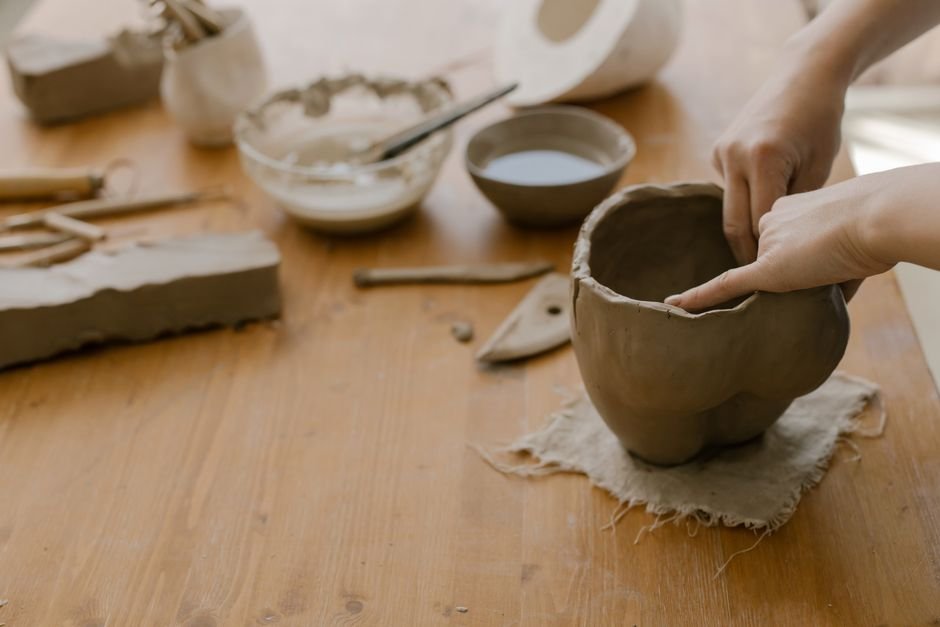
Hand building uses your hands and simple tools to shape clay without a wheel. There are three main methods, and most hand built pieces use one or more of them.
Pinching is the simplest. You press your thumb into a ball of clay and pinch the walls outward while turning it, creating small bowls, cups, and the foundations of sculptures.
Coil building involves rolling clay into long snakes and stacking them, then smoothing them together to build walls. It’s one of the oldest pottery techniques and works beautifully for larger and more organic forms.
Slab building uses flat sheets of clay, rolled to an even thickness, which are cut and joined like fabric or cardboard. It’s ideal for boxes, plates, tiles, and angular forms. Our guide to the core hand building methods goes into each in more detail.
Hand building is slower paced in a pleasant way. You can stop, think, adjust, and come back, and there’s plenty of room for experimenting with texture, carving, and sculptural ideas.
Learning Curve And Frustration Levels
Here’s the honest truth: wheel throwing usually has a steeper early learning curve. Centring clay takes practice, and most beginners collapse plenty of pots before things click. If you’re wondering why, our article on why your pot keeps collapsing on the wheel covers the common causes.
That early frustration is normal, and the breakthrough is usually very satisfying. Many beginners find that after several sessions of regular practice, centring starts to feel more natural and pieces begin to stay upright. Our guide on how long it takes to learn wheel throwing gives a realistic picture.
Hand building usually offers quicker early wins. Most people can make a recognisable pinch pot, dish, or small sculpture in their very first session. That can be really encouraging if you’re nervous about trying something new.
Hand building has its own challenges, though. Joins, even wall thickness, and drying without cracks all take practice, and more ambitious pieces can be just as demanding as anything on the wheel.
Personality plays a part too. Some people love the challenge and focus of the wheel, while others prefer the freedom and slower pace of building by hand. Neither reaction is right or wrong, and many people change their minds once they’ve spent a little time with each.
What Each Method Is Best For
Wheel throwing is best for round, symmetrical forms. Mugs, cups, bowls, vases, and jars are natural wheel pieces, and once you’ve built the skill, the wheel lets you make them relatively quickly and consistently.
It’s also the go to method for functional tableware made in sets, since repeating similar shapes is easier on the wheel than by hand. Thrown pieces tend to have thin, even walls and a satisfying lightness that many people associate with good studio pottery.
Hand building is best for sculptural, irregular, and flat forms. Figures, animals, tiles, plates with organic edges, boxes, and abstract sculpture are all well suited to pinch, coil, and slab techniques.
It’s also great for surface decoration and texture, since you can press patterns into flat slabs before assembling them. And because you don’t need a wheel, hand building is easier to continue at home with minimal equipment.
Many pieces combine both. A potter might throw a vase on the wheel and then add hand built handles or sculptural details, or build a slab plate and throw a foot ring to attach underneath.
What Competing Guides Leave Out On Wheel Throwing Vs Hand Building
Most comparisons of wheel throwing vs hand building treat them as rival choices. In reality, many potters try both, often within their first year, and plenty keep using both for different kinds of work.
Skills transfer more than you might expect. Hand building teaches you how clay behaves, how it dries, and how to join and smooth it, which helps on the wheel. Wheel throwing teaches you about wall thickness, form, and symmetry, which improves hand built pieces too.
Class formats also differ. Wheel classes often have a set number of wheels, so group sizes may be smaller and each student gets their own station. Hand building classes can be more flexible, social, and project based, with everyone working around shared tables.
Finally, your goals matter. If you dream of making your own mugs, the wheel might keep you motivated. If you’re drawn to sculpture or simply want to relax and create, hand building may suit you better. Our guide on what happens in a pottery wheel class shows what to expect on the wheel side.
Access is another practical point most guides skip. Wheels are expensive and messy to set up at home, so many wheel throwers rely on a studio membership to keep practising. Hand building needs little more than a table, a few tools, and access to a kiln, which makes it easier to continue between classes. If regular practice matters to you, it’s worth thinking about where and how often you’ll be able to work.
Choosing Where To Start With Wheel Throwing Vs Hand Building
There’s no wrong first choice. If you’re excited by the wheel, start there and be patient with yourself through the early wobbles. If you’d like a gentler introduction, start with hand building and move on to the wheel later.
A taster or one off workshop is a great way to test each method before committing to a longer course. Many people discover a strong preference within a single session, and some are surprised to find they love the method they expected to dislike.
Think about what you’d love to make. Mugs and bowls point towards the wheel, while sculptures, figures, and decorative pieces point towards hand building. Our guide to easy clay models for absolute beginners has hand building ideas to get you thinking.
Whichever you choose, the most important thing is enjoying it. Our workshops and classes cover both methods, members of our ceramic studio can explore either, and our firing service takes care of the kiln.
Can’t decide between the wheel and building by hand? Try both wheel throwing and hand building at Le Studio Art Space in Mordialloc, and discover which way of working with clay feels right for you.
Frequently Asked Questions
Is wheel throwing harder than hand building?
For most beginners, the wheel has a steeper early learning curve, especially centring. Hand building usually gives quicker first results, though advanced pieces in either method take real skill.
Should I learn hand building before wheel throwing?
You don’t have to, but some people find hand building a gentle introduction to how clay behaves. Others jump straight onto the wheel and love it.
Can I make mugs without a pottery wheel?
Yes. Mugs can be pinched, coiled, or made from slabs, and hand built mugs often have a lovely organic character. They just look a little different from thrown ones.
Which is better for anxiety or relaxation?
Many people find both calming in different ways. The wheel demands focused attention, while hand building offers a slower, more flexible rhythm.
Can I try both methods at Le Studio Art Space?
Yes. Le Studio Art Space runs both wheel throwing and hand building sessions, so you can try each and see which you enjoy most.
This article is provided for general educational purposes by Le Studio Art Space. Learning pace and results vary from person to person.