Hiring shared pottery studio space costs from about $33 a day or $180 a month at Le Studio Art Space, and memberships at other studios typically run $175 to $450 a month. Using shared space four days a month plus $22 of firing comes to about $154 a month. Buying a $5,990 kiln and $3,000 wheel instead takes about five and a half years to pay off at that level of use.
Studio Hire Cost Planner: Hiring Pottery Space vs Owning a Setup
This studio hire cost planner puts hiring and owning side by side. Choose a type of space, set how often you’d use it and how much you fire, and it shows the monthly and yearly cost, what owning your own kiln and wheel would cost over the same period, and how long it would take for owning to pay off.
Hiring studio space
$154.00 a month
$1,848 a year, including $22.00 a month of firing.
- Owning, per month
- $167.67over 5 years
- Owning, up front
- $8,990
- Owning, running
- $17.84 a monthelectricity and rent
- Break-even
- about 5.5 years
Cost per year
Owning pays off after about 5.5 years. Hiring usually includes things owning doesn’t: other potters, help, glazes or shelving and no maintenance. Check current prices with the studio.
This tool at a glance
- What it does
- Works out the monthly and yearly cost of hiring pottery studio space and compares it with buying and running your own kiln and wheel.
- Inputs
- Type of space, daily or monthly price, days used per month, kilograms fired per month and the firing price, plus the kiln, wheel and setup costs, kiln electricity, any rent for your own space and the years to spread the equipment over.
- Method
- Hire per month = price x days (or the monthly price) + kg fired x price per kg. Owning per month = (kiln + wheel + setup) / (years x 12) + electricity + rent. Break-even months = up-front cost / (hire per month – owning running cost per month).
- Outputs
- Monthly and yearly cost of hiring and of owning, up-front and running costs, and how long owning takes to pay off.
Studio hire and membership prices to plan with
Published prices checked on 26 October 2026, including GST. Le Studio Art Space figures are the “from” prices on its Space for Lease page; what each option includes is described there.
| Option | Price | Source | Try it |
|---|---|---|---|
| Shared space at Le Studio Art Space | from $33 a day | Le Studio Art Space, Space for Lease page | |
| Shared space at Le Studio Art Space | from $180 a month | Le Studio Art Space, Space for Lease page | |
| Individual studio at Le Studio Art Space | from $390 a month | Le Studio Art Space, Space for Lease page | |
| Pottery studio memberships | $175 to $450 a month, typical $280 | Published prices of 7 membership tiers at Melbourne studios | |
| Firing charged by weight | $8 to $16 a kg, typical $11 | Published prices of 7 firing rates at Melbourne studios | |
| Drop-in studio time | $16 an hour | One Melbourne studio (single source) |
How the studio hire cost planner works
The studio hire cost planner adds up what you’d pay each month to hire space: the daily price times the days you use it, or the monthly price, plus your firing by weight. On the owning side, it spreads the price of a kiln, a wheel and your setup costs over the years you expect to use them, then adds kiln electricity and any rent for your own space.
With the defaults, shared space at $33 a day for four days a month is $132, plus 2 kg of firing at $11 a kilogram, so hiring costs $154 a month or $1,848 a year. Owning a $5,990 kiln and a $2,999.95 wheel, spread over five years with $17.84 a month of electricity, works out to about $167.67 a month or $2,012 a year.
The break-even point is the up-front cost of owning divided by the monthly saving once you own. Here that’s $8,989.95 divided by $154 minus $17.84, which is about 66 months, or five and a half years. The more you’d use a hired space, the sooner owning pays off.
How much does it cost to hire pottery studio space?
Pottery studio space usually costs from about $33 a day or $180 a month for shared space, and from about $390 a month for an individual studio, based on Le Studio Art Space’s published prices. Memberships at other Melbourne studios we checked run about $175 to $450 a month, with $280 typical.
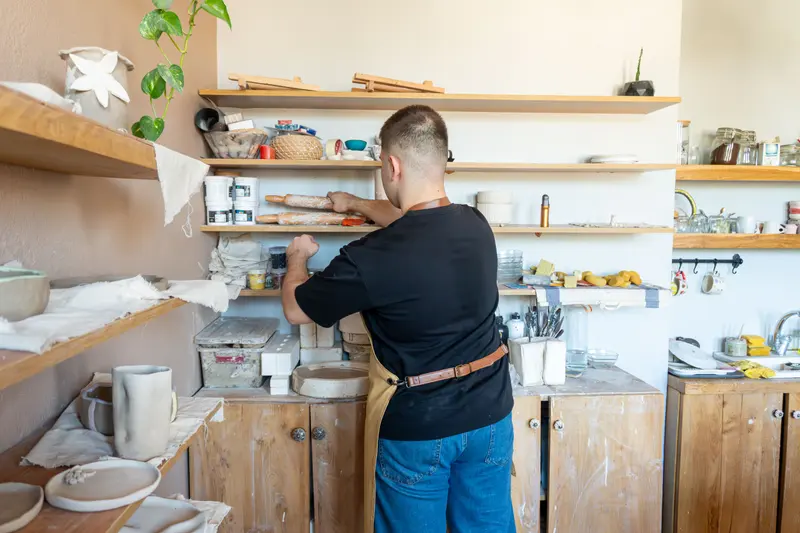
Those prices cover different things. A shared space gives you a place to work alongside other artists, an individual studio gives you a lockable room of your own, and a membership typically gives you access to a fully equipped pottery studio with wheels, kilns and shelving. The space for lease at Le Studio Art Space page explains what each of its options includes.
Firing is often the hidden variable. Some memberships include a firing allowance, while others charge by the kilogram. Published firing rates in our sample ran from $8 to $16 a kilogram, so the planner lets you set your own rate, or zero if firing is included.
Shared space, individual studio or membership?
A membership suits potters who need a wheel and a kiln but not a room of their own, shared space suits artists who bring their own work and tools and want company, and an individual studio suits people who work most days, store lots of work or need privacy. Cost is only part of the choice.
Think about how often you’ll really go. A daily rate is good value for a day or two a month, but at $33 a day, six days a month already costs more than the $180 monthly shared space. The planner shows that switch-over clearly: change the days and watch the monthly figure.
Our guide to the differences between an individual studio, shared studio and studio membership goes into the practical side, from storage to opening hours, and the article on how to choose a pottery studio membership lists the questions worth asking.
When does owning your own kiln and wheel pay off?
Owning pays off sooner the more you’d otherwise spend on hire. At the defaults, light use of shared space, it takes about five and a half years. With an individual studio at $390 a month plus firing, the same kiln and wheel would pay off in about 23 months, and against a $280 membership with firing included in about 34 months.
Those numbers assume your own space is free, such as a garage or spare room. If you’d need to rent a space for your equipment, add the rent and the sums change quickly: a $300 a month workshop rent can push the break-even point out by years, or mean owning never catches up at all.
Owning also brings work. You’ll load and unload the kiln, replace elements and thermocouples, clean, store clay and glazes, and manage dust and ventilation. For many potters, the time saved and the company in a studio are worth more than the money.
Costs people forget on both sides
On the hiring side, people forget travel time, parking, clay and glaze if they’re not included, and the cost of firing pieces that don’t make it. On the owning side, they forget the electrician, freight, kiln shelves and posts, cones, replacement elements, a decent ventilation setup, and the space itself.

The planner has a box for setup costs and one for rent, so put your real quotes in. If you’re not sure what electricity will cost, the kiln electricity cost calculator works it out from your kiln’s rating, and the pottery equipment cost calculator has current Australian prices for kilns and wheels.
Resale value is the other forgotten figure. A well-kept wheel or kiln can be sold if you stop, which softens the cost of owning, while hire money is gone once spent. We haven’t included resale, because second-hand prices vary too much to estimate fairly.
Common mistakes when comparing hire and owning
The biggest mistake is comparing a month of hire with the full price of a kiln, rather than spreading the kiln over realistic years. The second is assuming you’ll use your own equipment far more than you used a hired space. A home kiln that fires once a month costs much more per firing than one shared by a busy studio.
It’s also easy to forget that hire prices and equipment prices both rise over time. A five-year comparison made with today’s prices is a guide, not a forecast, so leave yourself some margin either way.
The third is treating the price as the whole story. A good studio gives you teachers and fellow potters to learn from, feedback, and a reason to turn up. Those don’t fit in a calculator, but they’re often why people stay.
Finally, revisit the sums as your practice changes. Someone throwing one day a month has very different numbers from someone preparing for markets every weekend. Save your planner link, and run it again when you start selling, take on commissions or find yourself in the studio more often. The point where owning makes sense tends to arrive gradually, and the planner shows you when you’ve reached it rather than leaving you to guess.
Frequently asked questions
Are the Le Studio Art Space prices current?
They’re the “from” prices published on the Le Studio Art Space Space for Lease page when we checked on 26 October 2026: shared space from $33 a day or $180 a month and individual studios from $390 a month. Check that page or ask us for current prices and what’s included.
Is owning really cheaper in the long run?
Only if you’d use it enough and already have a space for it. At light use, owning a kiln and wheel takes years to pay off, and if you’d need to rent a workshop it may never catch up. The break-even figure in the planner shows where your own numbers land.
Why does the planner ignore clay and glaze?
Because you’d buy them either way, unless a membership includes them. If yours does, lower the hire price in your head by what you’d otherwise spend, or add your clay and glaze costs to the owning side’s rent box.
Can I enter another studio’s prices?
Yes. Choose “Another studio or price”, set whether it’s charged by the day or the month and enter the price. The planner works the same way for any studio.
Does the planner include resale value?
No. Second-hand kiln and wheel prices vary too much to estimate fairly, so the planner treats equipment as spent over the years you choose. If you expect to sell later, use a longer spread of years.
Sources and method
Le Studio Art Space prices are the published “from” prices on its Space for Lease page. Membership prices are the published monthly prices of Melbourne studios including Creative Hands, Mayfield, Lygon St, Kilnfolk, Bisque Studios and twelve80. Firing prices per kilogram are from Mayfield, The Kiln Room, Bisque Studios, Kilnfolk and Beldari, and the $16 an hour drop-in rate from Mayfield (one source). Kiln and wheel prices are from our pottery equipment cost calculator, and the $17.84 of monthly electricity is four 8 hour firings in a Woodrow DK30 from our kiln electricity cost calculator. All checked on 26 October 2026, including GST.
Hire prices are placeholders you can change. The break-even point ignores resale value, interest and price changes, and costs are rounded to the cent or dollar as shown.
Figures last checked .
Use this tool on your site
You’re welcome to embed the studio hire cost planner on your own site, studio page or class notes. Copy the code below. Please keep the credit link, it’s how other potters find the full version.
Cite this tool
Le Studio Art Space (2026). Studio Hire Cost Planner. The Potter’s Bench. https://lestudioartspace.com/potters-bench/studio-hire-cost-planner/ (accessed 27 October 2026).
This studio hire cost planner from Le Studio Art Space is general educational content. Prices are placeholders and published prices on the date shown; they change, and what each option includes differs, so check current prices and inclusions with the studio. Kilns must be installed by a licensed electrician. Always follow the clay and glaze manufacturer’s data, and for glaze and food safety decisions follow the manufacturer’s guidance and local regulations.