Speedball underglazes are coloured slips for painting on greenware or bisque, formulated to fire from cone 05 to cone 6 and also fired successfully to cone 10, according to Speedball. This chart lists 48 Speedball underglaze colour names from published stockist lists, with item numbers for 25 of them. Underglaze fires matte unless you cover it with a clear glaze.
Speedball Underglaze Chart: 48 Colours, Cones and Tips
This Speedball underglaze chart brings the range into one list you can search by colour or item number, filter by colour group and print for the studio wall. Pick any colour to see its firing range and finish, then plan your decoration knowing what to expect from the kiln.
48 colours in this chart.
Pick one in the chart below to see its details here.
This tool at a glance
- What it does
- Lists Speedball underglaze colours in one searchable, printable chart with Speedball’s firing guidance.
- Inputs
- Search words (a colour name or item number) and a colour group.
- Method
- No calculation. Colour names come from M&N Clay’s Speedball underglaze list and item numbers from Stone Leaf Pottery’s listings; firing guidance is from Speedball. Swatches are approximate colours suggested by each name.
- Outputs
- Matching colours with an approximate swatch, item number where published, firing range and finish.
Speedball underglaze colour chart
Speedball underglaze colours as listed by US pottery suppliers M&N Clay and Stone Leaf Pottery, with item numbers where Stone Leaf publishes them. Swatches are approximate colours suggested by each name; fired colour depends on clay, cone and whether a clear glaze goes over the top.
| Swatch | Colour | Details | Show |
|---|---|---|---|
| Whites and creams | White (1050) | Cone 05 to 6, also fired to 10. Matte unless covered with a clear glaze | |
| Oranges | Cream (1051) | Cone 05 to 6, also fired to 10. Matte unless covered with a clear glaze | |
| Yellows | Yellow (1052) | Cone 05 to 6, also fired to 10. Matte unless covered with a clear glaze | |
| Oranges | Yellow/Orange | Cone 05 to 6, also fired to 10. Matte unless covered with a clear glaze | |
| Oranges | Melon (1054) | Cone 05 to 6, also fired to 10. Matte unless covered with a clear glaze | |
| Pinks | Pink (1055) | Cone 05 to 6, also fired to 10. Matte unless covered with a clear glaze | |
| Blues | Royal Blue (1056) | Cone 05 to 6, also fired to 10. Matte unless covered with a clear glaze | |
| Blues | Medium Blue (1057) | Cone 05 to 6, also fired to 10. Matte unless covered with a clear glaze | |
| Blues | Sky Blue (1058) | Cone 05 to 6, also fired to 10. Matte unless covered with a clear glaze | |
| Blues | Turquoise (1059) | Cone 05 to 6, also fired to 10. Matte unless covered with a clear glaze | |
| Blues | Aqua (1060) | Cone 05 to 6, also fired to 10. Matte unless covered with a clear glaze | |
| Yellows | Chartreuse (1061) | Cone 05 to 6, also fired to 10. Matte unless covered with a clear glaze | |
| Greens | Medium Green (1062) | Cone 05 to 6, also fired to 10. Matte unless covered with a clear glaze | |
| Greens | Pine (1063) | Cone 05 to 6, also fired to 10. Matte unless covered with a clear glaze | |
| Oranges | Tan | Cone 05 to 6, also fired to 10. Matte unless covered with a clear glaze | |
| Browns | Brown (1065) | Cone 05 to 6, also fired to 10. Matte unless covered with a clear glaze | |
| Blacks | Black (1066) | Cone 05 to 6, also fired to 10. Matte unless covered with a clear glaze | |
| Greys | Gray | Cone 05 to 6, also fired to 10. Matte unless covered with a clear glaze | |
| Blues | Sea Blue (1068) | Cone 05 to 6, also fired to 10. Matte unless covered with a clear glaze | |
| Oranges | Orange (1069) | Cone 05 to 6, also fired to 10. Matte unless covered with a clear glaze | |
| Reds | Red (1070) | Cone 05 to 6, also fired to 10. Matte unless covered with a clear glaze | |
| Reds | Burgundy | Cone 05 to 6, also fired to 10. Matte unless covered with a clear glaze | |
| Purples | Purple (1072) | Cone 05 to 6, also fired to 10. Matte unless covered with a clear glaze | |
| Purples | Violet | Cone 05 to 6, also fired to 10. Matte unless covered with a clear glaze | |
| Pinks | Soft Pink | Cone 05 to 6, also fired to 10. Matte unless covered with a clear glaze | |
| Reds | Carmine (1075) | Cone 05 to 6, also fired to 10. Matte unless covered with a clear glaze | |
| Reds | Flame Red | Cone 05 to 6, also fired to 10. Matte unless covered with a clear glaze | |
| Oranges | Mandarin Orange | Cone 05 to 6, also fired to 10. Matte unless covered with a clear glaze | |
| Oranges | Peach | Cone 05 to 6, also fired to 10. Matte unless covered with a clear glaze | |
| Yellows | Saffron Yellow (1087) | Cone 05 to 6, also fired to 10. Matte unless covered with a clear glaze | |
| Greens | Leaf Green | Cone 05 to 6, also fired to 10. Matte unless covered with a clear glaze | |
| Greens | Avocado | Cone 05 to 6, also fired to 10. Matte unless covered with a clear glaze | |
| Blues | Teal | Cone 05 to 6, also fired to 10. Matte unless covered with a clear glaze | |
| Blues | Blue Frost | Cone 05 to 6, also fired to 10. Matte unless covered with a clear glaze | |
| Purples | Amethyst (1092) | Cone 05 to 6, also fired to 10. Matte unless covered with a clear glaze | |
| Purples | Royal Purple | Cone 05 to 6, also fired to 10. Matte unless covered with a clear glaze | |
| Pinks | Bubble Gum (1096) | Cone 05 to 6, also fired to 10. Matte unless covered with a clear glaze | |
| Browns | Burnt Orange | Cone 05 to 6, also fired to 10. Matte unless covered with a clear glaze | |
| Browns | Caramel (1098) | Cone 05 to 6, also fired to 10. Matte unless covered with a clear glaze | |
| Greys | Charcoal | Cone 05 to 6, also fired to 10. Matte unless covered with a clear glaze | |
| Browns | Chocolate | Cone 05 to 6, also fired to 10. Matte unless covered with a clear glaze | |
| Greys | Cool Gray | Cone 05 to 6, also fired to 10. Matte unless covered with a clear glaze | |
| Greens | Emerald | Cone 05 to 6, also fired to 10. Matte unless covered with a clear glaze | |
| Greens | Honeydew | Cone 05 to 6, also fired to 10. Matte unless covered with a clear glaze | |
| Purples | Lilac (1105) | Cone 05 to 6, also fired to 10. Matte unless covered with a clear glaze | |
| Yellows | Spring Yellow | Cone 05 to 6, also fired to 10. Matte unless covered with a clear glaze | |
| Blues | Robins Egg | Cone 05 to 6, also fired to 10. Matte unless covered with a clear glaze | |
| Oranges | Sunflower | Cone 05 to 6, also fired to 10. Matte unless covered with a clear glaze |
How the Speedball underglaze chart works
The chart lists the 48 Speedball underglaze colour names that US pottery supplier M&N Clay publishes for the range, with item numbers for the 25 colours Stone Leaf Pottery lists by number, such as 1059 Turquoise and 1105 Lilac. Search matches names, numbers and colour groups, so “blue” finds Royal Blue, Sky Blue, Blue Frost and the rest.
Each colour has an approximate swatch suggested by its name. Underglaze names are usually literal, but the fired colour still depends on your clay, how thickly you paint, the cone you fire to and whether a clear glaze goes over the top. Treat the swatch as a label, and look at Speedball’s own fired chips and your test tiles for the real colour.
Pick a colour and the panel above shows its firing range and finish. The Print button gives you a clean list, handy for planning a class project or labelling bottles.
What firing range are Speedball underglazes?
Speedball underglazes are formulated to fire from cone 05 to cone 6, about 1021 to 1243 °C by Speedball’s figures, and Speedball says they’ve also been fired successfully to cone 10. That wide range makes them easy to use alongside both earthenware and mid-fire stoneware.
Colour can shift across that range. Some underglazes stay bright at low fire but soften or change at cone 6 and above, especially reds, pinks and some yellows. Speedball publishes a poster of fired chips at different cones, with and without clear glaze, which is the best way to see how each colour moves before you commit.
For bisque, Speedball’s FAQ suggests firing to cone 05 or 04 before applying its glazes and underglazes. Our firing service bisques at cone 06, which leaves ware slightly more porous. If your underglaze or clear behaves differently on our bisque, a test tile will show it.
How do you apply Speedball underglaze?
Paint underglaze onto greenware or bisque in two or three thin coats for solid colour, letting each coat dry before the next. One coat often looks streaky after firing, especially with lighter colours over darker clay.
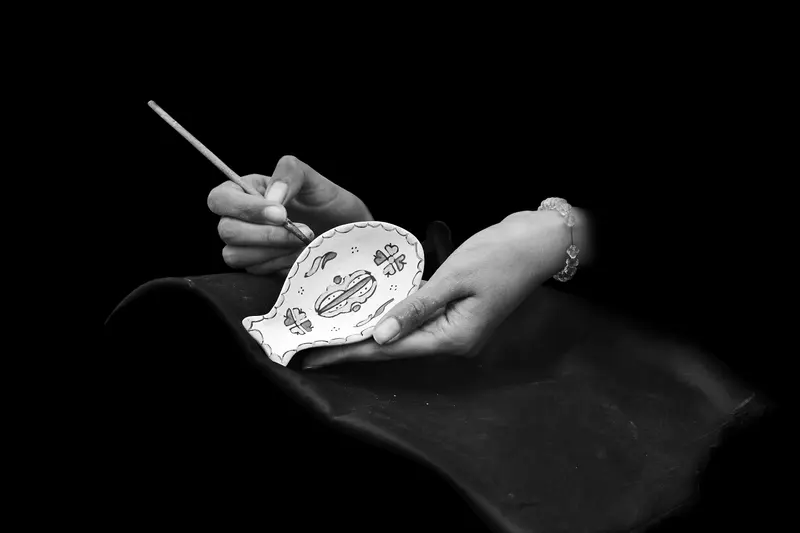
Underglaze behaves more like paint than glaze. It doesn’t move much in the kiln, which is why it’s popular for detailed decoration, lettering and illustration. You can brush it, sponge it, trail it or use it with stencils and sgraffito, scratching through to the clay underneath. Our guide to sgraffito tools covers that technique.
Speedball notes that underglaze fires matte and isn’t sealed unless a clear glaze is applied over it. For anything that will hold food or drink, cover the underglaze with a suitable clear glaze and fire it to that glaze’s cone.
Underglaze vs glaze: what’s the difference?
Underglaze is a coloured clay slip with little or no glass-forming material, so it stays put and fires to a matte, colourful surface. Glaze is mostly glass-forming material that melts into a smooth coating. Underglaze is for colour and detail; glaze is for the surface.
That’s why the two are so often used together. Paint your design in underglaze, bisque or not as you prefer, then dip or brush a clear glaze over the top. The clear makes the colours deeper and glossier and seals the surface. Our article on the difference between glaze and underglaze goes into more detail.
Testing underglaze colours
A simple underglaze test tile has a stripe of each colour at one, two and three coats, with clear glaze over half of the tile. That shows you how coverage builds and how the clear changes each colour, all from one firing.

Make tiles from each clay you use, since a red earthenware changes underglaze colours far more than white stoneware. Label the back with the colour names, item numbers and cone. Kept together, a set of tiles becomes your own fired version of the chart.
If you don’t have a kiln, our kiln firing service in Mordialloc can fire your tiles at cone 03 for earthenware or cone 6 for mid-fire, both within Speedball’s range.
Common underglaze mistakes
The most common mistake is one thin coat, which can fire patchy. The second is leaving underglaze unsealed on pieces meant for food or drink. The third is choosing colours from a screen. Every monitor shows colour differently, so trust fired tiles over swatches, and look at your tiles in daylight as well as under studio lights.
Another is putting underglaze on too thickly on bisque, which can flake or crawl under a glaze. Several thin coats beat one heavy one. Finally, keep bottles closed between uses so they don’t thicken, and stir well, because heavy colourants settle to the bottom.
If an underglaze has thickened, add a little water and stir until it brushes smoothly again. Test the thinned colour before relying on it, since more water means less colour per coat, and you may need an extra coat to match your earlier tiles.
Planning a palette with the Speedball underglaze chart
With 48 colours to choose from, it helps to plan a small palette before you start painting. Pick a light, a mid and a dark from the same colour group, plus one accent, and you’ll have enough contrast for shading and detail without the piece looking busy. The colour filter in the chart makes it easy to see every blue or every green side by side.
Mixing underglazes is possible too, since they behave much like paint, but mixed colours don’t always fire the way they look wet. If you mix, make a test tile of the mixture before you rely on it, and write the proportions on the back.
For layered effects, paint the lightest colours first and the darkest last, letting each dry before the next. Outlines in black or a dark brown go on at the end. Many potters bisque fire a decorated piece before adding the clear glaze, so a smudge while glazing doesn’t spoil the design.
Finally, keep a printed copy of this chart beside your bottles. The print button gives you a clean list, and ticking off the colours you own makes it quick to see what you need before your next order.
Frequently asked questions
Are these all the Speedball underglaze colours?
They’re the 48 names M&N Clay lists for the range when we checked. Speedball adds and renames colours from time to time, so check Speedball or your supplier for the current list before ordering.
Why don’t all colours have an item number?
We only show numbers a stockist publishes, and Stone Leaf Pottery lists 25 of them. We didn’t guess the rest, because a wrong number is worse than none when you’re ordering.
Can I use Speedball underglaze without a clear glaze?
Yes, on decorative pieces. Speedball says underglaze fires matte and isn’t sealed without a clear glaze, so cover anything that will hold food or drink.
Will Speedball underglaze work at cone 6?
Yes. Speedball formulates its underglazes for cone 05 to 6 and says they’ve also been fired to cone 10. Some colours shift at higher temperatures, so test the ones you care about.
Can Le Studio Art Space fire underglazed work?
Yes. The Le Studio Art Space firing service in Mordialloc fires bisque at cone 06, earthenware glazes at cone 03 and mid-fire glazes at cone 6, all within Speedball’s range. Make sure any glaze over the underglaze matches the cone you ask for.
Sources and method
Colour names are from M&N Clay’s Speedball underglaze list, and item numbers are from Stone Leaf Pottery’s Speedball underglaze pint listings, both US pottery suppliers. Firing range, the cone 05 or 04 bisque suggestion, the matte finish and the advice on clear glaze are from Speedball’s product pages and FAQ, with the firing range also confirmed by Speedball’s retailers. Checked on 27 October 2026.
We could not open Speedball’s own colour chart PDF, so names come from stockists and should be checked against Speedball’s current range. Swatch colours are our approximations from the names. Speedball is a trademark of Speedball Art Products, used here to identify its products.
Figures last checked .
Use this tool on your site
You’re welcome to embed the speedball underglaze chart on your own site, studio page or class notes. Copy the code below. Please keep the credit link, it’s how other potters find the full version.
Cite this tool
Le Studio Art Space (2026). Speedball Underglaze Chart. The Potter’s Bench. https://lestudioartspace.com/potters-bench/glaze-brand-chart-library/speedball-underglaze/ (accessed 27 October 2026).
This speedball underglaze chart from Le Studio Art Space is general educational content. Colour names come from published stockist lists and swatches are approximate colours suggested by the names: fired colour varies with clay, cone, coats and clear glaze, so always fire test tiles first. Always follow the clay and glaze manufacturer’s data, and for glaze and food safety decisions follow the manufacturer’s guidance and local regulations.