In Australia, a small electric kiln costs about $6,000 to $9,000 new and a studio pottery wheel about $1,900 to $3,100, before freight and installation. Stoneware clay costs about $21 to $33 for a 10 kg bag, or roughly $2 to $3.30 a kilogram. Running a small kiln adds a few dollars of electricity per firing.
Pottery Equipment Cost Calculator: Kilns, Wheels and Clay in AUD
This pottery equipment cost calculator puts real Australian prices behind the question of whether to buy your own gear. Pick the kiln, wheel or clay tab, start from a current retail price or enter your own, and see what owning costs over the years you’ll use it, compared with a studio membership or hiring a wheel.
Owning the kiln for 5 years
$7,060
Price and extras plus electricity, before elements, shelves and repairs.
- Up front
- $5,990
- Electricity per year
- $214.084 firings a month
- Per month
- $117.67spread over the years
- Per firing, all in
- $29.42
Over the same 5 years
A membership usually includes wheels, kilns, firing, space and company, so it is not a like-for-like swap. Owning also needs room, ventilation and, for a kiln, a dedicated circuit.
This tool at a glance
- What it does
- Adds up what a kiln, a pottery wheel or a supply of clay really costs, and compares owning equipment with a studio membership or wheel hire.
- Inputs
- Kiln: model or price, freight and installation, electricity per firing, firings per month. Wheel: model or price. Both: years of use and a membership fee to compare. Clay: bag price, bag size, clay per piece and number of pieces.
- Method
- Kiln total = price + extras + electricity per firing x firings per month x 12 x years. Per month = total / (years x 12). Wheel total = price; hire = $62.50 a week x 52 / 12 per month. Membership = monthly fee x 12 x years. Clay per kg = bag price / bag size; per piece = per kg x clay per piece; bags = pieces x clay per piece / bag size, rounded up.
- Outputs
- Total cost of owning over the years, up-front and monthly cost, cost per firing, comparison bars against a membership and wheel hire, and clay cost per kg, per bag, per piece and for a run of pieces.
Pottery equipment prices in Australia (AUD)
Retail prices including GST from Australian pottery suppliers, checked on 26 October 2026. Kiln freight and installation are extra. Second-hand prices vary too much to list, so enter the asking price in the calculator.
| Item | Price | Where we saw it | Try it |
|---|---|---|---|
| Woodrow DK30 kiln, 30 litre, 3.4 kW | $5,990 | Keane Ceramics, Blackwattle Pottery Supplies | |
| Woodrow DK60 kiln | $7,990 | Keane Ceramics, Walker Ceramics | |
| Woodrow DK70 kiln | $8,990 | Keane Ceramics | |
| Woodrow My First Kiln, 60 litre | $8,990 | Blackwattle Pottery Supplies | |
| Woodrow My Cube kiln, 90 litre | $11,990 | Walker Ceramics | |
| Woodrow My Studio kiln, 115 litre | $15,990 | Keane Ceramics | |
| Shimpo RK55 VL Lite wheel | $1,899.95 | Walker Ceramics | |
| Venco Direct Drive Flow wheel | $2,220 to $2,535 | Potter’s Market, Keane Ceramics | |
| Shimpo VL-Whisper RK-3E wheel | $2,999.95 to $3,109.95 | Walker Ceramics, Ceramix, Keane Ceramics, Potter’s Market | |
| Pottery wheel hire | $60 to $65 a week | Australian Pottery Supplies | |
| Walker No.10 stoneware, 10 kg | $21.57 to $33.30 | Walker Ceramics, Australian Pottery Supplies ($25.90), Northcote Pottery Supplies, Pottery Supplies Online | |
| Walker PB103, 10 kg | $25.50 to $32.60 | Australian clay retailers | |
| Walker SES school body, 10 kg | $21.05 | Australian Pottery Supplies | |
| Walker SWP porcelain, 10 kg | $43.80 | Australian Pottery Supplies |
How the pottery equipment cost calculator works
The pottery equipment cost calculator adds the purchase price to the running costs, then spreads the total over the years you expect to use the equipment. For a kiln, that’s the price, plus freight, electrician and kiln furniture, plus electricity for every firing. For a wheel, it’s simply the price, since a wheel’s running costs are tiny.
With the defaults, a Woodrow DK30 at $5,990, four firings a month at $4.46 each and five years of use, the electricity comes to $214.08 a year and the total to $7,060.40. That’s about $117.67 a month, or $29.42 per firing once the kiln’s price is shared across every firing it does. The more you fire, the cheaper each firing gets.
The clay tab divides the bag price by the bag size to get a price per kilogram, then multiplies by the clay in each piece. At $25.90 for 10 kg, clay costs $2.59 a kilogram and a 500 g mug carries about $1.30 of clay. The tool also rounds up how many bags you need for a run of pieces.
How much does a kiln cost in Australia?
A new small electric kiln costs about $6,000 to $9,000 in Australia, and studio-sized kilns $12,000 to $16,000 or more, before freight and installation. Woodrow, an Australian maker, lists its 30 litre DK30 at $5,990, the DK60 at $7,990 and the 115 litre My Studio at $15,990 through retailers such as Keane Ceramics and Walker Ceramics.
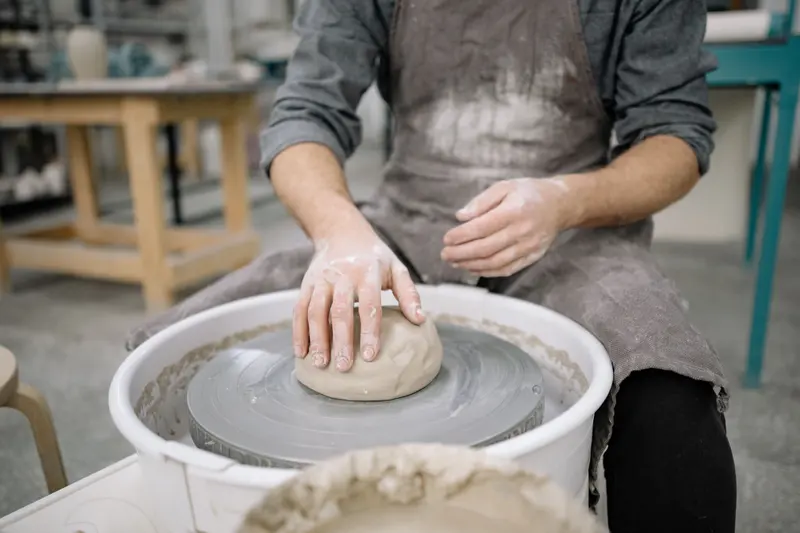
The kiln’s price is only part of the bill. Freight is charged on top, and Woodrow says all its kilns need a dedicated electrical connection like an oven or an air conditioner, because a normal power point is only rated at 10 amps. Shelves, posts and cones add more. Get the electrician’s quote before you choose a kiln, since a larger kiln may need a supply your house doesn’t have, and enter all of it in the extras box.
Second-hand kilns can be good value, but prices vary too much to publish, and we couldn’t verify them. If you’re looking at a used kiln, enter the asking price, budget for new elements and a thermocouple, and have an electrician check it before it’s switched on.
How much is a pottery wheel?
A new studio pottery wheel costs about $1,900 to $3,100 in Australia. The Shimpo RK55 VL Lite is listed at $1,899.95, the Venco Direct Drive Flow at $2,220 to $2,535, and the popular Shimpo VL-Whisper RK-3E at $2,999.95 to $3,109.95 depending on the retailer.
Wheels are cheap to run and last for years, so the real question is how often you’ll throw. Australian Pottery Supplies hires wheels for about $60 to $65 a week. At an average of $62.50 a week, hire costs about $270 a month, which means a $3,000 wheel pays for itself in about 11 months of continuous hire. If you’d only use a wheel now and then, hire or a membership makes more sense.
When comparing wheels, look at the motor power, how smooth it is at low speed, whether the splash pan comes off easily, and whether the pedal suits your seat height. Our comparison of Brent and Shimpo pottery wheels covers the details.
How much does clay cost per kg?
Stoneware clay costs about $2.16 to $3.33 a kilogram in Australia, bought by the 10 kg bag. Walker No.10, a common Australian stoneware, ranges from $21.57 at Walker’s own shop to $33.30 elsewhere, while Walker’s SWP porcelain is about $43.80 a bag.
Bag sizes differ between brands. Walker sells 10 kg bags while some other clays come in 12.5 kg, so the calculator lets you enter the bag size and shows both a 10 kg and a 12.5 kg price for easy comparison. At $2.59 a kilogram, a 12.5 kg bag would cost about $32.38.
Clay is usually the smallest cost per piece, often a dollar or two, but it adds up across a year. Reclaiming trimmings and failed pots brings the real cost down further. For a full guide to sources, see where to buy pottery clay.
Owning equipment vs a studio membership
Owning is cheaper per month if you use the equipment a lot, while a membership is usually better value when you’re starting out or work only a day or two a week. The calculator shows both over the same number of years so you can see where your own break-even point sits.
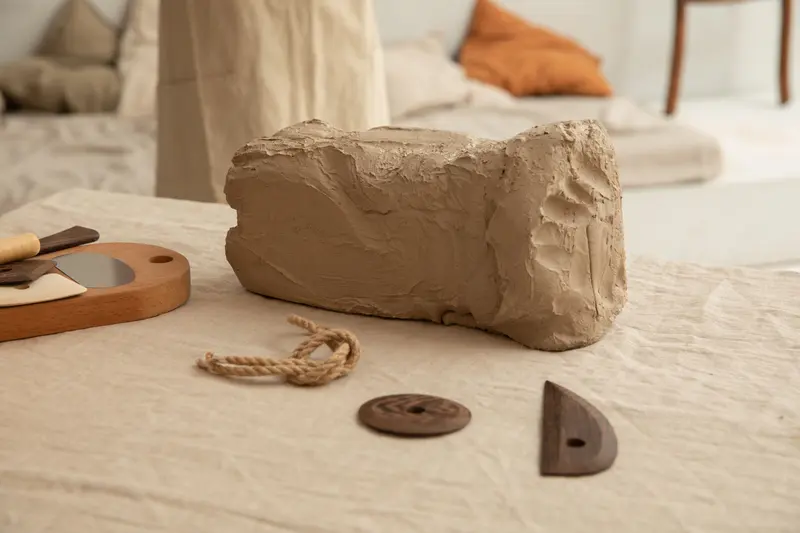
The Melbourne studio memberships we found ran from about $175 to $450 a month, and the default of $280 sits in the middle. Over five years that’s $16,800, against about $7,060 for a DK30 kiln with electricity, or about $3,000 for a wheel. But a membership isn’t a like-for-like swap. It typically includes wheels, kilns, firing, shelving, glazes or space to work, plus the company of other potters and help when something goes wrong.
Owning also has costs the calculator doesn’t count: the room to put it in, ventilation for the kiln, insurance, and your own time spent loading, firing and maintaining it. If you’d like to see what a shared studio looks like, our ceramic studio in Mordialloc is one example, and the kiln electricity cost calculator works out your running costs in more detail.
Hidden costs and common mistakes
The most common mistake is budgeting for the kiln and forgetting the installation, which can run to hundreds or thousands of dollars depending on your switchboard. The second is forgetting consumables: kiln shelves, posts, cones, kiln wash, replacement elements and a thermocouple every few years.
The third is comparing a membership’s monthly fee with a kiln’s purchase price alone. Spread the purchase over realistic years of use, add the running costs, and then compare. And remember that prices change: every figure in the table is dated, so check current prices with your supplier before you buy.
Finally, think about the order you buy things in. Many potters start with a wheel at home and pay for firing elsewhere, because a wheel is cheaper, needs no special wiring and can be sold easily if you change your mind. A kiln is the bigger, harder-to-reverse decision, so it’s worth a year of firing through a studio or a firing service first. That year tells you how often you really fire, which is the number that decides whether owning pays off.
Frequently asked questions
Is buying a kiln really cheaper than a membership?
Only if you fire often and stick with it for years. A $5,990 kiln with electricity costs about $7,060 over five years at four firings a month, against $16,800 for a $280 membership, but the membership also includes wheels, space, firing and help, which the kiln doesn’t.
Why aren’t second-hand prices in the table?
Because we couldn’t verify them. Listings vary hugely by age, condition and location, and many sites block automated checks. Enter the asking price in the calculator and budget for new elements, a thermocouple and an electrician’s inspection.
Do these prices include freight and GST?
They include GST but not freight. Kiln freight in particular can be significant, so ask the retailer for a delivered price and add it to the extras box.
Can I run a kiln from a normal power point?
Usually not. Woodrow says all its kilns need a dedicated connection, because a standard power point is rated at only 10 amps. Always have a licensed electrician check the kiln’s requirements against your switchboard.
What does Le Studio Art Space offer if I don’t want to buy?
Le Studio Art Space in Mordialloc has a ceramic studio with nine wheels and three kilns, a kiln firing service and workshops and classes. You can see the space and ask about current options when you visit.
Sources and method
Kiln prices are Woodrow’s Australian retail prices as listed by Keane Ceramics, Blackwattle Pottery Supplies and Walker Ceramics. Wheel prices are from Walker Ceramics, Ceramix, Keane Ceramics and Potter’s Market, and wheel hire from Australian Pottery Supplies. Clay prices are 10 kg bag prices from Walker Ceramics, Australian Pottery Supplies, Northcote Pottery Supplies and Pottery Supplies Online. Membership fees are the published monthly prices of Melbourne studios including Creative Hands, Mayfield, Lygon St, Kilnfolk, Bisque Studios and twelve80. The wiring advice is from Woodrow. All were checked on 26 October 2026.
The default electricity per firing comes from our kiln electricity cost calculator. Second-hand prices could not be verified and are left out. All prices are in Australian dollars including GST and are rounded as shown.
Figures last checked .
Use this tool on your site
You’re welcome to embed the pottery equipment cost calculator on your own site, studio page or class notes. Copy the code below. Please keep the credit link, it’s how other potters find the full version.
Cite this tool
Le Studio Art Space (2026). Pottery Equipment Cost Calculator. The Potter’s Bench. https://lestudioartspace.com/potters-bench/pottery-equipment-cost-calculator/ (accessed 27 October 2026).
This pottery equipment cost calculator from Le Studio Art Space is general educational content. Prices are indicative retail prices from Australian suppliers on the date shown and change often; freight, installation, kiln furniture and repairs are extra. Kilns must be installed by a licensed electrician. Always follow the clay and glaze manufacturer’s data, and for glaze and food safety decisions follow the manufacturer’s guidance and local regulations.