AMACO publishes layering charts for its Potter’s Choice glazes showing which glaze goes over which at cone 5 to 6. This chart lists all 174 combinations from AMACO’s flyers for seven base glazes: PC-12 Blue Midnight, PC-20 Blue Rutile, PC-29 Deep Olive Speckle, PC-59 Deep Firebrick, C-1 Obsidian, C-10 Snow and C-11 Mixing Clear. Each entry includes the coats AMACO used and the clay it tested on.
AMACO Glaze Combinations: Potter’s Choice Layering Chart
These AMACO glaze combinations come straight from AMACO’s own layering flyers, gathered into one chart you can search, filter and print. Look up a code like PC-20, filter to a base glaze, or browse by colour, then pick a combination to see how many coats AMACO applied and what clay it fired on.
174 combinations in this chart.
Pick one in the chart below to see its details here.
This tool at a glance
- What it does
- Lists every Potter’s Choice and Potter’s Choice Celadon layering combination AMACO publishes on its flyers, so you can search, filter and print them.
- Inputs
- Search words (a code such as PC-20, or a colour), a colour group and a base glaze.
- Method
- No calculation. Each combination is transcribed from AMACO’s layering flyers, with AMACO’s coat counts, cone 5 to 6 firing and test clay. Swatches are our approximate reading of the colour in AMACO’s photo.
- Outputs
- Matching combinations with an approximate swatch, the coats to apply, the cone and the clay AMACO tested on.
AMACO Potter’s Choice layering chart: every published combination
Every combination on AMACO’s Potter’s Choice and Potter’s Choice Celadon layering flyers for the PC-12, PC-20, PC-29, PC-59, C-1, C-10 and C-11 bases, fired to cone 5 to 6. Swatches are our approximate reading of AMACO’s photos; use Show to see the coats and test clay.
Over PC-12 Blue Midnight: One thick coat of base, three of top. Tested on AMACO Buff Stoneware #46. Over PC-20 Blue Rutile: Two coats of base, two of top. Tested on AMACO Buff Stoneware #46. Over PC-29 Deep Olive Speckle: Two coats of base, two of top. Tested on AMACO Buff Stoneware #46. Over PC-59 Deep Firebrick: Two coats of base, two of top. Tested on AMACO Buff Stoneware #46. Over C-10 Snow: Three coats of base, three of top. Tested on AMACO White Stoneware No. 11. Over C-1 Obsidian: Three coats of base, three of top. Tested on AMACO White Stoneware No. 11. Over C-11 Mixing Clear: Three coats of base, three of top. Tested on AMACO White Stoneware No. 11.
| Swatch | Combination | Details | Show |
|---|---|---|---|
| Greys | PC-1 Saturation Metallic over PC-12 Blue Midnight | Cone 5 to 6 | |
| Greys | PC-4 Palladium over PC-12 Blue Midnight | Cone 5 to 6 | |
| Blues | PC-20 Blue Rutile over PC-12 Blue Midnight | Cone 5 to 6 | |
| Blues | PC-23 Indigo Float over PC-12 Blue Midnight | Cone 5 to 6 | |
| Blues | PC-25 Textured Turquoise over PC-12 Blue Midnight | Cone 5 to 6 | |
| Greens | PC-27 Tourmaline over PC-12 Blue Midnight | Cone 5 to 6 | |
| Browns | PC-28 Frosted Turquoise over PC-12 Blue Midnight | Cone 5 to 6 | |
| Browns | PC-29 Deep Olive Speckle over PC-12 Blue Midnight | Cone 5 to 6 | |
| Browns | PC-30 Temmoku over PC-12 Blue Midnight | Cone 5 to 6 | |
| Oranges | PC-33 Iron Lustre over PC-12 Blue Midnight | Cone 5 to 6 | |
| Yellows | PC-34 Light Sepia over PC-12 Blue Midnight | Cone 5 to 6 | |
| Browns | PC-35 Oil Spot over PC-12 Blue Midnight | Cone 5 to 6 | |
| Blues | PC-36 Ironstone over PC-12 Blue Midnight | Cone 5 to 6 | |
| Browns | PC-37 Smoked Sienna over PC-12 Blue Midnight | Cone 5 to 6 | |
| Browns | PC-39 Umber Float over PC-12 Blue Midnight | Cone 5 to 6 | |
| Browns | PC-40 True Celadon over PC-12 Blue Midnight | Cone 5 to 6 | |
| Blues | PC-41 Vert Lustre over PC-12 Blue Midnight | Cone 5 to 6 | |
| Yellows | PC-42 Seaweed over PC-12 Blue Midnight | Cone 5 to 6 | |
| Greys | PC-43 Toasted Sage over PC-12 Blue Midnight | Cone 5 to 6 | |
| Yellows | PC-46 Lustrous Jade over PC-12 Blue Midnight | Cone 5 to 6 | |
| Oranges | PC-49 Frosted Melon over PC-12 Blue Midnight | Cone 5 to 6 | |
| Browns | PC-50 Shino over PC-12 Blue Midnight | Cone 5 to 6 | |
| Browns | PC-52 Deep Sienna Speckle over PC-12 Blue Midnight | Cone 5 to 6 | |
| Blues | PC-53 Ancient Jasper over PC-12 Blue Midnight | Cone 5 to 6 | |
| Reds | PC-55 Chun Plum over PC-12 Blue Midnight | Cone 5 to 6 | |
| Browns | PC-1 Saturation Metallic over PC-20 Blue Rutile | Cone 5 to 6 | |
| Blues | PC-4 Palladium over PC-20 Blue Rutile | Cone 5 to 6 | |
| Blues | PC-12 Blue Midnight over PC-20 Blue Rutile | Cone 5 to 6 | |
| Blues | PC-23 Indigo Float over PC-20 Blue Rutile | Cone 5 to 6 | |
| Greys | PC-25 Textured Turquoise over PC-20 Blue Rutile | Cone 5 to 6 | |
| Whites and creams | PC-27 Tourmaline over PC-20 Blue Rutile | Cone 5 to 6 | |
| Greys | PC-28 Frosted Turquoise over PC-20 Blue Rutile | Cone 5 to 6 | |
| Browns | PC-29 Deep Olive Speckle over PC-20 Blue Rutile | Cone 5 to 6 | |
| Reds | PC-30 Temmoku over PC-20 Blue Rutile | Cone 5 to 6 | |
| Browns | PC-32 Albany Slip Brown over PC-20 Blue Rutile | Cone 5 to 6 | |
| Greys | PC-33 Iron Lustre over PC-20 Blue Rutile | Cone 5 to 6 | |
| Reds | PC-35 Oil Spot over PC-20 Blue Rutile | Cone 5 to 6 | |
| Greys | PC-36 Ironstone over PC-20 Blue Rutile | Cone 5 to 6 | |
| Greys | PC-37 Smoked Sienna over PC-20 Blue Rutile | Cone 5 to 6 | |
| Browns | PC-39 Umber Float over PC-20 Blue Rutile | Cone 5 to 6 | |
| Yellows | PC-40 True Celadon over PC-20 Blue Rutile | Cone 5 to 6 | |
| Oranges | PC-41 Vert Lustre over PC-20 Blue Rutile | Cone 5 to 6 | |
| Greens | PC-42 Seaweed over PC-20 Blue Rutile | Cone 5 to 6 | |
| Yellows | PC-43 Toasted Sage over PC-20 Blue Rutile | Cone 5 to 6 | |
| Blues | PC-46 Lustrous Jade over PC-20 Blue Rutile | Cone 5 to 6 | |
| Yellows | PC-49 Frosted Melon over PC-20 Blue Rutile | Cone 5 to 6 | |
| Greys | PC-50 Shino over PC-20 Blue Rutile | Cone 5 to 6 | |
| Browns | PC-52 Deep Sienna Speckle over PC-20 Blue Rutile | Cone 5 to 6 | |
| Blues | PC-53 Ancient Jasper over PC-20 Blue Rutile | Cone 5 to 6 | |
| Greys | PC-55 Chun Plum over PC-20 Blue Rutile | Cone 5 to 6 | |
| Browns | PC-1 Saturation Metallic over PC-29 Deep Olive Speckle | Cone 5 to 6 | |
| Browns | PC-4 Palladium over PC-29 Deep Olive Speckle | Cone 5 to 6 | |
| Greys | PC-12 Blue Midnight over PC-29 Deep Olive Speckle | Cone 5 to 6 | |
| Blues | PC-23 Indigo Float over PC-29 Deep Olive Speckle | Cone 5 to 6 | |
| Browns | PC-25 Textured Turquoise over PC-29 Deep Olive Speckle | Cone 5 to 6 | |
| Greens | PC-27 Tourmaline over PC-29 Deep Olive Speckle | Cone 5 to 6 | |
| Yellows | PC-28 Frosted Turquoise over PC-29 Deep Olive Speckle | Cone 5 to 6 | |
| Browns | PC-30 Temmoku over PC-29 Deep Olive Speckle | Cone 5 to 6 | |
| Browns | PC-32 Albany Slip Brown over PC-29 Deep Olive Speckle | Cone 5 to 6 | |
| Browns | PC-33 Iron Lustre over PC-29 Deep Olive Speckle | Cone 5 to 6 | |
| Oranges | PC-34 Light Sepia over PC-29 Deep Olive Speckle | Cone 5 to 6 | |
| Browns | PC-35 Oil Spot over PC-29 Deep Olive Speckle | Cone 5 to 6 | |
| Oranges | PC-36 Ironstone over PC-29 Deep Olive Speckle | Cone 5 to 6 | |
| Browns | PC-37 Smoked Sienna over PC-29 Deep Olive Speckle | Cone 5 to 6 | |
| Browns | PC-39 Umber Float over PC-29 Deep Olive Speckle | Cone 5 to 6 | |
| Browns | PC-41 Vert Lustre over PC-29 Deep Olive Speckle | Cone 5 to 6 | |
| Greens | PC-42 Seaweed over PC-29 Deep Olive Speckle | Cone 5 to 6 | |
| Yellows | PC-43 Toasted Sage over PC-29 Deep Olive Speckle | Cone 5 to 6 | |
| Blues | PC-46 Lustrous Jade over PC-29 Deep Olive Speckle | Cone 5 to 6 | |
| Oranges | PC-49 Frosted Melon over PC-29 Deep Olive Speckle | Cone 5 to 6 | |
| Oranges | PC-52 Deep Sienna Speckle over PC-29 Deep Olive Speckle | Cone 5 to 6 | |
| Browns | PC-53 Ancient Jasper over PC-29 Deep Olive Speckle | Cone 5 to 6 | |
| Browns | PC-55 Chun Plum over PC-29 Deep Olive Speckle | Cone 5 to 6 | |
| Browns | PC-59 Deep Firebrick over PC-29 Deep Olive Speckle | Cone 5 to 6 | |
| Oranges | PC-60 Salt Buff over PC-29 Deep Olive Speckle | Cone 5 to 6 | |
| Blacks | PC-1 Saturation Metallic over PC-59 Deep Firebrick | Cone 5 to 6 | |
| Browns | PC-4 Palladium over PC-59 Deep Firebrick | Cone 5 to 6 | |
| Greys | PC-12 Blue Midnight over PC-59 Deep Firebrick | Cone 5 to 6 | |
| Purples | PC-20 Blue Rutile over PC-59 Deep Firebrick | Cone 5 to 6 | |
| Purples | PC-23 Indigo Float over PC-59 Deep Firebrick | Cone 5 to 6 | |
| Greys | PC-27 Tourmaline over PC-59 Deep Firebrick | Cone 5 to 6 | |
| Yellows | PC-28 Frosted Turquoise over PC-59 Deep Firebrick | Cone 5 to 6 | |
| Browns | PC-29 Deep Olive Speckle over PC-59 Deep Firebrick | Cone 5 to 6 | |
| Reds | PC-30 Temmoku over PC-59 Deep Firebrick | Cone 5 to 6 | |
| Browns | PC-32 Albany Slip Brown over PC-59 Deep Firebrick | Cone 5 to 6 | |
| Reds | PC-33 Iron Lustre over PC-59 Deep Firebrick | Cone 5 to 6 | |
| Oranges | PC-34 Light Sepia over PC-59 Deep Firebrick | Cone 5 to 6 | |
| Reds | PC-35 Oil Spot over PC-59 Deep Firebrick | Cone 5 to 6 | |
| Reds | PC-37 Smoked Sienna over PC-59 Deep Firebrick | Cone 5 to 6 | |
| Oranges | PC-39 Umber Float over PC-59 Deep Firebrick | Cone 5 to 6 | |
| Reds | PC-40 True Celadon over PC-59 Deep Firebrick | Cone 5 to 6 | |
| Reds | PC-41 Vert Lustre over PC-59 Deep Firebrick | Cone 5 to 6 | |
| Greens | PC-42 Seaweed over PC-59 Deep Firebrick | Cone 5 to 6 | |
| Greys | PC-43 Toasted Sage over PC-59 Deep Firebrick | Cone 5 to 6 | |
| Greys | PC-46 Lustrous Jade over PC-59 Deep Firebrick | Cone 5 to 6 | |
| Yellows | PC-49 Frosted Melon over PC-59 Deep Firebrick | Cone 5 to 6 | |
| Reds | PC-50 Shino over PC-59 Deep Firebrick | Cone 5 to 6 | |
| Browns | PC-53 Ancient Jasper over PC-59 Deep Firebrick | Cone 5 to 6 | |
| Reds | PC-60 Salt Buff over PC-59 Deep Firebrick | Cone 5 to 6 | |
| Blues | PC-12 Blue Midnight over C-10 Snow | Cone 5 to 6 | |
| Blues | PC-21 Arctic Blue over C-10 Snow | Cone 5 to 6 | |
| Blues | PC-23 Indigo Float over C-10 Snow | Cone 5 to 6 | |
| Greens | PC-25 Textured Turquoise over C-10 Snow | Cone 5 to 6 | |
| Browns | PC-27 Tourmaline over C-10 Snow | Cone 5 to 6 | |
| Yellows | PC-28 Frosted Turquoise over C-10 Snow | Cone 5 to 6 | |
| Oranges | PC-32 Albany Slip Brown over C-10 Snow | Cone 5 to 6 | |
| Oranges | PC-33 Iron Lustre over C-10 Snow | Cone 5 to 6 | |
| Oranges | PC-34 Light Sepia over C-10 Snow | Cone 5 to 6 | |
| Browns | PC-36 Ironstone over C-10 Snow | Cone 5 to 6 | |
| Browns | PC-37 Smoked Sienna over C-10 Snow | Cone 5 to 6 | |
| Browns | PC-39 Umber Float over C-10 Snow | Cone 5 to 6 | |
| Greens | PC-40 True Celadon over C-10 Snow | Cone 5 to 6 | |
| Greens | PC-41 Vert Lustre over C-10 Snow | Cone 5 to 6 | |
| Blues | PC-42 Seaweed over C-10 Snow | Cone 5 to 6 | |
| Reds | PC-43 Toasted Sage over C-10 Snow | Cone 5 to 6 | |
| Blues | PC-45 Dark Green over C-10 Snow | Cone 5 to 6 | |
| Blues | PC-46 Lustrous Jade over C-10 Snow | Cone 5 to 6 | |
| Blues | PC-48 Art Deco Green over C-10 Snow | Cone 5 to 6 | |
| Reds | PC-52 Deep Sienna Speckle over C-10 Snow | Cone 5 to 6 | |
| Browns | PC-53 Ancient Jasper over C-10 Snow | Cone 5 to 6 | |
| Reds | PC-55 Chun Plum over C-10 Snow | Cone 5 to 6 | |
| Reds | PC-57 Smokey Merlot over C-10 Snow | Cone 5 to 6 | |
| Reds | PC-59 Deep Firebrick over C-10 Snow | Cone 5 to 6 | |
| Browns | PC-61 Textured Amber over C-10 Snow | Cone 5 to 6 | |
| Blacks | PC-1 Saturation Metallic over C-1 Obsidian | Cone 5 to 6 | |
| Greys | PC-4 Palladium over C-1 Obsidian | Cone 5 to 6 | |
| Blues | PC-12 Blue Midnight over C-1 Obsidian | Cone 5 to 6 | |
| Blues | PC-20 Blue Rutile over C-1 Obsidian | Cone 5 to 6 | |
| Blues | PC-21 Arctic Blue over C-1 Obsidian | Cone 5 to 6 | |
| Blues | PC-23 Indigo Float over C-1 Obsidian | Cone 5 to 6 | |
| Blues | PC-25 Textured Turquoise over C-1 Obsidian | Cone 5 to 6 | |
| Blues | PC-27 Tourmaline over C-1 Obsidian | Cone 5 to 6 | |
| Browns | PC-29 Deep Olive Speckle over C-1 Obsidian | Cone 5 to 6 | |
| Blues | PC-30 Temmoku over C-1 Obsidian | Cone 5 to 6 | |
| Blues | PC-31 Oatmeal over C-1 Obsidian | Cone 5 to 6 | |
| Blues | PC-32 Albany Slip Brown over C-1 Obsidian | Cone 5 to 6 | |
| Greys | PC-34 Light Sepia over C-1 Obsidian | Cone 5 to 6 | |
| Browns | PC-36 Ironstone over C-1 Obsidian | Cone 5 to 6 | |
| Oranges | PC-37 Smoked Sienna over C-1 Obsidian | Cone 5 to 6 | |
| Blues | PC-41 Vert Lustre over C-1 Obsidian | Cone 5 to 6 | |
| Blues | PC-42 Seaweed over C-1 Obsidian | Cone 5 to 6 | |
| Blues | PC-46 Lustrous Jade over C-1 Obsidian | Cone 5 to 6 | |
| Blues | PC-48 Art Deco Green over C-1 Obsidian | Cone 5 to 6 | |
| Reds | PC-52 Deep Sienna Speckle over C-1 Obsidian | Cone 5 to 6 | |
| Blues | PC-53 Ancient Jasper over C-1 Obsidian | Cone 5 to 6 | |
| Reds | PC-55 Chun Plum over C-1 Obsidian | Cone 5 to 6 | |
| Purples | PC-57 Smokey Merlot over C-1 Obsidian | Cone 5 to 6 | |
| Reds | PC-59 Deep Firebrick over C-1 Obsidian | Cone 5 to 6 | |
| Browns | PC-61 Textured Amber over C-1 Obsidian | Cone 5 to 6 | |
| Greens | PC-1 Saturation Metallic over C-11 Mixing Clear | Cone 5 to 6 | |
| Greens | PC-4 Palladium over C-11 Mixing Clear | Cone 5 to 6 | |
| Blues | PC-20 Blue Rutile over C-11 Mixing Clear | Cone 5 to 6 | |
| Blues | PC-21 Arctic Blue over C-11 Mixing Clear | Cone 5 to 6 | |
| Blues | PC-23 Indigo Float over C-11 Mixing Clear | Cone 5 to 6 | |
| Greens | PC-25 Textured Turquoise over C-11 Mixing Clear | Cone 5 to 6 | |
| Blues | PC-27 Tourmaline over C-11 Mixing Clear | Cone 5 to 6 | |
| Greys | PC-28 Frosted Turquoise over C-11 Mixing Clear | Cone 5 to 6 | |
| Browns | PC-29 Deep Olive Speckle over C-11 Mixing Clear | Cone 5 to 6 | |
| Oranges | PC-31 Oatmeal over C-11 Mixing Clear | Cone 5 to 6 | |
| Browns | PC-33 Iron Lustre over C-11 Mixing Clear | Cone 5 to 6 | |
| Browns | PC-34 Light Sepia over C-11 Mixing Clear | Cone 5 to 6 | |
| Browns | PC-36 Ironstone over C-11 Mixing Clear | Cone 5 to 6 | |
| Browns | PC-39 Umber Float over C-11 Mixing Clear | Cone 5 to 6 | |
| Greens | PC-40 True Celadon over C-11 Mixing Clear | Cone 5 to 6 | |
| Blues | PC-41 Vert Lustre over C-11 Mixing Clear | Cone 5 to 6 | |
| Blues | PC-42 Seaweed over C-11 Mixing Clear | Cone 5 to 6 | |
| Greens | PC-46 Lustrous Jade over C-11 Mixing Clear | Cone 5 to 6 | |
| Blues | PC-48 Art Deco Green over C-11 Mixing Clear | Cone 5 to 6 | |
| Oranges | PC-52 Deep Sienna Speckle over C-11 Mixing Clear | Cone 5 to 6 | |
| Browns | PC-53 Ancient Jasper over C-11 Mixing Clear | Cone 5 to 6 | |
| Reds | PC-55 Chun Plum over C-11 Mixing Clear | Cone 5 to 6 | |
| Reds | PC-59 Deep Firebrick over C-11 Mixing Clear | Cone 5 to 6 | |
| Browns | PC-61 Textured Amber over C-11 Mixing Clear | Cone 5 to 6 | |
| Browns | PC-62 Textured Amber Brown over C-11 Mixing Clear | Cone 5 to 6 |
How the AMACO glaze combinations chart works
The chart is a transcription of AMACO’s layering flyers. Each flyer takes one base glaze and shows it under a set of Potter’s Choice top glazes, with a photo of the fired result. We’ve listed every combination on the flyers for four Potter’s Choice bases and three Potter’s Choice Celadon bases, 174 in all.
Search works on codes, names and colours, so “PC-23” finds every combination with Indigo Float, whether it’s the top or the base, and “green” finds everything we’ve placed in the green group. The base glaze filter shows one flyer at a time. Pick any combination and the result panel shows its coat count, cone and the clay AMACO used.
The swatches are our approximate reading of the main colour in AMACO’s photo of each combination. Layered glazes rarely have a single colour, since they break over edges, pool in recesses and run, so a swatch can only hint at the result. Use it to shortlist, then look at AMACO’s flyer and make your own tile.
Which AMACO glaze combinations are on the chart?
The chart covers all published combinations on seven AMACO flyers: 25 combinations over PC-12 Blue Midnight, 25 over PC-20 Blue Rutile, 25 over PC-29 Deep Olive Speckle, 24 over PC-59 Deep Firebrick, and 25 each over the Potter’s Choice Celadon bases C-1 Obsidian, C-10 Snow and C-11 Mixing Clear.
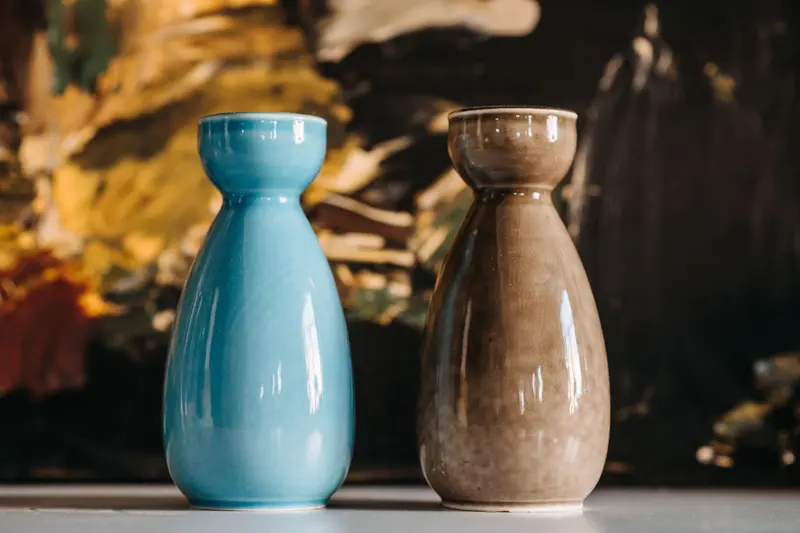
The Potter’s Choice flyers were fired on AMACO Buff Stoneware #46 and the celadon flyers on AMACO White Stoneware No. 11, all at cone 5 to 6. The clay makes a real difference: the white stoneware shows the celadons clean and bright, while the buff body warms everything up and shows through where glazes break thin.
We left out one tile. On the PC-59 Deep Firebrick flyer, one entry is labelled as being over PC-29 Deep Olive Speckle, but its base cup is clearly Deep Firebrick. Rather than guess which part of the label is right, we’ve left it off the chart.
How many coats for AMACO layering?
AMACO’s flyers give the coats for each base. Over PC-20, PC-29 and PC-59, apply two coats of the base and two of the top. Over PC-12 Blue Midnight, apply one thick coat of base and three of the top. Over the celadon bases, C-1, C-10 and C-11, apply three coats of base and three of top.
Let each coat dry before the next, as the flyers say. Brushing gives you the most control over thickness, which is what the coat counts assume. If you dip, one dip is not the same as one brushed coat, so make a test tile to see how your dipping compares with AMACO’s brushed results.
The coats change how far a combination moves. More coats on top usually mean more running and more of the top glaze’s colour, so stick to AMACO’s count for your first tile, then adjust. Keep the bottom centimetre or so of a piece clear of glaze while you’re learning how a combination behaves.
Favourite AMACO combinations and what to expect
Some of the most striking results on the flyers come from pairing contrasting glazes. In AMACO’s photos, PC-20 Blue Rutile over PC-59 Deep Firebrick breaks into blue and purple-red streaks, and PC-30 Temmoku over the same base turns a deep, glossy red. PC-33 Iron Lustre over PC-29 Deep Olive Speckle gives a rich rusty orange.
The celadon flyers are a good place to start if you like clean, glassy colour. Over C-10 Snow, the top glazes sit as bright bands with white below, such as PC-25 Textured Turquoise in vivid green-blue. Over C-1 Obsidian, almost everything becomes dramatic against near-black, from PC-48 Art Deco Green’s pale blue to PC-57 Smokey Merlot’s magenta.
Remember that these descriptions come from AMACO’s photos, not our kiln. Your clay, your coats and your firing will move the result, so think of the flyer as a direction, not a promise. A combination that disappoints on a buff clay can come alive on white, and the reverse, so it’s worth testing a favourite on both.
Testing AMACO combinations in your own kiln
Fire a test tile for every combination you plan to use. Use your own clay, apply AMACO’s coat count, and fire at your normal cone 5 to 6 schedule. A vertical tile with some texture shows both running and breaking, the two things that make a layered glaze interesting.
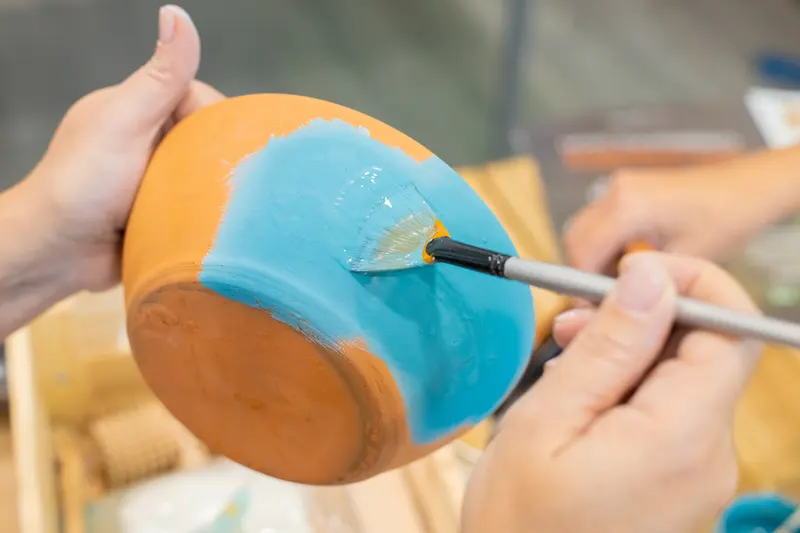
Label the back of each tile with the codes, the order, the coats and the date. Many potters keep a ring of test tiles beside their glaze buckets so they can hold a tile up next to the piece they’re about to glaze. A thick base coat that looks right raw can still run, so give each tile space on the shelf and a cookie under it.
If you don’t have a kiln, our kiln firing service in Mordialloc fires mid-fire glazes at cone 6, which matches AMACO’s flyers. Our guide to AMACO Potter’s Choice glazes explains the range in more detail.
Common mistakes with AMACO layering
The most common mistake is reversing the order. Over and under are not interchangeable, and the second glaze listed always goes on first. The second is using too many coats of a runny top glaze, which can glue a piece to the shelf.
The third is firing too hot. AMACO tested at cone 5 to 6, so a cone 7 firing or a long hold will make combinations move further than the flyers show. And finally, don’t judge a combination from one tile. Fire two or three in different parts of the kiln before committing a whole set of work.
It also pays to stir every jar thoroughly before you start. Potter’s Choice glazes carry the materials that make them break and float, and those can settle in the jar, so an unstirred glaze may fire flatter than AMACO’s photo. Keep the lids tight between sessions, since a glaze that has thickened goes on heavier than the coat count assumes, and a thick coat of a fluid glaze is exactly what runs onto the shelf.
Frequently asked questions
Will my result look like AMACO’s photo?
Probably not exactly. AMACO fired its tests on its own stoneware clays at cone 5 to 6 with set coat counts, and your clay, application and kiln will shift the result. Use the photo as a guide and fire a test tile first.
Can I fire these combinations at cone 10?
The flyers only show cone 5 to 6, so the chart can’t tell you. Potter’s Choice glazes are made for mid-fire, and firing hotter is likely to make layered combinations run further. Test carefully on a cookie if you try it.
Why is one PC-59 combination missing?
One tile on AMACO’s PC-59 flyer is labelled as PC-25 over PC-29, but its base is visibly Deep Firebrick. We couldn’t tell which part of the label was wrong, so we left it out rather than publish a guess.
Are AMACO’s layered glazes food safe?
The chart doesn’t cover food safety. Check each glaze’s label and AMACO’s guidance, and remember that layering and firing can affect a glaze. Our article on food safe glaze explains what to check.
Does Le Studio Art Space fire AMACO glazes?
The Le Studio Art Space firing service in Mordialloc runs mid-fire glaze firings at cone 6 in electric kilns, which suits AMACO Potter’s Choice glazes. Check the firing service page for what to bring and how to prepare your work.
Sources and method
Every combination is transcribed from AMACO’s layering flyers: the Potter’s Choice flyers for PC-12, PC-20, PC-29 and PC-59 (tested on AMACO Buff Stoneware #46) and the Potter’s Choice Celadon flyers for C-1 Obsidian, C-10 Snow and C-11 Mixing Clear (tested on AMACO White Stoneware No. 11 at cone 6), as published by AMACO and hosted by its stockists. Coat counts are from each flyer’s layering notes. AMACO’s flyer spells PC-39 as “Unber Float”; we use AMACO’s product name, Umber Float.
Swatch colours and colour groups are our approximate readings of AMACO’s photos. AMACO and Potter’s Choice are trademarks of American Art Clay Co., used here to identify its products. Checked on 27 October 2026.
Figures last checked .
Use this tool on your site
You’re welcome to embed the amaco glaze combinations chart on your own site, studio page or class notes. Copy the code below. Please keep the credit link, it’s how other potters find the full version.
Cite this tool
Le Studio Art Space (2026). AMACO Glaze Combinations Chart. The Potter’s Bench. https://lestudioartspace.com/potters-bench/glaze-brand-chart-library/amaco/ (accessed 27 October 2026).
This amaco glaze combinations chart from Le Studio Art Space is general educational content. The chart lists only combinations AMACO publishes, and swatch colours are approximate readings of AMACO’s photos: results vary with clay, coats, kiln and schedule, so always fire test tiles first. Always follow the clay and glaze manufacturer’s data, and for glaze and food safety decisions follow the manufacturer’s guidance and local regulations.