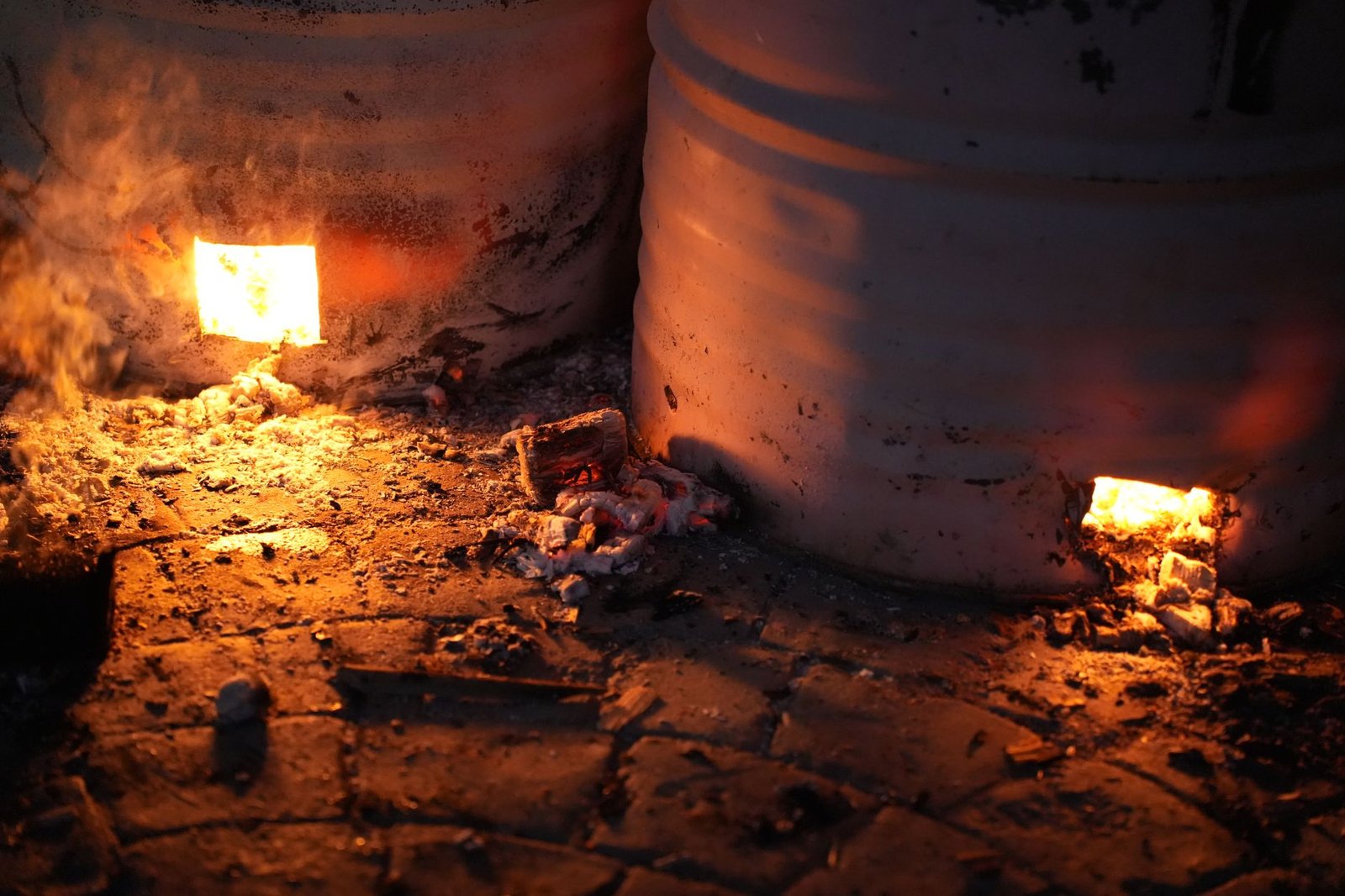
Kiln firing can feel like the most mysterious part of ceramics when you’re starting out. You hand over a greenware piece and it comes back transformed, but what actually happens inside the kiln, and why do temperatures matter so much? Here’s a plain-language guide to the firing stages you’ll come across at a ceramic studio.
Bisque firing: 960°C to 1000°C (Cone 06)
This is usually the first firing your piece goes through. It hardens the clay enough to handle and glaze safely, while keeping it porous enough for glaze to grip onto. Bisque-fired pottery is durable but still not watertight or food safe.
Earthenware glaze firing: around 1090°C (Cone 03)
A lower-temperature glaze firing suited to earthenware clay bodies. It melts the glaze into a glassy, sealed surface without pushing the clay body to full vitrification, which keeps earthenware’s characteristic warmth and colour range.
Midfiring: around 1230°C (Cone 6)
A hotter firing used for stoneware and mid-fire clay bodies. At this temperature the clay body itself vitrifies, becoming dense and effectively waterproof, while glazes take on richer, more varied surfaces than at earthenware temperatures.
Why the kiln type matters
Electric kilns, like the ones at Le Studio’s firing service, give consistent, repeatable results and are the most common choice for ceramic studios. Reduction firings in gas or wood kilns create different chemical effects during firing, but require different equipment and aren’t offered at every studio.
A few practical rules
- Work must be completely dry before firing. Any trapped moisture can cause pieces to crack or explode in the kiln.
- Different firing types need different shelves, so always check where your piece belongs.
- Name your work clearly. Kilns fire dozens of pieces from different makers at once.
- Even with careful firing, ceramics carries some risk. Not every piece survives the kiln.
Le Studio runs a dedicated kiln firing service in Mordialloc for bisque, earthenware glaze and midfiring, with a typical turnaround of 5 to 15 working days. See our Firing Service page for full details and contact information.