Pottery business startup costs in Australia range from a few hundred dollars in a shared studio to over $10,000 for a home or leased setup with your own wheel and kiln. A home studio with an entry wheel and a small kiln costs about $8,700 to $9,100 to set up, plus roughly $200 a month to run. These are indicative figures; this planner works out your own.
Pottery Business Startup Costs: Setup and Running Planner
Pottery business startup costs depend mostly on one decision: where you’ll work. Making at home means buying your own wheel and kiln, a shared studio means paying rent but little else up front, and leasing your own space means both. This planner prices each route with current Australian figures and your own estimates.
Everything is indicative. Prices change, and items you estimate yourself are only as good as the numbers you enter.
Indicative setup cost
$8,738 to $9,095
One-off costs to get started, including GST.
- Running cost
- $202 a month$2,426 a year
- First year in all
- $11,117 to $11,474setup plus 12 months
No electrician cost entered. Most kilns need a dedicated circuit, so get a quote before you budget, and allow for freight.
Setup
| Item | Indicative cost |
|---|---|
| Entry studio wheel | $1,900 to $2,060 |
| Woodrow DK30, 30 litre | $5,990 |
| Shelving, benches, display and market gear | $500 |
| Starting tools, clay and glazes | $301 to $498 |
| Business name registration (first year) | $47 |
Each month
| Item | Per month |
|---|---|
| Kiln electricity | $18 |
| Insurance | $30 |
| Marketing and website | $50 |
| Clay and glaze restock | $100 |
| Business name renewal | $4 |
Indicative Australian prices including GST, checked October 2026. Items marked as your estimate in the form are only as good as the numbers you enter.
This tool at a glance
- What it does
- Estimates what it costs to set up a pottery business and run it each month, for a home, shared or leased studio.
- Inputs
- Studio model and rent, wheel, kiln, electrician quote, fit-out, firings and electricity per firing (or a firing service), insurance, marketing, restock and whether you register a business name.
- Method
- Setup adds the wheel’s price range, the kiln’s price, your electrician and fit-out figures, starting materials of $301 to $498 and the business name fee. Running costs add rent, firing, insurance spread monthly, marketing, restock and the business name renewal.
- Outputs
- An indicative setup range, monthly and yearly running costs, a first-year total and itemised lists, all in AUD including GST.
Pottery business startup costs by studio model
Indicative costs for the three ways to set up, using the calculator’s starting values for each. At home: an entry studio wheel and a 30 litre kiln. Shared studio: Le Studio’s $180 a month shared space and a firing service. Leased space: a direct-drive wheel, a larger kiln and an illustrative $1,200 a month lease. Electricians, freight and your own estimates are extra.
| Studio | Setup | Running | First year | |
|---|---|---|---|---|
| At home | $8,738 to $9,095 | $202 a month | $11,117 to $11,474 | |
| Shared studio | $548 to $745 | $424 a month | $5,593 to $5,790 | |
| Leased space | $12,558 to $13,645 | $1,402 a month | $29,337 to $30,424 |
How the pottery business startup cost planner works
The planner splits costs into two kinds. Setup costs are one-off: a wheel, a kiln, installing it, shelving and display gear, starting tools and materials, and registering a business name. Running costs come every month: rent or membership, firing, insurance, marketing and restocking clay and glaze.
Wheel prices come from our pottery wheel buying guide and kiln prices from our pottery equipment cost calculator, both checked with Australian suppliers in October 2026. Because a wheel tier covers a range of models, the setup cost is shown as a range rather than a single number.
Choosing a studio model fills in typical starting values, which you can change. The first-year total adds the setup cost to twelve months of running costs, so you can see the cash you’d need to get through year one.
Pottery business startup costs at home
Setting up at home avoids rent but means buying your own equipment. An entry studio wheel costs about $1,900 to $2,060, and a small 30 litre Woodrow DK30 kiln about $5,990, before freight. Woodrow notes that its kilns need a dedicated electrical connection, much like an oven, so get an electrician’s quote before you budget. Kiln shelves, posts and cones are extra again, though some kilns come with a starter set.
Running costs at home are low: kiln electricity, insurance, marketing and restocking materials. Our kiln electricity cost calculator puts a typical 8-hour firing in a 3.4 kW kiln at about $4.46 on a Melbourne tariff, so even four firings a month cost less than $20.
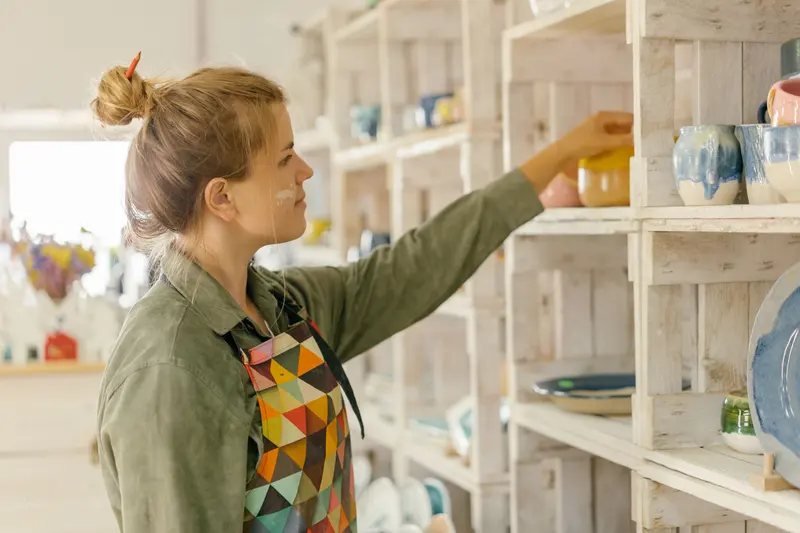
The hidden costs at home are space and ventilation. A kiln needs a safe, ventilated spot with clearance from walls, and clay work needs somewhere you can clean wet. Check your lease, strata rules or local council before installing a kiln.
Starting in a shared pottery studio
A shared studio is the cheapest way to start a pottery business. You pay a monthly fee and use the studio’s wheels and kilns, so setup costs are mainly your own tools, materials and display gear, often under $1,000.
At Le Studio Art Space in Mordialloc, shared space is $33 a day or $180 a month, and residents get their own key and can buy clay, glazes and raw materials on site. Melbourne studio memberships we found run from about $175 to $450 a month. Firing is often charged separately, so ask how the studio prices it.
The trade-off is control. You work around other people’s schedules and firing loads, and space for storing stock can be limited. Many potters start shared and move to their own space once sales are steady.
Leasing your own studio space
Leasing a workshop or small industrial unit gives you room to grow, but it’s the most expensive route. You pay rent every month whether or not you sell, plus the full cost of equipment and fit-out. The planner uses an illustrative $1,200 a month for a lease; replace it with real quotes for spaces near you.
A lease often brings extra costs too: a bond, electrical work for a three-phase kiln, signage, utilities and possibly council permits. Larger kilns such as the 60 litre DK60 at about $7,990 or the 90 litre My Cube at $11,990 make sense only when you have the output to fill them.
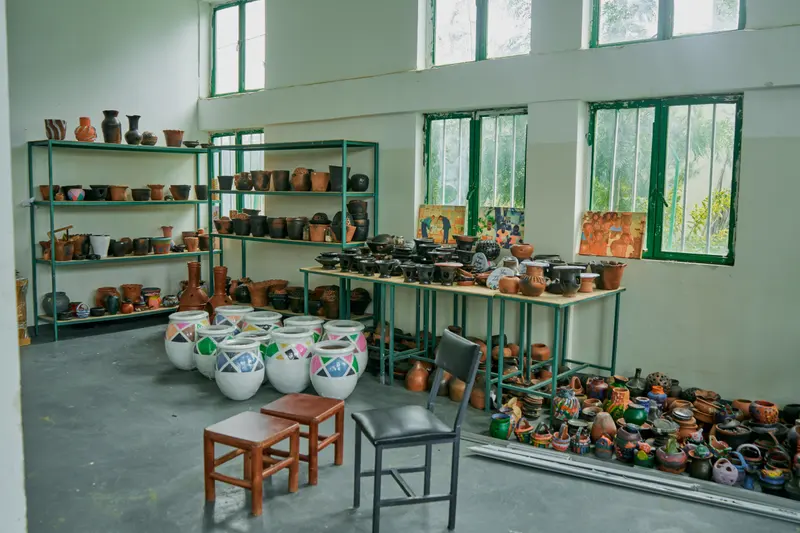
If you’re considering a lease, compare it with a private studio in a shared building first. Le Studio’s individual studios start from $390 a month, which can bridge the gap between a shared bench and a lease of your own.
Comparing the three routes over a first year
With the planner’s starting values, a shared studio costs about $550 to $750 to set up and about $425 a month to run, so the first year comes to roughly $5,600 to $5,800. A home studio costs far more to set up, about $8,700 to $9,100, but only about $200 a month after that, so its first year is roughly $11,100 to $11,500.
The difference narrows every year, because the home studio’s big costs are paid once. On these figures, a home studio’s extra setup cost is earned back after about three years of lower running costs, and sooner if you’d otherwise pay for a lot of firing. A leased space, at roughly $29,000 to $30,000 for the first year, needs steady sales from the start.
None of this counts your time, the space you’d give up at home, or the company and advice of a shared studio, which many potters value as much as the savings.
Insurance, registration and marketing
Public liability insurance is usually essential once you sell, and many markets require it. NAVA’s Premium Plus membership, which includes $20 million of public and products liability cover for professional visual artists and craftspeople, is listed at $365 a year. Check what it covers and compare it with other policies for your situation.
An ABN is free, and registering a business name with ASIC costs $47 for one year from 1 July 2026, if you trade under a name other than your own. Marketing can be as cheap as social media and a website plan, but good photographs of your work are worth paying for.
Keep records from the start. Track what you spend on equipment, materials and fees, because many of these costs can be claimed against your income at tax time. An accountant or the ATO can tell you what applies to a small creative business, including when you’d need to register for GST.
Keeping startup costs down
Start with what you need for the work you make now, not the work you might make one day. Buy a second-hand wheel or kiln if you can inspect it, start in a shared studio, and use a kiln firing service until your output justifies a kiln of your own.
Then check the other side of the ledger. Our potter income estimator shows what your output and prices could earn in a year, and comparing it with the running costs here tells you how long it would take to pay back the setup.
Frequently asked questions
How much does it cost to start a pottery business?
From a few hundred dollars in a shared studio to well over $10,000 for your own wheel, kiln and space. A home setup with an entry wheel and small kiln costs about $8,700 to $9,100 before electrical work and freight.
Do I need my own kiln to start a pottery business?
No. Many potters start with a shared studio’s kilns or a firing service. A kiln makes sense once you fire often enough that firing fees cost more than owning one.
What are the monthly running costs of a pottery business?
Rent or membership, firing, insurance, marketing and materials. At home with your own kiln, that can be around $200 a month; with a lease, it’s usually well over $1,000.
Do I need insurance to sell pottery?
Public liability insurance is strongly advisable and often required by markets and venues. Compare policies, such as the cover included with NAVA’s Premium Plus membership, for your situation.
Are these costs exact?
No. They’re indicative, based on Australian prices checked in October 2026 and on your own estimates. Get quotes for equipment, installation and rent before you commit.
How much is studio space at Le Studio Art Space?
Le Studio Art Space in Mordialloc lists shared space at $33 a day or $180 a month, and individual studios from $390 a month. Check the space for lease page for current availability.
Sources and method
Wheel prices are from our pottery wheel buying guide and kiln prices from our pottery equipment cost calculator, both checked with Australian suppliers in October 2026. Woodrow’s dedicated circuit advice is from its published kiln information. Le Studio Art Space’s space prices are from our Space for Lease page. Insurance is NAVA’s listed Premium Plus membership price, and the business name fee is ASIC’s one-year fee from 1 July 2026 as reported by Australian business registration services.
Starting materials are a range built from our beginner kit list research. The lease rent, fit-out, firing service, marketing and restock defaults are our own illustrative assumptions, and everything here is indicative.
Figures last checked .
Use this tool on your site
You’re welcome to embed the pottery business startup cost planner on your own site, studio page or class notes. Copy the code below. Please keep the credit link, it’s how other potters find the full version.
Cite this tool
Le Studio Art Space (2026). Pottery Business Startup Cost Planner. The Potter’s Bench. https://lestudioartspace.com/potters-bench/pottery-business-startup-cost-planner/ (accessed 28 October 2026).
This pottery business startup cost planner from Le Studio Art Space is general educational content. Results are estimates: firing results vary from kiln to kiln and with your clay, glaze, cone placement and firing schedule. Always follow the clay and glaze manufacturer’s data, and for glaze and food safety decisions follow the manufacturer’s guidance and local regulations.