The parts of a kiln every potter should know include the chamber where pieces sit during firing, the heating elements that generate temperature, the control panel that manages the firing schedule, and the shelves and posts that hold pieces safely in place. Understanding each part helps you troubleshoot and appreciate what’s actually happening during a firing.
The Parts Of A Kiln Every Potter Should Know
A kiln can feel like a bit of a mysterious black box, especially for someone newer to pottery who mostly just hands pieces over and waits for them to come out finished. At Le Studio Art Space, understanding a little about how a kiln actually works genuinely helps members feel more connected to the process, even if they’re not the ones operating it directly. Knowing the basic parts and what each one does demystifies a machine that plays a genuinely central role in every fired piece.
Here’s a straightforward breakdown of what’s actually inside a kiln and why each part matters.
The Kiln Chamber
The kiln chamber is simply the enclosed interior space where pieces sit during firing, insulated heavily to hold and contain the extreme heat needed to transform clay and glaze into their final fired state.
Chamber size varies enormously between kilns, from small tabletop test kilns used for glaze testing to large walk-in kilns capable of firing dozens of pieces at once in a working studio environment.
The insulation lining the chamber, usually firebrick or a ceramic fibre material, is specifically designed to withstand repeated extreme heat cycles without breaking down, since the chamber walls themselves experience the same intense temperatures as the pieces inside.
How pieces are arranged within the chamber matters too, since even heat distribution depends partly on leaving appropriate space around each piece rather than overcrowding the available room.
Over time, a kiln chamber’s lining can wear down from repeated use, which is why studios periodically inspect and maintain this part of the kiln as routine upkeep. A well maintained chamber lining also improves energy efficiency, since better insulation means the kiln doesn’t have to work as hard to maintain its target temperature.
Heating Elements
Heating elements are the components that actually generate the heat inside an electric kiln, typically coiled wire made from a metal alloy designed to withstand extreme, repeated heating without breaking down too quickly.
These elements are usually set into grooves along the interior walls of the chamber, positioned to distribute heat as evenly as possible throughout the firing space rather than concentrating it in one area.
Elements do wear out over time and with use, gradually becoming less efficient, which is part of why kilns need periodic element replacement as routine maintenance rather than a sign that something has gone genuinely wrong.
Gas kilns work differently, using burners rather than electric elements, though the underlying goal, generating and distributing sufficient heat evenly through the chamber, remains the same regardless of fuel type.
Understanding that elements degrade gradually helps explain why an older kiln might take longer to reach the same temperature than it once did, even without any obvious fault. This is exactly why regular kiln maintenance and monitoring matters so much for a studio firing pieces on a consistent, reliable schedule.
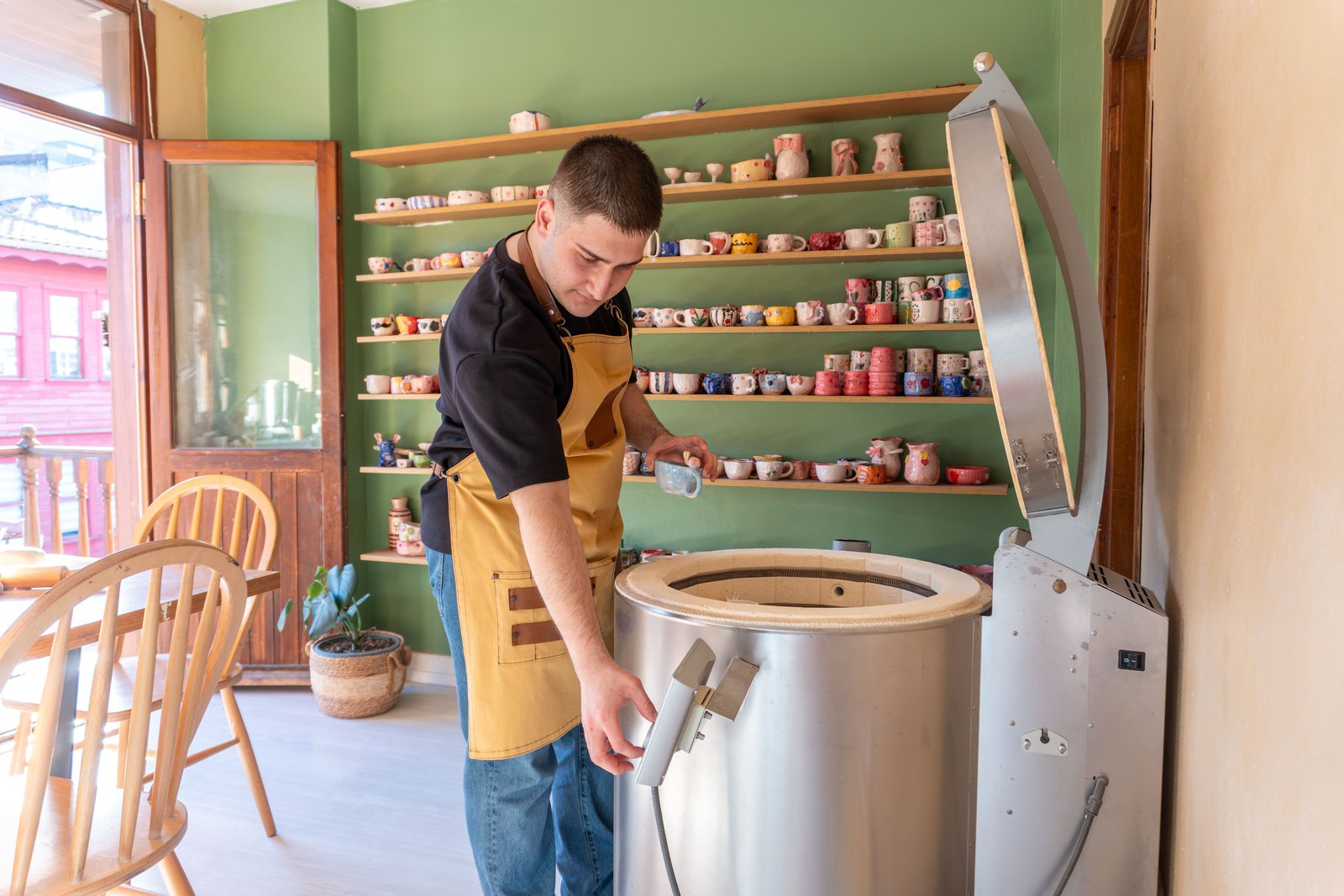
The Control Panel
The control panel is where a kiln’s firing schedule is actually programmed and monitored, typically including a digital controller that manages temperature increase rate, peak temperature, and how long the kiln holds at that peak.
Modern electric kilns often use programmable digital controllers that can run a full firing schedule automatically once set, removing a lot of the manual monitoring that older kilns once required throughout an entire firing cycle.
A thermocouple, a temperature sensing probe inside the chamber, feeds real-time temperature data back to the control panel, allowing the controller to adjust heating elements as needed to follow the programmed schedule accurately.
Understanding basic control panel functions, even without needing to operate a kiln yourself, helps you appreciate why a firing schedule can’t simply be rushed by cranking the temperature up faster than the programmed rate.
Studios like Le Studio Art Space carefully calibrate and monitor control panels and thermocouples regularly, since accurate readings are essential for both consistent results and firing safety more broadly. Cone packs, small pyrometric cones placed inside the kiln, offer an additional physical check on actual heat work beyond what the digital display reports.
Shelves, Posts, And Kiln Furniture
Kiln shelves are flat, heat resistant platforms placed inside the chamber to hold pieces during firing, allowing multiple layers of work to be stacked within the same firing rather than using only the chamber floor.
Posts, small heat resistant supports, hold shelves at the correct height and spacing above one another, letting a kiln load be arranged efficiently to make the most of the available chamber space during a single firing.
Together, shelves and posts are often referred to as kiln furniture, and they need to be genuinely heat resistant and stable, since a shelf collapse mid-firing can damage or destroy every piece stacked below it.
Kiln furniture needs regular maintenance too, including cleaning off dripped glaze and checking for cracks, since damaged furniture poses a genuine risk to an entire kiln load if it fails during a firing. Shelves are also typically coated with a protective wash to prevent glaze drips from permanently bonding to the shelf surface.
What Competing Guides Leave Out
A gap many general kiln guides skip is how understanding these parts actually helps you troubleshoot a firing that hasn’t gone as expected, whether that’s uneven results, underfiring, or unexpected glaze behaviour across different areas of a load.
Knowing that heat distribution can vary between the top, middle, and bottom of a kiln chamber, for example, helps explain why identical pieces placed in different spots can sometimes come out looking slightly different after the same firing.
Basic safety awareness around kiln components is another area worth more attention than it usually gets. Kilns reach genuinely dangerous temperatures, and understanding which parts get hot, and which need care when loading or unloading, matters for anyone spending time around one.
It’s also worth knowing that ventilation, whether through a dedicated kiln vent system or simply a well ventilated room, plays a real role in both firing quality and safety, removing fumes released during the firing process from clay, glaze, and any organic material burning out of the ware.
Why This Knowledge Helps Even If You Do Not Own A Kiln
Most hobbyist and beginner potters will never personally own or operate a kiln, relying instead on a shared studio’s firing service, but understanding the basics still genuinely deepens appreciation for what happens to a piece after it leaves your hands.
It also helps you ask better, more informed questions when something about a firing doesn’t go as expected, rather than simply assuming a mistake was made without understanding what might have actually happened.
Many members at Le Studio Art Space find that learning a bit about kiln operation makes the whole process feel less like a black box and more like a genuine, understandable part of the craft they’re already engaged in every session.
Even a basic understanding of kiln parts can inform how you design and build a piece in the first place, since knowing how heat moves through a chamber affects decisions like wall thickness or where to place delicate details on a more ambitious form.
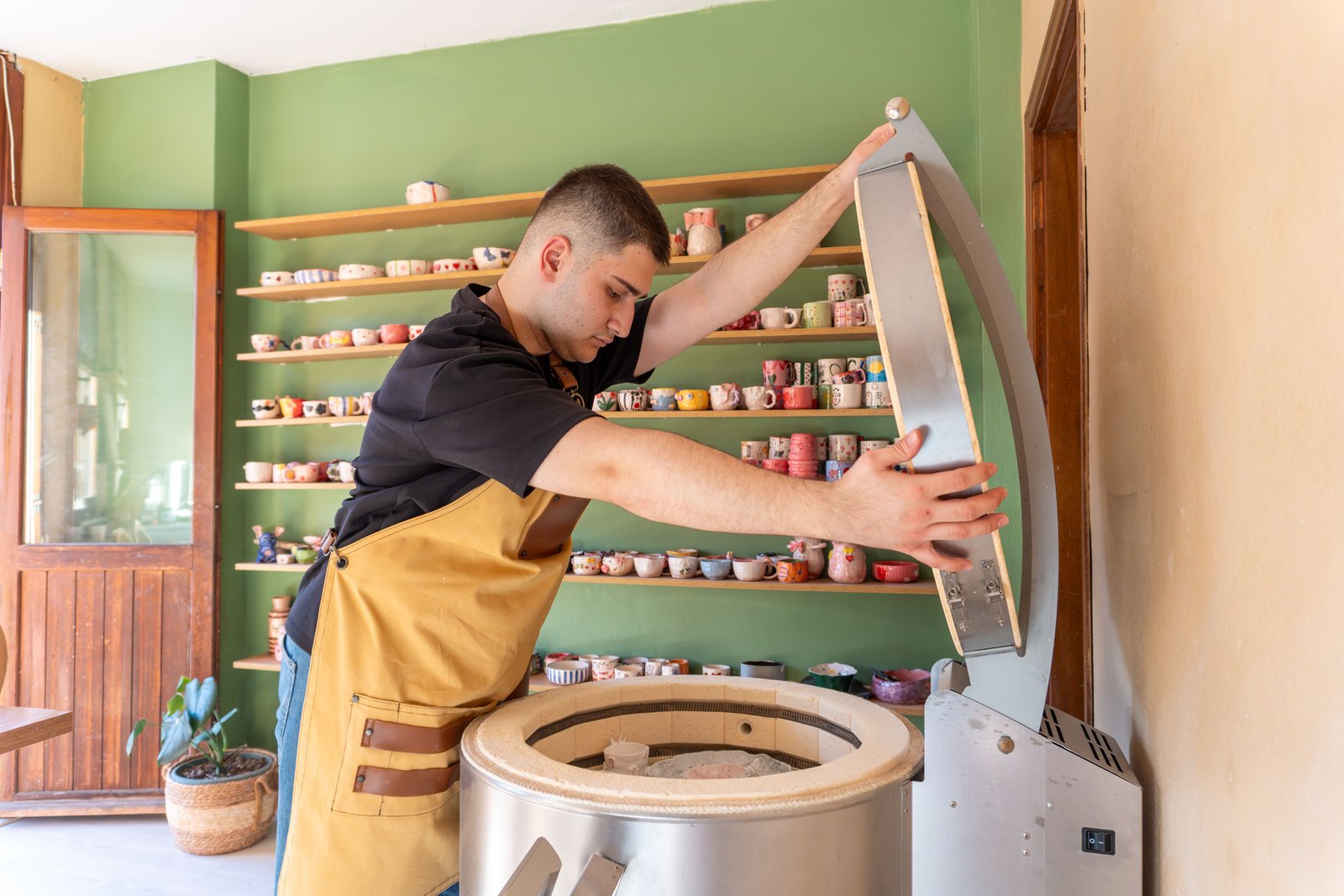
Curious to see the kilns up close? Ask about the firing service at Le Studio Art Space’s ceramic studio in Mordialloc during your next visit.
Frequently Asked Questions
Do I really need to understand kiln parts if I’m never going to own one?
Not strictly, but it genuinely helps you understand what happens to your work during firing and lets you ask more informed questions if something about a firing surprises you.
Why do some pieces come out slightly different even when fired together?
Heat distribution can vary slightly between different spots inside a kiln chamber, which is one reason identical pieces placed in different positions can show small differences after the same firing.
Is it dangerous to be around a kiln while it’s firing?
Kilns reach genuinely high temperatures, so it’s important to respect safety guidelines and let trained staff handle loading, operating, and unloading, which is standard practice at studios like Le Studio Art Space.
How often do kiln elements need replacing?
It varies with use, but elements gradually wear down over time and eventually need replacement as routine maintenance, not necessarily as a sign of a serious problem.
What happens if a kiln shelf breaks during a firing?
It can potentially damage pieces stacked below it, which is why studios regularly inspect kiln furniture for cracks or damage before loading a new firing.
This article is provided for general educational purposes by Le Studio Art Space and reflects general kiln operation principles. Always follow proper safety training before operating kiln equipment.