The beginner pottery supplies you really need are a 10 kg bag of clay, a basic tool kit with a needle tool, cutting wire, rib, sponge and loop tool, and a few household bits such as plastic bags and a spray bottle. Add a rolling pin for hand building or a trimming tool for the wheel. In Australia, that costs roughly $35 to $120 before any wheel or kiln.
Beginner Pottery Supplies: Pottery Kit List Builder
Beginner pottery supplies can get expensive fast if you buy everything at once. This builder separates what you need for your first projects from what’s nice to have later, based on whether you’ll hand build or throw, work at home or in a studio, and how much you want to spend.
It’s brand-neutral: items are described rather than named, and every price is an indicative Australian range, not a quote.
Essentials for your start
$65
Priced at the middle of indicative Australian ranges ($35 to $93).
- Essentials
- 4 items$65
- Nice to have
- 9 items$478 more
Essentials
| Item | Your price | Range |
|---|---|---|
| Clay, one 10 kg bagEnough for a term of small projects; match it to the firing temperature | $30 | $22 to $38 |
| Basic pottery tool kitNeedle tool, cutting wire, wooden rib, sponge, loop and modelling tools | $19 | $13 to $24 |
| Rolling pinFor slabs; a kitchen rolling pin works to start | $16 | $0 to $31 |
| Household bitsPlastic bags or sheeting, a spray bottle, a bucket, old towels and a canvas or calico cloth | Household | household |
Nice to have, when you’re ready
| Item | Your price | Range |
|---|---|---|
| Metal and flexible ribsSmoothing and shaping walls; a steel kidney is the cheap all-rounder | $16 | $4 to $27 |
| ApronAn old shirt does the job | $25 | $0 to $49 |
| Banding wheelTurns hand-built work while you coil, carve and decorate | $250 | $150 to $350 |
| Hole cutterClean drainage and vent holes | $7 | $6 to $8 |
| Stamps and texture toolsPressing patterns into slabs and coils | $30 | $18 to $41 |
| Glaze and underglaze brushesA fan, a hake and a few round brushes | $21 | $7 to $35 |
| Underglaze, one jarPainting colour onto greenware or bisque | $11 | $7 to $15 |
| Brushing glaze, one 472 ml jarReady-made glaze for a few pieces; check its cone and food-safe rating | $43 | $39 to $47 |
| Half-face respirator with P3 filtersFor mixing dry glaze or cleaning up dust, which you should do wet anyway | $75 | $75 |
No kiln at home? A kiln firing service can bisque and glaze fire your work, so check its clay and glaze rules before you buy.
Indicative Australian prices including GST from pottery and art suppliers, checked 28 October 2026. Prices change, and these are ranges, not quotes.
This tool at a glance
- What it does
- Lists the pottery supplies a beginner actually needs for their technique and setting, split into essentials and nice-to-haves, with indicative Australian prices.
- Inputs
- Technique (hand building, wheel or both), where you’ll work (home or a studio) and your budget (tight, moderate or generous).
- Method
- Each item in the table on this page is tagged by technique, place and need. The tool keeps the ones that fit and prices them at the low end, middle or high end of their indicative range for your budget.
- Outputs
- Your essentials with a total, the nice-to-haves with a total, each item’s price and range, and notes on wheels and firing.
Beginner pottery supplies and indicative Australian prices
Every item the builder can suggest, with indicative prices including GST from Australian pottery and art suppliers, checked on 28 October 2026. Ranges run from a basic version to a better one, and household items have no price because you probably have them already.
| Item | Essential? | Technique | Where | Indicative price | What it is for |
|---|---|---|---|---|---|
| Clay, one 10 kg bag | Essential | Both | Both | $22 to $38 | Enough for a term of small projects; match it to the firing temperature |
| Basic pottery tool kit | Essential | Both | Both | $13 to $24 | Needle tool, cutting wire, wooden rib, sponge, loop and modelling tools |
| Rolling pin | Essential | Hand building | Both | $0 to $31 | For slabs; a kitchen rolling pin works to start |
| Trimming tool | Essential | Wheel | Both | $8 to $25 | A sturdy loop for trimming feet at leather hard |
| Household bits | Essential | Both | Home | household | Plastic bags or sheeting, a spray bottle, a bucket, old towels and a canvas or calico cloth |
| Metal and flexible ribs | Nice to have | Both | Both | $4 to $27 | Smoothing and shaping walls; a steel kidney is the cheap all-rounder |
| Apron | Nice to have | Both | Both | $0 to $49 | An old shirt does the job |
| Banding wheel | Nice to have | Hand building | Home | $150 to $350 | Turns hand-built work while you coil, carve and decorate |
| Hole cutter | Nice to have | Hand building | Both | $6 to $8 | Clean drainage and vent holes |
| Stamps and texture tools | Nice to have | Hand building | Both | $18 to $41 | Pressing patterns into slabs and coils |
| Wheel bat | Nice to have | Wheel | Home | $20 to $46 | Lift wide or soft pieces off the wheel without distorting them |
| Calipers | Nice to have | Wheel | Both | $13 to $17 | Measuring lids and matching sets |
| Glaze and underglaze brushes | Nice to have | Both | Both | $7 to $35 | A fan, a hake and a few round brushes |
| Underglaze, one jar | Nice to have | Both | Both | $7 to $15 | Painting colour onto greenware or bisque |
| Brushing glaze, one 472 ml jar | Nice to have | Both | Home | $39 to $47 | Ready-made glaze for a few pieces; check its cone and food-safe rating |
| Half-face respirator with P3 filters | Nice to have | Both | Home | $75 | For mixing dry glaze or cleaning up dust, which you should do wet anyway |
How the pottery kit list builder works
Every item in the table above is tagged three ways: whether it’s essential or nice to have, which technique it’s for, and whether you need it at home, in a studio or both. The builder keeps the items that fit your answers and prices each one at the low end, the middle or the high end of its range, depending on your budget.
Prices are indicative Australian retail prices including GST, from Australian pottery and art suppliers in October 2026. The low end is usually a basic version that does the job, and the high end a sturdier or more specialised one. Household items have no price, because you probably already have them, and the wheel itself is left out of the totals because it costs far more than everything else combined.
The totals are a guide to budgeting, not a shopping list to follow to the letter. Many potters start with less and add tools as they discover what they actually reach for.
The essential beginner pottery supplies
Clay comes first. A 10 kg bag of stoneware or earthenware costs about $22 to $38 in Australia and is enough for a term of small projects. Match it to the firing temperature of the kiln that will fire it, because a clay fired too low stays weak and one fired too high can melt. Our clay body selector helps you choose.
A basic pottery tool kit is the second essential. Most cheap kits include a needle tool for scoring and trimming, a cutting wire, a wooden rib, a sponge, a loop tool and a couple of modelling tools, for about $13 to $24. They aren’t fancy, but they’re all a beginner needs, and you’ll learn which tools you love before you upgrade them.
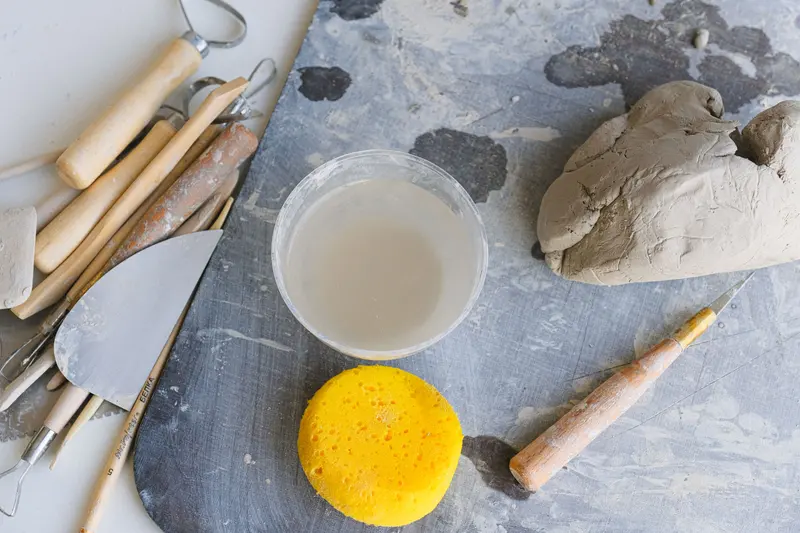
Hand builders need a rolling pin for slabs, and a kitchen one is fine to start. Wheel throwers need a sturdy trimming tool for cleaning up feet at leather hard, which matters more than any other wheel accessory.
Don’t forget the household essentials. Clay dries quickly in an Australian summer, so plastic bags or sheeting to wrap work between sessions are as important as any tool. A spray bottle keeps the rim of a coil pot workable, a bucket collects scraps for reclaim, and old towels and a canvas or calico cloth on the table stop clay sticking and make cleaning up easier. None of these needs to be bought new.
What’s in a good pottery tool kit?
A good beginner pottery tool kit covers five jobs: cutting, scoring, smoothing, shaping and cleaning up. A cutting wire takes clay off the bag and pots off the wheel. A needle tool scores joins, pops air bubbles and trims rims. A rib, wooden, metal or flexible, smooths and shapes walls. A sponge controls water. And a loop or ribbon tool carves and trims.
What a cheap kit often lacks is quality, not variety. The wooden rib may be rough and the loop tool may bend. Rather than buying a pricier kit, many potters keep the cheap kit and upgrade just one or two tools, usually a flexible rib and a good trimming tool. Our article on choosing a pottery starter kit goes into more detail.
Nice-to-have pottery supplies for later
Once you know you’re hooked, a few extras make life easier. A banding wheel turns hand-built work while you coil, carve and decorate, and it’s the single most useful upgrade for hand builders, though a good one costs $150 or more. Stamps and texture tools add surface interest, and a hole cutter makes clean drainage holes and vents.
Wheel throwers benefit from bats, which let you lift wide or soft pieces off the wheel without distorting them, and calipers for measuring lids and matching sets. Both make sense once you’re throwing regularly, not on day one. A wooden or plastic bat system also needs a wheel head with bat pins, so check yours before you buy.
For decorating, a few brushes, a jar or two of underglaze and a ready-made glaze let you finish pieces at home, as long as a kiln or firing service will fire them.
Pottery supplies for home vs a studio
Where you work changes the list a lot. In a studio, wheels, bats, banding wheels, slab rollers and kilns are usually shared, so you need only personal tools and clay. Many studios sell clay and glazes on site, and some require you to use their clay so it suits their kilns.
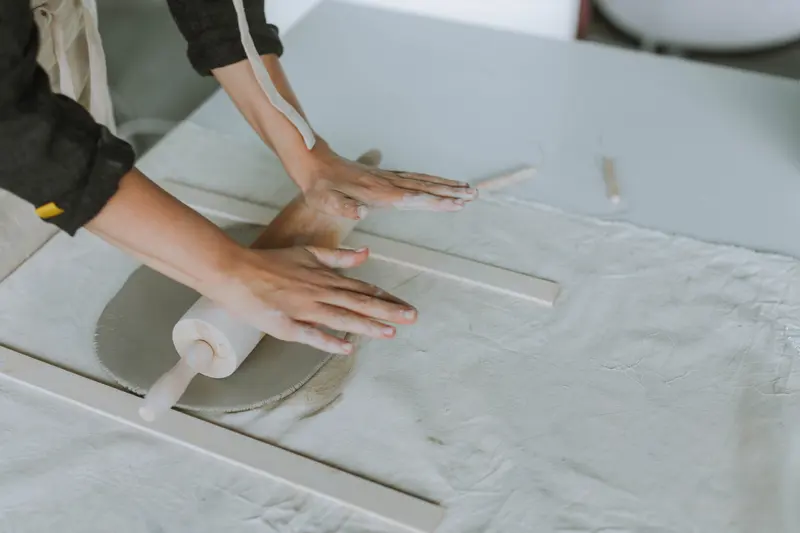
At home, you need everything yourself, plus the household bits that keep clay workable: plastic bags or sheeting to slow drying, a spray bottle, a bucket for reclaim and slurry, old towels, and a canvas or calico cloth so clay doesn’t stick to the table. Clean up wet with a sponge or mop and never sweep dry clay, because the dust contains silica. A respirator with P3 filters is worth having if you’ll mix dry glaze materials.
How to save money on beginner pottery supplies
Start small and buy as you go. Use kitchen tools you already own: an old knife, a wooden spoon, a fork for scoring, a rolling pin and chopsticks all work. Reclaim your scraps instead of throwing them out, and split a bag of clay or a glaze with a friend.
Be wary of the all-in-one pottery kits sold online with a tiny wheel, a few tools and air-dry clay. They can be fun for children, but air-dry clay can’t be fired, isn’t waterproof and behaves differently from real clay, so the skills don’t always transfer. You’ll get more from a bag of real clay and a basic tool kit, plus access to a kiln.
Taking a class first is often the cheapest way to start, because the studio supplies clay, tools, wheels and firing, and you find out what you enjoy before spending anything. If you go on to set up at home, our pottery equipment cost calculator compares owning a wheel or kiln with a studio membership, and a kiln firing service means you don’t need a kiln at all.
Frequently asked questions
What pottery supplies does a complete beginner need?
A bag of clay, a basic tool kit and a few household items such as plastic bags, a sponge and a spray bottle. Add a rolling pin for hand building or a trimming tool for the wheel, and you can start.
How much does it cost to start pottery at home?
Essential supplies for hand building cost roughly $35 to $95 in Australia. Wheel throwing at home adds the cost of a wheel, from about $120 for a hobby tabletop, and every piece needs firing in a kiln or by a firing service.
Is a cheap pottery tool kit worth buying?
Yes, for a beginner. A cheap kit covers the basic jobs and helps you find out which tools you actually use. Upgrade the one or two you use most, rather than buying an expensive kit up front.
Do I need a kiln to start pottery?
No. Many potters make work at home and use a studio or firing service to fire it. Check the firing service’s clay and glaze requirements before you buy materials.
Why doesn’t the builder recommend brands?
Because most basic tools are made by many companies and do the same job. The builder describes what each item is for, so you can choose whatever suits your budget and is in stock.
What supplies do I need for a class at Le Studio Art Space?
Usually just old clothes or an apron. Classes at Le Studio Art Space in Mordialloc generally supply clay and tools, but check with the teacher when you book, as each class differs.
Sources and method
Indicative prices including GST were checked on 28 October 2026 at Keane Ceramics (tools, ribs, sponges, cutting wires, trimming and hole tools, rolling pin, banding wheels, bats, calipers, aprons, brushes, underglaze, glazes, respirator and filters) and Eckersley’s Art and Craft (basic tool kit). Clay prices are 10 kg bags from Walker, Clayworks and Keane stockists, as on our clay body selector. Le Studio’s on-site clay and glaze sales are from our Ceramic Studio page.
Which items count as essential, and the advice on what to buy first, are our own studio judgement. Prices change, so treat every figure as a range, not a quote.
Figures last checked .
Use this tool on your site
You’re welcome to embed the beginner pottery kit list builder on your own site, studio page or class notes. Copy the code below. Please keep the credit link, it’s how other potters find the full version.
Cite this tool
Le Studio Art Space (2026). Beginner Pottery Kit List Builder. The Potter’s Bench. https://lestudioartspace.com/potters-bench/beginner-pottery-kit-list-builder/ (accessed 28 October 2026).
This beginner pottery kit list builder from Le Studio Art Space is general educational content. Results are estimates: firing results vary from kiln to kiln and with your clay, glaze, cone placement and firing schedule. Always follow the clay and glaze manufacturer’s data, and for glaze and food safety decisions follow the manufacturer’s guidance and local regulations.