MKM Pottery Tools are used mainly for adding stamped and rolled texture to clay, through a range of carved stamps, rollers, and the brand’s well-known Decorating Disk template. Founded by a potter solving his own studio need, the range has built a genuine following among hand builders and wheel throwers alike.
Spotting a beautifully stamped texture pattern on a piece and wanting to know exactly how it was made leads a lot of potters straight to mkm pottery tools sooner or later. Here at Le Studio Art Space, this is genuinely one of the more exciting decorating tool brands we introduce members to once they’re ready to add texture to their work, so here’s a proper rundown of what the range actually offers.
What MKM Pottery Tools Is
MKM Pottery Tools was founded in 2003 by Rick McKinney, growing directly out of his own personal need for tools that simply weren’t available anywhere else at the time. Rather than staying a private solution, he realised other potters would likely want the same tools, and the company grew from there.
The throwing sticks he originally developed for himself, now known as MKM Throwing Tools, and a decorating template called the Decorating Disk were really what launched the business into a genuine commercial product line, alongside the various stamps he’d designed along the way for his own work.
What makes MKM genuinely distinctive within the ceramics tool world is that every stamp, roller, and small tool is carved at the company’s own factory by MKM’s own employees, rather than being contracted out to third-party manufacturers, giving the brand direct, hands-on control over quality throughout production.
The company also takes a genuinely thoughtful approach to materials, using wood left over from the furniture industry for its rollers rather than sourcing new timber specifically for tool production, a small but meaningful detail that reflects a broader care in how the business actually operates day to day.
The Main Product Lines MKM Is Known For
Stamps make up a huge part of the MKM catalogue, spanning an enormous range of patterns and designs, from simple geometric motifs through to intricate, detailed imagery, giving potters a genuinely broad library of texture options to choose from for decorative work.
Rollers are another core product line, letting potters apply a continuous, repeating texture pattern across a larger surface far more efficiently than stamping the same motif individually across a whole piece by hand, which is particularly useful for slab work and larger hand-built forms.
The Decorating Disk deserves special mention as the product that really launched the business, a genuinely clever universal template tool that helps potters divide and mark pieces evenly for consistent, repeatable decoration, solving a specific, practical studio problem that hadn’t had a dedicated tool before it existed.
Smaller hand tools round out the catalogue too, including various shaping and detail implements that complement the main stamp and roller lines, giving potters a genuinely broader kit of texture-focused tools built to the same quality standard rather than just the two headline product categories.
How Potters Use MKM Tools In Practice
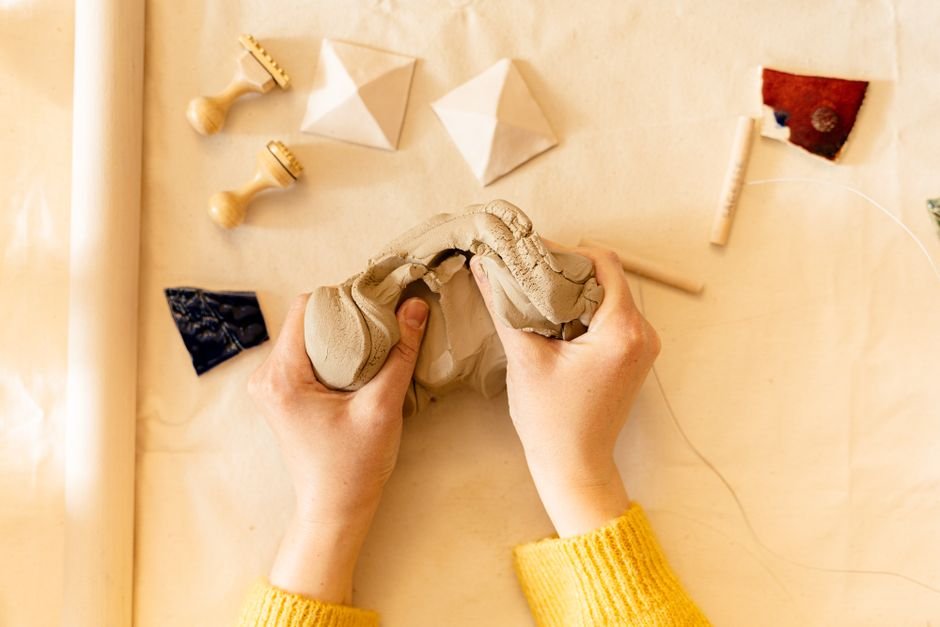
Application typically happens on leather-hard clay, firm enough to hold a clean, crisp impression from a stamp or roller without collapsing or smearing, but still soft enough that the texture presses in cleanly rather than requiring excessive force that risks distorting the piece.
Combining MKM texture work with glaze or underglaze is where a lot of the visual payoff really comes through, since a textured surface interacts with glaze in ways a flat surface simply can’t, catching and pooling colour differently in the recessed areas compared to the raised parts of a stamped or rolled pattern.
Many potters use MKM stamps and rollers as a starting point for their own further decoration too, combining a stamped texture base with hand painting, sgraffito, or additional carved detail layered on top, building a genuinely personalised design rather than relying purely on the stamp pattern alone.
The Decorating Disk sees particularly regular use for anyone doing repeated banding, lettering, or evenly spaced pattern work around the circumference of a thrown piece, a task that’s genuinely fiddly and error-prone to do accurately by eye alone without a dedicated marking tool.
Who MKM Tools Suit Best
Hand builders genuinely get enormous value from the roller range specifically, since applying texture to a flat slab before forming it into a piece is such a natural, efficient part of the hand-building process, and rollers make covering larger surface areas fast and consistent.
Wheel throwers benefit too, particularly for adding decorative texture bands or stamped detail to an already-thrown form, though the leather-hard timing window matters more here since a wheel-thrown piece needs to reach the right firmness before stamping without disrupting its thrown shape.
Potters at pretty much any skill level can genuinely get good results from MKM tools, since the technique itself, pressing a well-made stamp or rolling a textured roller evenly, doesn’t demand the same steady hand and years of practice that freehand carving or painting decoration requires.
Production potters making repeated, similar pieces also benefit meaningfully from the consistency a purpose-made stamp or roller offers, since achieving the exact same texture pattern across a batch of pieces by freehand carving alone would be genuinely difficult to replicate reliably piece after piece.
What Competing Guides Leave Out
How MKM stamps compare to carving your own texture by hand rarely gets an honest, balanced comparison. In our experience at Le Studio Art Space’s Ceramic Studio, a purpose-made MKM stamp genuinely offers more consistency and repeatability than freehand carving, while hand carving still wins on complete design originality, so the right choice really depends on what a specific piece calls for.
Realistic cost expectations for building a stamp collection are another gap worth addressing plainly. Individual stamps and rollers add up in cost fairly quickly if you’re drawn to collecting a wide variety of patterns, so starting with a small, versatile selection and expanding gradually as you identify your own favourite textures is a genuinely more sensible approach than buying broadly upfront.
Cleaning and maintaining stamps between uses is a third practical gap that rarely gets a clear mention. Clay residue left in the fine detail of a stamp can affect how cleanly it presses on future use, so a quick clean after each session genuinely keeps a stamp performing at its best over years of regular use.
Proper drying and storage between sessions matters too, particularly for the wooden roller handles, since leaving them damp for extended periods can affect the wood over time. A quick wipe down and storing tools somewhere dry is a small habit that genuinely extends their working life.
MKM Pottery Tools Versus Other Texture Tool Brands
Other manufacturers offer their own stamp and roller ranges, some with a narrower focus on a specific decorative style, others covering broadly similar ground to MKM’s catalogue with their own particular pattern selection and construction approach.
MKM’s in-house carving and manufacturing process is a genuine differentiator worth weighing, since direct control over production tends to translate into consistent quality across the range, compared to a brand that outsources manufacturing to multiple third-party contractors with potentially more variable results.
Ultimately, browsing a few different brands’ pattern catalogues directly, since the specific designs available matter as much as brand reputation for a decorative tool like this, is a genuinely sensible way to find the texture options that actually suit your own style and current project.
Price also varies across brands, and while MKM sits at a reasonable mid-range point for purpose-made stamps and rollers, comparing a couple of options against your specific budget is worth doing before committing to building out a larger collection of any single brand’s tools.

Ready to try MKM texture tools hands-on for yourself? Join a hand building workshop at Le Studio Art Space in Mordialloc and give it a go.
Frequently Asked Questions
Do I need wheel-throwing experience to use MKM stamps and rollers?
Not at all, they work genuinely well for hand-building too, arguably even more naturally since applying texture to a flat slab before forming is such a core part of that process. Beginners can get good results quickly.
How many MKM stamps should I buy to get started?
A small, versatile selection is a more sensible starting point than trying to build a large collection right away. Individual stamps add up in cost, so it’s worth expanding gradually as you find your own favourite patterns.
Do MKM stamps work on any type of clay?
They work best on clay at leather-hard, firm enough to hold a clean impression without collapsing. Working too wet or too dry both make getting a crisp, consistent texture noticeably harder regardless of clay body.
Is hand carving better than using a stamp for texture?
Neither is objectively better, they suit different goals. In our experience, stamps offer more consistency and repeatability, while hand carving allows more complete design originality, so the right choice depends on what a specific piece calls for.
Do I need to clean MKM stamps after every use?
A quick clean genuinely helps, since clay residue left in the fine detail of a stamp can affect how cleanly it presses next time. It’s a small habit that keeps a stamp performing well over years of regular use.
This article is provided for general educational purposes by Le Studio Art Space and reflects publicly available product information and common studio practice.