To turn pottery into a business, start by deciding what kind of business you want, such as markets, online sales, wholesale, commissions, or teaching. Build a consistent body of work, understand your real costs including firing and your time, and test where your work sells best. Using studio access and a firing service can keep startup costs low while you grow steadily.
It often starts with a simple question from a friend: “Can I buy that mug?” Then someone asks if you’ll make a set for their kitchen, or whether you sell at markets. Before long you’re wondering whether your hobby could become a pottery business. It’s an exciting thought, and plenty of potters have made that shift, but it helps to go in with your eyes open.
At Le Studio Art Space in Mordialloc, we see members at every stage of this journey, from selling a few pieces to friends to running regular market stalls and taking commissions. This guide offers realistic, grounded advice on deciding what kind of business you want, building a consistent range, understanding costs, finding where to sell, and growing at a sustainable pace.
Deciding What You Want The Pottery Business To Be
There’s no single kind of pottery business. Some potters sell at weekend markets, some run online shops, some supply cafes and stores wholesale, some take commissions, and some focus on teaching classes. Many combine a few of these.
Each option suits different personalities and lifestyles. Markets suit people who enjoy chatting with customers and don’t mind setting up stalls in all weather. Online sales suit people comfortable with photography, social media, and shipping fragile items.
Wholesale means making larger quantities of consistent pieces at lower prices per piece, which suits efficient makers who like repetition. Commissions suit people who enjoy working to a brief, while teaching suits those who love sharing skills.
It’s worth thinking about how much time you have, what you enjoy making, and how much you want the business to grow. A small side business that covers your clay and firing costs is a perfectly valid goal, just as much as a full time studio.
If you’d like a broader picture of how people earn in the field, our guides on what a career as a ceramic artist looks like and what ceramic jobs are out there cover the wider landscape.
Building A Consistent Body Of Work
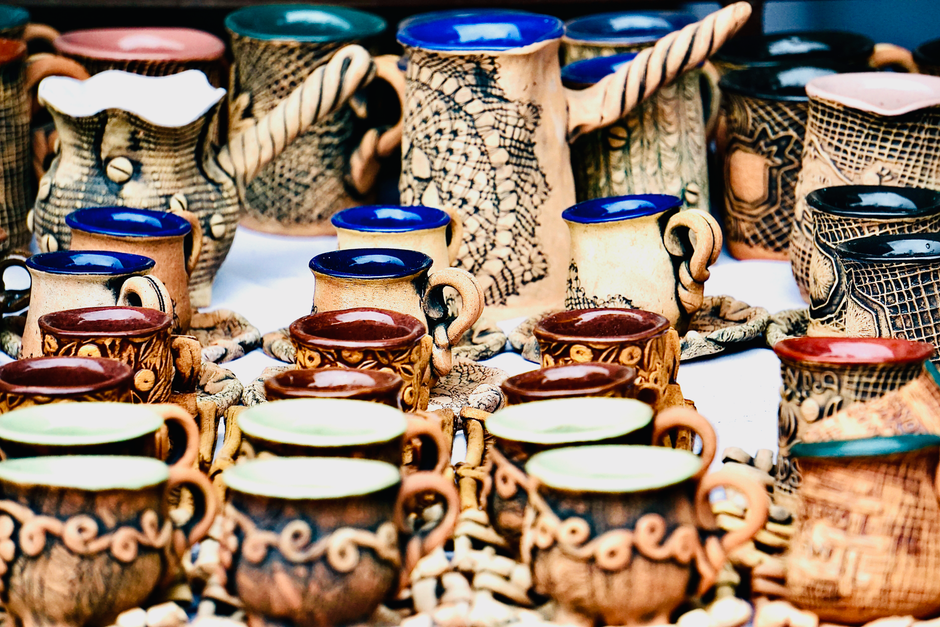
Consistency matters a lot when selling. Customers like to see a coherent range, pieces that clearly belong together through form, colour, glaze, or style. It makes your stall or shop look intentional and helps people recognise your work.
A consistent range also makes production easier. If you settle on a few forms and glazes you can make reliably, you’ll waste less time, lose fewer pieces, and be able to restock popular items.
That doesn’t mean you can’t experiment. Many potters keep a core range for selling and a separate space for new ideas. Successful experiments can gradually join the core range.
Repeatability is a real skill. Being able to throw ten mugs of similar size, weight, and handle shape takes practice. Our guide to wheel pottery ideas for your next session includes ideas for practising sets and series.
Finally, choose a clay body and glaze palette you can access reliably. If a key material suddenly becomes unavailable, it can disrupt a whole range, so it’s worth knowing your suppliers and having backups.
Understanding Your Real Costs
Many new sellers underprice their work because they only count clay. Real costs include clay, glaze materials, firing fees or kiln electricity, studio rent or membership, tools, packaging, market stall fees, online platform fees, and transport.
Then there’s your time. Pottery involves many stages: wedging, throwing or building, trimming, drying, bisque, glazing, glaze firing, finishing, photographing, packing, and selling. It adds up to a lot of hours for each piece.
Losses also need to be counted. Some pieces will crack, warp, or come out of the glaze kiln with flaws. Factoring in a realistic loss rate helps your pricing stay sustainable.
A simple approach is to track every cost for a batch of work, divide by the number of saleable pieces, then add a fair hourly rate for your time and a margin. It’s not exact, but it’s far better than guessing.
Basic record keeping helps too. Keeping receipts and tracking income and expenses makes tax time easier. In Australia, you may need an ABN once you’re running a business, and registering for GST becomes relevant above certain turnover thresholds, so it’s worth speaking with an accountant or checking official government guidance as you grow.
Where And How Potters Sell
Markets are a classic starting point. They let you meet customers face to face, hear what they think, and see what catches their eye. Craft and makers’ markets around Melbourne’s bayside and beyond can be a great way to start.
Galleries and studio shops can show your work to an art minded audience. Some work on consignment, taking a percentage of each sale. Group exhibitions and pop up shows are often more accessible for emerging potters.
Online shops give you a wider reach but require good photos, clear descriptions, and careful packing. Shipping ceramics safely takes practice, and postage costs need to be built into prices.
Local stockists, such as gift shops, cafes, and design stores, may buy wholesale or stock work on consignment. Wholesale prices are lower than retail, so your costs need to allow for that.
Social media ties everything together. Sharing your process, new work, and upcoming markets helps people follow your journey and find out where to buy.
Commissions and custom orders can come from any of these channels. They’re a lovely vote of confidence, but it helps to agree on details like size, colour, quantity, timing, and price in writing, and to explain that handmade pieces will vary slightly. Taking a deposit is common practice and protects your time if plans change.
What Competing Guides Leave Out About A Pottery Business
Most articles about starting a pottery business focus on marketing and pricing, but many skip food safety. If you sell mugs, bowls, and plates, the glazes you use need to be suitable for food and drink. That means using glazes designed and tested for food use, firing them correctly, and being cautious with surfaces that are crazed, rough, or unstable. Our guides to what makes a glaze food safe and why food safe glaze claims are not all equal explain the key points.
Labelling matters too. If a piece is decorative only, say so clearly. Customers appreciate honesty about dishwasher, microwave, and oven use.
Another gap is startup costs. Buying a kiln, wheel, and studio setup can cost thousands of dollars before you sell a single piece. Many potters reduce that risk by using studio access and a firing service while their business grows. That way, you only pay for what you use, and you can invest in your own equipment later if it makes sense.
Finally, few guides mention burnout. Turning a hobby into a business changes how it feels. Keeping some time for making just for fun helps protect your love of clay.
Starting Small And Growing Steadily
Start with a small, manageable step. That might be one market, a handful of pieces online, or a small order for a friend’s cafe. Learn from each experience before taking on more.
Keep notes on what sells, what people ask about, and what you enjoy making. Over time, these patterns will guide your range and pricing, and help you drop pieces that take too long for what they earn.
Grow at a pace that suits your life. Many potters build their business gradually over years, keeping other income while sales grow. There’s no need to rush.
Lean on community. Other makers can share advice on markets, suppliers, and pricing. Our ceramic studio gives members space and kiln access, our firing service handles firing without a kiln of your own, and our workshops and classes help sharpen your skills.
Results vary for everyone, and there are no guarantees, but many potters find that a steady, thoughtful approach builds a business that’s both sustainable and enjoyable.
Ready to take your pottery further? Develop a consistent body of work with studio access and the firing service at Le Studio Art Space in Mordialloc, and keep startup costs low while your business finds its feet.
Frequently Asked Questions
Can you really make money from a pottery business?
Some potters do, but income varies a lot and often grows slowly. Many combine sales with teaching or other work, especially early on.
How should I price my pottery?
Add up all your costs, including materials, firing, studio access, packaging, and your time, then add a margin. Many beginners underprice, so it’s worth reviewing regularly.
Do I need my own kiln to sell pottery?
No. Many potters use a studio or firing service, which keeps startup costs down. You can consider your own kiln later if it makes financial sense.
Do my mugs need food safe glaze to sell them?
If they’re meant for food or drink, yes, they should be glazed and fired with materials suitable for that use. Label decorative items clearly.
Can Le Studio Art Space help me start selling?
Le Studio Art Space offers studio access, a firing service, classes, and a gallery for exhibitions and pop up shows, which can help you develop and show your work.
This article is provided for general educational purposes by Le Studio Art Space. It is not financial, legal, or tax advice. Please consult a qualified professional about your circumstances.