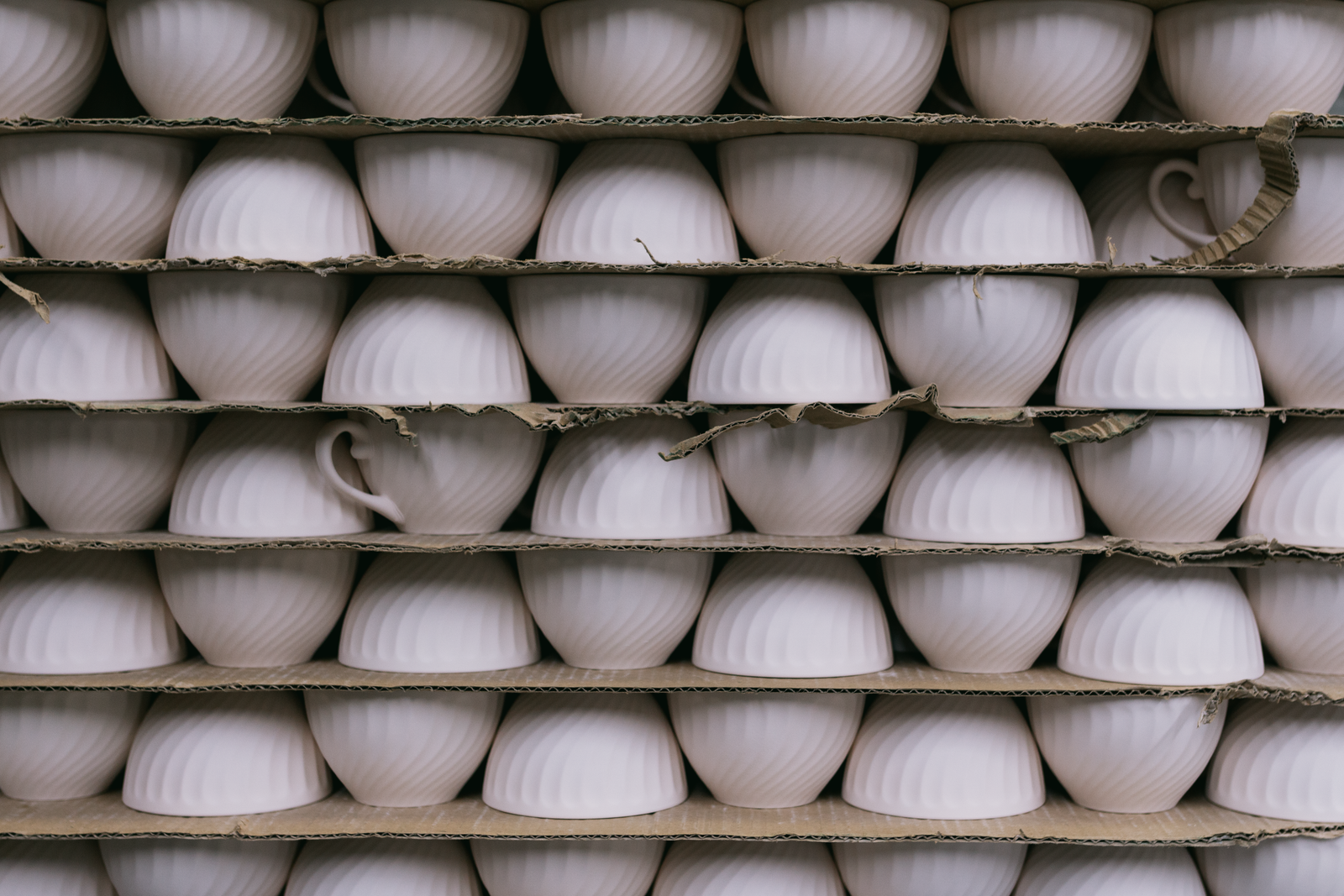
Unpainted pottery, meaning a bisque fired piece that never got decorated, can still be painted and fired later without any issue, since bisqueware doesn’t expire or degrade sitting on a shelf. Whether it’s from an old class or a half-finished project, there are genuinely more options for finishing it than most people realise.
What To Do With Unpainted Pottery
Almost every studio has a shelf somewhere with a few unclaimed, unpainted pieces sitting quietly in the corner, and almost every potter has at least one bisque fired piece at home that never made it past the raw clay colour stage. At Le Studio Art Space, this comes up regularly with members who rediscover an old mug or figure and aren’t sure whether it’s too late to do anything with it. The good news is that unpainted pottery is far more forgiving than people expect, and there are several genuinely good paths forward.
Understanding why pieces end up unfinished in the first place, and what your real options are now, makes it much easier to decide what to actually do with that piece sitting in your cupboard.
Why Pieces End Up Unpainted
Life is the most common reason a bisque piece never gets decorated. Someone finishes a class, gets busy, and the piece simply gets set aside with every intention of coming back to it later, until later turns into months or even years.
Sometimes it’s indecision rather than time. A piece can sit unpainted because the maker genuinely can’t settle on a colour scheme or design, and rather than commit to something they’re unsure about, they leave it blank instead.
Occasionally a piece is left unpainted on purpose, at least temporarily, because the maker wants to see how it looks bisque fired before deciding on a decoration approach. That’s a completely reasonable way to work, even if it sometimes turns into a longer pause than planned.
Whatever the reason, none of it means the piece is somehow ruined or past its usable window. Bisqueware is remarkably stable once fired, which is exactly why it can sit around for a long time without any real consequence.
Can You Still Paint It Even After Time Has Passed
Yes, genuinely. Once clay has been bisque fired, it’s a stable, inert ceramic material, not something that continues to change chemically over time the way organic materials do. A piece fired a year ago behaves essentially the same as one fired last week.
This is one of the more reassuring facts about ceramics for anyone worried they’ve left it too long. There’s no expiry date on bisqueware, and no clock quietly ticking down on whether it can still be decorated.
The only real consideration is dust and surface grime that can accumulate over months or years of sitting on a shelf, which is a cleaning issue rather than a structural one. A quick wipe down before painting solves that completely.
So if you’ve been putting off finishing an old piece out of a vague worry that it’s somehow too late, that worry simply isn’t grounded in how ceramics actually work. The piece is exactly as paintable now as it was the day it came out of the kiln.
Options Beyond Traditional Glaze Or Ceramic Paint
Traditional glaze is only one route for finishing an old piece, and it’s worth knowing there are genuinely good alternatives depending on what look you’re after. Underglaze offers a different range of finishes and can be layered in ways that create more painterly, hand-drawn effects than a straight glaze application.
Acrylic paint is another option, particularly for a piece that’s purely decorative rather than intended for food or drink use. It won’t be fired the same way a glaze would, but it opens up colour and technique options that a firing process doesn’t always allow.
Mixed approaches are increasingly common too, combining underglaze detail work with a clear glaze overlay, or using resist techniques to create pattern and contrast rather than a single flat colour. An old piece is actually a low-pressure way to experiment with an approach you haven’t tried before.
None of these options are objectively better than another, they simply suit different goals, so it’s worth thinking about what you actually want from the finished piece before choosing a direction.
Bringing An Old Piece Back Into A Studio Session
If your unpainted piece came from a studio originally, or even if it didn’t, most working studios are happy to have you bring an old piece in to finish during a regular session. Le Studio Art Space regularly sees members bring back pieces from months or even years earlier to finally decorate them.
Before your session, a quick wipe with a slightly damp cloth or soft brush removes any accumulated dust, which gives the paint or glaze a cleaner surface to bond with. There’s no need for anything more elaborate than that for a typical piece.
Bringing the piece in also means you get access to a proper firing service afterward, rather than needing to find somewhere to fire it yourself. That’s often the actual bottleneck for people finishing an old piece at home rather than the painting itself.
It’s also a good opportunity to ask staff for guidance if you’ve forgotten some of the technique from your original class, since revisiting an old skill after a long gap is completely normal and nothing to feel awkward about.
What Competing Guides Leave Out
Most general guides to finishing old pottery skip the question of whether dust or storage conditions genuinely affect an unpainted piece, beyond a vague mention of cleaning. In practice, ordinary household dust and light surface grime are the only real concerns, and neither compromises the clay body itself in any lasting way.
Cleaning is genuinely simple. A soft, slightly damp cloth or a gentle rinse under water is usually enough, and the piece can air dry fully before you start painting, which typically only takes an hour or two depending on the size of the piece and the room’s humidity.
Another gap worth naming is what happens if a piece has picked up oils from handling over the years, since skin oils can occasionally affect how evenly glaze adheres in small areas. A light rinse before painting addresses this too, so it’s rarely worth worrying about beyond that simple step.
Storage conditions like sunlight or temperature swings, which some guides vaguely warn about, genuinely don’t affect fired bisqueware in any meaningful way, since it’s already a stable, inert ceramic material by that point.
Deciding Whether To Finish It Or Start Fresh
Sometimes the honest answer is that a piece is worth finishing exactly as it is, especially if it holds sentimental value or you’re simply curious to complete something you started long ago. There’s real satisfaction in finally closing that loop on an old project.
Other times, your skills or taste may have moved on enough that the original piece no longer feels like something you’d choose to make today, and that’s a perfectly valid reason to set it aside and start something new instead.
Neither choice is wrong, and there’s no pressure to finish every piece you’ve ever started. Many potters find that letting go of an old piece that no longer excites them actually frees up more enthusiasm for a new project.
If you’re genuinely unsure, bringing the piece into a session and starting to paint it is often the fastest way to find out how you feel about it, rather than trying to decide in the abstract while it’s still sitting on a shelf.
Have an old unpainted piece sitting around? Bring it into Le Studio Art Space’s ceramic studio in Mordialloc and finish it during a regular session.
Frequently Asked Questions
Is it actually too late to paint a piece I made years ago?
No, it genuinely isn’t. Bisqueware is a stable, fired ceramic material that doesn’t degrade sitting on a shelf, so a piece from years ago is just as paintable now as it was the day it was fired.
Does dust or dirt ruin an old unpainted piece?
Not permanently. A light wipe or rinse before painting removes surface dust and grime completely, and it won’t affect how well paint or glaze adheres once the piece is clean and dry.
Can I use regular craft paint instead of bringing it to a studio?
You can, though it won’t be fired and typically won’t be food safe or as durable as a properly fired glaze or ceramic paint finish. Many people at Le Studio Art Space choose to bring old pieces in specifically to get that proper fired result.
What if I don’t remember much from the class where I made it?
That’s completely normal after a long gap, and studio staff are generally happy to walk you back through the basics before you start decorating an older piece.
Is it weird to bring in a piece I made somewhere else entirely?
Not at all. Most working studios are used to visitors bringing in bisqueware from elsewhere, whether from another studio, a class years ago, or even a kit bought online.
This article is provided for general educational purposes by Le Studio Art Space and reflects common studio practice. Individual results may vary depending on the piece and materials used.