A pottery glaze is essentially made from three core ingredients: silica to form the glass, a flux to lower silica’s melting point, and alumina to give the melted glass enough body to stay put on the pot instead of running off. Colourants and other additives are then blended in to create the huge range of finishes potters actually see on the shelf.
It’s easy to use glaze for months, or years, without ever really asking what is in pottery glaze beyond knowing it makes a bisque pot shiny and food safe. That’s a completely normal way to start out. Here at Le Studio Art Space, this exact question comes up a lot in first classes, once someone’s dipped their first piece and started wondering what’s actually happening in that bucket. So here’s a simple, jargon-light breakdown of what a glaze is genuinely made from.
The Three Core Ingredients In Any Glaze
Every functional glaze, no matter how different two finishes look on the shelf, is built from the same three basic categories of material. The first is silica, which is essentially finely ground glass-forming material. When it’s heated to a high enough temperature, silica melts and turns into an actual glass layer over the surface of the clay.
The second ingredient is a flux. On its own, silica needs an extremely high temperature to melt, well beyond what most pottery clay bodies can handle without deforming. A flux is added specifically to lower that melting point down into a workable firing range, so the glass layer can form at a temperature the clay itself survives.
The third ingredient is alumina, which acts almost like a thickener for the melted glass. Without it, a glaze would simply run straight off the pot in the kiln, pooling on the shelf below. Alumina gives the melted glaze enough viscosity to stay where it’s applied, holding its shape on vertical surfaces and rims instead of sliding away.
Beyond these three, most commercial glazes also include a small percentage of clay in the raw recipe itself, mainly to help the unfired glaze suspend evenly in water and stick to the bisque surface during application, rather than settling out or flaking off before firing.
What Gives Glaze Its Colour
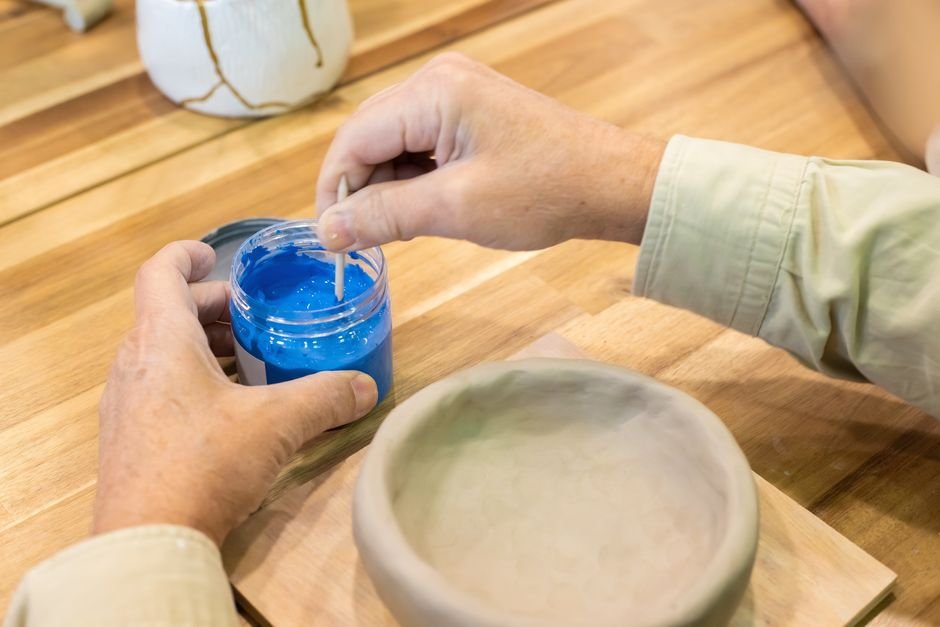
None of the three core ingredients naturally produce colour on their own. Colour comes from a separate category of materials called colourants, most commonly metal oxides like iron, copper, cobalt, and manganese, added in relatively small percentages to an otherwise clear or white base glaze.
What surprises a lot of beginners is just how little colourant it actually takes to shift a glaze dramatically. Cobalt oxide, for example, produces a strong, saturated blue at a tiny fraction of a recipe’s overall weight, while iron oxide can shift a glaze anywhere from a warm honey tone to a deep brown depending on the exact percentage used and how the kiln atmosphere behaves during firing.
The same colourant can also behave differently depending on what else is in the recipe around it, and how thickly the glaze is applied. That’s part of why two glazes with genuinely similar core ingredients can still fire to noticeably different colours and effects, something worth keeping in mind as you start comparing glazes in the studio.
Why Glaze Needs A Flux To Melt
The role of flux is worth explaining a bit more, since it’s genuinely the ingredient doing the most quiet work in any glaze recipe. Different fluxes melt at different temperatures, which is a big part of why some glazes are formulated for low-fire earthenware while others are built specifically for the higher temperatures stoneware and porcelain require.
Common fluxes include materials like feldspar, whiting, and various frits, and the specific combination chosen affects far more than just melting temperature. Flux choice also influences the final texture, whether a glaze ends up glossy or matte, and how the glaze responds to the clay body underneath it during firing.
This is also where cone ratings come from in practical terms. A glaze labelled for cone 5 to 6 uses a flux combination calibrated to melt properly at that specific temperature range, which is exactly why using a low-fire glaze on a high-fire clay body, or the reverse, tends to give disappointing or even unsafe results.
How These Ingredients Come Together In A Recipe
Most potters, especially in a shared studio setting, work with ready-mixed commercial glazes rather than mixing recipes from raw materials themselves. A bottle or bucket of commercial glaze has already combined silica, flux, alumina, colourants, and suspension agents in tested, repeatable proportions, so all you’re doing is applying it correctly and firing to the right cone.
Mixing from raw materials is a different, more involved process that some more experienced or technically minded potters do take on, usually because they want precise control over a specific colour, texture, or cost per batch that a commercial product can’t quite match. It requires accurate scales, a tested recipe, and a genuine understanding of how each raw ingredient behaves, which is a meaningful step up in complexity from opening a jar.
For most hobbyist and even many working potters, commercial glazes genuinely make more sense. The formulation work has already been done and tested by the manufacturer, which removes a huge amount of trial and error from the process, especially when you’re still building a feel for how glaze behaves in the kiln.
What Competing Guides Leave Out
A lot of glaze explainers stop at listing the core ingredients without addressing why two glazes with a genuinely similar ingredient list can still look completely different once fired. The honest answer is that small percentage differences in flux type, colourant amount, and even particle size can shift a glaze’s final appearance far more than the basic ingredient list suggests, which is part of why glaze chemistry has such a steep learning curve.
The difference between a matte and a glossy recipe is another area that rarely gets a clear explanation. Glossy glazes generally contain enough flux and silica to melt fully smooth, while matte glazes are formulated with either less silica relative to alumina, or specific matting agents added deliberately, so the surface stays slightly textured rather than melting to a fully smooth glass layer. Neither is a flawed or incomplete version of the other, they’re simply built differently on purpose.
Firing atmosphere is a third gap worth mentioning. The same glaze recipe can genuinely produce different results in an oxidation electric kiln compared to a reduction gas kiln, since some colourants react differently depending on the oxygen levels present during the firing. Most studio work, including everything fired here at Le Studio Art Space, happens in oxidation electric kilns, which is worth knowing if you’re ever comparing your own results to photos from a reduction studio.
Why Understanding Glaze Ingredients Helps You Troubleshoot
Knowing roughly what’s in a glaze genuinely pays off the first time something goes wrong in the kiln. A glaze that crawls, pinholes, or runs excessively often points back to one of the three core ingredients being out of balance for that particular application, whether that’s too thick a coat overloading the flux, or a base glaze simply not suited to the clay body it was applied over.
It also helps make sense of layering. Once you understand that a flux lowers melting point and alumina controls flow, it’s much easier to predict how two glazes might interact when applied over each other, rather than layering purely by guesswork and hoping for the best.
Even at a basic level, understanding the three core ingredients turns glaze from a slightly mysterious finishing step into something you can reason about. That shift genuinely changes how confidently you experiment once you’re past the beginner stage.
Curious how the glazes used in studio actually work? Ask questions about ingredients and behaviour during a class at Le Studio Art Space in Mordialloc.
Frequently Asked Questions
Is it actually necessary to understand glaze chemistry to be a good potter?
Not necessarily, plenty of potters get great results using commercial glazes without deep chemistry knowledge. A basic understanding does help with troubleshooting and layering decisions though, which is why it’s worth learning even at a surface level.
Are the ingredients in pottery glaze actually safe to use?
Commercial glazes formulated and labelled for functional ware are tested to be food safe when applied and fired correctly to their stated cone. In our experience, following the manufacturer’s application and firing guidance closely is the key safety factor, rather than the raw ingredient list itself.
Why do two glazes with similar ingredients look so different once fired?
Small differences in flux type, colourant percentage, and application thickness can shift the final result more than the basic ingredient list suggests. Firing atmosphere and kiln placement add further variation on top of that.
Can I mix my own glaze from raw materials as a beginner?
It’s possible, but it’s a genuinely more involved process requiring accurate scales and a tested recipe. Most studios report that beginners get more consistent, reliable results starting with commercial glazes before attempting raw mixing.
What actually makes a glaze matte instead of glossy?
Matte glazes generally have less silica relative to alumina, or include specific matting agents, so the surface stays textured rather than melting fully smooth. It isn’t a lower-quality version of a glossy glaze, just a different formulation on purpose.
This article is provided for general educational purposes by Le Studio Art Space and reflects publicly available product information and common studio practice.