Amaco, short for American Art Clay Company, is a century-old Indianapolis manufacturer of ceramic clays, glazes, underglazes, and studio equipment, including the Brent pottery wheels found in classrooms and studios worldwide. Potters use it because its glazes and clay bodies fire predictably from batch to batch, which matters enormously when a kiln load represents weeks of work. It is not the only brand worth knowing, but it has earned its reputation as a dependable, well-documented starting point for beginners and a trusted staple for working artists.
Walk into almost any working ceramic studio, including ours here at Le Studio Art Space in Mordialloc, and you will spot an Amaco label within the first few minutes. Maybe it is a glaze bucket on the mixing shelf, maybe it is the brand stamped on a Brent wheel you are sitting down at for the first time. If a teacher mentioned the name and you nodded along without really knowing what it meant, you are in good company. Here is the plain-English version of what Amaco actually is and why so many potters, ourselves included, keep reaching for it.
What Is Amaco
Amaco is short for American Art Clay Company, a family-owned manufacturer founded in Indianapolis back in 1919. That makes it well over a century old, which is a long time for any art supply brand to stay in business, let alone stay relevant. The company built its early reputation making modeling clay, then expanded into ceramic glazes, clay bodies, kilns, and eventually pottery wheels, becoming one of the first manufacturers to produce lead-free glazes and electric kilns for the education and studio market.
That education focus matters for how the brand actually behaves today. Amaco has spent decades supplying school art rooms and university ceramics departments alongside professional studios, which pushed it toward clear labeling, published firing schedules, and safety documentation that a lot of smaller or more artisanal glaze makers simply do not bother with. When a studio like ours needs to know exactly how a glaze will behave before it goes anywhere near student work, that kind of consistency is not a small thing.
It also helps that Amaco has stayed a family-owned business through all of this growth, now into its fourth generation of the same family running it. That is part of why the brand still reads as grounded in actual ceramics practice rather than as a faceless corporate supplier. It was also a founding member of the industry body that set safety standards for art materials, which is a big part of why its labeling and non-toxic claims carry real weight rather than just being a sticker on the jar.
The Amaco Product Range
The Amaco name covers a surprisingly wide catalog once you start looking. On the glaze side there are dipping glazes, brush-on glazes, and underglazes across multiple lines, with the Potter’s Choice range being especially popular for its layered, semi-reduction look in an ordinary electric kiln. Clay bodies range from smooth white stoneware to heavily grogged sculpture clay, plus air-dry and self-hardening options for work that will never see a kiln at all.
Then there is the equipment side, which is where the name shows up even for potters who have never touched an Amaco glaze bucket. Amaco acquired Brent pottery wheels in the late 1970s and still manufactures them today, and Brent wheels have become something close to an industry default in teaching studios because of how dependable they are under heavy daily use. If you have thrown on a wheel in a class before, there is a decent chance it was a Brent.
There is also a smaller but genuinely useful corner of the catalog most beginners never think to look at, tools and kiln accessories like kiln shelves, posts, and glazing equipment. It is not glamorous, but a studio that is properly equipped down to that level tends to be one where firings run smoothly and consistently, which quietly matters just as much as the glaze itself.
Why Potters Choose Amaco
Consistency is the word that comes up again and again when potters explain why they stick with Amaco. A glaze that behaves the same way this year as it did last year is genuinely valuable, especially in a shared studio where several people are relying on the same batch to turn out predictably. Amaco also publishes clear compatibility and firing information for most of its lines, which takes a lot of the guesswork out of glazing for someone who is still learning how heat and chemistry interact.
Food safety is another real factor, not just marketing language. Many Amaco glazes are developed and tested to be food safe once fired and used as directed on functional ware, which matters a great deal if you are making mugs or bowls for actual daily use rather than purely decorative pieces. Add a genuinely wide color range and the fact that Amaco is stocked by most major ceramics suppliers, and you end up with a brand that is easy to buy, easy to trust, and easy to build a body of consistent work around.
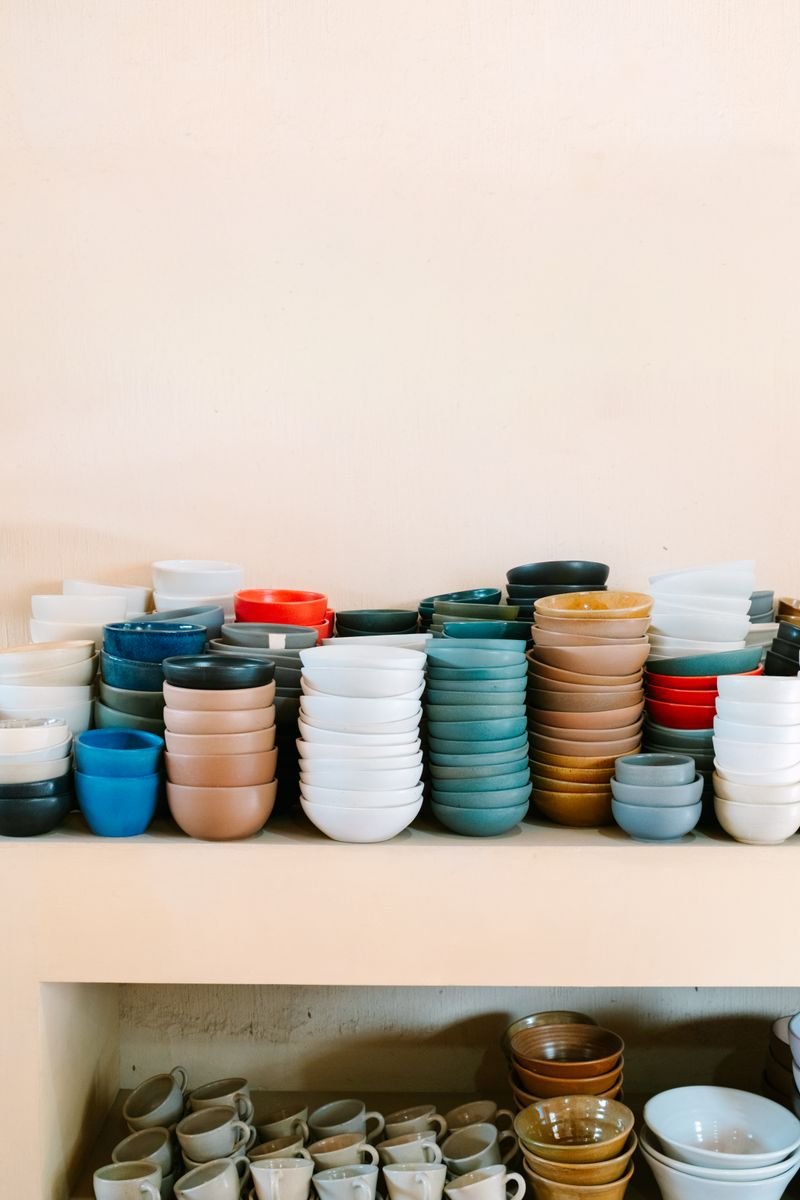
How Amaco Products Show Up In A Working Studio
In a real studio, Amaco tends to enter a beginner’s world at the glazing stage, well after the clay has already been thrown or hand-built and bisque fired once. That first trip to the glaze shelf can be a little overwhelming, dozens of jars, unfamiliar names, and a glaze that looks nothing like its fired result while it is still wet in the jar. Having a brand where the test tiles and documentation actually match what comes out of the kiln takes a lot of that anxiety out of the process.
At our Ceramic Studio here in Mordialloc, that is exactly where most members first encounter the brand, standing at the glaze shelf during one of our Workshops and Classes, asking what half the labels actually mean. Amaco tends to show up again at the firing stage too, since our Firing Service runs pieces through bisque and glaze firings at the temperatures its glazes and clay bodies are actually designed for, which is a big part of why the results come out looking the way the label promised.
What Competing Guides Leave Out
Most articles about Amaco fall into one of two camps. Either they are product listings from a supplier trying to sell you a specific glaze, or they are official brand pages that, understandably, are not going to tell you when a different product might suit your project better. What they tend to skip is the beginner-specific reality of actually buying and using this stuff for the first time.
Cost is one of those gaps. Amaco sits in a mid-range price bracket, generally more than a bargain off-brand glaze but noticeably less than boutique small-batch options, and a beginner’s first glaze purchase does not need to be expensive to get solid, reliable results. Kiln compatibility is another gap worth naming plainly. Amaco’s low-fire and mid-fire glaze lines are formulated for the electric kilns most studios and schools actually use, so most potters working in an electric kiln studio, ours included, are already working within the ranges these products are designed for without needing to think too hard about it. Reduction-style gas or wood firing is a different world, and while lines like Potter’s Choice are built to fake that layered reduction look in an electric kiln, they are not a substitute if you are actually loading a gas kiln.
Amaco Versus Other Glaze And Clay Brands
None of this means Amaco is automatically the right choice for every project or that other brands are not worth your attention. Small-batch glaze makers can offer surfaces and colors that a large manufacturer’s line simply does not replicate, and some sculptors prefer clay bodies from brands that specialize narrowly in high-grog or raku-specific work rather than the broader general-purpose range Amaco covers. If you are chasing a very specific, unusual surface effect, it is worth asking around rather than assuming Amaco has it.
Where Amaco tends to win out is breadth and reliability rather than any single standout product. It covers clay, glaze, underglaze, and equipment under one roof with documentation you can actually rely on, which is exactly why it functions as a studio-standard default rather than a niche specialty brand. Most potters end up using it as their everyday, dependable choice and reaching for something else only when a specific project calls for it.
A useful way to think about it is the difference between a dependable everyday brand and a specialty one you reach for occasionally. You would not necessarily pick one over the other permanently, most working potters end up with a shelf that includes both. Amaco earns its place as the reliable backbone of that shelf, the glazes and clay you know will behave the same way every time, while smaller specialty brands fill in the specific effects or textures that a broader catalog was never really trying to cover in the first place.

The easiest way to actually understand what all of this means is to see it in person. Come try Amaco glazes and clay bodies firsthand at Le Studio Art Space’s ceramic studio in Mordialloc, whether that is signing up for a class, dropping into a shared studio session, or asking us about running your own work through our in-house firing service.
Frequently Asked Questions
Is Amaco actually good for beginners or is that just marketing talk?
It genuinely is a solid starting point for beginners, mostly because of how predictable and well documented it is. When you are still learning how glazes behave, a brand that fires consistently and explains itself clearly removes a lot of the guesswork that would otherwise slow you down.
Is Amaco glaze safe to eat and drink from once it’s fired?
Many Amaco glazes are formulated and tested to be food safe when fired to the correct temperature and used as directed on functional pieces like mugs and bowls. That said, always check the specific glaze’s labeling and firing instructions, since food safety depends on following the recommended firing range correctly.
Why does my Amaco glaze look nothing like the sample on the shelf?
This trips up almost every beginner at some point, and it is completely normal. Amaco glazes often look chalky, dull, or even a completely different color in the jar and on unfired test tiles, since the real color only develops once heat, the specific clay body, and application thickness all come together in the kiln.
Is Amaco too expensive for someone just starting out?
Not really. Amaco sits in a comfortable mid-range price bracket, generally more affordable than boutique small-batch glazes while still being noticeably more consistent than the cheapest off-brand options, so a beginner’s first purchase does not need to break the budget.
Do I need a specific kiln type to use Amaco products?
Most Amaco glaze and clay lines are designed around the electric kilns that most studios and schools actually use, including the firing service here at Le Studio Art Space, so most beginners are already working in the right range without realizing it. Reduction firing in a gas or wood kiln is a different situation and worth asking your studio about directly.
Should I just use Amaco for everything, or do I need other brands too?
You do not need to limit yourself to one brand. Many potters find Amaco works well as a dependable everyday choice and reach for a different, more specialized brand only when a particular project calls for a surface or clay body that Amaco’s range does not cover.
This article is provided for general educational purposes by Le Studio Art Space and reflects common studio practice and publicly available product information. It is not a substitute for the specific firing instructions, safety data, and technical guidance published by Amaco for its individual products, which should always be checked before use.