Buying a kiln makes sense if you fire often, have suitable space and electrical capacity, and want full control over your schedule. Using a community studio’s firing service is usually better value for hobbyists and anyone firing occasionally, since you avoid the upfront cost, installation, maintenance, and learning curve. Your firing volume and frequency, not just enthusiasm, should drive the decision.
Sooner or later, most potters who get hooked on clay start daydreaming about buying a kiln. It’s a natural step. Having your own kiln promises freedom, no waiting for firing slots, and the satisfaction of handling every stage of the process yourself.
At Le Studio Art Space in Mordialloc, we talk with members about the question of buying a kiln vs a community studio regularly, and our honest answer is that it depends on how you work. This guide breaks down what owning a kiln involves, what a firing service offers instead, how the costs compare, and the signs that you might genuinely be ready for your own.
What Owning A Kiln Actually Involves
The upfront cost is the first thing most people notice. A new electric kiln suitable for studio pottery commonly costs several thousand dollars, and larger or more advanced models cost considerably more. You’ll also need kiln shelves, posts, a controller if one isn’t included, and safety equipment, which add to the total.
Space is the next consideration. Kilns get extremely hot on the outside during firing, so they need clearance from walls and anything flammable, a non-combustible floor, and a well ventilated area. Firing also releases fumes, especially during bisque firings, so good ventilation or a venting system is important.
Electrical requirements often surprise people. Many studio kilns need a dedicated high-capacity circuit, and some need a three-phase supply. Installation should always be done by a licensed electrician, and in some homes that can mean upgrading switchboards or wiring, which adds significant cost.
Finally, there’s the learning curve. Loading a kiln well, choosing firing schedules, and troubleshooting problems all take time to learn. Mistakes, like glaze running onto shelves or pieces touching, can damage both your work and your equipment.
Safety is part of that learning curve. You’ll need to keep children and pets away during firings, never leave a kiln unattended at the start of a firing until you trust it, and wear appropriate gloves and eye protection when checking or unloading. Kiln wash for shelves, careful storage of glaze materials, and good housekeeping to control clay dust all become your responsibility once the kiln is yours.
What A Community Studio Firing Service Offers Instead
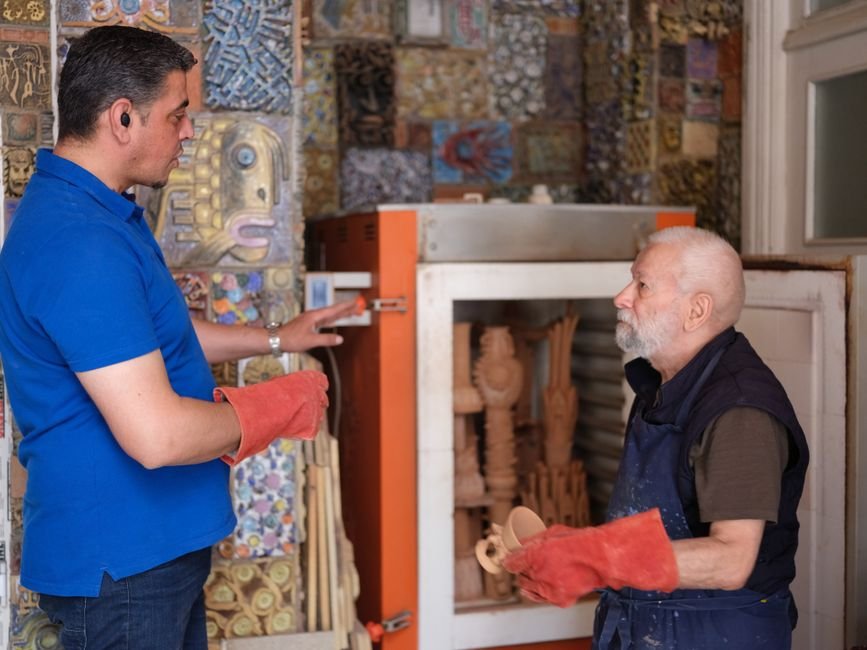
A community studio firing service gives you access to professional kilns without the ownership burden. You bring your dried or glazed work, the studio loads and fires it, and you collect it afterwards. The studio handles maintenance, electrical costs, and firing expertise.
Pricing is usually based on the size of the piece, a shelf space, or the volume you’re firing, and it varies between studios. For occasional or moderate firing, the total cost over a year is often far lower than the combined expense of buying, installing, and running your own kiln.
Firing services also bring knowledge. Experienced staff know how to load mixed work safely, can advise on suitable clays and glazes for each firing, and can often spot problems like glaze on the base before a piece goes in. That can save you from costly disappointments.
Our firing service is designed for exactly this, supporting both studio members and independent potters who work at home but need access to reliable kilns.
Ongoing Costs Compared Honestly
Owning a kiln comes with ongoing costs beyond the purchase. Electricity is the obvious one. A single firing uses a meaningful amount of power, especially for high temperature glaze firings, and the cost per firing depends on your kiln’s size, your electricity tariff, and how full each load is.
Maintenance adds up too. Elements wear out and need replacing, thermocouples and relays fail over time, and kiln shelves can crack or become coated in glaze drips. Repairs may require a technician, and a kiln out of action means no firing until it’s fixed.
There’s also the cost of efficiency. A kiln is most economical when fully loaded, so if you don’t produce enough work to fill it regularly, you’ll either wait longer between firings or run half-empty loads, which increases the cost per piece.
With a studio firing service, you pay per piece or per space, with no maintenance or repairs to worry about. For many hobbyists, that predictable cost is the biggest advantage. For high-volume makers, though, owning a kiln can eventually become cheaper per piece over several years.
Resale value is worth factoring in too. Well maintained kilns do hold some value, and there’s an active second-hand market, but used kilns come with their own risks, including worn elements, cracked bricks, and outdated controllers. If you’re tempted by a second-hand kiln to save money, have it inspected and budget for replacement parts, since a bargain can quickly become expensive once repairs are added.
Flexibility And Community Considerations
Owning a kiln gives you complete control over timing. You can fire when you want, test glazes quickly, and experiment with custom firing schedules. For potters selling work or preparing for markets and exhibitions, that flexibility can be genuinely valuable.
Community studios work on shared schedules, so there may be a wait for firing, particularly during busy periods. Firing temperatures and schedules are usually standardised, which suits most work but may limit highly specialised experiments.
On the other hand, a shared studio offers things a home kiln can’t. You’re surrounded by other makers, can ask questions, share glaze results, and get feedback on your work. Many potters find that this community is one of the main reasons they keep coming back.
A community studio also gives you access to wheels, slab rollers, glazes, and space in our ceramic studio, which can make the choice less about the kiln alone and more about how you want to work overall.
What Competing Guides Leave Out
Many guides focus on the thrill of kiln ownership, but the real deciding factor should be firing volume and frequency. If you produce enough work to fill a kiln every week or two, owning one may make sense. If you fire a handful of pieces a month, a firing service is almost always more practical and cost effective.
A useful exercise is to track your work for a few months. Count how many pieces you make, how often you need bisque and glaze firings, and what you spend on firing now. Then compare that to the estimated cost of a kiln, installation, electricity, and maintenance over several years.
It’s also worth considering future plans. Are you likely to increase production, start selling, or teach? Or is pottery a relaxing hobby you enjoy a few hours a week? Buying a kiln based on enthusiasm alone often leads to an expensive piece of equipment that sits unused.
Finally, remember insurance and rental considerations. Some home insurance policies and leases have conditions about high-temperature equipment, so it’s worth checking before you buy.
Signs You Are Ready To Consider Buying A Kiln
You might be ready if you’re consistently producing enough work to fill a kiln regularly, and waiting for studio firings is genuinely holding you back. That’s especially true if you’re selling, preparing for exhibitions, or running workshops of your own.
Other signs include having a suitable space with proper ventilation and clearance, access to the right electrical supply or budget to install it, and a willingness to learn kiln operation and maintenance. Some potters start with a small test kiln to learn before committing to a larger one.
It also helps if you’ve spent time learning from a firing service first. Understanding how your clays and glazes behave in different firings makes the transition to your own kiln much smoother.
If you’re not there yet, that’s completely fine. Many committed potters use a studio firing service for years. Our workshops and classes and our article on how to choose a pottery studio membership can help you find the right setup for now.

Weighing up a kiln purchase? Compare the real cost of ownership with Le Studio Art Space’s firing service in Mordialloc, and ask our team how much of your work we could fire for you each month.
Frequently Asked Questions
Is it cheaper to buy a kiln or use a firing service?
For most hobbyists, a firing service is cheaper once you add up purchase, installation, electricity, and maintenance. High-volume potters may find owning a kiln cheaper over several years.
Can I plug a pottery kiln into a normal power point?
Only some very small test kilns can. Most studio kilns need a dedicated high-capacity circuit installed by a licensed electrician.
Do I need special ventilation for a home kiln?
Yes, kilns release fumes and heat during firing. Good ventilation or a dedicated venting system is strongly recommended.
How long do kiln elements last?
It depends on how often and how hot you fire. Elements are consumable parts that eventually need replacing, and frequent high temperature firing wears them faster.
Can I use Le Studio Art Space’s firing service if I’m not a member?
Our firing service at Le Studio Art Space supports independent potters as well as members. Get in touch with the team to check current details and suitable clays and glazes.
This article is provided for general educational purposes by Le Studio Art Space and is not electrical, financial, or safety advice. Always consult a licensed electrician and the kiln manufacturer before installing a kiln.