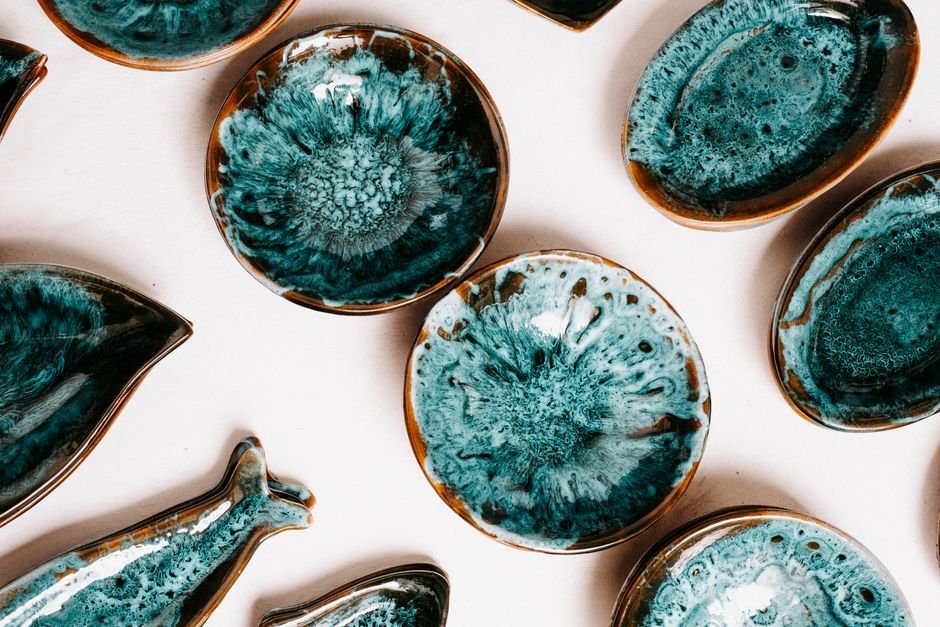
Mayco CG 713 is Peacock Green, a colour from Mayco’s Jungle Gems Crystal Glazes line, known for producing dramatic crystalline textures and rich, variegated colour rather than a flat, even finish. It’s a genuinely striking specialty glaze, though it behaves quite differently from Mayco’s more everyday Stroke and Coat range.
Spotting a code like CG 713 on a supplier list or a half-used studio bottle and having no idea what it actually is happens to pretty much every potter at some point. Here at Le Studio Art Space, questions about specific Mayco codes come up often enough in class that it’s worth a proper, honest breakdown, so here’s exactly what mayco cg 713 is and what to expect from it.
What The Mayco CG 713 Code Refers To
The CG prefix identifies it as part of Mayco’s Jungle Gems Crystal Glazes line, a specialty range distinct from Mayco’s more widely used Stroke and Coat glazes that most beginners encounter first. Jungle Gems glazes are formulated specifically to produce dramatic, crystalline surface effects rather than a smooth, even colour coat.
Within that Jungle Gems range, CG 713 is specifically Peacock Green, one of a numbered set of colours the line offers, each formulated with its own particular crystal formation and colour character. The numbering system itself doesn’t follow an obvious pattern to a newcomer, which is part of why looking up a specific code by name genuinely helps.
Because it’s a specialty crystal glaze rather than a standard everyday colour, CG 713 tends to sit alongside a smaller, more curated selection in a studio’s glaze shelf compared to core Stroke and Coat colours that see much more frequent, everyday use.
Mayco itself markets the Jungle Gems line specifically around dramatic, eye-catching effects rather than reliable, everyday coverage, which is worth keeping in mind when deciding whether a code like CG 713 actually suits what you’re trying to achieve on a particular piece.
The Look And Finish Of CG 713
Peacock Green lives up to its name with a rich, saturated green base, but the real character of this glaze comes from its crystalline texture rather than the colour alone. Jungle Gems glazes are formulated to develop visible crystal formations during firing, giving the surface genuine dimension and sparkle rather than a flat, uniform coat.
That crystalline effect means no two applications of CG 713 look perfectly identical, even on similar pieces fired together. Variation in exactly where and how the crystals form is part of the glaze’s appeal, giving every piece a genuinely one-of-a-kind quality that a standard flat glaze simply doesn’t offer.
The overall finish reads as bold and eye-catching rather than subtle, which is exactly the point of the Jungle Gems line as a whole. It’s built for pieces where you want the glaze itself to be a genuine visual focal point, not just a background finish.
Light interacts noticeably with the crystal formations too, catching and reflecting differently depending on the angle a piece is viewed from. That subtle shimmer effect is part of what photos genuinely struggle to capture accurately, which is why seeing a fired CG 713 piece in person tends to be far more impressive than a product listing image suggests.
Firing Requirements For CG 713
Jungle Gems Crystal Glazes, including CG 713, are formulated for cone 06 firing, which sits in the low-fire range rather than the mid to high stoneware range some other Mayco lines use. Firing to the correct cone matters more with this glaze than with a lot of standard colours, since the crystal formation effect depends on hitting that specific temperature range.
Firing too hot or too cool relative to that cone 06 target can genuinely change how well the crystals develop, sometimes resulting in a flatter, less dramatic surface than the glaze is capable of producing when fired correctly. A well-calibrated kiln and accurate cone placement matter more here than with a more forgiving, standard glaze.
Because it fires at a different cone to a lot of stoneware glazes, it’s worth double-checking your studio’s usual firing schedule before using CG 713 on a piece, particularly if most of your other work happens at cone 5 to 6, since combining incompatible cone ranges in a single firing simply doesn’t work.
This also means CG 713 is generally applied to earthenware or a clay body rated for low-fire use, rather than the mid to high fire stoneware clays used with a lot of other studio glazes, which is worth confirming with your specific clay body before glazing a piece with it.
How To Apply CG 713 For Consistent Results
Application thickness plays a genuinely significant role in how the crystal effect develops, with most crystal glazes, CG 713 included, needing a specific coat count or thickness range stated on the label to get reliable results. Too thin an application can leave the crystalline texture underdeveloped, while too thick risks excess pooling or running.
Kiln shelf spacing deserves extra attention with crystal glazes too, since some of the crystalline formation can involve a bit more surface movement during firing than a standard flat glaze. Giving pieces glazed with CG 713 a bit of extra clearance on the shelf is a genuinely sensible precaution.
Testing on a scrap tile with your own clay body before committing to a finished piece is worth the extra step here more than with most standard glazes, since crystal formation can vary noticeably based on clay body, application thickness, and exact firing conditions in ways that are hard to predict from a supplier photo alone.
What Competing Guides Leave Out
How CG 713 looks over different clay bodies is a gap that rarely gets addressed clearly. In our experience at Le Studio Art Space’s Ceramic Studio, crystal glazes like this one can develop noticeably different crystal density and colour depth depending on the clay body underneath, which is worth testing directly rather than assuming consistent results across different clays.
How it compares to similarly numbered glazes in the same Mayco line is another area most guides skip. The Jungle Gems range includes several other crystal glazes with their own distinct colours and crystal characteristics, and browsing the full line, rather than fixating on one specific code, often turns up a genuinely better fit for a particular project.
The cone mismatch with more common stoneware ranges is a third practical gap. Because CG 713 fires at cone 06 rather than cone 5 to 6, it genuinely doesn’t mix into the same firing as most stoneware glazes, which is a detail that trips up potters more used to working with mid-fire ranges exclusively.
Mayco CG 713 Versus Similar Glazes
Other colours within the Jungle Gems line offer a similar crystalline effect in different base colours, so if Peacock Green’s specific shade doesn’t suit a project, another Jungle Gems code is often the most direct alternative with a comparable texture and behaviour.
Standard Stroke and Coat glazes, by contrast, offer far more predictable, flat coverage without the crystalline surface texture, which suits functional pieces and consistent branding work better than a specialty crystal glaze designed specifically for dramatic, one-of-a-kind visual effect.
Choosing between them really comes down to what the piece calls for. A decorative piece meant to showcase a bold, textured surface suits CG 713 and its Jungle Gems siblings well, while functional ware needing predictable, repeatable colour is usually better served by a standard glaze line instead.
Cost is worth factoring in as well, since specialty crystal glazes typically carry a higher price per jar than standard everyday colours, reflecting their more specific formulation and use case. For a single statement piece that’s a reasonable expense, but it’s worth budgeting for accordingly on a larger project.
Want to see Mayco CG 713’s crystalline finish in person before trying it yourself? Join a glazing session at Le Studio Art Space in Mordialloc.
Frequently Asked Questions
Is Mayco CG 713 the same as a regular Stroke and Coat colour?
No, it’s part of the separate Jungle Gems Crystal Glazes line, formulated for dramatic crystalline texture rather than the flat, even coverage Stroke and Coat glazes are known for. They behave quite differently in the kiln.
Can I fire CG 713 alongside my regular cone 5-6 stoneware pieces?
Not in the same firing. CG 713 is formulated for cone 06, a lower firing range than most stoneware glazes, so it needs its own separate firing rather than being combined with mid-fire work.
Why did my CG 713 not develop much crystal texture?
Application thickness and firing accuracy both affect crystal formation significantly. In our experience, closely following the label’s recommended coat thickness and firing to the correct cone genuinely improves how well the crystals develop.
Will CG 713 look the same on every clay body?
Not necessarily. Crystal glazes like this one can vary in density and colour depth depending on the clay body underneath, so testing on your own studio’s clay is more reliable than judging from a supplier sample alone.
Is Peacock Green the only colour in the Jungle Gems line?
No, the Jungle Gems range includes several other crystal glaze colours with their own distinct look. It’s worth browsing the wider line if Peacock Green’s specific shade doesn’t suit your project.
This article is provided for general educational purposes by Le Studio Art Space and reflects publicly available product information and common studio practice.