Amaco Snow is a glossy, opaque white glaze from Amaco’s Celadon line, used mainly to enhance texture and reveal speckling in a clay body while giving a piece a clean, bright white finish. It’s a genuinely popular choice for texture-forward pieces, though it’s not the only white glaze worth considering.
White glazes sound simple until you actually start comparing them side by side, and amaco snow keeps coming up as a favourite among potters who work with texture. Here at Le Studio Art Space, it’s one of the whites we point members toward once they’re working on a carved or stamped piece, so here’s a genuine, practical rundown of what it’s actually used for.
What Amaco Snow Glaze Is
Snow sits within Amaco’s Celadon glaze range, a line generally known for glossy, often semi-translucent finishes that respond well to texture and clay body variation. Unlike some Celadon glazes that lean more transparent, Snow is formulated as a more opaque white, giving reliable coverage rather than letting the clay colour show through strongly underneath.
As a mid to high fire glaze, it fits the same cone 5 to 6 firing range most studio stoneware and porcelain work uses, which makes it a genuinely accessible addition alongside other glazes already in regular rotation in a shared studio without needing a separate firing schedule.
Like other Celadon-line glazes, Snow is designed to interact meaningfully with the surface underneath it rather than simply sitting as a flat, uniform coat. That responsiveness to texture and clay body is really the defining quality that sets it apart from a more generic, purely flat white glaze.
Because it’s lead-free and formulated for functional stoneware, Snow is used across both purely decorative and everyday functional work in studios, though as with any glaze, following the manufacturer’s application and firing guidance closely is what actually keeps a finished piece genuinely food safe for daily use.
The Look Snow Glaze Creates
The most distinctive quality of Snow is how it settles into texture, pooling slightly thicker in carved lines, stamped impressions, or any surface variation, and thinner over raised or flat areas. That variation genuinely brings out detail work in a way a completely flat, opaque glaze often can’t manage.
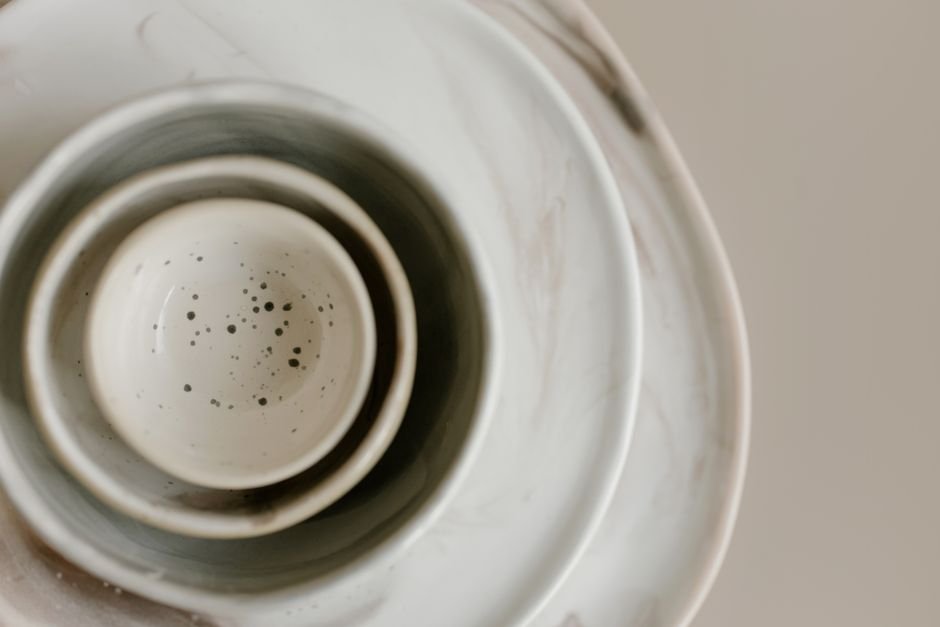
Speckling is another characteristic effect, particularly on clay bodies that contain iron or other speckling minerals. The glossy, semi-reactive nature of Snow can let flecks of speckle show through the white surface, giving pieces a subtle, organic texture that reads as genuinely handmade rather than uniformly manufactured.
Overall, the finish leans toward a clean, bright white rather than a stark, clinical one, with just enough gloss to catch light attractively without becoming overly reflective or glassy in a way that would distract from texture work underneath it.
Firing atmosphere and kiln placement can shift the exact result slightly too, since every kiln has small variations in heat distribution across a load. Most potters find these shifts fairly subtle with Snow compared to more dramatically reactive glazes, but it’s still worth expecting a little natural variation piece to piece.
How To Apply Snow Glaze For The Best Result
Application thickness genuinely shapes how this glaze performs, similarly to other reactive Celadon-line glazes. A thinner application tends to let more texture and speckling show through, while a thicker coat pushes the result toward a more solid, uniformly white finish with less of that textural variation visible.
Most studios recommend starting with two even coats as a baseline, then adjusting based on how much texture contrast you want to preserve on a specific piece. Testing on a scrap tile with the same clay body and texture style you’re working with genuinely helps dial in the right thickness before committing to a finished piece.
Because it responds so directly to what’s underneath it, Snow tends to reward pieces with genuine, deliberate surface texture rather than a perfectly smooth one, where a lot of its distinctive character would simply have nothing to interact with and grab onto.
Application method matters a little too, brushing tends to give slightly more visible texture and variation than dipping, since a dipped coat is often more even by nature. Neither method is wrong, but it’s worth knowing which effect you’re actually after before choosing how to apply it to a specific piece.
What Kind Of Pieces Suit This Glaze
Decorative pieces with carved, stamped, or otherwise textured surfaces genuinely get the most visual benefit from Snow, since that’s exactly where its pooling and thin-thick variation has the most to show off. Sgraffito work, stamped patterns, and hand-built texture all suit it particularly well.
Functional pieces work fine with Snow too, provided you’re comfortable with a bit less predictability in exactly how white or textured the final result looks compared to a completely flat, stable glaze. Mugs and bowls with subtle texture, rather than a perfectly smooth surface, tend to show the glaze’s character best.
Pieces where speckling would genuinely add to the design, rather than distract from it, are also a natural fit, particularly work using a speckled or iron-bearing clay body specifically chosen to interact with a glaze like this one.
It’s a less obvious fit for pieces where you want a completely flat, uniform white with zero variation, since some degree of natural pooling and speckling is really baked into what this glaze does. A more stable, purely opaque white would suit that particular goal better.
What Competing Guides Leave Out
Realistic beginner expectations versus polished showroom sample photos is a gap worth addressing honestly. In our experience at Le Studio Art Space’s Ceramic Studio, a first attempt with Snow on an unfamiliar clay body can look noticeably less dramatic than a sample photo, mainly because application thickness and clay body speckling both take some getting used to before results feel predictable.
How it layers with other Amaco glazes rarely gets a clear explanation either. Snow can be layered with other Celadon or Potter’s Choice glazes for additional effects, though results vary depending on which glaze goes first and how thick each layer is, so testing combinations on scrap tiles genuinely pays off before trying it on a finished piece.
Clay body compatibility is a third area that often gets glossed over. Snow’s speckling and reactive qualities depend heavily on the clay body underneath it, so the same glaze can look genuinely quite different on a smooth porcelain compared to a heavily speckled stoneware, which is worth testing directly on your own studio’s clay rather than assuming from a supplier’s sample photo alone.
Amaco Snow Versus Similar Textured Glazes
Other white or off-white textured glazes on the market offer a similar general idea, reactive white finishes that respond to texture, but formulations vary meaningfully in how much they pool, how bright the white reads, and how strongly they interact with speckled clay bodies.
Some alternatives lean more toward a matte or satin finish rather than Snow’s glossier character, which suits a different aesthetic depending on whether you want a soft, understated texture or a brighter, more reflective white with more visual pop.
Choosing between them ultimately comes down to testing a few options directly on your own clay body and texture style, since sample tiles from a supplier rarely translate perfectly to how a glaze will behave on your specific studio’s materials and firing conditions.
Price and availability can factor into the decision too, since some alternative white glazes cost noticeably less per jar depending on the brand and supplier. If budget is a genuine consideration, it’s worth weighing that alongside the visual result when comparing a few options side by side.
The best way to judge Amaco Snow is to see it fired on real texture. Try it during a glazing session at Le Studio Art Space in Mordialloc.
Frequently Asked Questions
Will Amaco Snow look good on a piece with no texture at all?
It’s usable on smooth pieces, but a lot of its distinctive character comes from interacting with texture and speckling, so it won’t show off as much on a completely flat surface. A more uniform white glaze may suit smooth work better.
Is Amaco Snow food safe for a mug or bowl?
When applied and fired correctly to the manufacturer’s stated cone range, it’s formulated as a lead-free glaze suitable for functional ware. It’s still worth checking current application guidance for the specific product you’re using.
Why does Snow look different on my clay compared to the sample photo?
Clay body composition genuinely affects speckling and reactivity, so the same glaze can look noticeably different on different clay bodies. In our experience, testing directly on your own studio’s clay is more reliable than judging from a sample alone.
Can I layer Snow with other Amaco glazes?
Yes, it can be layered with other Celadon or Potter’s Choice glazes, though the exact result depends on layering order and thickness. Testing the combination on a scrap tile first is genuinely worth the extra step.
Is Snow the only good white glaze for textured pieces?
No, several other white or off-white glazes offer a similar reactive, texture-responsive quality with slightly different finishes. It’s worth comparing a couple of options directly rather than assuming one is universally best.
This article is provided for general educational purposes by Le Studio Art Space and reflects publicly available product information and common studio practice.