The best paint for terra cotta pieces is generally acrylic paint, since it adheres well to the surface’s natural porosity, though sealing it afterward genuinely matters for durability, especially outdoors.
Terra cotta pots, planters, and decorative pieces have a genuinely lovely warm, earthy look, and painting them is a popular way to personalise them further.
At Le Studio Art Space, members regularly ask us for honest advice on finishing terracotta pieces, whether functional or purely decorative.
This guide covers the best paint for terra cotta, how to apply it well, and when a proper glaze might actually serve you better.
None of this is complicated once you understand a few basics about how terracotta’s surface behaves compared to other ceramics.
By the end, you’ll genuinely know which finishing approach suits your specific piece and where you plan to use it.
Why Terra Cotta Behaves Differently To Other Ceramics
Terra cotta is typically low-fired and left unglazed, which leaves its surface genuinely porous and absorbent compared to a stoneware or porcelain piece.
This porosity means terracotta readily soaks up moisture, paint, and sealant, which can work in your favour or against you depending on the product used.
Its warm reddish-orange colour, from iron content in the clay, also genuinely affects how painted colours appear once applied over the surface.
Because it’s unglazed, terracotta’s surface has more texture and tooth than a glazed ceramic, which actually helps most paints grip and adhere.
Outdoor terracotta pieces also face genuine weather exposure, meaning any paint or sealant needs to hold up to rain, sun, and temperature swings.
Understanding this porous, textured nature is genuinely the starting point for choosing the right paint and finishing approach.
It’s also why terracotta behaves quite differently from painting a smooth, glazed surface, which most general painting guides don’t distinguish clearly.
Older, weathered terracotta pieces can also have a slightly different surface texture, which is worth checking before you begin painting.
Acrylic Paint On Terra Cotta
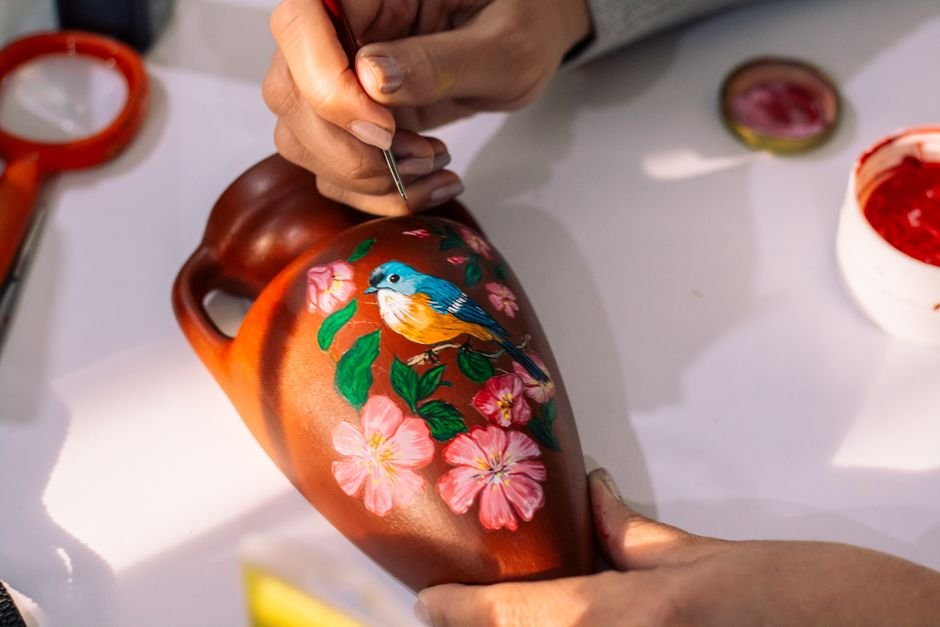
Acrylic paint is genuinely the most popular and practical choice for terracotta, thanks to good adhesion, easy application, and a wide range of available colours.
Because terracotta is porous, acrylic paint soaks in slightly at the surface, which actually helps it bond well without much special preparation.
A light sanding or a quick wipe to remove dust before painting genuinely improves how evenly the acrylic paint goes on.
Multiple thin coats generally give better, more even coverage than one thick coat, which can crack or peel more easily over time.
Acrylic paint dries relatively quickly, which is genuinely convenient for layering colours or adding detail work without long waits between coats.
For indoor decorative pieces, acrylic paint alone often performs perfectly well without any additional sealant, especially with minimal handling.
For anything handled regularly or used outdoors, though, acrylic paint genuinely needs a protective sealant on top to hold up long-term.
Craft acrylics and artist-grade acrylics both generally work well, though artist-grade paint tends to offer richer, more consistent colour once dry.
Ceramic Glaze As An Alternative Finish
For a more permanent, durable finish, a proper ceramic glaze fired in a kiln genuinely outperforms surface paint on terracotta in the long run.
Glaze chemically fuses to the clay body during firing, creating a glassy, water resistant surface that surface paint genuinely can’t replicate.
This makes glaze the better choice for functional terracotta pieces meant to hold water regularly or see frequent daily handling.
The tradeoff is that glazing requires kiln access and a proper firing process, which isn’t always practical for every piece or every maker.
At Le Studio Art Space’s firing service, members can explore glazing terracotta pieces as a more durable alternative to surface paint.
Glazed terracotta also tends to develop a genuinely different, more refined look compared to the flatter, matte finish of painted terracotta.
Choosing between paint and glaze really comes down to how the piece will be used and how much durability it genuinely needs.
A glazed piece also resists staining far better than painted terracotta, which matters if the piece will regularly hold soil or water.
Sealing Painted Terra Cotta For Durability
A clear acrylic sealant, applied after the paint has fully dried, genuinely protects the colour and helps it resist chipping and fading over time.
Outdoor pieces benefit from a sealant specifically rated for outdoor or weather exposure, since it holds up far better against rain and sun.
Applying the sealant in thin, even coats, allowing full drying between each, gives a genuinely more durable, professional-looking result.
Without sealant, painted terracotta left outdoors will typically fade, chip, or peel considerably faster, especially through a full season of weather exposure.
Many potters find a matte sealant keeps terracotta’s natural earthy look, while a gloss sealant gives a shinier, more polished appearance.
Reapplying sealant every year or two on outdoor pieces genuinely helps maintain the painted finish’s appearance and durability long-term.
Testing the sealant on a small, hidden area first is always a sensible precaution before committing to the whole piece.
Letting the sealant cure fully, not just dry to the touch, before handling the piece heavily genuinely helps it last longer.
What Competing Guides Leave Out
Many guides recommend acrylic paint without ever mentioning that indoor and outdoor use genuinely call for quite different sealing approaches and product choices.
Few guides mention common failure points, like painting over a dusty or damp surface, which is one of the most frequent causes of paint flaking off terracotta.
What actually happens to unsealed painted terracotta left outdoors over a full season rarely gets honest coverage, even though many potters learn this the hard way.
The genuine tradeoff between paint and glaze, in terms of cost, equipment, and durability, is another comparison most surface-paint guides skip entirely.
Few guides mention that a shared studio’s ceramic studio and kiln access genuinely opens up glazing as a realistic option for terracotta, not just paint.
How terracotta’s natural colour interacts with painted colours, sometimes bleeding through lighter shades, is a practical detail many overviews leave out.
Whether to paint before or after any surface repairs on an older terracotta piece is another gap rarely addressed clearly.
What actually happens when paint meets a piece that already has old mineral deposits or efflorescence on the surface is another common, rarely covered scenario.
Terra Cotta Paint Versus Glazing In The Studio
Surface paint is genuinely the more accessible option, requiring no kiln access and giving you flexibility to repaint or change the design later.
Glazing requires more commitment, a kiln firing, and generally a longer process, but rewards you with a genuinely more durable, permanent finish.
For purely decorative indoor pieces, paint is often the more practical, lower-effort choice, especially for a first project or a quick creative outlet.
For functional pieces meant to hold water or see regular handling, glaze genuinely tends to be the more sensible long-term choice.
Some potters even combine both, painting decorative elements while relying on glaze for the functional interior of a piece like a planter.
There’s genuinely no single right answer, and the best choice depends entirely on how you plan to use and display the finished piece.
Asking studio staff about your specific piece and its intended use is always a sensible way to settle on the right approach.
Neither choice is genuinely wrong, and plenty of potters happily use both approaches depending on the specific piece in front of them.
Curious about glazing your terracotta piece instead of painting it? Ask about our firing service at Le Studio Art Space in Mordialloc.
Frequently Asked Questions
Will regular acrylic paint actually stick to terracotta properly?
Yes, acrylic paint generally adheres well to terracotta’s naturally porous surface, though a light sanding or dust wipe beforehand genuinely improves how evenly it applies.
Do I really need to seal painted terracotta, or is it optional?
For indoor decorative pieces it’s often optional, but for anything outdoors or handled regularly, sealant genuinely matters for preventing chipping, fading, and paint loss.
Is glazing actually better than just painting a terracotta piece?
For functional, frequently handled pieces, yes, glaze offers genuinely superior durability, though painting remains a more accessible, flexible option for purely decorative work.
Why does my painted terracotta keep flaking off after a while?
This usually happens from painting over a dusty or damp surface, or skipping sealant on an outdoor piece, both common and genuinely fixable mistakes.
Can Le Studio Art Space help me decide between paint and glaze?
Absolutely. Staff at Le Studio Art Space are always happy to talk through your specific piece and recommend whichever finish genuinely suits its intended use.
This article is provided for general educational purposes by Le Studio Art Space and reflects common studio practice.