A pottery apron isn’t strictly essential, especially for a single class, but it genuinely helps protect your clothing from clay, water, and slip, particularly during wheel throwing where mess is far more likely than in hand building. For anyone attending regularly, it’s a worthwhile, low-cost addition to bring along.
Packing for a first pottery class often comes with a small list of uncertain questions, and whether an apron is genuinely necessary is one of the more common ones at Le Studio Art Space. The honest answer is that it’s not strictly required, but it makes a real practical difference once you actually get your hands into wet clay and spinning water on the wheel.
Understanding what an apron actually protects, and what alternatives exist if you don’t have one yet, makes the decision a lot easier before your first session.
What A Pottery Apron Actually Protects
A pottery apron primarily protects your clothing from clay splatter, slip, and the considerable amount of water involved in wheel throwing, all of which can stain or dampen fabric in ways that don’t always wash out easily afterward.
It also offers a layer of protection for your skin in a minor way, keeping constant direct contact with wet clay off your torso and thighs, which some people find more comfortable during a longer session.
Pockets on many pottery aprons offer a genuinely practical place to keep small tools within easy reach, saving you from constantly getting up to fetch something during a session when your hands are already covered in clay. Reaching across a wet workspace with muddy hands is exactly the kind of small annoyance a well placed pocket avoids entirely.
Beyond the practical protection, many potters simply find that putting on an apron helps mentally signal it’s time to focus and get into the work, similar to how a chef’s apron sets a working mindset before starting to cook. That small ritual of putting one on can genuinely help ease the transition into a focused studio session.
How Messy Pottery Really Is For A Beginner
Wheel throwing is genuinely the messier of the two main pottery techniques, since it involves constant water, centrifugal splatter, and slip that tends to fling outward as the wheel spins, especially during a beginner’s less controlled early attempts.
Hand building is comparatively cleaner, though it’s still not mess-free, since wedging clay and working with slip for joining pieces can still leave clay residue on hands, forearms, and occasionally clothing during a longer session.
Beginners in particular tend to create more mess than experienced potters simply because their movements are less controlled and refined, meaning more clay ends up outside the intended working area during those early sessions. This gradually improves with practice, as movements become more precise and deliberate over time.
None of this mess is a sign you’re doing something wrong, it’s simply a normal part of learning a genuinely hands-on, physical craft that inherently involves wet materials in motion. Most instructors expect and plan for it, so there’s no need to feel self-conscious about a splattered apron by the end of a session.
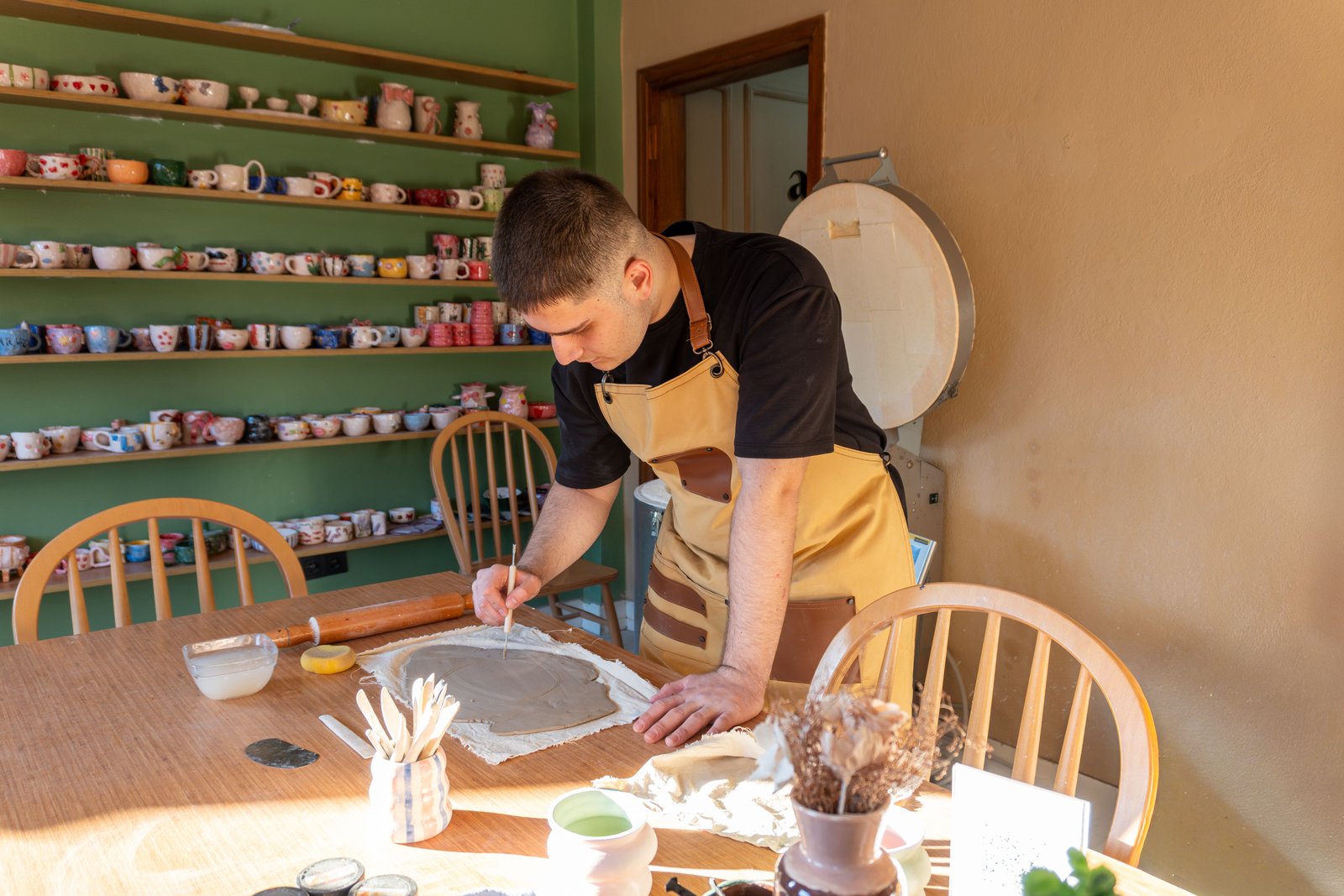
What To Look For In A Good Pottery Apron
A washable, durable fabric matters most, since a pottery apron needs to survive regular exposure to wet clay and frequent washing without breaking down or staining permanently after just a few sessions.
Good coverage across the front and lap area is genuinely important, particularly for wheel throwing, where splatter tends to land directly in your lap and across your thighs during a typical session.
Pockets, while not essential, are a genuinely useful feature for holding small tools like a sponge, needle tool, or rib without needing to constantly reach across the workspace during a session.
An adjustable neck strap and waist tie help ensure a comfortable, secure fit regardless of your body size, since an apron that shifts around or feels loose can actually become more of a distraction than a help. Length matters too, since an apron that’s too short leaves your lap exposed during wheel work exactly where protection matters most.
What Studios Typically Provide Versus What You Should Bring
Many studios, including Le Studio Art Space, keep a small stock of communal aprons available for casual visitors or first-time class attendees who haven’t yet bought their own.
These communal aprons are genuinely fine for an occasional visit, though many regular members eventually prefer bringing their own, both for a better personal fit and simply for the comfort of using something familiar each session, worn in exactly the way they like it.
It’s always worth checking with a specific studio beforehand about what’s provided, since policies genuinely vary and some studios expect members to bring their own protective clothing entirely. A quick message or call ahead of your first visit avoids any awkward surprise on arrival.
For a first class specifically, it’s genuinely fine to not own an apron yet, since most studios accommodate new visitors reasonably well while you decide whether pottery is something you want to invest more into. There’s no pressure to buy equipment before you even know if you’ll enjoy the craft.
What Competing Guides Leave Out
A distinction many general guides skip is how much more important an apron is for wheel work specifically compared to hand building, where the mess level and splatter risk are genuinely quite different between the two techniques, a difference worth knowing before deciding whether to invest in one right away.
Simple clothing alternatives are another gap worth addressing directly for anyone without an apron yet. Wearing older clothes you don’t mind getting stained, or layering a large, plain t-shirt over your regular clothing, can offer reasonable protection for an occasional session without any real cost involved.
It’s also worth mentioning that clay stains, while sometimes stubborn, generally wash out of most fabrics with a normal wash cycle, so the risk of permanently ruining clothing is genuinely lower than some new potters initially fear, especially if you don’t let clay dry into the fabric first.
Investing in a proper apron becomes more worthwhile specifically once you’re attending regularly, rather than something you necessarily need before ever trying a single class to see if you enjoy it. Waiting until after a few sessions also lets you choose a style and fit you actually know you’ll like.
Other Simple Ways To Protect Your Clothes In The Studio
Rolling up sleeves before starting, particularly for wheel throwing, helps keep cuffs out of wet clay and slip, avoiding one of the more common minor annoyances beginners run into during their first sessions.
Tying back long hair and removing jewellery, while not strictly clothing protection, genuinely helps avoid a different kind of mess and interference during hands-on work, particularly on the wheel where loose items can catch on spinning clay or dip unexpectedly into wet slip.
Bringing a simple change of clothes, or planning your outfit around clothes you don’t mind getting a little dirty, is a genuinely practical low-cost approach for anyone not ready to invest in a dedicated apron yet.
Keeping a small towel or rag nearby during a session also helps manage mess as it happens, rather than only dealing with it after the fact once clay has already dried onto clothing or skin, which is considerably harder to remove once dry.
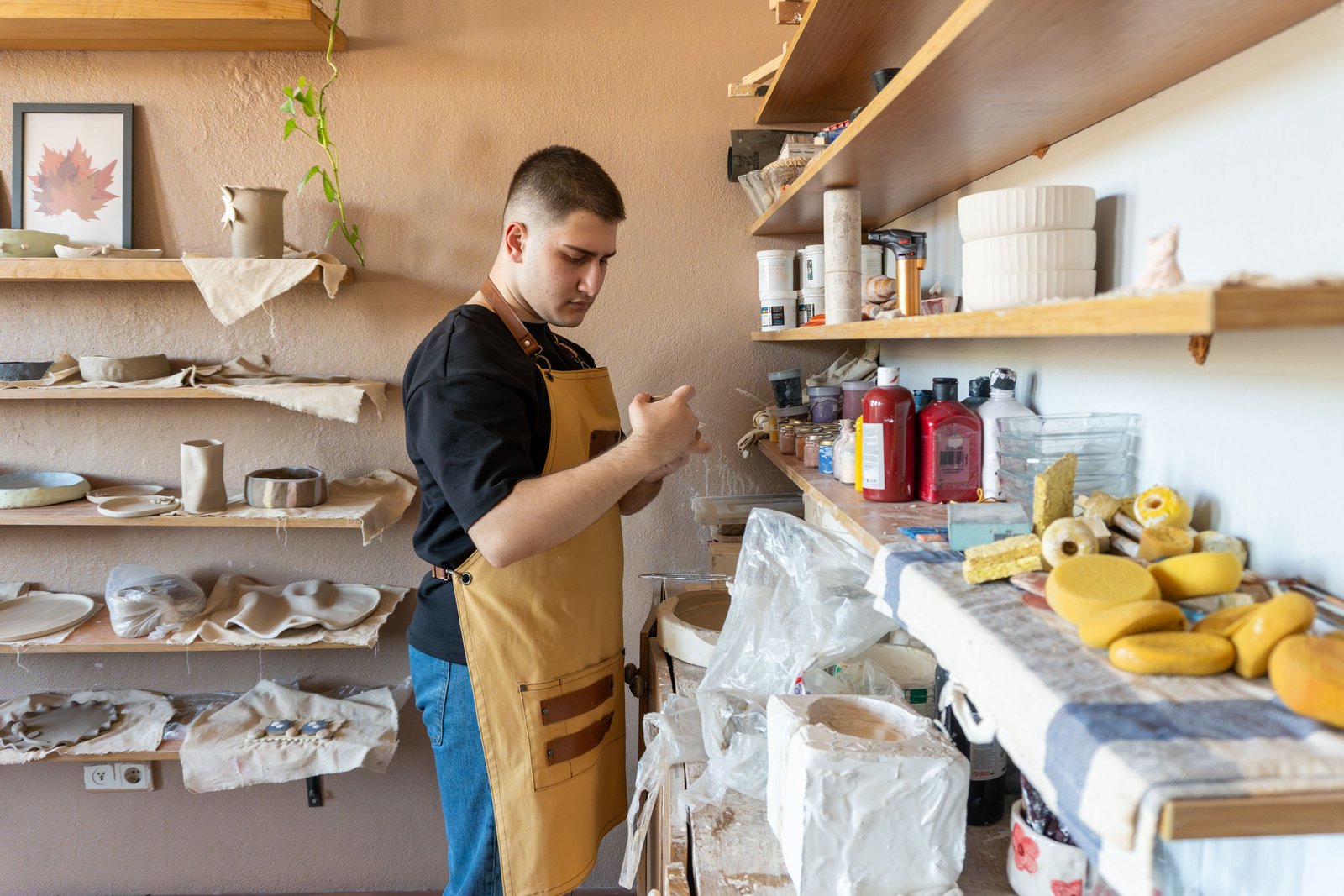
Not sure what to bring to your first class? Ask about aprons and studio essentials before your first session at Le Studio Art Space in Mordialloc.
Frequently Asked Questions
Will I ruin my clothes if I don’t have an apron for my first class?
It’s unlikely, especially for hand building, though wheel throwing carries more splatter risk. Wearing older clothes you don’t mind getting a bit dirty is a reasonable approach for a first session.
Do studios usually provide aprons for beginners?
Many do, including Le Studio Art Space, which keeps communal aprons available for casual visitors and first-time attendees, though it’s always worth checking with a specific studio beforehand.
Is a pottery apron really necessary if I’m only doing hand building?
It’s less essential for hand building, since it’s genuinely less messy than wheel throwing, though it can still help keep clay and slip off your clothing during a longer, more involved project.
What should I look for if I decide to buy my own apron?
A washable, durable fabric, good front and lap coverage, and pockets for small tools are the main features worth prioritising when choosing a pottery apron.
Do clay stains actually come out of clothing afterward?
Generally, yes, with a normal wash cycle for most fabrics, though it’s still sensible to wear clothes you’re not too precious about, just in case a stain proves more stubborn than expected.
This article is provided for general educational purposes by Le Studio Art Space and reflects common studio practice. Specific studio policies on provided equipment may vary.