The main pottery trimming tools are loop tools and ribbon tools, which shave excess clay from a leather hard pot to refine its shape and carve a foot ring. Supporting tools include chucks to hold awkward forms, ribs to smooth and compress trimmed surfaces, a needle tool for checking thickness, and a sponge. Most beginners only need one or two good loop tools to start.
Trimming is the stage where a thrown pot really comes into its own. You take a chunky, heavy form and carve it into something lighter, cleaner and more refined. The right trimming tools make that process smoother, but tool catalogues can be overwhelming, with dozens of shapes, sizes and materials on offer.
At Le Studio Art Space in Mordialloc, trimming is part of every wheel class in our ceramic studio, so we’ve seen which trimming tools beginners actually reach for. This guide explains what trimming tools do, the difference between loop and ribbon tools, useful supporting tools, how to choose a first set, how to care for them, and the details competing guides tend to skip.
What Trimming Tools Do
Trimming tools remove excess clay from a leather hard pot. After throwing, most pots have thick bases and lower walls, because clay naturally collects there. Trimming takes that extra weight away.
They also shape the foot. A foot ring lifts a pot slightly off the table, giving it a finished look and a defined base. Trimming tools carve that ring and refine the base profile.
Trimming refines the overall form too. You can sharpen curves, clean up the transition between wall and base, and add details like grooves or bevels.
Good trimming balances a pot. A bowl or mug that feels heavy at the bottom often just needs more trimming, and the difference in the hand can be dramatic.
Trimming happens on the wheel, with the pot usually inverted and centred, while the tool shaves away ribbons of clay. Our guide to centring versus throwing versus trimming explains where it fits.
It’s also a stage where you can fix small throwing problems. A slightly off centre base, an uneven lower wall or a clumsy profile can often be improved with careful trimming, as long as there’s enough clay to work with.
Loop Tools And Ribbon Tools
Loop and ribbon tools are the core trimming tools. Both have a metal cutting edge attached to a handle, but they differ in shape and stiffness.
Loop tools usually have a flat strip of steel bent into a loop shape. The loop may be round, square, triangular or teardrop shaped. Many are sharpened on one or both edges.
Loop tools are strong and stable, making them ideal for removing clay quickly and carving clean foot rings. They’re the workhorse of most trimming kits.
Ribbon tools use a thinner strip of metal, often wire like, bent into a shape. They’re more flexible and lighter, making them useful for carving details, hollowing and delicate trimming.
Some ribbon tools aren’t sharpened, so they cut less aggressively and suit finer work. Our article on the trimming tool kit a potter actually needs covers combinations that work well.
Many potters keep both. A sturdy loop tool for bulk trimming and a ribbon tool for fine details cover most needs.
Tool steel matters too. Carbon steel blades often hold a sharper edge but can rust, while stainless steel resists rust but may dull a little faster. Tungsten carbide trimming tools stay sharp much longer and are popular with potters who trim a lot.
Supporting Trimming Tools
Chucks are supports that hold pots during trimming, especially pots with narrow necks or curved rims that can’t sit flat on the wheel head. A chuck can be a leather hard cylinder of clay, a purpose made plastic chuck, or a bisque fired form. Our article on what a pottery trimming chuck is for explains options.
Ribs help smooth and compress trimmed surfaces. A metal or rubber rib run lightly over a trimmed area can remove chatter marks and give a cleaner finish.
A needle tool is handy for checking base thickness before trimming. Pressing it gently into the base gives a rough idea of how much clay there is to remove.
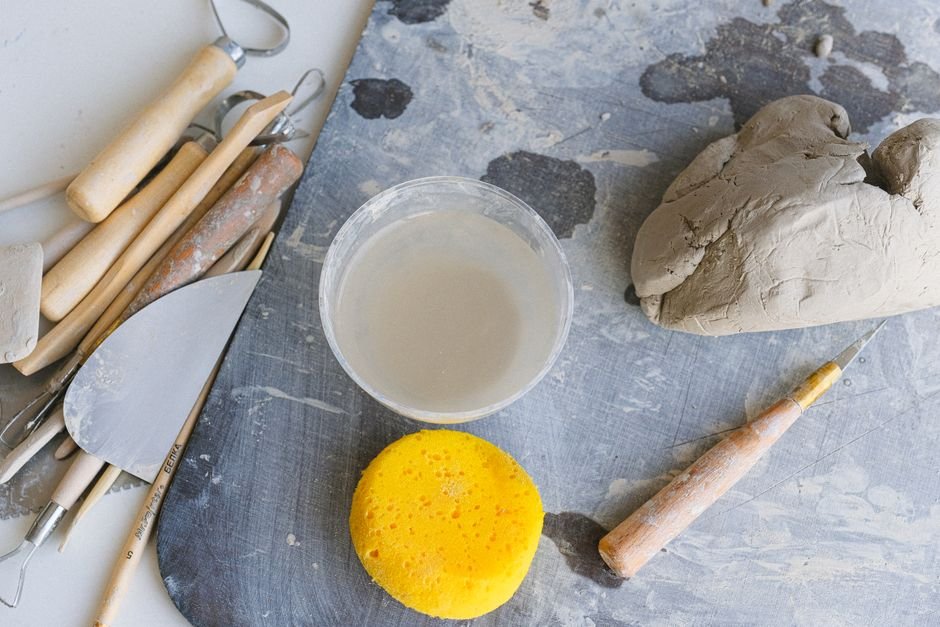
Sponges help keep surfaces clean and slightly moist, although too much water can soften leather hard clay.
Small coils or soft clay help secure pots to the wheel head during trimming. Some potters use a damp wheel head or a giffin grip, a device that holds pots in place without clay.
A banding wheel or turntable is useful for checking profiles and adding hand carved details after trimming.
Some potters also keep a soft brush handy for sweeping away trimming scraps as they work. Keeping the surface clear helps you see the form properly and stops loose bits of clay from scratching the pot.
Choosing Your First Trimming Tools
Start small. A medium sized loop tool with a round or teardrop end and a smaller loop tool for details will handle most beginner trimming.
Choose quality over quantity. One sharp, well made tool will outperform a box of cheap ones. Tools from reputable brands often hold their edge better. Our articles on Kemper tools and Mudtools look at popular ranges.
Consider handle comfort. Trimming can take time, so a handle that sits comfortably in your hand reduces fatigue.
Think about the shapes you make. Bowls often benefit from rounded loop tools, while cylinders and mugs may suit square or angled tools.
Many studios provide trimming tools for classes, so it’s worth trying a few before buying. Our beginner pottery kit list builder helps you plan a starter kit.
Add tools gradually as your trimming improves and you know which shapes suit you.
Budget for one higher quality tool rather than many cheap ones. A well made loop tool that stays sharp will make trimming feel easier from your very first session, while a dull tool tends to drag and chatter, which can be discouraging for beginners.
Caring For Your Trimming Tools
Clean tools after each session. Rinse off clay, wipe them dry and store them somewhere they won’t get bent.
Dry carbon steel tools thoroughly, as they can rust. Stainless steel tools are more forgiving.
Keep edges sharp. Dull trimming tools drag clay and leave chatter marks. Many loop tools can be sharpened with a small file or sharpening stone. Some tools, like tungsten carbide trimmers, stay sharp much longer.
Store tools carefully. A tool roll, box or container with separate slots protects edges and keeps tools from tangling.
Check tools regularly for bent loops or loose handles, and repair or replace them as needed.
Finally, keep trimming tools separate from glaze tools if possible, so they don’t get contaminated with glaze materials that could end up on your pots.
What Competing Trimming Tools Guides Leave Out
Most guides ignore left versus right handed use. Some trimming tools are sharpened or bent for a particular hand or wheel direction. If you’re left handed or trim with the wheel spinning clockwise, check whether a tool suits you before buying.
Tool shape affects results more than many realise. A rounded loop creates soft curves, while a square loop makes crisp angles. A narrow tool carves fine foot rings, while a wide tool removes clay quickly.
Angle matters too. Holding a tool at the wrong angle can cause chatter or gouges. Many potters find a slight angle, letting the edge glide over the surface, gives the cleanest results.
Another gap is what studios usually provide. Many studios supply basic trimming tools, so beginners can learn without buying a full kit straight away. At Le Studio, our ceramic studio provides tools for classes and members.
Finally, competing guides rarely mention that tools can’t fix poor timing. Trimming too wet or too dry causes problems no matter how good the tool. Our wheel classes help you learn the right moment to trim.
Not sure which trimming tools suit your hands? Try a range of studio tools in a wheel class at Le Studio Art Space in Mordialloc before you spend money on your own kit.
Frequently Asked Questions
What trimming tools do beginners need?
One or two good loop tools, a needle tool and a sponge are enough to start. Add more as you discover which shapes you prefer.
What is the difference between a loop tool and a ribbon tool?
Loop tools are usually sturdier and sharpened, ideal for removing clay. Ribbon tools are thinner and lighter, better for detail and carving.
Why do my trimming tools leave chatter marks?
Chatter often comes from dull tools, holding the tool at the wrong angle, or trimming clay that’s too dry. Sharpening and adjusting your angle can help.
Do I need left handed trimming tools?
Some tools work for either hand, but others are designed for one direction. Check before buying if you’re left handed.
Does Le Studio Art Space provide trimming tools in classes?
Yes. Le Studio Art Space provides tools in classes and for studio members, so you can try different trimming tools before buying your own.
This article is provided for general educational purposes by Le Studio Art Space. Handle sharpened tools carefully and follow manufacturers’ care instructions.