Yes, Amaco makes a dedicated air dry and self-hardening clay line, separate from its kiln fired stoneware and earthenware bodies, sold in white, grey, and terra cotta and sized in 10 and 25 pound packages for hand modelling and craft projects.
It’s a genuinely common question, especially from someone weighing up a kiln fired pottery project against something simpler that hardens without a firing at all. The short answer is yes, Amaco does make an air dry clay, but it’s worth understanding how different it actually is.
At Le Studio Art Space, this question comes up regularly from people deciding between joining the ceramic studio for real kiln fired work or trying something more accessible first, and it’s a fair question worth answering honestly.
This article looks at what Amaco’s air dry clay actually is, how it compares to kiln fired stoneware and earthenware, and when each option genuinely makes sense for a given project.
What Air Dry Clay Actually Is
Air dry clay hardens simply by drying out at room temperature over time, without ever needing a kiln, which is exactly what makes it appealing for craft projects, classrooms, and anyone without access to firing equipment.
This is fundamentally different from kiln fired stoneware or earthenware, where the clay undergoes an irreversible chemical transformation inside the kiln, called vitrification, that gives fired ceramics their genuine strength, durability, and, in many cases, waterproofing once glazed.
Air dry clay never goes through that transformation. It hardens through moisture loss alone, which means it remains inherently more fragile and, importantly, never becomes truly waterproof or food safe no matter how long it’s left to dry.
Understanding this distinction upfront genuinely changes what kind of project makes sense for air dry clay versus what really needs a proper kiln firing to hold up long term.
It’s a distinction worth taking seriously before starting a project, since disappointment usually comes from expecting air dry clay to behave like fired ceramics rather than from any real flaw in the material itself.
Where Amaco’s Product Range Sits On This
Amaco Brent, the company behind Amaco clay, has been making ceramic and craft related products in the United States since 1919, and its catalogue genuinely spans both worlds, kiln fired stoneware and earthenware alongside a separate air dry and self-hardening line.
The air dry clay is ready to use straight from its packaging and can be sculpted, hand modelled, or even thrown on a wheel, coiled, pinched, or worked in slabs much like a moist clay body, despite never being intended for firing.
It’s sold in white, grey, and terra cotta colours, in 10 and 25 pound packages, making it accessible for home use, classroom projects, and hobby sculpting without needing any kiln access at all.
Amaco is genuinely best known among serious potters for its kiln fired stoneware, glazes, and underglazes, so it’s worth being clear that the air dry line serves a meaningfully different audience and purpose within the same broader product range.
Packaging and marketing for the air dry line also leans toward schools, families, and craft hobbyists rather than working studio potters, which is a genuine, honest signal about who the product is actually built for.
Why Air Dry Clay Is Not The Same As Studio Pottery
Durability is the biggest practical difference. A fired stoneware piece can withstand daily handling, washing, and functional use for years, while an air dried piece remains genuinely more fragile and prone to chipping or breaking with regular handling.
Food safety is another important distinction. Amaco’s air dry clay is non-toxic, but it was never designed to be food safe, and pieces made from it should not be used to hold or serve food or drink, unlike a properly fired and food safe glazed stoneware piece.
Permanence differs meaningfully too. Air dried pieces can technically be fired to cone 04 for added hardness according to Amaco, though this doesn’t fully replicate the strength of a clay body engineered from the start for kiln firing.
Amaco’s own guidance also notes that air dried pieces can be sealed with shellac afterward for extra strength and some water resistance, though this remains a genuinely different level of durability compared to a properly fired and glazed stoneware piece.
When Air Dry Clay Makes Sense
Air dry clay genuinely suits craft projects, decorative sculptures, kids activities, and anything where the finished piece won’t need to hold up to regular handling, washing, or functional daily use.
It’s also a reasonable, low barrier way for someone to explore working with clay by hand before committing to wheel classes or kiln access, particularly for younger makers or a first casual attempt at hand building.
For anything meant to genuinely function as dinnerware, hold liquid, or survive years of regular handling, kiln fired stoneware remains the far more appropriate choice, since air dry clay simply wasn’t engineered for that kind of durability.
Many families and classrooms find air dry clay a genuinely useful starting point precisely because it removes the need for kiln access, even while understanding its finished pieces will always sit in a different durability category.
Setting realistic expectations from the outset, rather than assuming an air dried piece will behave like fired stoneware, genuinely prevents most of the disappointment people report after their first attempt with the material.
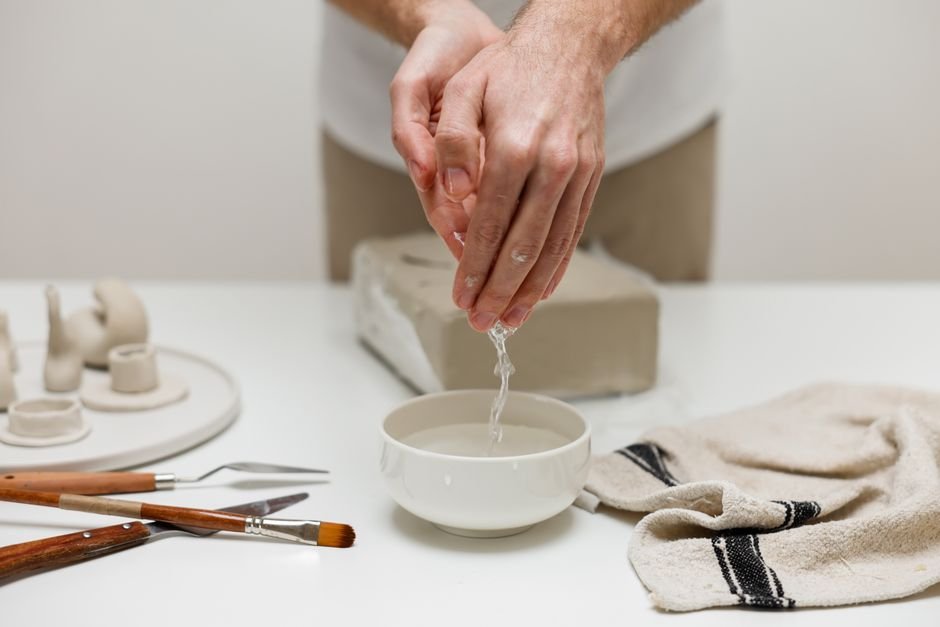
What Competing Guides Leave Out
Most product pages describe air dry clay’s colours and package sizes without genuinely explaining why a working ceramic studio like Le Studio Art Space focuses its equipment and teaching on kiln fired clay rather than air dry alternatives, and the honest answer comes down to durability and genuine ceramic craft.
A kiln fired piece undergoes real, permanent chemical transformation that air dry clay simply cannot replicate, which is why serious functional pottery, and the wheels, kilns, and glazing knowledge a proper studio offers, genuinely produces a different category of finished object.
Few guides mention clearly that shellac sealing, while helpful, is not equivalent to a proper food safe glaze, and pieces treated this way should still never be used to hold or serve food or drink.
Realistic durability expectations rarely get addressed either. Many people find an air dried piece that’s handled regularly starts showing wear, chipping, or cracking well before a comparable fired stoneware piece would show any equivalent damage.
Kiln Fired Clay Versus Air Dry Clay For Real Projects
For anything decorative, low handling, or aimed at a beginner exploring clay for the first time, air dry clay is a genuinely reasonable and accessible starting point that removes the barrier of needing kiln access.
For functional dinnerware, gifts meant to last, or any piece that needs to survive regular use, kiln fired stoneware or earthenware remains the appropriate choice, and that’s exactly the kind of work a ceramic studio and its kilns are built for.
Many potters actually use both at different stages, air dry clay for quick sketching out an idea in three dimensions, and kiln fired clay for the finished, functional version of a piece once the concept is worked out.
Neither option is objectively better than the other; they simply serve genuinely different purposes, and choosing between them comes down honestly to what the finished piece actually needs to do.
Talking through the intended use of a piece before starting, whether it’s a quick decorative gift or something meant for daily use, genuinely helps decide which material and process actually fits the project rather than defaulting to whichever is more familiar.
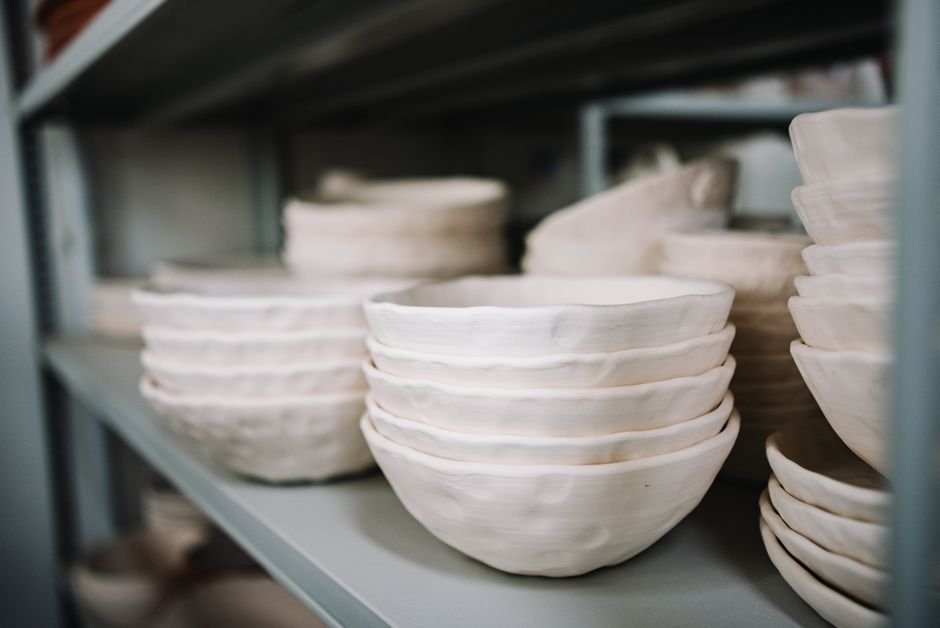
Curious what genuine kiln fired pottery can offer compared to air dry projects? Come see the difference for yourself at Le Studio Art Space’s ceramic studio in Mordialloc.
Frequently Asked Questions
Is air dry clay basically the same as regular pottery clay?
No, not really. It hardens by drying rather than through the chemical transformation that happens in a kiln, so it stays genuinely more fragile and is never truly waterproof or food safe.
Can I fire Amaco air dry clay in a kiln to make it stronger?
Amaco notes it can technically be fired to cone 04 for added hardness, though this doesn’t fully replicate the strength of a clay body specifically engineered from the start for kiln firing.
Is Amaco air dry clay safe to make a mug or bowl I’ll actually use?
It’s genuinely not recommended for anything meant to hold food or drink, since it was never designed to be food safe or truly waterproof, even once dried or shellac sealed.
Why would a real ceramic studio not just use air dry clay for everything?
Because kiln fired clay produces a genuinely different, more durable category of finished object, which is exactly why Le Studio Art Space focuses on kiln fired work and proper firing for functional pieces.
Is air dry clay a good way to try pottery before committing to a class?
It can be a low barrier way to explore working with clay by hand, though many people find that trying real wheel throwing or hand building at a studio gives a genuinely more accurate sense of what pottery actually involves.
This article is provided for general educational purposes by Le Studio Art Space and reflects publicly available product information and common studio practice.