The history of pottery stretches back around 20,000 years, to cooking vessels found in Xianrendong Cave in China. Pottery then developed independently across Asia, Africa, the Middle East, Europe, and the Americas, transformed by the potter’s wheel and better kilns, and grew from everyday storage and cooking ware into porcelain, industrial tableware, and eventually fine art. Today it thrives in community studios as both craft and creative practice.
Every time you centre clay on a wheel or pinch a small bowl, you’re repeating something humans have done for tens of thousands of years. The history of pottery isn’t a narrow story about one ancient civilisation. It’s a long, winding tale that crosses continents, shifts with technology, and keeps finding new purposes as societies change.
At Le Studio Art Space in Mordialloc, we love the fact that a beginner in one of our classes is connected to such a deep tradition. This short tour won’t cover everything, since whole libraries exist on the subject, but it will give you a clear sense of how pottery evolved from the earliest cooking pots to the studio practice we know today.
The Earliest Chapter In The History Of Pottery
For a long time, people assumed pottery appeared alongside farming, roughly 10,000 years ago. Discoveries in East Asia changed that view. Fragments from Xianrendong Cave in Jiangxi Province, China, have been dated to around 20,000 years ago, making them the oldest known pottery vessels. They were made by hunter gatherers, most likely for cooking, long before agriculture took hold.
In Japan, the Jomon culture produced distinctive cord-marked pottery beginning more than 15,000 years ago, and the tradition continued for thousands of years. Early pottery also appeared independently in parts of North Africa, the Middle East, and South America, which tells us people in many places discovered for themselves that clay hardens permanently in fire.
Fired clay actually predates vessels. Small figurines made of fired clay found in central Europe are around 26,000 years old, showing that people understood how heat transforms clay well before they used it to make containers.
What’s striking about these early beginnings is how similar the basic method was wherever pottery appeared. People dug local clay, mixed in sand, grit, crushed shell, or plant fibre to help it survive firing, shaped it by hand, and fired it in open flames. Those same principles, choosing the right clay and managing heat, still sit at the heart of every studio today, including ours.
Major Regional Traditions Through History
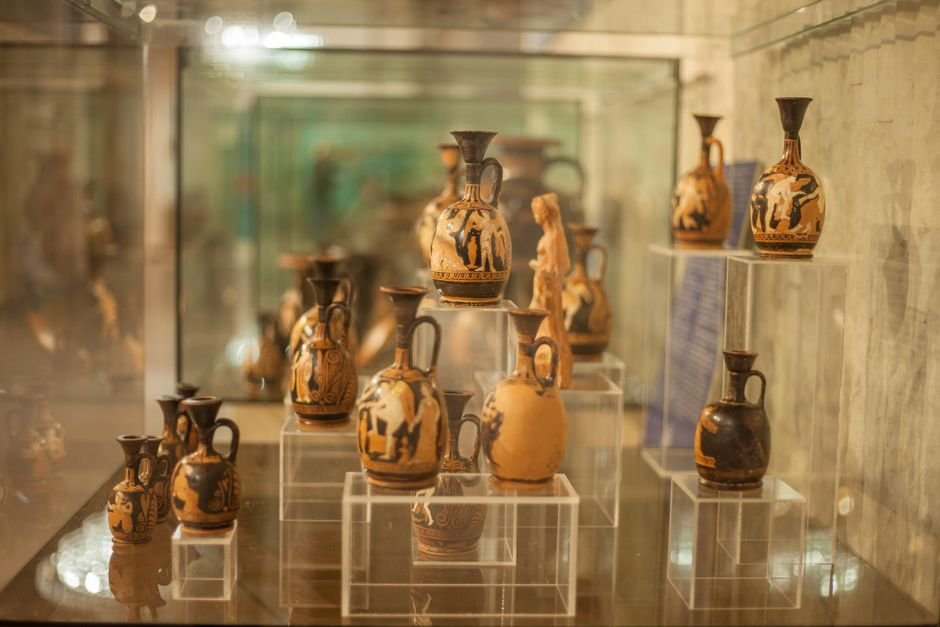
Once pottery took hold, regional styles flourished. In ancient Greece, potters and painters produced black-figure and later red-figure wares, decorated with scenes from myth and daily life, which remain some of the most recognisable ceramics in the world. Roman workshops later mass produced glossy red tableware, known today as terra sigillata, and traded it across the empire.
China’s contribution is enormous. Chinese potters refined high-fired stoneware and then true porcelain, and the city of Jingdezhen became a porcelain centre from the Song dynasty onward, supplying imperial courts and eventually export markets across the globe. Korea and Japan developed their own celebrated traditions too, from celadon glazes to the tea ceremony wares explored in our article on Japanese ceramics.
In the Islamic world, potters developed tin-glazed wares and shimmering lustre decoration from around the ninth century, influences that later travelled into Spain and Italy as maiolica and on to the Netherlands as Delftware. Meanwhile, cultures across Africa and the Americas built rich hand built and burnished traditions without the wheel at all.
Pueblo potters in what is now the south western United States, for example, developed coil built wares with painted and burnished surfaces that are still made and celebrated today. Across many parts of Africa, women potters produced large, beautifully burnished vessels fired in open bonfires, a practice that continues in some communities. These traditions are a good reminder that the wheel is only one path, and that hand building has produced some of the most sophisticated pottery in history.
How The Wheel And Kiln Changed Pottery Over Time
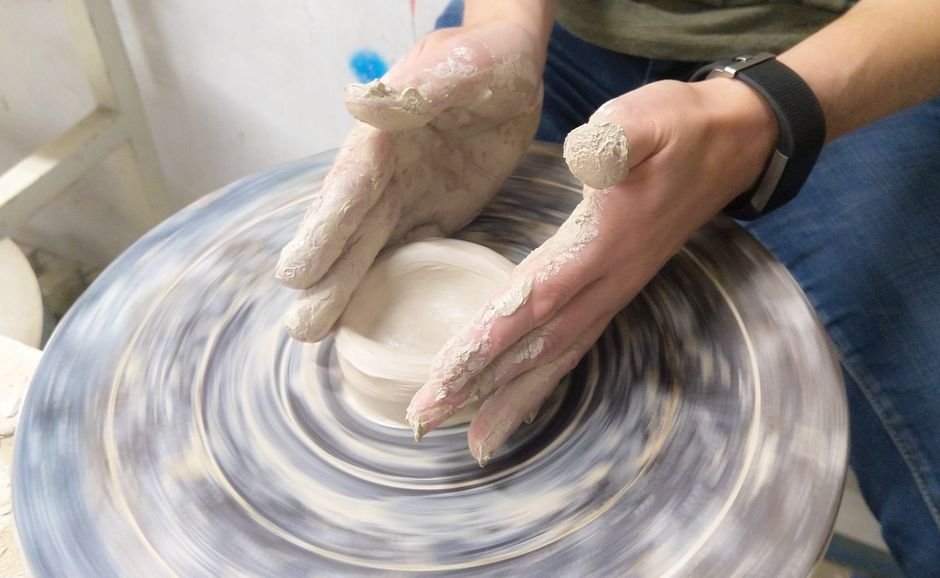
The potter’s wheel is one of the great turning points in the history of pottery. Slow turntables appeared in the Middle East around 4500 BCE, and fast spinning wheels capable of true throwing were in use in Mesopotamia by roughly 3500 BCE. The wheel made it possible to produce symmetrical vessels far more quickly, which supported growing towns and trade.
Kilns evolved just as dramatically. Early pottery was often fired in open bonfires or pits, which limited temperatures and produced uneven results. Enclosed kilns trapped heat, allowing higher temperatures and more control. Over centuries, Chinese dragon kilns climbing hillsides, European bottle kilns, and eventually gas and electric kilns each expanded what potters could achieve.
The twentieth century brought electric kilns and kick or electric wheels small enough for home workshops and community studios. That shift is a big reason why pottery is so accessible today. You no longer need a factory or a village kiln to fire your work, and services like our firing service mean you don’t even need to own one.
Pottery’s Role In Trade, Culture, And Daily Life Through The Ages
For most of history, pottery was primarily practical. Pots stored grain, carried water, fermented food, and cooked meals. Because broken pottery survives so well, archaeologists rely heavily on potsherds to date sites and trace how people lived, traded, and moved.
Pottery was also a trade good in its own right. Amphorae carried wine and oil around the Mediterranean, and Chinese porcelain travelled along maritime routes to the Middle East, Africa, and Europe, where it was so admired that Europeans spent centuries trying to copy it. The word china for fine tableware in English reflects that history.
The industrial revolution changed things again. Factories such as Josiah Wedgwood’s in eighteenth century England standardised production, making matching tableware affordable for ordinary households. Pottery became cheaper and more uniform, which in turn set the stage for a reaction in favour of handmade work.
Pottery has also always carried meaning beyond its practical job. Ceremonial vessels, burial offerings, tea bowls treasured for generations, and wedding gifts all show that people have long invested pots with memory and significance. Even an everyday cooking pot could reflect family, region, and identity through its shape and decoration, something potters today still think about when they design a piece.
What Competing Guides Leave Out
Many histories stop around the ancient world, which misses one of the most interesting shifts, pottery’s move from purely functional craft to fine art over the last century or so. Figures like Bernard Leach, who set up his pottery in St Ives in 1920 and blended Japanese and English traditions, helped create the idea of the studio potter, an individual maker valued for their personal vision rather than factory output.
In the 1950s, artists such as Peter Voulkos pushed clay into abstract, sculptural territory, arguing it could stand alongside painting and sculpture. Today, ceramic works appear in major galleries, and many artists featured in our look at contemporary ceramic artists work somewhere between function and pure expression.
Another gap is how modern studios connect to this long history. When you learn to wedge clay, throw on a wheel, or apply a glaze, you’re using techniques refined over thousands of years. Community studios keep that knowledge alive by passing it hand to hand, much like village workshops did centuries ago.
It’s also worth noticing how much of pottery history was shaped by ordinary, unnamed makers. Most of the pots in museums weren’t signed, and many of the potters were women whose skills were passed through families rather than recorded in books. Recognising that helps explain why community studios feel so natural. Pottery has nearly always been a shared, social craft rather than a solitary one.
Where The History Of Pottery Stands Today
Pottery is having a genuine revival. Many people find that working with clay offers a welcome balance to screen-heavy lives, and classes are filling up with complete beginners alongside experienced makers. Handmade mugs and bowls have become prized again, not because they’re needed, but because they carry the mark of a person.
Modern potters benefit from reliable electric kilns, commercially prepared clay bodies, and glazes with predictable results, yet the core skills remain surprisingly unchanged. Centring still takes practice, and firing still involves a little bit of magic and uncertainty.
If you’d like to go further back in time, our article on pottery in ancient times explores early techniques in more depth. And if you’d like to add your own chapter, our ceramic studio and workshops and classes are a welcoming place to start.
Pottery’s story is still being written, and there’s room for you in it. Join a beginner class at Le Studio Art Space in Mordialloc and make your first piece with the same clay, wheel, and fire potters have used for millennia.
Frequently Asked Questions
How old is the oldest pottery ever found?
The oldest known pottery vessels come from Xianrendong Cave in China and are around 20,000 years old. Fired clay figurines are even older, at roughly 26,000 years.
Did pottery really exist before farming?
Yes, and that surprised many researchers. The earliest pots were made by hunter gatherers thousands of years before agriculture, probably for cooking.
When was the potter’s wheel invented?
Slow turntables appeared in the Middle East around 4500 BCE, and fast wheels suitable for throwing were used in Mesopotamia by about 3500 BCE. Many cultures continued to hand build without a wheel long after that.
Why is fine tableware called china?
Chinese porcelain was traded to Europe for centuries and was highly prized. The name china stuck in English as a general term for fine ceramic tableware.
Is pottery still worth learning when everything is mass produced?
Many people think so, precisely because handmade pieces feel personal. At Le Studio Art Space we see students enjoy the process as much as the finished mug or bowl.
This article is provided for general educational purposes by Le Studio Art Space. Archaeological dates are approximate and may be revised as new research emerges.