Hand building ceramics means shaping clay with your hands and simple tools instead of a pottery wheel. The three core techniques are pinching, coiling and slab building, which can be combined to make bowls, mugs, plates, planters, boxes, tiles and sculpture. With wedged clay, a few low cost tools and slow, even drying, beginners can make lasting, kiln fired pieces without ever touching a wheel.
When people picture pottery, they often imagine spinning clay on a wheel. But for thousands of years, most pottery around the world was made by hand, without any wheel at all. Hand building ceramics is still one of the most creative and accessible ways to work with clay, and it suits people who want to explore shape, texture and sculpture at their own pace.
At Le Studio Art Space in Mordialloc, our ceramic studio offers hand building classes alongside wheel throwing and sculpture, and plenty of makers stick with hand building by choice. This guide explains what hand building ceramics means, the core techniques, what you can make, the tools you need, how it compares with wheel throwing, and tips for clean, even walls.
What Hand Building Ceramics Means
Hand building ceramics simply means forming clay without a pottery wheel. You use your hands, along with basic tools like rolling pins, knives and ribs, to shape and join clay.
It’s one of the oldest ways of making pottery. Many ancient vessels, figurines and tiles were hand built, and many traditions around the world still use hand building today.
Hand building doesn’t rely on symmetry the way wheel throwing does. That freedom lets you make asymmetric, organic or geometric forms that would be hard or impossible to throw.
It’s also slower and more deliberate. Many people find hand building relaxing, because you can stop, think and adjust as you go.
Hand building suits all ages and abilities. Children, beginners and experienced artists all use the same core techniques, simply at different levels of complexity.
It’s also very portable. Because you don’t need a wheel, hand building can happen at a kitchen table, in a classroom or at a shared studio bench, as long as you can keep the clay covered between sessions and get finished work to a kiln.
Core Hand Building Ceramics Techniques
Pinching is the most intuitive technique. You press your thumb into a ball of clay and pinch the walls outward while rotating it. It’s ideal for small bowls, cups and organic forms.
Coiling involves rolling clay into long ropes and stacking them to build walls. Coils are blended together on the inside, and sometimes the outside, for strength. Coiling suits taller vessels, large planters and sculptural forms.
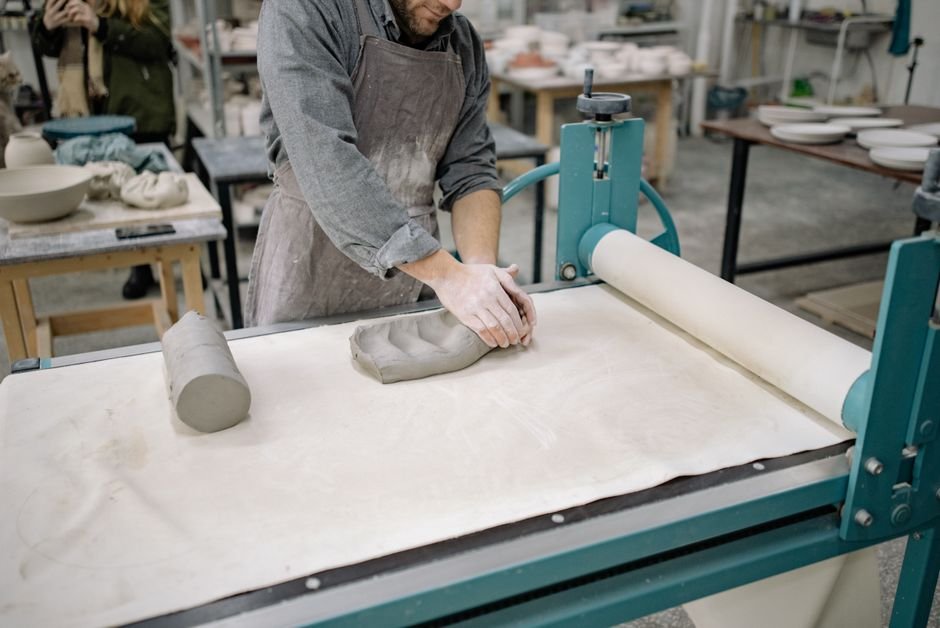
Slab building uses flat sheets of clay rolled to an even thickness. Slabs can be cut, folded, draped over moulds or joined to make boxes, plates, mugs and tiles.
Many makers combine techniques. A slab built mug might have a pinched handle, or a coil built vase might have a slab base.
Joining is a core skill across all techniques. Scoring both surfaces, applying slip and pressing pieces together firmly creates strong joins.
Our guide to the core hand building methods explains each technique step by step.
Moulds add another option. Pressing slabs into or over a bowl, a plaster form or even a simple household object lets you make consistent shapes quickly, which is especially handy for plates and shallow dishes.
What You Can Make With Hand Building Ceramics
Functional pieces are absolutely possible. Mugs, bowls, plates, jugs, planters and serving dishes can all be hand built, though they need attention to thickness, balance and glazing for everyday use.
Tiles and wall pieces suit slab building perfectly, offering a flat surface for texture, carving and glaze.
Boxes and lidded containers are popular slab projects, teaching precise measuring and joining.
Sculpture is a natural fit for hand building. Figures, animals, heads and abstract forms often combine pinching, coiling and modelling. Our guide to starting your first clay sculpture explains how.
Decorative vessels and vases can be built in shapes that would be impossible on a wheel, such as square, oval or irregular forms.
Our article on hand building pottery ideas for beginners has many project suggestions to get you started.
Hand building also lends itself to series. Making a set of matching slab plates or a family of pinched cups lets you refine your technique piece by piece, and the finished group often looks more striking than a single item.
Tools You Need To Start Hand Building Ceramics
Hand building needs very few tools. A rolling pin or wooden dowel, two guide sticks of equal thickness, and a canvas or cloth surface are enough for rolling slabs.
A needle tool helps with scoring, cutting and piercing air holes. A craft knife or fettling knife cuts slabs cleanly.
A rubber or metal rib smooths surfaces and compresses clay. A sponge helps with smoothing and cleaning edges.
Slip, made from the same clay mixed with water, is essential for joining. A small brush helps apply it.
Plastic sheeting keeps work moist between sessions. Templates made from paper or card help with consistent slab shapes.
Most of these tools are inexpensive, and many studios provide them. Our guide to building a starter tool kit on a budget covers more options.
As you progress, you might add a slab roller, texture mats, a banding wheel or an extruder, but none of these are essential at the start. Plenty of experienced hand builders still rely on a rolling pin and a few well worn tools.
Hand Building Versus Wheel Throwing
Hand building and wheel throwing each have different strengths. Wheel throwing is fast for symmetrical forms like bowls and cylinders, and it’s ideal for making multiples.
Hand building is better for asymmetric, geometric and sculptural forms. It also allows more control over individual details and textures.
The learning curve differs too. Wheel throwing often feels hard at first because centring clay takes practice. Hand building is usually easier to start, though mastering clean joins and even walls still takes time.
Hand building needs less equipment, which makes it easier to practise at home, as long as you can access a kiln for firing.
Neither is better. Many potters enjoy both, and the skills from one often improve the other. Our article on wheel throwing versus hand building and our hand building versus wheel throwing chooser help you decide where to start.
Physically, hand building tends to be gentler on the back and shoulders than long sessions at the wheel, since you can sit at a comfortable bench and change position easily. That makes it a popular choice for people who want a calmer, less strenuous practice.
What Competing Hand Building Ceramics Guides Leave Out
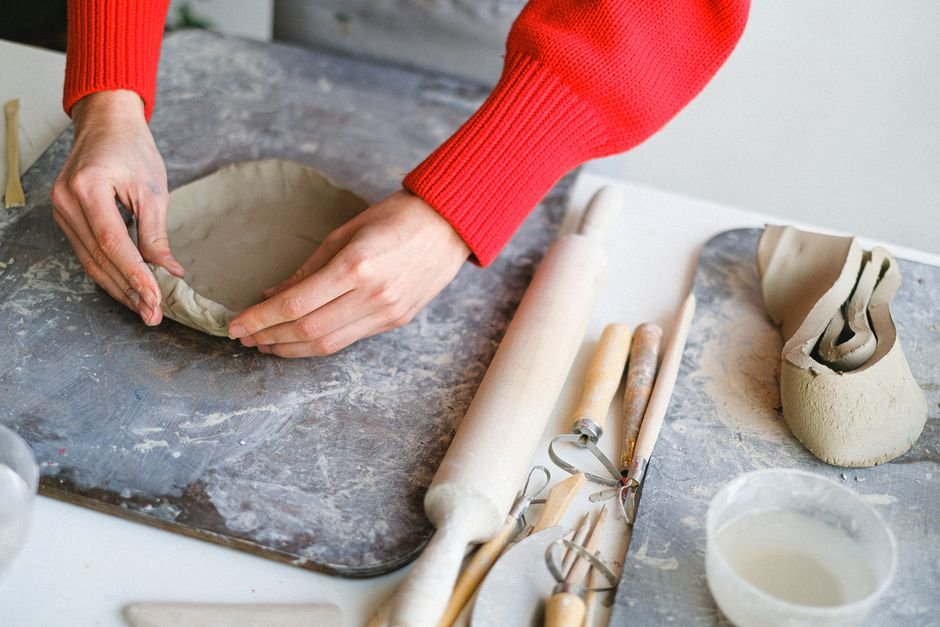
Many hand building guides skip how to get clean, even walls. For slabs, use guide sticks on either side of your rolling pin to keep thickness consistent, and roll in different directions to compress the clay evenly.
For coils, roll them evenly by using your whole hand rather than fingers, and blend each coil into the one below. For pinch pots, rotate the pot constantly and pinch gradually, checking thickness by feel.
Compressing surfaces with a rib helps strengthen walls and reduce cracking. Our guide to common hand building mistakes covers more tips.
Another gap is how to combine hand building with wheel work later. Many potters throw parts on the wheel and alter them by hand, or add hand built handles, feet and decorations to thrown forms. Learning both techniques opens up endless possibilities.
At Le Studio, our ceramic studio, workshops and classes and firing service support both approaches, so you can explore at your own pace.
No wheel? No problem. Try hand building ceramics in a class at Le Studio Art Space in Mordialloc, and discover how much you can make with just your hands, a few tools and our in-house firing service.
Frequently Asked Questions
Can you make pottery without a wheel?
Yes. Hand building with pinching, coiling and slabs lets you make bowls, mugs, plates, tiles and sculpture without a wheel.
Is hand building easier than wheel throwing?
Many beginners find it easier to start, because there’s no centring to master. Both take practice to do well.
Can hand built pottery be used for food?
Yes, if it’s made with suitable clay, glazed appropriately and fired correctly. Follow your studio’s advice and product labels.
What clay is best for hand building?
A grogged stoneware or hand building clay is a good choice. It dries evenly and resists cracking in slabs and larger forms.
Does Le Studio Art Space offer hand building classes?
Yes. Le Studio Art Space’s ceramic studio offers hand building classes as well as wheel throwing and sculpture, and our firing service fires finished pieces.
This article is provided for general educational purposes by Le Studio Art Space. Results vary with clay, technique and firing, so follow your studio’s guidance and product instructions, especially for any pieces intended for food use.