Mayco’s crystal glazes, primarily its Jungle Gems line, are genuinely fluid in the kiln, moving and running as they mature at cone 06/05, so they need catch plate protection, generous spacing, and careful shelf placement to fire predictably.
Understanding what a glaze actually does inside the kiln matters just as much as how you apply it, and Mayco’s crystal glazes are a genuine case where firing behaviour deserves as much attention as brushwork.
At Le Studio Art Space, members using Mayco’s crystal glazes for the first time are often surprised by how much movement happens during firing, and a bit of upfront understanding genuinely changes how confidently a piece can be set up beforehand.
This article covers what the range actually includes, how these glazes move and mature during firing, and practical steps toward getting more consistent, predictable results firing after firing.
What The Mayco Crystal Glaze Range Includes
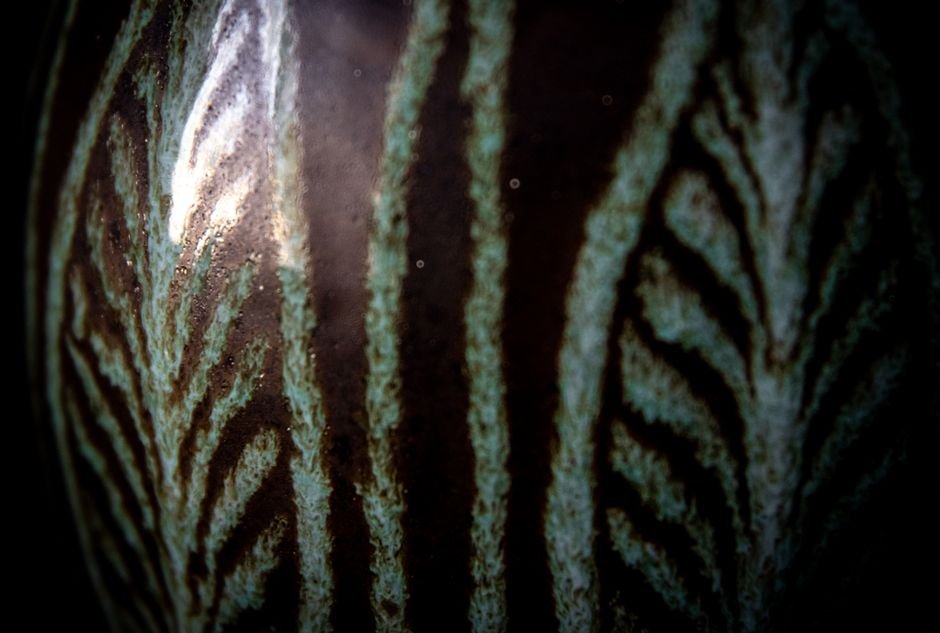
Jungle Gems is Mayco’s primary crystal glaze product line, formulated with heavier mineral crystals suspended in the glaze that settle and bloom during firing to create a genuinely distinctive, textured surface.
The line spans a real range of colours, from bold jewel tones to softer, earthier shades, giving potters genuine variety while working within a single consistent glaze family and firing behaviour.
Mayco’s broader Fired product catalogue also includes other genuinely fluid, movement-heavy glazes like their Elements range, which behave somewhat similarly in the kiln even though they’re formulated differently from the crystal-specific Jungle Gems line.
Understanding that Jungle Gems is specifically engineered for crystal formation, rather than simply being a decorative variant of a standard glaze, helps explain why it needs meaningfully different handling in the kiln than most of a studio’s regular glaze shelf.
Mayco has also built out complementary crystal-adjacent products over time, though Jungle Gems genuinely remains the core, most widely used product when potters talk about Mayco crystal glazes specifically.
How These Glazes Move And Run During Firing
Jungle Gems is formulated to mature at cone 06/05, and within that range it becomes genuinely fluid as it melts, allowing the suspended crystals room to settle, cluster, and bloom into the textured surface the glaze is known for.
That same fluidity means the glaze will run down a vertical surface during firing more than a typical stable glaze would, which is exactly why keeping crystal-heavy application away from the base of a piece matters so much.
Movement genuinely increases the higher the firing temperature climbs beyond the recommended range, with crystals behaving more as a blending agent within the glaze at higher temperatures rather than forming distinct, separate crystal clusters.
This is part of why sticking closely to the recommended cone 06/05 firing range gives the most reliable, true-to-expectation crystal bloom, rather than experimenting with a higher mid-range firing and hoping for a similar result.
Watching the glaze’s actual behaviour through a kiln’s peep hole during the hottest part of a firing, where safe to do so, can also give a useful sense of just how much movement is genuinely happening compared to a standard glaze firing.
Kiln Placement And Shelf Protection
Every piece glazed with a Mayco crystal glaze genuinely needs its own catch plate or kiln shelf protection, since the glaze’s fluidity during firing can drip and, without protection, permanently fuse a piece to the shelf beneath it.
Leaving a clean, unglazed margin near the base of the piece gives the expected glaze movement somewhere safe to settle without running off the edge entirely and reaching the shelf or catch plate underneath.
Generous spacing between pieces on the same shelf also matters more with a fluid crystal glaze than with a standard stable glaze, since unexpected spread can genuinely bridge between two pieces placed too closely together.
In a shared studio kiln, confirming placement and spacing with whoever is loading that particular firing is a genuinely worthwhile step, since a crowded load changes the margin for error more than a dedicated, single-purpose kiln would.
Using a slightly taller catch plate or setter under a crystal glazed piece, rather than relying on a flat shelf alone, gives an extra buffer of protection against runoff reaching the actual kiln shelf below it.
How Firing Temperature Affects The Crystal Effect
Cone accuracy genuinely matters more with crystal glazes than with many standard glazes, since crystal formation depends on the glaze reaching, and often being held briefly within, a fairly specific temperature and cooling range.
Firing even a full cone below the recommended range can leave the glaze underfired and immature, with crystals failing to develop their expected bloom, while firing above the range pushes toward excessive movement and less distinct crystal formation.
Using witness cones alongside a kiln’s electronic controller, rather than relying purely on a digital readout, remains one of the more reliable ways to confirm your kiln is genuinely reaching the temperature it reports.
Because a shared studio kiln fires many different pieces and clay bodies together, small variances in how evenly that heat distributes can affect crystal glaze results more noticeably than they would a more forgiving, standard glaze.
Logging the specific firing schedule used for each crystal glaze piece, rather than trusting memory alone, makes it much easier to spot patterns over several firings and adjust placement or timing with real evidence behind the decision.
What Competing Guides Leave Out
Most product pages describe the recommended cone range without genuinely addressing how a shared studio kiln schedule, set for a whole group’s mixed workload rather than one crystal glaze piece specifically, can introduce more variation between firings than a dedicated home kiln fired the same way every time.
Realistic variation between firings rarely gets honest treatment either. Many potters find that even two pieces glazed identically and fired in the same load can come out looking meaningfully different, purely because of small differences in shelf position and local heat.
Few guides mention that Jungle Gems’ fluidity can also be affected by how thickly nearby pieces are glazed in the same firing, since heavy glaze runoff from one piece can occasionally affect airflow and heat distribution immediately around it.
Cleaning and resealing a kiln shelf that’s previously had crystal glaze runoff on it is another gap. A shelf with old glaze residue can transfer unevenly to a new piece’s kiln wash, so proper shelf maintenance genuinely matters for consistent results over time.
Getting Consistent Results With Mayco Crystal Glazes
Sticking closely to the recommended cone 06/05 firing range, rather than experimenting with higher temperatures, remains the single most reliable step toward predictable crystal formation with Mayco’s crystal glaze line.
Keeping detailed notes on application thickness, kiln shelf position, and firing schedule for each crystal glaze piece helps build a genuinely useful personal reference over several firings, even in a shared studio kiln where every load varies slightly.
Using witness cones alongside your kiln’s digital controller, and confirming your kiln’s actual hot and cool spots over a few firings, both genuinely help narrow the gap between expected and actual results over time.
Most studios report that consistency improves noticeably once a potter treats crystal glaze firing as its own specific process, worth a bit of extra attention, rather than simply applying it the same way as a standard glaze and hoping for similar reliability.
Comparing results with other members who’ve fired crystal glaze pieces in the same studio kiln is also genuinely useful, since it builds a shared, collective sense of how that particular kiln tends to treat this kind of fluid, temperature-sensitive glaze.
Want to see fired Mayco crystal glaze results up close? Come look at samples and ask about our next glazing session at Le Studio Art Space’s ceramic studio in Mordialloc.
Frequently Asked Questions
Why did my Mayco crystal glaze run so much more than a regular glaze?
Crystal glazes like Jungle Gems are genuinely more fluid by design, since that movement is part of what allows the crystals to settle and bloom, so more running than a standard glaze is expected and normal.
Can I fire Mayco crystal glazes higher than cone 06/05 for a stronger effect?
You can, but crystal behaviour changes meaningfully at higher temperatures, generally producing more movement and less distinct crystal clusters, so testing on a sample tile first is genuinely worth doing.
Is it safe to fire a crystal glaze piece in a shared studio kiln?
Yes, with proper catch plates, unglazed margins, and generous spacing, and Le Studio Art Space can advise on setup before your piece goes into a shared firing.
Why do two identical pieces sometimes fire so differently?
Small differences in shelf position and local kiln heat genuinely affect crystal formation more than they would a standard glaze, so some variation between otherwise identical pieces is normal.
Do I need a dedicated kiln just for crystal glazes?
Not necessarily, but a kiln capable of holding an accurate cone 06/05 firing schedule is genuinely important, and it’s worth confirming your studio’s kiln can do that reliably before your first attempt.
This article is provided for general educational purposes by Le Studio Art Space and reflects publicly available product information and common studio practice.