Mayco glazes are a large, widely trusted range of non-toxic, lead-free ceramic glazes made by an Ohio manufacturer producing hundreds of colors and finishes for potters, schools, and studios. The range spans everyday stoneware glazes, the heavily pigmented, forgiving Stroke and Coat line, and specialty crystalline glazes like Jungle Gems, covering most of what a working potter needs under one brand. Mayco is not the only glaze brand worth knowing, but its scale and consistency have made it a genuine studio staple.
Once you start actually comparing glaze brands rather than just grabbing whatever’s on the shelf, the name Mayco comes up constantly. Here at Le Studio Art Space in Mordialloc, it’s one of the brands members ask us about most, so here is an honest, practical guide to the Mayco range.
What Mayco Is
Mayco Colors was founded in 1954 and is now based in Hilliard, Ohio, near Columbus, where the company manufactures more than 600 different glaze colors in a 75,000 square foot production facility. That scale is genuinely significant, few glaze manufacturers cover this much ground under a single brand.
Every Mayco glaze in that huge range is formulated to be non-toxic and lead-free, reflecting decades of the company’s focus on safety alongside color and finish variety. That combination of scale and consistent safety standards is a big part of why the brand has become such a common sight in art rooms, university ceramics departments, and working studios alike.
The company also invests noticeably in supporting resources, colour charts, application guides, and troubleshooting material aimed specifically at helping less experienced potters get consistent results. That educational focus mirrors the same values we hold here at Le Studio Art Space, where genuinely understanding a material matters just as much as simply having access to it.
That production scale also means the company can maintain tighter quality control across every batch than a much smaller operation typically could, which is part of the practical foundation underneath the brand’s reputation for consistency.
The Main Mayco Glaze Lines Potters Encounter
Stoneware glazes are Mayco’s core everyday range, reliable, wide-ranging colors suited to standard functional and decorative ceramics work at typical studio firing temperatures. This is usually the first Mayco line a potter encounters, since it covers the broadest range of everyday needs.
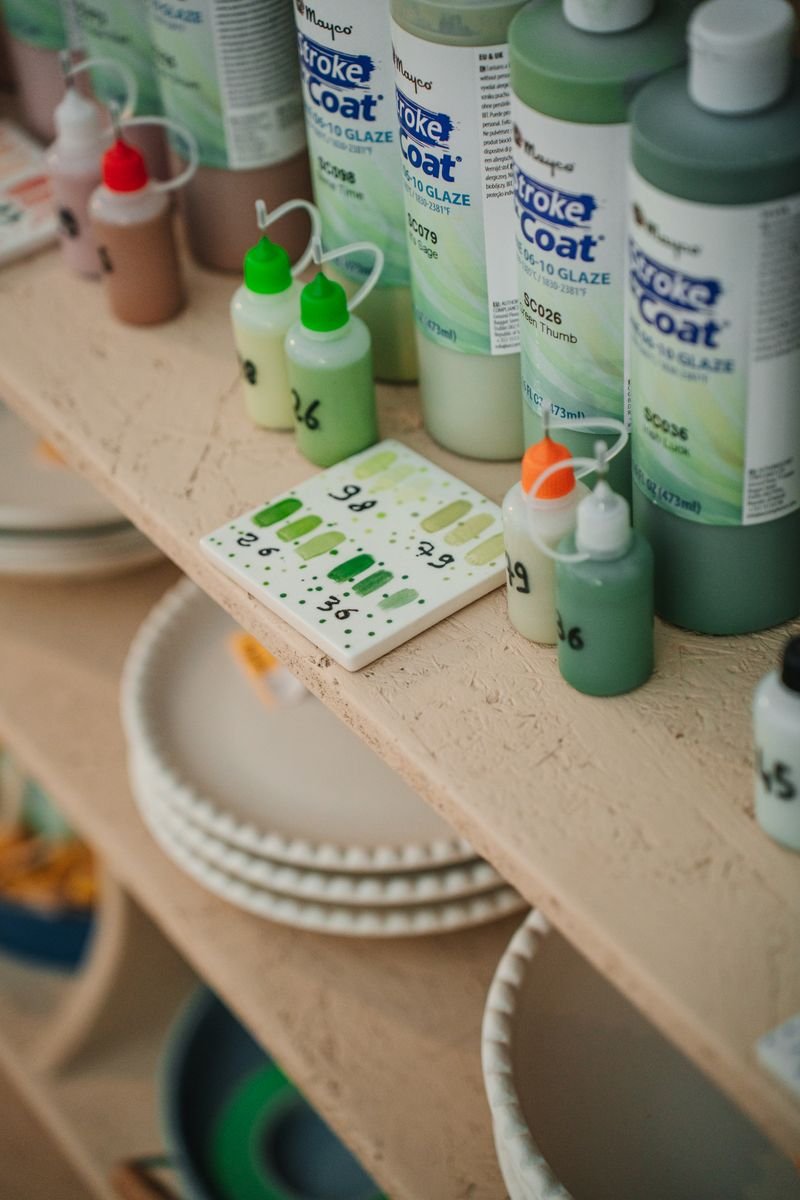
Stroke and Coat is a distinctive heavy-bodied glaze line, thick enough to level out and heal small imperfections during application, and notably tolerant of both overfiring and a wide variety of bisque and clay bodies, which makes it especially forgiving for less experienced hands. Jungle Gems sits at the specialty end of the range, a crystalline glaze line designed to grow dramatic, sparkling crystal texture at an accessible cone 06 firing temperature, aimed at decorative and sculptural work rather than everyday functional pieces.
Beyond these three well-known lines, Mayco also produces underglazes, specialty texture glazes, and various finishing products that round out a genuinely complete decorating toolkit. A studio stocking a thoughtful cross-section of these lines can usually cover the vast majority of what members want to achieve without needing to source materials elsewhere.
New lines and colours are also released periodically, which keeps the catalog feeling current rather than static. Many long-time potters enjoy checking in on new Mayco releases occasionally, even after they’ve settled into a reliable go-to palette of favourites.
What Makes Mayco Popular In Studios
Consistency across such a large catalog is genuinely impressive and a major reason studios keep stocking Mayco. Knowing that a specific glaze will fire the same way today as it did last year, across hundreds of color options, removes a lot of guesswork for a busy studio managing many members’ work at once.
The wide color range means a studio can offer real variety without juggling glazes from a dozen different manufacturers, and reliable firing results reduce the number of disappointing surprises coming out of the kiln. Together, that combination of scale, consistency, and dependability is exactly what a working studio needs from its glaze supply.
Restocking simplicity matters too, in ways that are easy to overlook until you’re the one managing studio inventory. Ordering replacement colors from a single supplier with a huge, well-documented catalog is genuinely far simpler than tracking down individual glazes from many smaller, less consistently available manufacturers.
That reliability also extends to shelf life. Properly stored Mayco glazes generally keep well over time, which matters for a studio that needs to maintain a consistent, ready-to-use stock rather than reordering constantly in small, urgent batches.
How To Choose Within The Mayco Range
Start with your clay body and firing temperature, the same first filter that applies to any glaze brand, since only glazes compatible with your specific setup are actually usable. From there, think honestly about the finish and effect you want, everyday reliability points toward the stoneware line, forgiving thick coverage points toward Stroke and Coat, and dramatic texture points toward a specialty line like Jungle Gems.
Testing on sample tiles still matters even within a single trusted brand, since color and finish genuinely vary across such a large catalog, and a glaze’s raw, unfired appearance rarely predicts its true fired result. Treat brand trust as a starting point for confidence, not a substitute for testing.
It also genuinely helps to think in terms of a small working set rather than trying to sample the entire catalog at once. Picking five or six Mayco colors across the lines that interest you, testing them properly, and building outward from what you actually like using is a far more manageable approach than feeling obligated to explore hundreds of options straight away.
What Competing Guides Leave Out
Most Mayco guides list colors and finishes without ever addressing realistic cost per piece, which matters a lot to anyone actually budgeting a project. Mayco glazes sit at a fairly accessible mid-range price point, and because a little glaze covers a lot of surface area, the actual cost per finished piece is usually smaller than people expect once you break it down.
Layering with other brands is another gap worth addressing honestly. Mayco glazes generally layer reasonably well with each other, but combining them with a different manufacturer’s glaze introduces more unpredictability and genuinely needs testing first, since chemical compatibility between different brands’ formulas isn’t guaranteed the way it usually is within one manufacturer’s own range.
A third gap worth naming is how differently the various Mayco lines actually behave to apply, despite all sitting under one brand name. Stroke and Coat’s thick, forgiving consistency handles very differently under a brush than the thinner stoneware line, so switching between lines without adjusting your technique is a common source of beginner frustration that guides rarely mention.
Mayco Versus Other Major Glaze Brands
Mayco sits alongside other major studio staples, Amaco being probably the most directly comparable, another large American manufacturer covering a similarly broad range of glazes, clay, and equipment. Both brands share a reputation for consistency and wide availability, and many studios, ours included, stock glazes from more than one of these major brands rather than treating it as an either-or choice.
Where the two brands tend to differ is mostly in specific color palettes, finish characteristics, and specialty lines like Jungle Gems, rather than any fundamental difference in quality or trustworthiness. Smaller specialty glaze makers can still offer effects neither large brand replicates, so it’s worth staying open to exploring beyond the major names for a specific, unusual project.
In practice, most working potters end up developing preferences between the two brands based on genuinely small, personal details, how a particular colour looks on their preferred clay body, or how a specific line handles under their own brushwork, rather than any dramatic overall quality gap between Mayco and Amaco as brands.

With hundreds of colors in the Mayco range, seeing them fired in person is the fastest way to actually narrow things down. Explore Mayco glaze options in person during a studio session at Le Studio Art Space in Mordialloc.
Frequently Asked Questions
Is Mayco glaze actually safe for food and drink pieces?
Mayco formulates its glazes to be non-toxic and lead-free, and many are developed to be food safe once fired correctly to their intended temperature. Always check the specific glaze’s own labeling and firing instructions to confirm suitability for a functional piece.
What’s the difference between Mayco Stroke and Coat and their regular stoneware glazes?
Stroke and Coat is a heavier-bodied glaze that levels out imperfections and tolerates a wider range of bisque and clay bodies, making it more forgiving for less experienced hands, while the stoneware line is a more standard everyday glaze. Both are reliable, they just suit slightly different application styles and confidence levels.
Can I mix Mayco glazes with a different brand’s glaze?
You can, but it needs testing first, since chemical compatibility between different manufacturers’ formulas isn’t guaranteed the way it usually is within one brand’s own range. Testing any cross-brand combination on a sample tile before committing to a finished piece is the safer approach.
Is Mayco expensive compared to other glaze brands?
Mayco sits at a fairly accessible mid-range price point, and because glaze covers a lot of surface area per bottle, the actual cost per finished piece tends to be smaller than people initially expect. It’s a genuinely reasonable choice for building out a glaze collection on a budget.
Should I use Mayco or Amaco, or does it even matter?
Both are well-regarded major glaze brands with a strong reputation for consistency, so it often comes down to specific color palettes and finishes you personally prefer rather than one being objectively better. Many studios, including Le Studio Art Space, happily stock glazes from both.
This article is provided for general educational purposes by Le Studio Art Space and reflects publicly available product information. Always check Mayco’s own product labeling and firing instructions before use.