No, porcelain is not the same as glass, although the two are related. Porcelain is a ceramic made from a kaolin rich clay body fired to high temperatures, while glass is mostly silica melted into a non crystalline solid. Fired porcelain contains a large glassy phase alongside crystals, which is why it can look translucent and feel glassy, and glaze itself is a thin layer of glass on top.
Hold a fine porcelain cup up to the light and you might see the glow of your fingers through the wall. Tap it and it rings almost like a wine glass. It’s no wonder so many people ask whether porcelain and glass are basically the same thing. The porcelain glass question is a good one, and the answer is more interesting than a simple yes or no.
At Le Studio Art Space in Mordialloc, porcelain is one of the clay bodies people love and find challenging in equal measure. This guide explains what porcelain is made of, what glass is made of, why fired porcelain looks so glassy, and how they actually differ when you use them every day.
The Short Answer On Porcelain And Glass
Porcelain and glass are related, but they’re not the same material. Both are made from mineral ingredients heated to high temperatures, and both contain silica. That shared chemistry is why they can look and sound similar.
The big difference is structure. Glass is essentially all glass, a non crystalline solid with no grains or crystals. Porcelain is a ceramic, which means it’s a mix of crystals and glass bonded together, formed from shaped clay.
They’re also made in completely different ways. Porcelain starts as a soft clay that’s thrown, cast, or built by hand, then dried and fired. Glass starts as a mix of powders melted into a liquid, then blown, pressed, or poured into shape while hot.
So when people say porcelain is glassy, they’re right in a way. It does contain a lot of glass. But it’s a different material with different behaviour, and potters treat it very differently from glassmakers.
What Porcelain Is Made From
Porcelain is made from a clay body rich in kaolin, a fine, white clay mineral. Kaolin gives porcelain its whiteness and helps it keep its shape during firing. Our guide to what makes porcelain pottery different covers the clay itself in more detail.
Traditional porcelain recipes usually combine kaolin with feldspar and silica, often called quartz or flint. A commonly cited traditional hard porcelain recipe is roughly half clay with the rest split between feldspar and silica, though recipes vary widely.
Feldspar acts as a flux, which means it melts and helps the other ingredients fuse at high temperatures. Silica adds structure and contributes to the glassy phase. Together, these ingredients transform in the kiln into a dense, hard ceramic.
Porcelain is typically fired to high temperatures. Studio porcelains are often made for mid fire around cone 6 or high fire around cone 10, while some industrial hard porcelains are fired hotter still. Firing at those temperatures is what allows porcelain to become so dense and vitreous.
If you’d like to compare porcelain with the other main clay families, our guide to stoneware, porcelain, and earthenware explains the differences.
What Glass Is Made From
Most everyday glass is made mainly from silica, usually in the form of sand. On its own, silica melts at very high temperatures, so glassmakers add other ingredients, like soda and lime, to lower the melting point and make the glass easier to work.
When the mixture is heated, it melts into a thick liquid. As it cools, the atoms don’t have time to arrange themselves into an orderly crystal pattern. Instead, they freeze in a disordered arrangement. That’s what makes glass an amorphous, or non crystalline, solid.
This lack of crystals is why glass is usually clear. Light passes through it without being scattered by grains or boundaries. Coloured glass gets its colour from small amounts of metal oxides.
Glass is shaped while molten or softened by heat, which is very different from clay, which is shaped cold and then fired. You can’t throw glass on a pottery wheel, and you can’t blow porcelain.
Glass also behaves differently when reheated. It softens gradually as it warms, which is why glassmakers can reheat and reshape a piece many times. Fired porcelain doesn’t work that way. Once it has been fired, it can’t be softened back into clay or reshaped, because the firing has permanently changed its structure.
Why Porcelain Looks And Feels Glassy
The glassy quality of porcelain comes from vitrification. As porcelain is fired, the feldspar and silica partly melt and form a glassy phase that flows between and around the other particles. When it cools, that glass binds everything together.
Technical studies of porcelain describe the fired body as a mix of fine crystals, including a mineral called mullite, held in a large glassy matrix. In many porcelains, glass makes up a big share of the fired body, which is why it’s so dense and low in porosity.
That glassy phase is also why thin porcelain can be translucent. Light can travel through the glass and fine crystals, especially where the wall is thin. Less porosity and fewer air bubbles generally mean more translucency.
The ring when you tap porcelain comes from that density too. A well vitrified body vibrates cleanly, a bit like glass, while more porous ceramics like earthenware give a duller sound.
Bone china adds another twist. It’s a close relative of porcelain made with bone ash in the recipe, and it’s known for being especially white and translucent. Its fired structure is a little different from traditional porcelain, but it’s still a ceramic, not glass, and it shows how many variations exist within the porcelain family.
It’s also worth noting that not all porcelain is translucent. Thicker pieces, some studio porcelain bodies, and work fired a little below full maturity can look quite opaque. Translucency is a sign of a thin, well vitrified piece rather than a defining feature of every porcelain object.
What Competing Guides Leave Out About Porcelain And Glass
Most articles on the porcelain glass question compare the two bodies but forget about glaze. A ceramic glaze is itself a thin layer of glass, melted onto the surface of the pot during firing. Our guide to what is actually in a pottery glaze explains the ingredients.
That’s a big source of confusion. When you see a glossy porcelain cup, much of the shine you’re looking at is glaze, which is genuinely glass. Underneath is the porcelain body, which is a ceramic with a glassy phase but not glass itself.
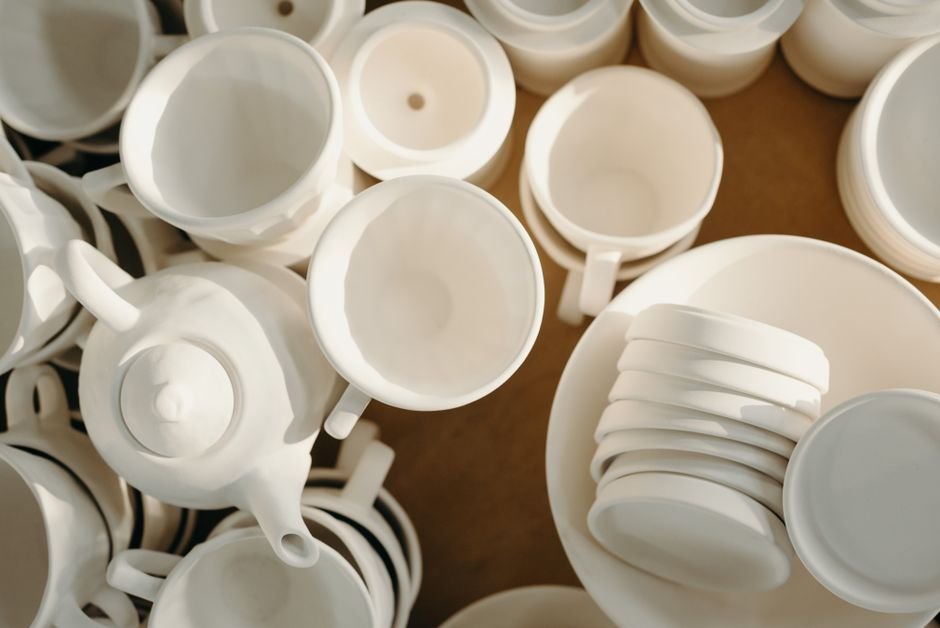
This is also why unglazed porcelain looks and feels quite different. Bisque or unglazed fired porcelain often has a smooth, stone like, slightly matte surface rather than the glossy look people associate with porcelain tableware.
Competing guides also rarely explain why porcelain is tricky to throw. Because it’s fine and low in grog, porcelain can feel slippery and floppy on the wheel, and it’s prone to warping and cracking in the kiln. Many potters find it rewarding but demanding, and it’s often recommended once you have some experience.
Porcelain Versus Glass In Everyday Use
In daily use, porcelain is usually more forgiving with heat. Many porcelain mugs and bowls handle hot drinks and dishwashers well, although sudden temperature changes can still cause problems. Ordinary glass can crack if hit with a sharp temperature change, unless it’s a heat resistant type.
Strength depends on thickness and design. Fine porcelain can be surprisingly strong for its weight, but it can still chip or break if dropped. Glass tends to shatter into sharp pieces, while porcelain usually breaks into chunkier shards.
Clarity is the obvious difference. Glass is generally transparent, while porcelain is opaque or only slightly translucent, even when very thin. That’s why glass suits windows and drinking glasses, while porcelain suits plates, cups, and fine tableware.
If you’d like to experience porcelain’s qualities yourself, there’s nothing like working with it. Our workshops and classes introduce different clay bodies, members of our ceramic studio can explore porcelain in their own time, and our firing service handles the high temperatures it needs.
Curious how porcelain really feels compared with other clays? Come and handle porcelain and glazed ceramics up close at Le Studio Art Space in Mordialloc, and ask our team about working with it.
Frequently Asked Questions
Is porcelain just a type of glass?
No. Porcelain is a ceramic made from clay, while glass is a melted silica based material with no crystals. Fired porcelain contains a glassy phase, which is why they seem similar.
Why can I see light through porcelain?
Fired porcelain contains a lot of glass and very little porosity, so light can pass through thin walls. The thinner the piece, the more translucent it usually looks.
Is the shiny surface on a porcelain cup glass?
Usually, yes. That shine is mostly glaze, which is a thin layer of glass melted onto the surface. The porcelain body underneath is a ceramic.
Is porcelain stronger than glass?
It depends on the item, but porcelain tableware is often more resistant to heat and everyday knocks than ordinary glass. Both can break if dropped.
Can beginners work with porcelain at Le Studio Art Space?
Porcelain can be tricky for absolute beginners, but it’s possible with guidance. Le Studio Art Space can help you decide when porcelain suits your skills and projects.
This article is provided for general educational purposes by Le Studio Art Space. Material properties vary between clay bodies, glass types, and firing conditions.