Pots crack in the kiln mainly from trapped air or moisture, uneven wall thickness, firing too quickly, or poorly joined attachments, all of which put uneven stress on the clay body during heating.
Opening the kiln to find a heartbreaking crack running through a piece you’d spent hours making is a genuinely painful moment for any potter.
At Le Studio Art Space, we’ve talked plenty of members through exactly this disappointment, and there’s almost always a clear, fixable reason behind it.
This guide walks through the most common causes of kiln cracking and what you can genuinely do differently next time.
None of this means you did something wrong out of carelessness. Cracking is a genuinely common part of learning this craft.
By the end, you’ll understand what likely happened and feel more confident heading into your next firing.
Trapped Air Or Moisture As A Common Cause
Air bubbles trapped inside the clay body expand rapidly as they heat, and this expansion can genuinely crack a piece from the inside out.
Wedging clay thoroughly before forming a piece is the most reliable way to remove trapped air pockets before they become a problem later.
Insufficiently dried pieces are another major cause, since any remaining moisture turns to steam during firing and needs somewhere to escape.
If that steam can’t escape fast enough, the resulting pressure can genuinely crack or even explode a piece inside the kiln.
Checking that a piece is genuinely bone dry, not just dry to a quick touch, before bisque firing is a habit worth building.
A piece that feels cool to the cheek, rather than room temperature, usually still has moisture trapped somewhere inside the clay body.
Hollow forms are especially vulnerable to trapped air and moisture, since there’s often no escape route for expanding gases during firing.
Piercing a small, hidden vent hole in a hollow form is a common, genuinely effective way potters prevent this specific problem.
Even a small, seemingly minor air pocket left near the surface can be enough to cause a visible crack once heat builds up inside it.
Uneven Wall Thickness
Thick and thin areas within the same piece expand and contract at different rates during firing, creating genuine internal stress on the clay body.
This uneven stress is one of the most common causes of cracking, especially around the joins between a thick base and a thinner wall.
Aiming for consistent wall thickness throughout a piece, whether thrown or hand built, genuinely reduces this specific risk considerably.
Trimming a thrown piece evenly at the leather hard stage helps correct any thickness inconsistencies left over from the throwing process.
Hand built pieces are especially prone to uneven thickness, since it’s genuinely easy to leave one section thicker than another without noticing.
Running your hands over a piece before it dries, checking for thickness by feel, is a simple habit that catches many problems early.
At Le Studio Art Space, staff are always happy to check a piece’s wall thickness before it goes into the kiln.
Larger pieces are especially worth checking carefully, since thickness inconsistencies become more pronounced, and more risky, as the overall scale increases.

Firing Too Fast
Rapid temperature changes genuinely stress the clay body, especially early in the firing when residual moisture is still turning to steam.
A kiln firing schedule that ramps up too quickly doesn’t give the clay body enough time to adjust evenly to rising heat.
This is especially risky during the early stages of a bisque firing, when any remaining moisture in the clay needs a slower, gentler ramp.
Cooling too quickly after firing can genuinely cause cracking too, since rapid cooling creates similar uneven stress within the clay body.
A well-managed kiln schedule, with slower ramps at critical points, genuinely reduces this risk considerably across a whole firing cycle.
At Le Studio Art Space’s firing service, our kiln schedules are managed carefully with exactly this risk in mind.
If you’re firing your own kiln at home, following a proper, tested firing schedule rather than rushing genuinely matters for avoiding cracks.
Opening the kiln too soon after firing, before it’s genuinely cooled fully, is another common way rapid temperature change causes cracking.
Attached Pieces And Handles Cracking Away
Poor joins between separate pieces of clay, like a handle attached to a mug, are a genuinely common source of cracking during firing.
If the join wasn’t properly scored, slipped, and blended, the two pieces can shrink at slightly different rates and pull apart under stress.
Attaching pieces while both are at a similar moisture level, ideally both leather hard, genuinely improves how well the join holds together.
Scoring both surfaces with a needle tool and applying slip before joining creates a genuinely stronger mechanical bond than pressing pieces together alone.
Smoothing and blending the join thoroughly, rather than leaving a visible seam, also helps reduce stress concentrated at that specific point.
Handles and other attachments are especially vulnerable, since they’re often thinner than the main body and dry at a different rate.
Taking extra care with joins genuinely pays off, since this is one of the more preventable causes of kiln cracking.
Letting a fresh join dry slightly before adding further detail also gives it a little more strength before the piece heads toward drying.
What Competing Guides Leave Out
Many overviews list causes of cracking without explaining how a shared studio’s kiln schedule is genuinely designed to reduce this risk for every user.
Few guides mention what to actually do differently on your next piece after a crack, beyond vague advice to just be more careful.
What actually happens chemically as steam pressure builds inside a poorly dried piece rarely gets explained in a way that’s genuinely useful to a beginner.
How to tell the difference between a crack caused by drying stress versus one caused by firing stress is another detail many guides skip.
Whether a cracked piece can sometimes still be saved or repurposed, rather than discarded entirely, rarely gets honest, practical coverage.
Few guides mention that studio staff can genuinely help diagnose what went wrong with a specific cracked piece if you bring it in.
The emotional side of losing a piece you’d invested real time in is another aspect general guides rarely acknowledge at all.
It’s genuinely worth remembering that even experienced potters lose the occasional piece to cracking, and it’s rarely a reflection of overall skill.
Preventing Cracks Before Your Next Firing
Wedge clay thoroughly before every project to remove trapped air pockets that could expand and crack a piece during firing.
Aim for even wall thickness throughout, checking by feel and correcting any thick or thin spots during trimming or forming.
Make sure a piece is genuinely bone dry, not just dry to a quick touch, before it goes in for bisque firing.
Score, slip, and carefully blend every join between separate pieces of clay, rather than simply pressing them together.
Follow a proper, gradual firing schedule, especially during the early stages of a bisque firing when moisture is still escaping.
Ask studio staff to check a piece before firing if you’re ever unsure about thickness, dryness, or a join’s strength.
At Le Studio Art Space, we’re always happy to help troubleshoot a piece before it goes into the kiln, reducing the risk of a disappointing crack.
Building these checks into your regular routine genuinely becomes second nature over time, and cracked pieces should become steadily rarer as a result.
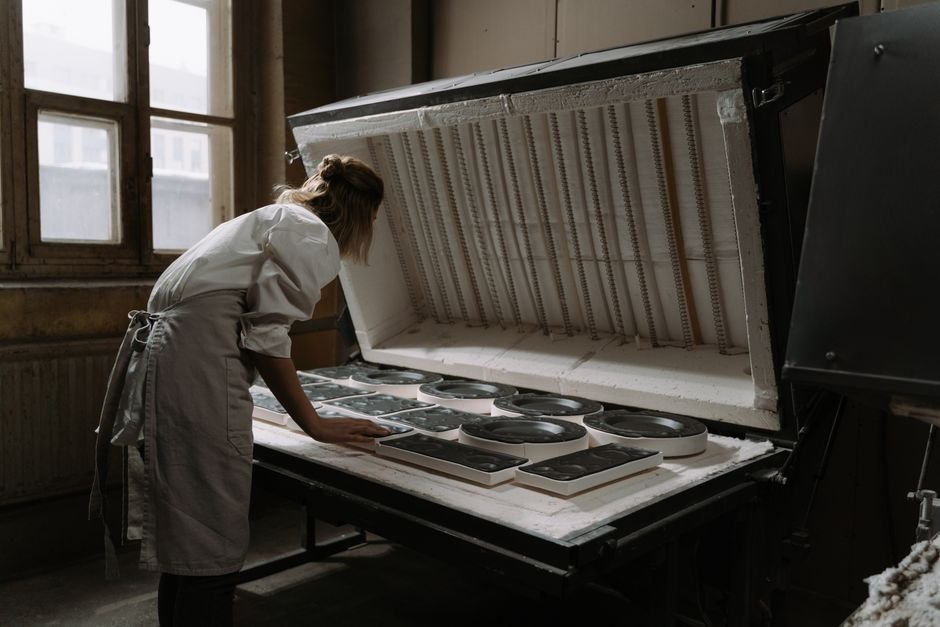
Had a piece crack in the kiln, or want firing advice before your next one? Ask us at Le Studio Art Space in Mordialloc.
Frequently Asked Questions
Did I do something wrong if my pot cracked in the kiln?
Not necessarily. Cracking is a genuinely common part of learning pottery, and it’s usually traceable to a specific, fixable cause like moisture or uneven thickness.
Can a cracked piece ever be saved after it happens?
Sometimes a small crack can be filled or repurposed creatively, though a piece cracked badly during firing generally can’t be fully repaired back to its original state.
How do I know if my piece is actually dry enough to fire?
It should feel cool and consistent throughout, not just dry on the surface, and studio staff can genuinely help you judge this if you’re unsure.
Why did my handle crack away even though the rest of the piece was fine?
This usually points to a weak join, often from insufficient scoring and slipping, or attaching the handle at a different moisture level than the main piece.
Can Le Studio Art Space help me figure out why a piece cracked?
Absolutely. Bring the piece in, and staff at Le Studio Art Space are always happy to help diagnose what likely happened and how to avoid it next time.
This article is provided for general educational purposes by Le Studio Art Space and reflects common studio practice.