A ceramicist is someone who makes objects from clay and fires them into permanent ceramic, from mugs and tableware to tiles, sculpture and installations. Day to day, the work covers designing, preparing clay, forming pieces, managing drying, loading and firing kilns, glazing, finishing, and the less visible tasks of cleaning, record keeping and selling.
Say the word ceramicist and many people picture someone at a pottery wheel, hands covered in slip, pulling up a perfect cylinder. That moment is real, but it’s only a small slice of the job. Most of a ceramicist’s time goes into things that never make it onto social media.
At Le Studio Art Space in Mordialloc, our ceramic studio is busy with makers at every level, so we see the full rhythm of the work up close. This guide explains what a ceramicist is, how the working process unfolds, how the role compares with a potter, where ceramicists work, and the habits that help them keep going.
What A Ceramicist Is
A ceramicist is a maker who works with clay and fires it to create ceramic objects. The term is broad. It can describe someone making functional tableware, decorative vessels, architectural tiles, figurative sculpture or large scale installations.
What ties them together is the material and the process. Every ceramicist works with clay that must be formed, dried and fired, and that shared process creates a common language between very different practices.
Some ceramicists focus on one technique, such as wheel throwing or slip casting. Others combine methods, throwing parts on the wheel and assembling them by hand, or casting forms and carving into them.
The word is used widely in Australia, the UK and elsewhere, sometimes interchangeably with ceramic artist. It often suggests a broader or more experimental practice than functional pottery alone, although usage varies from person to person.
Being a ceramicist doesn’t require a particular qualification. Many ceramicists train through art schools or diplomas, but others build their skills through classes, studio memberships and years of practice. Our guide to what makes someone a ceramic artist looks at that question in more depth.
A Ceramicist’s Typical Working Process
Most work begins with design. A ceramicist might sketch forms, make test pieces, or work out how a new glaze will sit on a particular shape. For commissions, this stage includes talking with clients about size, colour and use.
Next comes clay preparation. Clay is wedged to remove air and even out moisture, and reclaimed clay is often recycled. This step is physical, repetitive and essential.
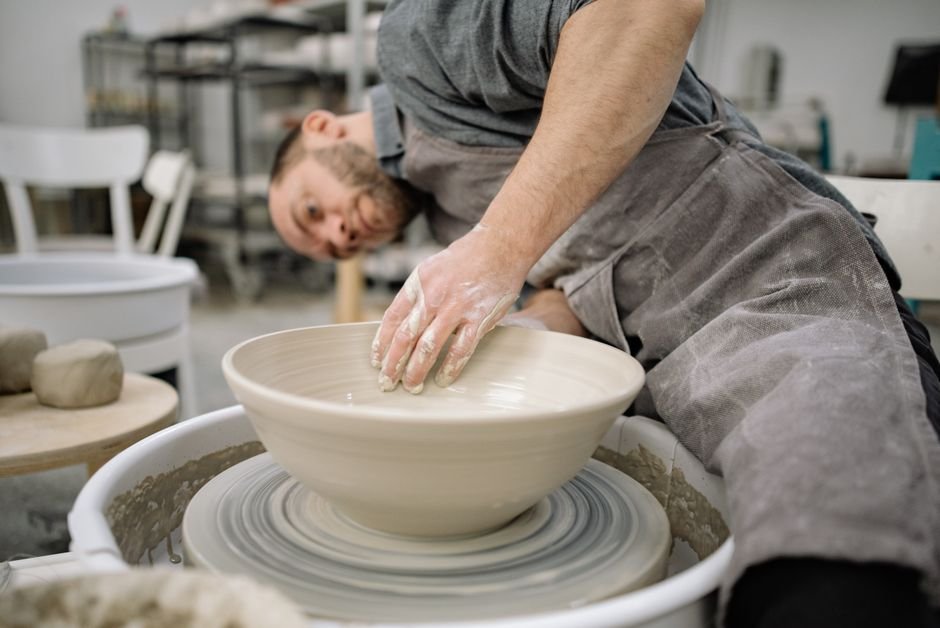
Forming is the part most people imagine. Pieces are thrown, hand built, cast or sculpted. Ceramicists often make in batches, producing several pieces of the same form so they can refine it.
Drying is managed carefully. Pots are covered, uncovered and turned to dry evenly, while trimming, attaching handles and adding decoration happen at specific stages. Our guide to the stages of clay from wet to fired explains why timing matters.
Firing follows, usually twice: a bisque firing and a glaze firing. Between them, pieces are cleaned, waxed and glazed. After the final firing, ceramicists check, sand and finish each piece before photographing, pricing and packing it.
Throughout all of this, there’s cleaning. Clay dust, glaze buckets, tools and work surfaces all need attention, and good studio hygiene is part of the job rather than an afterthought.
Ceramicist Versus Potter
The words ceramicist and potter overlap a lot, and plenty of people use both. Traditionally, a potter makes pots, meaning vessels and functional ware. A ceramicist works with ceramic more broadly, which can include pots, sculpture, tiles and installations.
Some makers prefer potter because it feels grounded and connected to craft traditions. Others prefer ceramicist because it signals a wider or more sculptural practice.
In practice, the skills are shared. Both work with clay bodies, firing, glazes and kilns. A ceramicist making sculpture still needs to understand drying and shrinkage, just as a potter making mugs does.
The differences are mostly about focus and self description rather than ability. Someone making production tableware might call themselves a potter, while someone exhibiting sculptural vessels might choose ceramicist, even if their techniques are similar.
If you’re starting out, don’t worry too much about the label. Many makers try both terms over time and settle on the one that feels right. Our guide to ceramics as a material explains why the word ceramic stretches so much further than pots.
It’s also worth remembering that the public often uses the words loosely. A customer at a market might call a sculptural piece pottery, or call a mug a ceramic, and both are fine. What matters more is that you can explain your own work clearly when someone asks how it was made, what it’s for, and why it looks the way it does.
Where Ceramicists Work
Home studios are common, especially for established makers. A garage, shed or spare room can house a wheel, shelving and sometimes a kiln, though space, ventilation and power supply all need careful thought.
Shared studios are popular, particularly for emerging ceramicists. They offer access to wheels, kilns and materials without the full cost of setting up alone, and they come with a built in community. Our article on buying a kiln versus using a community studio compares the options.
Schools, universities and community centres employ ceramicists as teachers and technicians. Teaching is a common way for ceramicists to earn a steady income alongside their own practice.
Industry offers other roles. Ceramicists may work in design, manufacturing, tile production or product development, applying their knowledge of clay and glaze at a larger scale.
Many ceramicists combine several settings, perhaps teaching a few days a week, working in a shared studio and exhibiting through galleries. Our guide to ceramic jobs that are out there covers the range of paid work.
Skills And Habits Of A Working Ceramicist
Patience is essential. Clay can’t be rushed through drying or firing without risk, and many projects take weeks from start to finish.
Planning helps manage that time. Ceramicists juggle pieces at different stages, so they plan which pieces need trimming, which need covering and when the next kiln load will be ready.
Material knowledge grows with every firing. Many ceramicists keep detailed notes about clay bodies, glaze recipes and kiln schedules, which helps them repeat successes and understand failures.
Resilience matters too. Pieces crack, glazes misbehave and kilns occasionally surprise everyone. Experienced ceramicists treat losses as information rather than defeat. A cracked base points to drying or thickness, a crawled glaze points to dust or application, and each lesson gets folded into the next batch.
Curiosity keeps the work alive. Many ceramicists set aside time for testing, whether that’s a new clay body, a glaze variation or an unfamiliar technique, because small experiments often lead to the next body of work.
Finally, good habits protect health. Wet cleaning instead of sweeping dust, wearing a suitable mask when mixing glazes, and taking care of hands, wrists and back all help ceramicists keep working for years.
What Competing Guides On The Ceramicist Role Leave Out
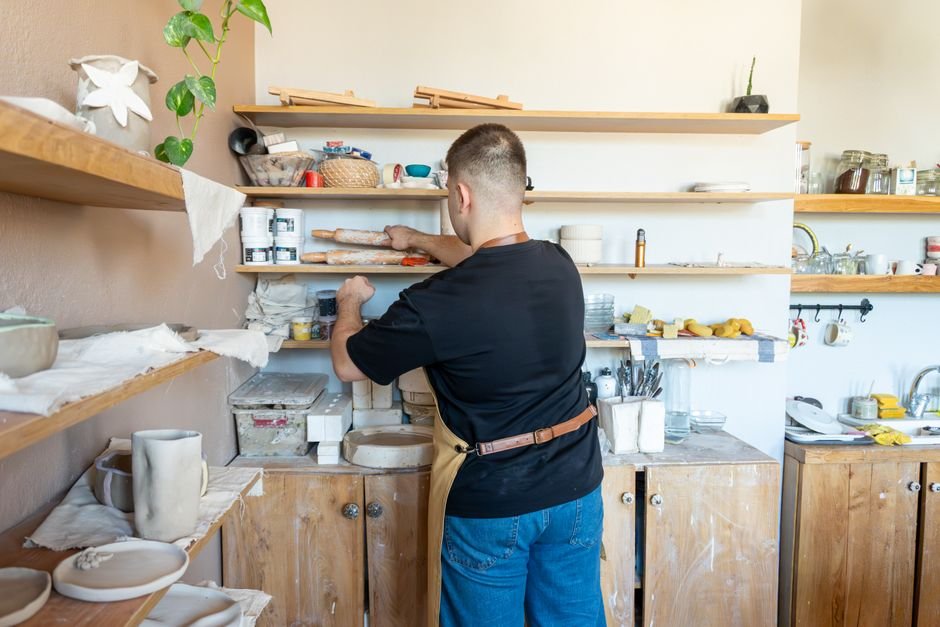
Most descriptions of the job focus on making. They rarely mention how much of a ceramicist’s time goes into preparation and finishing. Wedging, reclaiming clay, mixing glazes, waxing feet, sanding bases and cleaning can easily take as much time as forming itself.
Admin is another hidden part. Photographing work, writing descriptions, pricing, packing orders and managing exhibitions all fall to the ceramicist, especially when working independently.
Competing guides also ignore how much studio access shapes what a ceramicist can make. Kiln size limits the scale of pieces. Kiln type affects which glazes and effects are possible. Access to a slab roller, extruder or spray booth opens up different techniques.
That’s one reason many ceramicists start in shared facilities. At Le Studio, our ceramic studio has nine wheels and three kilns, and our firing service covers bisque, earthenware and midfire firings, so makers can explore without buying everything first.
Finally, few guides admit how physical the work is. Lifting clay, kneading and long hours at the wheel take a toll, and good posture and rest are part of a sustainable practice.
Curious what a ceramicist’s day really feels like? Try the work for yourself in the ceramic studio at Le Studio Art Space in Mordialloc, through a class or casual studio session with wheels, kilns and clay on hand.
Frequently Asked Questions
Is a ceramicist the same as a potter?
The roles overlap a lot. Potters usually focus on vessels and functional ware, while ceramicist can include sculpture, tiles and installations. Many makers use both words.
Do ceramicists need a degree?
No formal qualification is required. Some study art or design, while others learn through classes, mentors and studio practice over many years.
How do ceramicists make a living?
Often through a mix of selling work, teaching, commissions and other jobs. Income varies widely, and many combine several sources.
Is being a ceramicist physically demanding?
It can be. Wedging, lifting clay and long sessions at the wheel are tiring, so posture, breaks and safe lifting matter.
Can I try ceramics at Le Studio Art Space before committing?
Yes. Le Studio Art Space offers classes and casual ceramic studio sessions, so you can try the work before deciding whether to take it further.
This article is provided for general educational purposes by Le Studio Art Space. It describes general ceramic practice and does not offer career, financial or health advice.