There is no formal test or licence that makes someone a ceramic artist. Most people who use the title combine solid material and firing skills with a recognisable personal voice, a developing body of work made with intention, and a habit of sharing that work through exhibitions, markets, online or within a studio community.
If you spend your weekends at the wheel or hand building at the kitchen table, you might have wondered whether you’re allowed to call yourself a ceramic artist. It’s a surprisingly loaded question. Some people feel the label belongs only to gallery represented makers, while others use it the moment they sell their first mug.
At Le Studio Art Space in Mordialloc, we share a building with painters, potters, sculptors and makers at every stage, and the conversation comes up often. This guide looks honestly at what separates ceramic artists, potters and hobbyists, the skills involved, why a personal voice matters, how ceramic artists share work, and the role of community.
Ceramic Artists Versus Potters Versus Hobbyists
These three labels overlap far more than people expect. A potter usually makes functional ware like mugs, bowls and plates. A ceramic artist might make functional pieces, sculpture, installations or all three. A hobbyist makes for the pleasure of it, without needing an income or audience.
Many people sit in two or three categories at once. Plenty of respected ceramic artists describe themselves simply as potters, while some hobbyists produce thoughtful, exhibition worthy work. The words describe emphasis more than rank.
There’s no governing body or exam. Unlike some professions, no qualification is required to call yourself a ceramic artist. Degrees and diplomas exist and can be valuable, but they aren’t a gatekeeper.
What usually shifts the label is intention. When someone starts making work that explores an idea, a form or a surface with real purpose, and begins to share it as their artistic output, the term ceramic artist tends to fit naturally.
Income doesn’t decide it either. Some well regarded ceramic artists earn most of their living from teaching or other jobs, while some full time production potters prefer to call themselves craftspeople. Our article on what a career as a ceramic artist looks like covers the realities of earning from clay.
So if you’re wondering whether you count, the more useful question is what you want your work to say and where you want it to go.
Skills Ceramic Artists Develop
Material knowledge sits at the heart of ceramic practice. Ceramic artists learn how different clay bodies behave, how they shrink, how they respond to drying, and what they can and can’t do at different temperatures.
Forming skills come next. Whether through wheel throwing, hand building, slip casting or sculpting, ceramic artists develop the control to make forms that match their ideas rather than settling for whatever the clay allows.
Surface is equally important. Glazes, slips, underglazes, carving, texture and firing effects all shape how a piece reads. Many ceramic artists spend years refining a small number of surfaces until they feel completely their own.
Firing knowledge separates confident makers from hopeful ones. Understanding kiln schedules, cones and atmospheres helps artists predict results and troubleshoot problems. Our guide to what cone numbers mean is a useful starting point.
Beyond technique, ceramic artists build skills in documentation, photography, writing about their work and presenting it. These aren’t glamorous, but they shape how others encounter the work.
Problem solving ties all of these skills together. Ceramic artists learn to read a cracked base, a crawled glaze or a warped rim and work backwards to the cause. That detective work, repeated over hundreds of firings, is often what turns technical knowledge into genuine confidence with the material.
A Personal Voice And Body Of Work
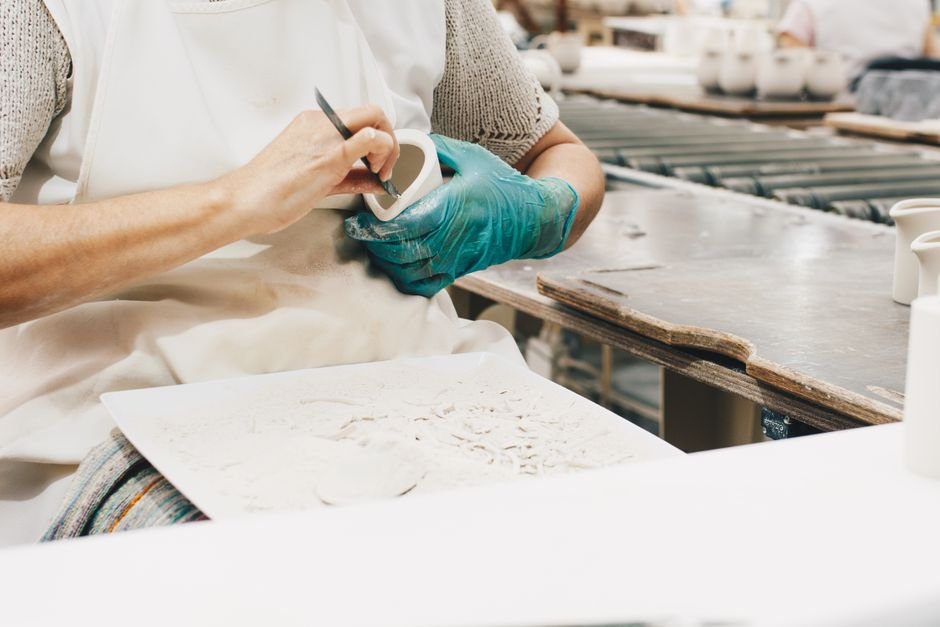
A personal voice is the thread that makes a maker’s work recognisable. It might come from a particular form, a colour palette, a type of mark, or the ideas a maker keeps returning to. It’s rarely planned at the start. It emerges from making a lot of work and noticing what keeps pulling you back.
A body of work is a group of pieces that relate to each other. Rather than one off experiments in every direction, ceramic artists often develop series, exploring variations of a form or theme. This consistency helps galleries, buyers and peers understand what the artist is about.
Intention matters here. Making the same shape repeatedly isn’t the goal on its own. The point is to push an idea further each time, refining what works and questioning what doesn’t.
Many artists keep sketchbooks, test tiles and notes as part of this process. Looking back over months of work can reveal patterns you didn’t notice while making. Our article on how clay artists develop their style explores this further.
A personal voice doesn’t have to be loud or dramatic. Some of the most respected ceramic work is quiet, restrained and focused on subtle shifts of form or surface.
Ways Ceramic Artists Show And Share Work
Exhibitions remain an important way for ceramic artists to share work. Group shows, solo exhibitions and curated displays give work context and help artists meet audiences, peers and buyers.
Markets and open studios offer a more direct connection. Talking with people about your work, seeing what they pick up, and hearing their questions can be just as valuable as a gallery opening.
Online platforms have changed how many ceramic artists build an audience. A consistent social media presence or website lets people follow your process and your finished work, though it takes time and energy to maintain.
Commissions and collaborations are another avenue. Working with restaurants, interior designers or other artists can stretch your practice in new directions.
Community spaces matter too. Artist run studios and galleries often host pop up shows and exhibitions. At Le Studio, our exhibition space gives makers a place to show work close to home. Our guide to turning pottery into a business covers selling in more depth.
The Role Of Studio Access And Community
Few ceramic artists work in complete isolation. Kilns, wheels, glaze materials and space are expensive, so many makers share facilities, at least early on.
Shared studios also bring people together. Working near other makers means you see different techniques, hear about opportunities, and get honest feedback on your work. Many artists say these informal conversations shaped their practice as much as any formal training.
Community provides accountability as well. When others see you in the studio regularly, it’s easier to keep showing up and keep developing your work.
It also helps with the business side. Fellow artists share tips on pricing, exhibitions, suppliers and photography, saving each other plenty of trial and error.
At Le Studio, our ceramic studio offers access to wheels, kilns and materials, and our shared space lets artists work alongside others. Our article on why working artist studios matter explains the bigger picture.
What Competing Guides On Ceramic Artists Leave Out
Most articles about ceramic artists focus on famous names and formal education. They rarely explain how many artists begin without formal training. Plenty of ceramic artists started with evening classes, community studios or self directed learning, then built skills through years of practice.
Classes, mentoring and studio access can cover much of what formal courses teach. The key is consistent making, honest reflection and a willingness to learn from failures. Our workshops and classes are one place to start.
Another overlooked area is the difference between functional and sculptural work. Functional ceramic artists must balance beauty with use, thinking about weight, balance, handles and how a piece feels in the hand. Sculptural ceramic artists can focus purely on form and idea, though they often face technical challenges around size and structure.
Neither path is more legitimate. Many ceramic artists move between the two, and the skills from one often enrich the other. Our guide to what counts as ceramic art explores this blurred line.
Finally, competing guides rarely mention self doubt. Many ceramic artists hesitate to use the title for years. In our experience, the people who keep making with intention eventually find the word fits.
Whatever you call yourself, your work grows faster among other makers. Come and see the ceramic studio and shared spaces at Le Studio Art Space in Mordialloc, and join a community of artists who take their practice seriously.
Frequently Asked Questions
Do I need a degree to call myself a ceramic artist?
No. There’s no required qualification. Many ceramic artists learned through classes, community studios and years of practice rather than formal degrees.
Is a potter the same as a ceramic artist?
The terms overlap. Potters often focus on functional ware, while ceramic artist can include sculpture and conceptual work. Many people use both.
When can I start calling myself a ceramic artist?
There’s no fixed point. Many people start when they’re making work with clear intention and sharing it, whether through exhibitions, markets or online.
Do ceramic artists need their own kiln?
Not necessarily. Many use shared studios or firing services, especially early on. It saves significant cost and gives access to experienced advice.
Can I join a ceramic community at Le Studio Art Space?
Yes. Le Studio Art Space offers ceramic studio access, shared and individual studio spaces, classes and exhibition opportunities for makers at different stages.
This article is provided for general educational purposes by Le Studio Art Space. It reflects general observations about ceramic practice and does not offer career, financial or professional advice.