A ribbon tool is a pottery tool with a thin, flat strip of metal bent into a loop and fixed to a handle. Potters use it to carve, trim and hollow clay, removing thin ribbons of material from leather hard pots, refining foot rings, scooping out sculptures and smoothing surfaces. It is lighter and more delicate than a sturdy loop tool, which makes it good for detail work.
Open almost any beginner pottery kit and you’ll find a few tools with wire or metal loops on the ends. One of them is usually a ribbon tool. It looks simple, but it’s surprisingly versatile, and many potters reach for it constantly once they understand what it’s good at.
At Le Studio Art Space in Mordialloc, ribbon tools are part of the everyday kit in our ceramic studio, used on the wheel and at the hand building bench. This guide explains what a ribbon tool is, how it shapes clay, how to use it on the wheel and in hand building, how to choose and care for one, and how it compares with a loop tool.
What A Ribbon Tool Is
A ribbon tool is made from a thin strip of metal, often steel, bent into a shape and attached to a handle. The metal strip is flat like a ribbon, which gives the tool its name.
The loop can be round, oval, triangular, square or teardrop shaped. Many ribbon tools are double ended, with a different shape on each end, so one tool gives you two options.
Handles are usually wooden or plastic, and lengths vary. Longer handles give reach for hollowing, while shorter ones offer control for detail.
Ribbon tools are generally lighter and more flexible than heavy duty loop tools. Some are sharpened, while others have a slightly rounded edge that cuts more gently.
The name and design overlap with other tools. Some brands call similar tools wire tools, modelling tools or loop tools, so the label varies. Our article on what makes the Kemper Ribbon Series different looks at one well known range.
Despite their differences, they all work on the same principle. Draw the loop through clay, and it shaves away a thin strip, leaving a smooth, clean surface behind.
How A Ribbon Tool Shapes Clay
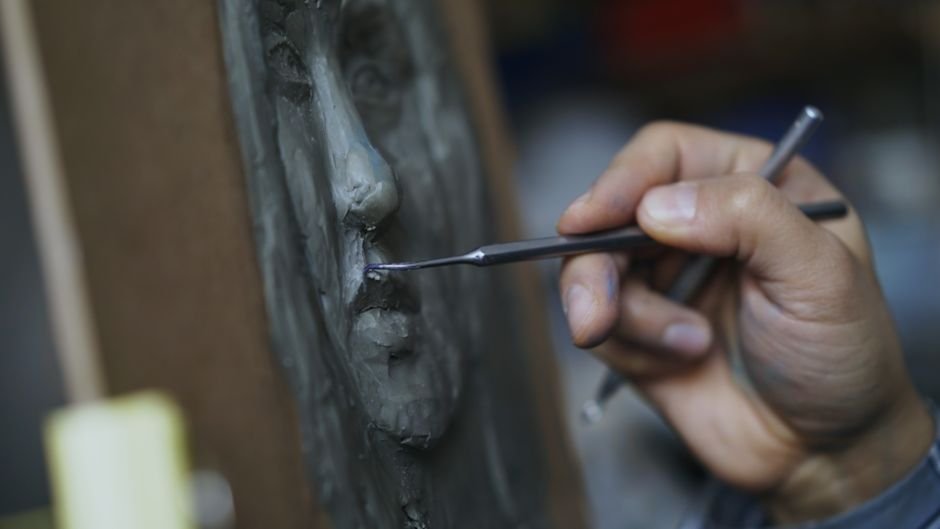
Carving is a key use. Drawing a ribbon tool through leather hard clay removes a clean strip, letting you carve patterns, grooves, flutes and decorative cuts.
Trimming is another. On thrown pots, ribbon tools remove thin layers of clay to refine shape and thickness, especially in tight curves or detailed areas.
Hollowing is useful in sculpture. Ribbon tools scoop clay from the inside of solid forms, reducing thickness so pieces dry and fire more safely.
Smoothing and refining is a gentler use. Running a ribbon tool lightly over a surface can even out bumps and blend transitions.
The shape of the loop determines the mark. Round loops create soft curves, triangular loops make V shaped grooves, and square loops give flat bottomed channels.
Clay condition matters. Ribbon tools work best on leather hard clay. Soft clay drags and smears, while very dry clay chips and creates dust.
Holding the tool at a shallow angle usually gives the smoothest cut. Steeper angles dig in and remove more clay at once, which is useful for hollowing but can leave gouges on a finished surface.
Using A Ribbon Tool On The Wheel
On the wheel, ribbon tools are mainly used for trimming. After a pot has firmed to leather hard, it’s inverted, centred and secured, then trimmed as the wheel turns.
Ribbon tools excel at fine trimming. They remove thin, controlled layers, which helps when shaping delicate foot rings, refining curves or working close to the final wall thickness.
They’re also handy for cutting back. If a pot has a heavy lower wall or a clumsy transition into the foot, a ribbon tool can carefully pare it back.
Hold the tool firmly and brace your hands against each other or the wheel tray for stability. Let the wheel do the work rather than pushing the tool hard into the clay.
Keep checking thickness as you go. Tapping the base or lightly pressing it can help you feel how much clay remains.
Our guide to pottery trimming tools explains how ribbon tools fit alongside loop tools, chucks and ribs.
Some potters also use a ribbon tool on the wheel to add decorative grooves or bands around a pot. Holding the tool steady while the wheel turns slowly creates neat, even lines that would be hard to carve freehand.
Using A Ribbon Tool In Hand Building
In hand building, ribbon tools are used for removing clay and refining forms. They help shape coil and slab pieces, trim edges and smooth joins.
Carving surface decoration is a popular use. Patterns carved into leather hard slabs, tiles or vessels add texture that glaze can highlight beautifully.
Sculptors use ribbon tools to refine details, hollow forms and remove excess clay from thick sections. Our guide to starting your first clay sculpture explains why hollowing matters.
Ribbon tools can also clean up the interior of hand built forms, smoothing coil joins and removing lumps.
For pinched pieces, a small ribbon tool can refine wall thickness and add decorative fluting.
Our article on hand building ceramics without a wheel covers more hand building techniques where a ribbon tool comes in handy.
Ribbon tools are also great for correcting proportions. If a hand built form looks too heavy in one area, careful carving can slim it down without rebuilding the whole piece, which saves time and frustration.
Choosing And Caring For A Ribbon Tool
Start with a double ended ribbon tool in a medium size. It gives you two loop shapes in one tool and covers most beginner needs.
Small ribbon tools suit detail and carving, while larger ones suit hollowing and broader trimming.
Look for a sturdy connection between the metal and the handle. Cheap tools sometimes loosen over time.
Consider whether you want a sharpened edge. Sharpened ribbon tools cut more aggressively, while unsharpened ones are gentler and safer for beginners.
Clean tools after each use, wipe them dry, and store them so the loops don’t get bent. A tool roll or container with slots keeps them organised.
Bent loops can sometimes be gently reshaped with pliers, but heavily damaged tools are best replaced.
If your ribbon tool is sharpened, a few strokes with a small file now and then keeps the edge crisp. A sharp edge cuts cleanly with less pressure, which gives you more control and reduces the chance of the tool catching and tearing the clay. Handle sharpened ribbon tools with care, especially when cleaning them.

What Competing Ribbon Tool Guides Leave Out
Most guides blur ribbon tools and loop tools together. In general, loop tools use a thicker, stiffer strip of metal and are often sharpened for aggressive trimming. Ribbon tools use a thinner, more flexible strip, better suited to detail, carving and gentle refining.
The line is blurry, and brands use the terms differently. What matters is stiffness and edge. A stiff, sharp tool removes clay quickly, while a thin, flexible tool gives more control.
Another gap is when a beginner actually needs one. Most beginner kits include a ribbon tool, and it’s useful for trimming, carving and sculpture. But if you’re only throwing simple pots at first, a good loop tool may handle most trimming.
A ribbon tool becomes more valuable as you start carving, refining feet and sculpting. Our guide to whether a pottery starter kit is worth buying explains what you get in a typical kit.
At Le Studio, our ceramic studio provides tools for classes and members, so you can try ribbon tools before buying. Our workshops and classes show you how to use them well.
Want to see what a ribbon tool can do? Try ribbon tools for trimming, carving and sculpting in a class at Le Studio Art Space in Mordialloc, with studio tools ready to use.
Frequently Asked Questions
What is the difference between a ribbon tool and a loop tool?
Loop tools are usually stiffer and often sharpened for trimming. Ribbon tools are thinner and more flexible, suiting detail and carving.
Can I use a ribbon tool on soft clay?
It’s possible, but ribbon tools work best on leather hard clay. Soft clay tends to drag and smear.
Do I need a ribbon tool as a beginner?
It’s useful but not essential at first. A good loop tool handles basic trimming, and a ribbon tool helps as you start carving and sculpting.
How do I clean a ribbon tool?
Rinse it after use, wipe it dry and store it so the loop isn’t bent. Dry carbon steel tools thoroughly to prevent rust.
Does Le Studio Art Space provide ribbon tools in classes?
Yes. Le Studio Art Space provides tools in classes and for studio members, so you can try ribbon tools before buying your own.
This article is provided for general educational purposes by Le Studio Art Space. Handle sharpened tools carefully and follow manufacturers’ care instructions.