To use a wire clay cutter, hold the handles so the wire is taut, place it on the far side of the clay, and pull it smoothly and steadily toward you in one motion, keeping it flat against the table. On the wheel, hold the wire tight against the wheel head and draw it under the pot while the wheel turns slowly, then lift the pot with dry hands or a bat.
The wire clay cutter is one of the simplest tools in pottery, and one of the most used. It’s usually the first tool you pick up in a session, slicing clay from a fresh block, and often the last, releasing a freshly thrown pot from the wheel. Yet it’s easy to use poorly, dragging clay, cutting unevenly or even damaging a pot.
At Le Studio Art Space in Mordialloc, wire cutters are on every bench in our ceramic studio. This guide explains what a wire clay cutter is, how to cut a block of clay, how to cut a pot off the wheel, how to keep cuts clean and safe, how to choose and care for one, and the common mistakes and alternatives other guides tend to skip.
What A Wire Clay Cutter Is
A wire clay cutter is a length of thin wire with a handle at each end. The handles might be wooden toggles, plastic grips, metal rings or beads, and the wire is usually stainless steel, braided wire or nylon fishing line.
The wire slices cleanly through soft clay with very little resistance, which is why it’s used instead of a knife for large blocks.
Some wire cutters are plain and straight, while others are twisted or braided to create a textured cut. Twisted wires can leave decorative wave patterns on the base of a pot when cutting off the wheel.
Lengths vary. Longer wires cut wide blocks easily, while shorter ones offer control for smaller tasks.
Wire cutters are inexpensive and often included in beginner kits. Our guide to whether a pottery starter kit is worth buying covers what’s usually included.
They’re also used beyond cutting clay. Many potters use wire cutters when wedging, slicing clay to check for air bubbles, and some use them to cut slabs from a block.
Because they’re so cheap, many potters keep two or three wires: a plain one for cutting blocks and checking wedged clay, and a twisted one for releasing pots with a decorative base.
Cutting A Block Of Clay With A Wire Clay Cutter
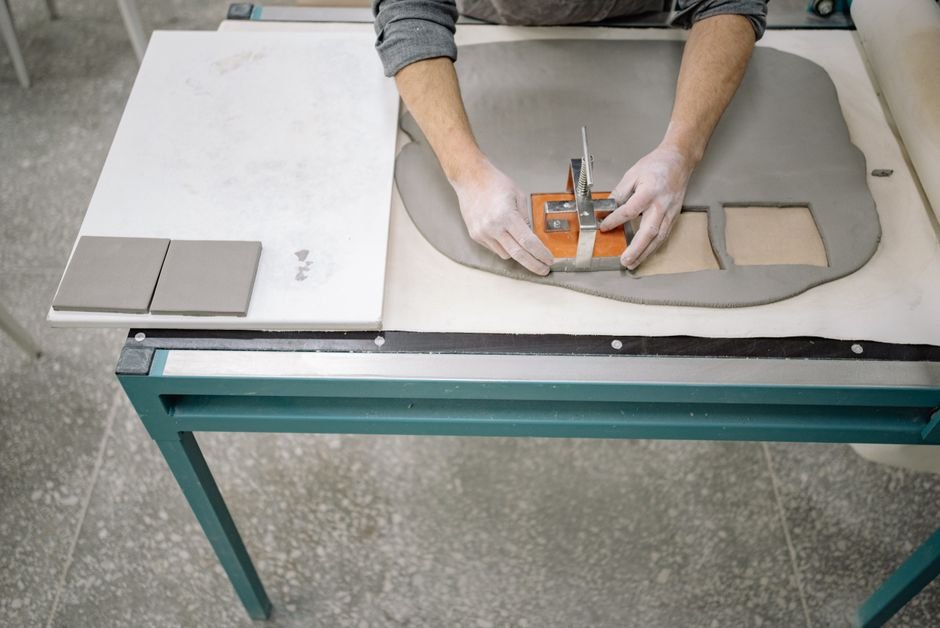
Place the clay block on a stable, clean surface. A wooden board or canvas covered table works well.
Hold one handle in each hand and pull the wire taut. A loose wire wobbles and creates uneven cuts.
Position the wire on the far side of the block, at the height where you want to cut. Keep your hands level.
Pull the wire smoothly toward you in one steady motion. Don’t saw back and forth, as that can tear the clay. Let the wire do the work.
Keep the wire flat against the table if cutting near the base, or at a consistent height for horizontal slices.
For vertical cuts, press the wire down through the top of the block, keeping it taut and pulling evenly with both hands.
If you’re portioning clay for throwing, our clay weight calculator helps you estimate how much clay each piece needs. Weighing portions makes it easier to throw sets of matching pots.
Cutting A Pot Off The Wheel
Releasing a thrown pot is one of the most important uses of a wire clay cutter. Done well, it leaves a clean base and lets you lift the pot without distortion.
First, tidy the base with a wooden tool, removing excess clay around the bottom of the pot. This gives the wire a clean path.
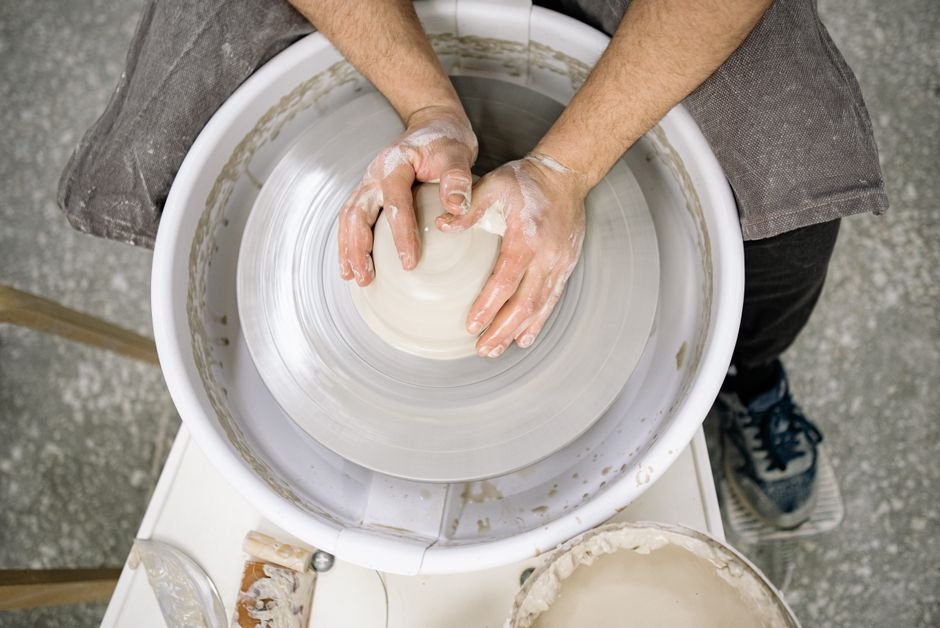
Hold the wire taut with both hands, pressing it flat against the wheel head on the far side of the pot.
With the wheel turning slowly or stopped, pull the wire toward you under the pot, keeping it pressed flat against the wheel head. Some potters cut with the wheel turning slowly to create a spiral pattern on the base.
After cutting, lift the pot with dry hands, cupping it gently at the base, or slide it onto a board. Many potters throw on bats, removable discs, which avoids lifting altogether.
A second pass with the wire can help if the pot hasn’t fully released. Our guide to why your pot keeps collapsing on the wheel covers more wheel troubleshooting.
A little water on the wheel head before the second pass can help the pot slide free, but use it sparingly. Too much water can seep under the base and soften it, making the pot harder to lift cleanly.
Keeping Cuts Clean And Safe
Tension is the key to clean cuts. Keep the wire tight throughout the cut. A slack wire curves and drags.
Posture matters. Stand or sit square to the clay, with your arms comfortable and your weight balanced. Awkward angles lead to uneven cuts.
Keep fingers clear of the wire path. Thin wire can cut skin if pulled sharply, especially against your fingers.
Clean the wire regularly. Clay buildup makes the wire thicker and rougher, causing drag. Wipe it with a damp cloth between cuts.
Use the right clay consistency. Very soft clay may stick to the wire, while very firm clay resists cutting. Our guide to signs clay is too wet or too dry helps.
Store wire cutters coiled loosely or hung up, so the wire doesn’t kink.
In a shared studio, put the wire back where it belongs when you’re done. A wire left tangled on a bench can catch someone’s hand or end up wedged into a reclaim bucket.
Choosing And Caring For A Wire Clay Cutter
Look for comfortable handles that are easy to grip, even with wet hands. Wooden toggles are classic and reliable.
Choose a wire material that suits your needs. Stainless steel is durable and resists rust. Braided wire cuts smoothly and lasts well. Nylon fishing line is cheap and easy to replace.
Twisted wires create decorative patterns when cutting pots off the wheel. Plain wires leave smoother bases.
A length around the width of your largest clay blocks is practical.
Care is simple. Rinse and dry the wire after use, check it for kinks or fraying, and replace it if it becomes damaged.
Wire cutters are inexpensive, so replacing a worn one is easy. Some potters make their own with wire and toggles.
Making your own is simple. Cut a length of stainless or braided wire, thread each end through a wooden bead, button or short dowel, and tie or crimp it securely. A homemade cutter lets you choose the exact length and handle style that suits your hands, and it costs very little to replace when the wire wears out.
What Competing Wire Clay Cutter Guides Leave Out
Most guides show the basic cut and stop. They rarely cover common mistakes that drag clay. Sawing back and forth tears clay. A slack wire creates curved, uneven cuts. Dirty wire drags and smears. Cutting too fast can pull the pot sideways.
When cutting pots off the wheel, a frequent mistake is lifting the wire away from the wheel head, leaving a thick, uneven base. Keep the wire pressed flat throughout the cut.
Another gap is wire versus other cutting tools. A wire is best for slicing blocks and releasing pots. A knife, such as a fettling knife or mud knife, is better for cutting slabs and trimming edges. Our article on what a mud knife is used for covers that tool.
A needle tool is better for small cuts, piercing and scoring. Each tool has its place, and most potters use all of them.
At Le Studio, our ceramic studio provides tools for classes and members, and our workshops and classes help you practise with guidance.
Want to get your cutting technique right from the start? Practise with a wire clay cutter in a class at Le Studio Art Space in Mordialloc, and learn the small habits that keep pots clean and intact.
Frequently Asked Questions
Why does my wire clay cutter drag the clay?
Dragging often comes from a slack wire, clay buildup on the wire, or sawing motions. Keep it taut, clean and pull in one smooth motion.
Can I use fishing line as a clay cutter?
Yes. Many potters use nylon fishing line with simple handles. It’s cheap and cuts clay well.
Why does my pot stick after cutting it off the wheel?
The wire may have lifted, or the clay may still be adhering. Try a second pass with the wire pressed flat, or use bats to avoid lifting.
Is a twisted wire better than a plain one?
Twisted wires create decorative patterns on pot bases, while plain wires leave smooth bases. It’s personal preference.
Can I practise using a wire cutter at Le Studio Art Space?
Yes. Le Studio Art Space provides tools in classes and for studio members, so you can practise cutting clay and releasing pots with guidance.
This article is provided for general educational purposes by Le Studio Art Space. Handle wire cutters carefully, keep fingers clear of the wire path, and follow studio safety guidance.