Mug painting at a pottery studio usually follows the same path: you choose a bisque mug, paint it with studio underglazes, and leave it behind. Staff then coat it in clear glaze and fire it in a kiln, and you come back to collect a glossy, finished mug once the firing and cooling are complete, often one to three weeks later.
If you’ve never done it before, mug painting at a studio can feel a little mysterious. Do you bring anything? How long does it take? Why can’t you take the mug home straight away? Knowing what happens from start to finish makes the whole experience much more relaxing.
At Le Studio Art Space in Mordialloc, our ceramic studio and firing service see painted pieces of all kinds, and the questions people ask are remarkably consistent. This guide walks through a typical visit step by step, from arriving and choosing a mug to painting, firing and finally taking your finished piece home.
What Happens When You Arrive For Mug Painting
Most studios start by showing you the shelf of bisque mugs. Bisqueware has been fired once, so it’s hard but porous, perfect for soaking up colour. Shapes vary, from straight sided cylinders to rounded belly mugs, and choosing the right one is part of the fun.
Think about how you’ll use the mug when you choose. A wide, straight cylinder is easiest to paint, while a curved or textured mug gives more character but makes stripes and lettering a little harder.
Next comes the paint. Studios usually provide a palette of underglaze colours along with sample tiles that show how each colour looks after firing. Spend a minute comparing the wet paint with the fired tile, because they can look very different.
You’ll also get brushes, sponges, water and sometimes stencils, stamps or tape. Ask what’s available. Many studios have tools tucked away that make patterns much easier.
Finally, staff often give a quick run through of the basics: how many coats to use, where to avoid painting, and how to sign the base. If they don’t, it’s worth asking before you start.
It also helps to arrive with a loose idea. You don’t need a finished design, but knowing whether you want something bold, soft, patterned or personal makes choosing colours far quicker. A photo on your phone of a pattern or palette you like can be a great starting point, and it stops you spending half the session staring at a blank mug.
Painting Your Mug Design
Most people begin with a light pencil sketch. On bisque, pencil lines usually burn away in the kiln, so you can plan without worrying. Keep marks light so they don’t show through pale colours.
Studio underglazes go on best in thin layers. Two or three coats usually give solid colour, with each coat allowed to dry until it loses its shine before the next. Brushing each coat in a different direction helps avoid streaks.
Work from light colours to dark where you can. It’s easier to paint a dark detail over a light background than the other way around, and it keeps colours clean.
Staff are there to help. If you’re unsure how to fix a smudge, blend colours or paint lettering, just ask. Small mistakes on unfired underglaze can often be gently scraped or sponged back.
Take your time. A typical session for a mug might run anywhere from forty minutes to a couple of hours depending on the design. Our post on fun mug painting ideas for beginners has plenty of simple designs to start with.
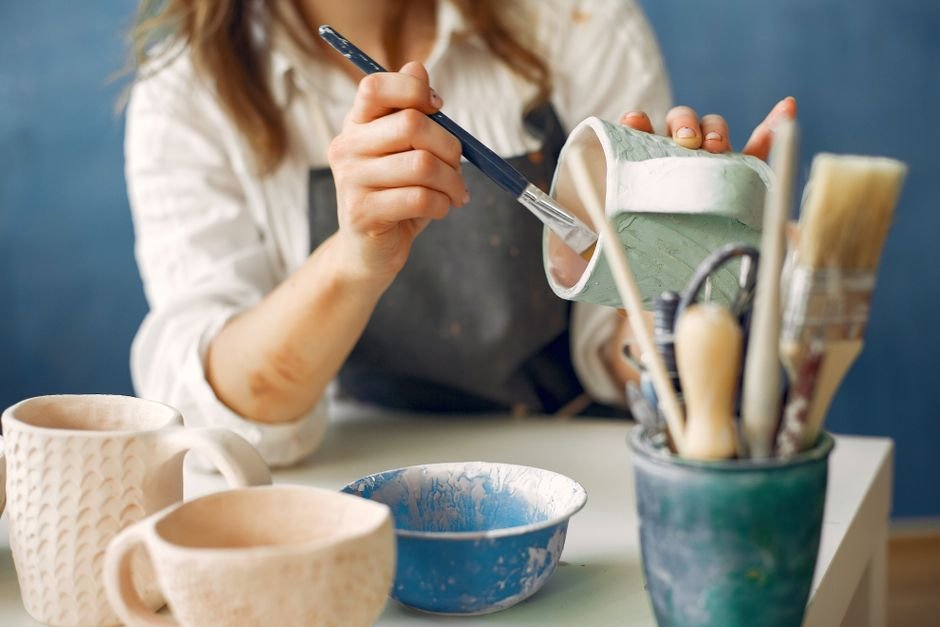
Glazing And Firing After You Leave
Once you’ve finished, your mug goes onto a shelf for the studio to process. This is the part people don’t see, and it’s why you can’t take your mug home the same day.
First, the mug is usually coated in a clear glaze by dipping, brushing or spraying. This glaze becomes a glassy layer over your colours, sealing them and giving the mug its shine. The base is kept clean so the mug doesn’t stick to the kiln shelf.
The mug is then loaded into a kiln with many other pieces. Studios wait until they have a full load, both to save energy and to fire efficiently, so timing depends partly on how busy they are.
The firing itself takes many hours, followed by a long cooling period. Opening a kiln too early can crack pieces, so patience is built into the process. During the firing, the clear glaze melts, flows over your colours and fuses with the surface, which is what turns a chalky painted mug into a smooth, glassy one.
All up, most studios quote somewhere between one and three weeks from painting to collection. At Le Studio, our firing service typically works within five to fifteen working days.
Collecting Your Finished Mug
Collection day is exciting. Your colours will often look brighter and richer than they did when you painted, and the clear glaze gives the surface a glossy, smooth finish.
Expect a few surprises. Thin areas may look lighter, colours can shift slightly, and brush strokes sometimes show more than you expected. Most people find these small quirks part of the charm.
Check the mug over when you pick it up, including the base and rim, and ask staff any questions about care. Occasionally a piece comes out with a small glaze flaw, such as a pinhole or a bare patch where dust or skin oil stopped the glaze sticking. Most studios will happily explain what happened, and knowing the cause helps you avoid it next time.
For care, gentle hand washing is a safe default. Avoid sudden temperature changes such as pouring boiling water into a cold mug, and check with the studio before using a dishwasher or microwave. Our guide to what happens after a paint your own session covers this in more detail.
Some people like to photograph their finished mug next to the fired sample tiles. It’s a handy reminder of which colours behaved as expected for your next visit.
Who Mug Painting Suits
Mug painting suits almost anyone. Solo visitors enjoy it as a relaxing creative break, and many find the slow, focused painting surprisingly calming.
It’s a popular date idea because it’s low pressure and gives you something to talk about. You also leave with a keepsake each.
Kids love it too. They can paint freely, and small hands make great prints. Just be aware that younger children may need help with fine detail.
Groups and celebrations work well, from birthdays and hens’ parties to team events. Le Studio runs painting parties and classes as part of a rotating program, so it’s worth asking what’s coming up.
Finally, mug painting makes thoughtful gifts. A personalised mug for a parent, teacher or friend often means more than something bought in a shop. It also gives you a small, finished project that can spark a longer interest, and plenty of people who start with a painted mug end up wanting to learn how to make one from scratch.

What Competing Mug Painting Guides Leave Out
Most mug painting guides gloss over timing. It’s worth planning ahead if you’re making a gift, since a mug painted the week before a birthday may not be ready in time. Ask the studio about current turnaround before you book.
They also rarely prepare you for how different colours look before firing. Pale, chalky underglaze can become bold and glossy, while some shades shift in tone. Sample tiles are your best guide, and our beginner’s guide to ceramic paint explains why this happens.
Another missing piece is what to ask about food use. Whether a mug is suitable for drinking depends on the glaze, the clay and the firing. Ask the studio what products they use and how they fire them, and follow any product labels.
Guides also skip the importance of signing your work. Initials or a small mark on the base helps staff match your mug to you when dozens of pieces come out of the kiln.
Finally, if you love the process, consider learning more. Our ceramic studio offers classes where you can make the mug itself, not just paint it.
Thinking of painting a mug? Get in touch with Le Studio Art Space in Mordialloc to ask about upcoming painting sessions, and we’ll explain how our in-house firing service turns your design into a finished piece.
Frequently Asked Questions
Why can’t I take my mug home the same day?
Your mug still needs a clear glaze and a kiln firing, which takes many hours plus cooling time. Studios also wait for a full kiln load, so most pieces are ready in one to three weeks.
Do I need any artistic skill to paint a mug?
Not at all. Simple patterns, dots and stripes look great, and staff can help with techniques. Many first timers are surprised by how good their mug looks.
Can I drink from a mug I painted at a studio?
Ask the studio about the products and firing they use, and follow product labels. If food use isn’t clearly supported, treat the mug as decorative.
What should I wear to a mug painting session?
Wear clothes you don’t mind getting a little paint on. Underglaze often washes out of fabric, but it’s safest to dress casually.
How long does Le Studio Art Space take to fire painted pieces?
Le Studio Art Space’s firing service typically works within five to fifteen working days, depending on how busy the kilns are. Ask when you drop off your piece.
This article is provided for general educational purposes by Le Studio Art Space. Studio processes, turnaround times and products vary, so always follow the manufacturer’s instructions and your studio’s advice on firing and food use.