A sculpture is a three dimensional work of art made by shaping, carving, modelling, casting, or assembling materials into a form that exists in real space. What makes something a sculpture is mainly that it’s made to be experienced as form, from more than one angle, rather than used as a tool or read as a flat image. Clay is one of the oldest and most natural sculpture materials.
It sounds like a simple question until you really think about it. Is a hand pinched bird a sculpture? What about a vase, a carved spoon, or a pile of bricks in a gallery? Ask a few people what makes a sculpture a sculpture and you’ll get surprisingly different answers, and most of them will be at least partly right.
At Le Studio Art Space in Mordialloc, this question comes up in gallery conversations and hand building classes alike. This guide explores what sculpture actually is, using clay as our main example, and looks honestly at where the edges blur, so you can enjoy sculpture with more confidence or even try making some yourself.
The Simple Definition Of Sculpture
At its core, sculpture is three dimensional art. Unlike a painting or drawing, which creates an image on a flat surface, a sculpture has real height, width, and depth. You can usually walk around it, see it from different sides, and notice how light falls across its surfaces.
Sculpture can be made in the round, meaning it’s freestanding and can be viewed from every angle, or as relief, where the form projects out from a flat background, like a carved panel or a decorated tile. Both are sculpture, just with different relationships to the space around them.
Materials range enormously. Stone, wood, bronze, clay, glass, metal, paper, found objects, and even light or sound have all been used. What unites them is that the artist works with form and space, not just colour and line.
Intent matters too. A sculpture is generally made to be looked at, thought about, or felt, rather than to serve a practical job. That’s a big part of what separates it from everyday objects made from the same materials.
You probably encounter sculpture more often than you realise. Public statues, garden pieces, memorials, carved doorways, and the small ceramic works in a local gallery all count. Once you start noticing how they’re shaped and placed, a walk through any city or park becomes a little sculpture tour of its own.
Additive And Subtractive Approaches To Sculpture
Most sculpture is made in one of two basic ways. Subtractive sculpture starts with a block of material and removes what isn’t needed. Carving stone or wood is the classic example, and once material is cut away, it can’t be added back.
Additive sculpture works the other way, building up a form piece by piece. Clay is the perfect additive material. You can add coils, slabs, and small pinched pieces, push them into shape, and keep adjusting until the form feels right.
Clay can also be worked subtractively. Many sculptors build a rough solid shape and then carve, scrape, and refine it, especially when it reaches the leather hard stage. In practice, most clay sculpture combines both approaches.
There are other methods too. Casting involves pouring material like bronze, plaster, or liquid clay into a mould, and assemblage combines found or made objects into a single work. Our guide to the core hand building methods shows how coil, slab, and pinch techniques feed into additive clay work.
Why Clay Is A Natural Sculpting Material
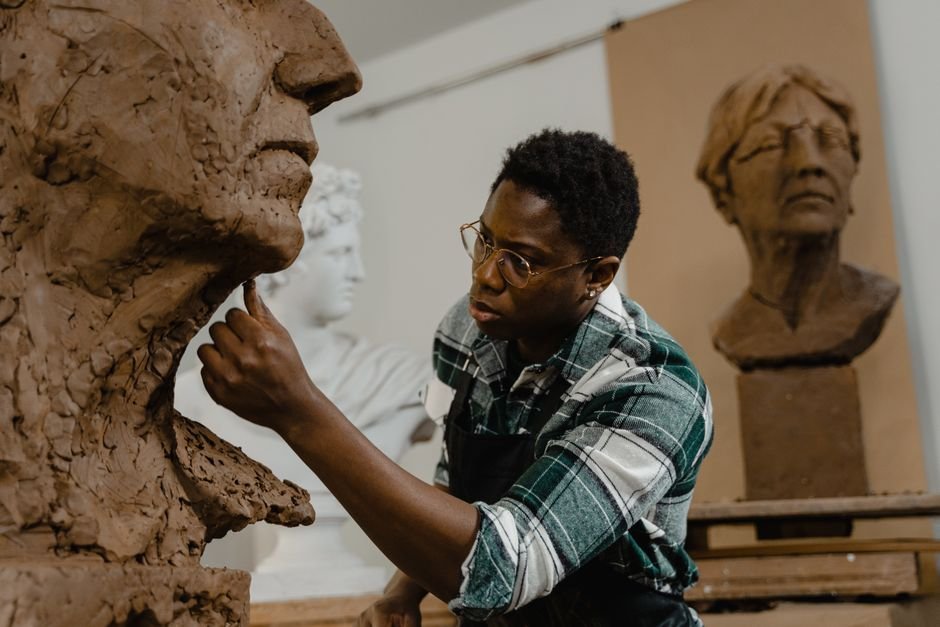
Clay has been used for sculpture for tens of thousands of years, and it’s easy to see why. It’s soft and responsive when wet, records every fingerprint and tool mark, and can be pushed, pulled, smoothed, or textured with very simple tools.
Once fired, clay becomes permanent. Ancient ceramic figures have survived for millennia, and the famous Terracotta Army in China, made more than two thousand years ago, shows how durable fired clay sculpture can be when it’s well made.
Clay also offers a huge range of finishes. A sculpture can be left as raw fired clay, burnished to a soft sheen, coloured with slips and oxides, or covered in glossy glaze. Our article on what ceramic sculpture is explores those possibilities further.
And clay is forgiving while you work. If something isn’t right, you can add more, take some away, or squash it and start again. That freedom makes it a wonderful material for anyone exploring sculpture for the first time.
Where Sculpture Ends And Craft Or Design Begin
This is where things get genuinely blurry. A handmade vase is three dimensional and shaped with skill, so is it a sculpture? Many people would call it craft or functional ceramics, because it’s designed to hold flowers. Others see sculptural qualities in the way it’s shaped.
Function is often the dividing line people reach for. If something is mainly made to be used, like a mug, a chair, or a lamp, it’s usually called craft or design. If it’s mainly made to be looked at or to express an idea, it’s more likely to be called sculpture.
But plenty of work sits in between. Some ceramic artists make vessels that can’t hold anything, while others make sculptures you can sit on. In the twentieth century, artists like Marcel Duchamp challenged the whole idea by presenting everyday objects as art, which pushed the definition wider than ever.
In our experience, the most useful approach is to stay curious rather than strict. Asking what an object is trying to do, and how it makes you feel, usually tells you more than any label. Our guide on what counts as ceramic art digs further into that question.
What Competing Guides Leave Out About Clay Sculpture
Most definitions of sculpture treat all materials the same, but clay sculpture has a structural quirk that other materials don’t: it has to survive drying and firing. That changes how a ceramic sculpture is built from the very beginning.
Clay shrinks as it dries and again in the kiln, often by around ten percent or more overall. Thick and thin sections shrink at different rates, which can cause cracks. Sculptors manage this by keeping walls fairly even and drying work slowly.
Solid lumps of clay are risky in a kiln, because trapped moisture can turn to steam and crack or even burst a piece. Larger ceramic sculptures are usually built hollow, or hollowed out once firm, with small holes so air can escape.
Weight and support matter too. Soft clay can sag under its own weight, so sculptors often build in stages, letting lower sections firm up before adding more. Guides also rarely mention that beginners can try all of this in a studio with guidance, which is far easier than learning alone. Our firing service team regularly helps people check whether a sculpture is ready for the kiln.
Trying Sculpture Yourself With Clay
You don’t need to be an artist to try sculpture. Start with a small, simple form, such as an animal, a head, a hand, or an abstract shape you enjoy. Keep it compact and roughly fist sized for your first attempt.
Begin with the overall shape before worrying about details. Many sculptors work from big to small, getting the basic mass and proportions right first, then refining surfaces and adding texture once the form feels balanced.
Use simple tools. Fingers, a wooden modelling tool, a loop tool, and a needle tool will take you a long way. Our guide to essential clay sculpting tools covers the basics, and our guide on choosing the right clay for sculpting helps you pick a suitable body.
Turn your piece often as you work. Because sculpture is seen from every side, it’s easy to make a lovely front view and forget the back. Rotating it on a banding wheel, or simply turning the board it sits on, helps you catch flat spots and awkward angles early.
Once you’re happy, let the sculpture dry slowly under loose plastic, especially if it has thinner parts. Patience at this stage often makes the difference between a piece that survives the kiln and one that cracks.
Most importantly, enjoy the process. A hand building session in our workshops and classes is a relaxed way to start, and members of our ceramic studio can keep developing ideas between sessions.
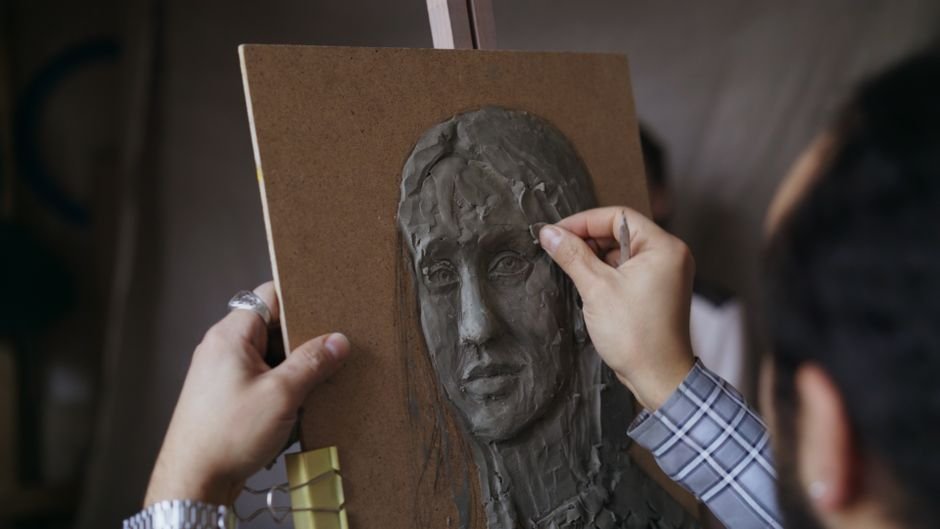
Curious what it feels like to make a sculpture of your own? Try sculpting in clay during a hand building session at Le Studio Art Space in Mordialloc, with guidance on building, drying, and firing your piece.
Frequently Asked Questions
Is a pot considered a sculpture?
Usually a functional pot is called craft or ceramics rather than sculpture. Some vessels are made mainly as art objects, though, and many people do see them as sculptural.
Does a sculpture have to be big?
Not at all. Sculpture can be tiny enough to hold in your palm or large enough to fill a room. Scale changes how it’s experienced, not whether it counts.
Can I make a sculpture if I can’t draw?
Yes. Sculpture uses a different skill set, built around form, touch, and space. Many people who struggle with drawing find working in clay much more intuitive.
Why do clay sculptures need to be hollow?
Thick solid clay can trap moisture that turns to steam in the kiln and cracks the piece. Hollowing larger sculptures helps them dry evenly and fire safely.
Where can I try clay sculpture as a beginner?
A hand building class is a great place to start, since you’ll have tools, clay, and guidance. Le Studio Art Space in Mordialloc runs sessions where beginners can try sculpting with support.
This article is provided for general educational purposes by Le Studio Art Space. Results vary with clay type, technique, and firing conditions.