Modelling clay is a soft, reusable, usually oil or wax based clay that stays workable instead of hardening. It is used for prototyping, sculptors’ maquettes, stop motion animation, kids’ play and practising shapes. Because it contains oils and waxes rather than fired clay minerals alone, it cannot go in a kiln, so anything meant to be permanent should be made in ceramic or air dry clay instead.
Walk down the craft aisle and you’ll find modelling clay, air dry clay, polymer clay and pottery clay, often shelved side by side. It’s no wonder people get confused. Parents buy a tub for the kids and wonder if it can be fired. Hobbyists make a figure and wonder why it never hardens. The answers come down to what modelling clay actually is.
At Le Studio Art Space in Mordialloc, our ceramic studio works with kiln fired clay, but we often hear from people who started with modelling clay at home. This guide explains what modelling clay is, how it differs from ceramic clay, its common uses, how it compares with air dry clay, how to step up to kiln fired work, and the safety and permanence questions most guides skip.
What Modelling Clay Is
Modelling clay is a soft, pliable material designed to stay workable for a long time. Many types use a base of oils, waxes and fillers, sometimes combined with clay minerals, so they don’t dry out when left in the open air.
Plasticine is a well known example. It was developed in England in the late nineteenth century and became popular for children’s play and for artists making models.
Professional modelling clays, sometimes called oil based or plastilina clays, are used by sculptors, designers and model makers. Some contain sulfur, while others are sulfur free for use with certain mould making materials. Our guide to what tooling clay is used for covers a related industrial material.
Modelling clay typically comes in many colours, can be softened with warmth from your hands, and can be reused again and again by squashing it back into a lump.
In everyday language, people sometimes use modelling clay to mean any soft craft clay, including air dry clay. In this guide, we mean the non hardening, reusable type.
That reusability is its biggest strength. You can build, squash and rebuild as many times as you like, which makes it a relaxed, low pressure way to explore form without worrying about wasting material or ruining a piece.
Modelling Clay Versus Ceramic Clay
Ceramic clay is a natural earth material made mainly of clay minerals and water. When it dries and is fired in a kiln, it undergoes permanent chemical and physical changes, becoming hard ceramic.
Modelling clay doesn’t work that way. Its oils and waxes don’t transform into ceramic. Instead, they would soften, melt, smoke and potentially burn in a kiln.
That’s why modelling clay must never go into a pottery kiln. It can produce smoke and fumes, damage kiln elements and shelves, and ruin other people’s work in a shared firing.
Ceramic clay also changes as it dries, moving from plastic to leather hard to bone dry. Modelling clay stays roughly the same over time, which is great for reworking but means it never becomes permanent.
The feel is different too. Ceramic clay is cool, damp and responsive to water, while modelling clay is waxy, slightly oily and responds more to warmth.
Many potters use both. They might sketch an idea in modelling clay, then make the final piece in ceramic clay. Our guide to the stages of clay from wet to fired explains what ceramic clay goes through.
Some ceramic clays are sold for school and hobby use in smaller packs that look a lot like modelling clay. If a pack says it needs kiln firing, it’s ceramic clay. If it says it stays soft or is reusable, treat it as modelling clay.
Common Uses For Modelling Clay
Prototyping is a major use. Designers and product developers shape modelling clay to test ideas quickly, adjusting forms before committing to final materials.
Sculptors use modelling clay for maquettes, small preliminary models that help them work out composition and proportion before making a larger sculpture in clay, bronze or stone.
Mould making is another use. Because modelling clay holds detail and doesn’t dry out, artists can sculpt in it, then make a mould from the finished model.
Stop motion animation relies heavily on modelling clay. Characters can be posed, adjusted and re posed frame by frame, which is exactly why it suits animators.
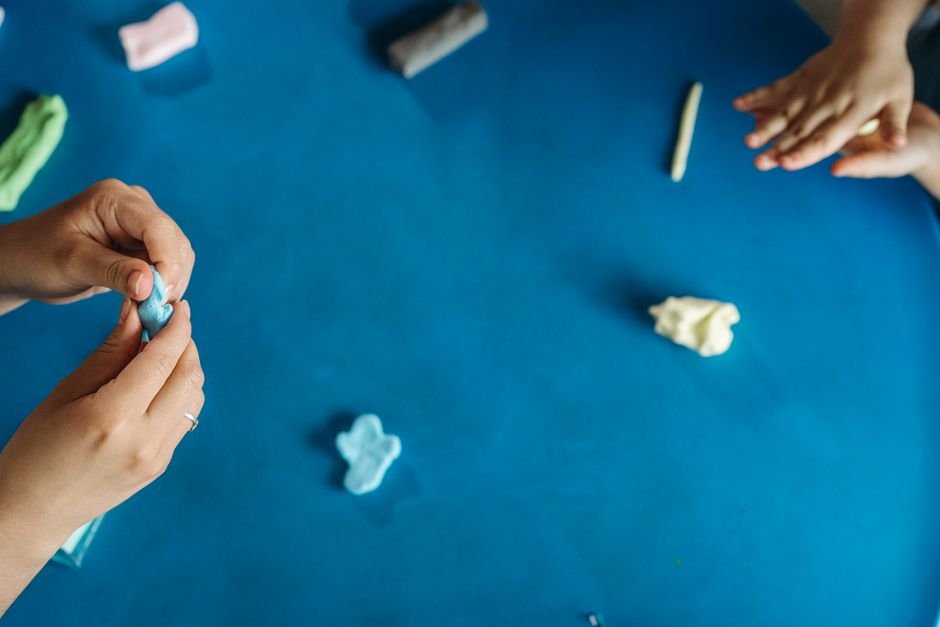
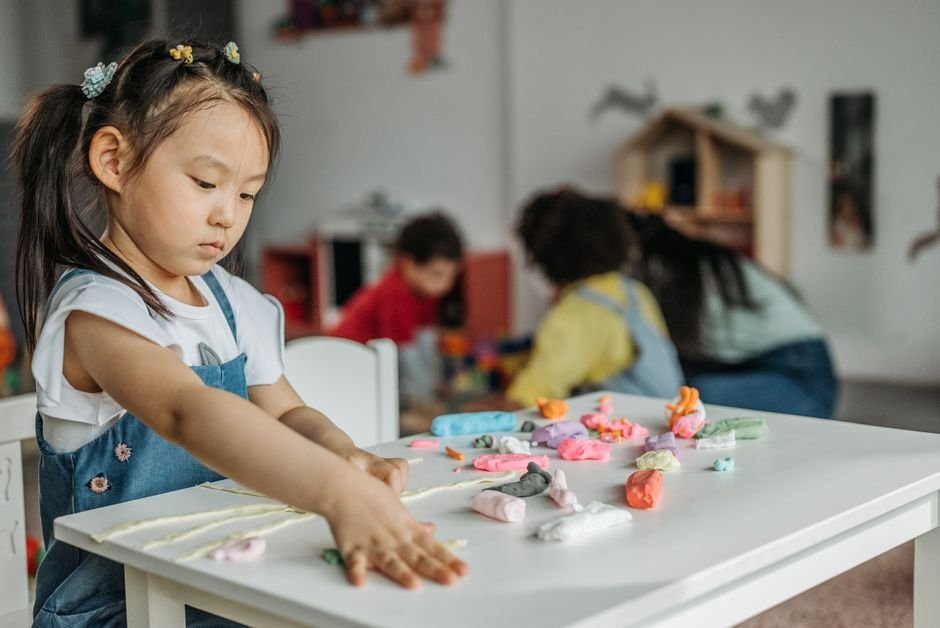
Children’s play is perhaps the most familiar use. Modelling clay helps kids develop fine motor skills, creativity and spatial thinking without mess or waste.
It’s also a useful practice material. Beginners can explore shapes, joins and proportions before working with ceramic clay. Our article on easy clay models for absolute beginners has ideas you could try in either material.
Teachers sometimes use it to demonstrate concepts too. Showing how a coil joins to a base or how a figure’s proportions work is easy with a material that never dries out and can be reset in seconds.
Choosing Between Modelling Clay And Air Dry Clay
Air dry clay hardens as water evaporates, without kiln firing. It can be made from natural clay, paper fibres or other materials, and once dry, it’s firmer and more permanent than modelling clay.
Modelling clay stays soft. That’s ideal for reworking and animation, but it means pieces can be squashed, collect dust and lose detail over time.
Air dry clay can be sanded, painted and sealed once dry. It’s better for keepsakes, decorations and craft projects you want to keep.
However, air dry clay isn’t the same as fired ceramic. It’s more fragile, sensitive to moisture, and not suitable for holding water or food. Our article on air dry clay versus kiln fired clay compares them in detail.
Polymer clay is another option. It hardens in a home oven at relatively low temperatures and suits small, detailed items like jewellery and figures, but like modelling clay it’s not ceramic and must never go in a pottery kiln.
The right choice depends on your goal. For play, practice and prototypes, modelling clay works well. For lasting decorative pieces without a kiln, air dry or polymer clay may suit. For durable, functional pieces, ceramic clay is the answer.
Moving From Modelling Clay To Ceramic Clay
Many people start with modelling clay and eventually want something permanent. Moving to ceramic clay is a natural next step.
The biggest change is learning to manage moisture. Ceramic clay dries as you work, so you’ll need to keep it covered and learn when it’s too wet or too dry. Our guide to signs clay is too wet or too dry helps.
Joining is also different. Ceramic clay needs scoring and slip to join pieces securely, whereas modelling clay simply sticks when pressed.
Thickness matters in ceramic work. Thick, solid pieces can crack in the kiln, so ceramic sculptures are often hollowed. Our guide to starting your first clay sculpture explains how.
Finally, you’ll need access to a kiln. Many beginners use a studio or firing service rather than buying a kiln straight away.
The good news is that skills transfer. A sense of proportion, an eye for form and confidence with your hands all carry over, so time spent with modelling clay is never wasted.
What Competing Modelling Clay Guides Leave Out
Most guides list uses for modelling clay without mentioning safety around kilns. Modelling clay, polymer clay and many craft clays must never go into a pottery kiln. They can melt, smoke, release fumes and damage the kiln and other people’s work.
If you’re unsure what a clay is, check the packaging or ask before bringing it to a studio. Studios generally only fire ceramic clay that matches their firing ranges.
Another gap is what to use if you want a permanent piece. For permanent, durable work, ceramic clay fired in a kiln is the most reliable option. Air dry clay offers a middle ground for decorative work.
Guides also rarely mention storage. Modelling clay can pick up dust and lint, and colours can blend over time. Store colours separately in sealed containers.
If you’re ready to try kiln fired clay, our ceramic studio, workshops and classes and firing service offer a simple way in.
Ready to make something that lasts? Try kiln fired clay at Le Studio Art Space in Mordialloc, where classes and our in-house firing service help you turn your ideas into permanent ceramic pieces.
Frequently Asked Questions
Can modelling clay be fired in a kiln?
No. Modelling clay contains oils and waxes that melt and burn rather than turning into ceramic. It can damage the kiln and produce fumes.
Does modelling clay ever harden?
Most non hardening modelling clay stays soft. It may firm up in the cold, but it softens again with warmth.
Is modelling clay the same as air dry clay?
No. Air dry clay hardens as it dries, while modelling clay stays soft and reusable.
What clay should I use for a permanent sculpture?
Ceramic clay fired in a kiln is the most durable choice. Air dry clay works for decorative pieces that won’t be handled roughly.
Can I try kiln fired clay at Le Studio Art Space?
Yes. Le Studio Art Space’s ceramic studio offers classes in wheel throwing, hand building and sculpture, and our firing service fires suitable ceramic work.
This article is provided for general educational purposes by Le Studio Art Space. Follow manufacturers’ instructions for all clay products, and never place non ceramic clays in a pottery kiln.