A clay body is a blend of raw materials formulated for a particular purpose and firing temperature. Most clay body composition rests on three groups: clays such as kaolin and ball clay for plasticity and structure, feldspar as a flux that melts and binds, and silica that forms glass and controls fit. Additives like grog, fireclay, talc or colourants then tune texture, strength, shrinkage and colour.
Most of us open a bag of clay without thinking about what’s inside. It’s just clay, right? In reality, the clay you buy from a supplier is usually a carefully designed recipe, balancing several materials so it throws well, dries evenly and fires reliably at a specific temperature. Understanding clay body composition makes many studio mysteries suddenly make sense.
At Le Studio Art Space in Mordialloc, our ceramic studio works with different clay bodies for throwing, hand building and sculpture, and our firing service fires them at different temperatures. This guide explains what a clay body is, the role of clay, feldspar and silica, what grog and other additives do, why bodies behave differently, how to read a clay label, and how studios choose bodies for their kilns.
What A Clay Body Is
A clay body is the complete mix of materials that makes up the clay you work with. The word body distinguishes it from raw clay dug from the ground and from glaze, which is a separate coating.
Natural clays can be used on their own, and some potters dig and process their own. But most commercial clay bodies combine several clays and minerals to achieve consistent, predictable results.
Each body is designed with goals in mind: a firing temperature, a level of plasticity, a fired colour, a texture and a final density. Changing one material can affect all of these.
Clay bodies are usually grouped by firing range, such as earthenware, mid fire stoneware, high fire stoneware and porcelain. Our guides to earthenware clay and stoneware clay explain two of the main families.
Within each family, there are many variations: smooth and grogged, white and red, speckled and plain. That variety is why choosing a clay body can feel overwhelming at first.
Suppliers develop and test these recipes carefully, then produce them in large batches for consistency. That consistency is a big part of what you’re paying for, because it means a bag bought this month should behave much like a bag bought last year.
Clay, Feldspar, And Silica In A Clay Body
Clay minerals provide plasticity and structure. Kaolin, sometimes called china clay, is relatively pure and white, and it’s important in porcelain and white bodies. Our article on what Thiele kaolin is used for covers one example. Ball clay is finer and more plastic, adding workability and strength when raw.
Fireclay is another common ingredient, especially in stoneware. It’s refractory, meaning it tolerates high temperatures, and it often adds coarser texture and toothiness. Our guide to what fire clay is used for explains more.
Feldspar acts as a flux. During firing, it melts and forms glass that binds clay particles together. More flux generally means the body vitrifies at a lower temperature or becomes denser at the same temperature.
Silica, usually added as ground quartz or flint, forms part of the glassy structure and influences how the body expands and contracts. That affects glaze fit, which is why silica levels matter to whether glazes craze or shiver.
Together, these three groups form a balance. Too much clay can make a body overly plastic and prone to shrinking and cracking, too much flux can cause slumping, and too little silica can lead to glaze fit problems.
Many traditional porcelain recipes, for example, are often described as roughly half clay with the rest split between feldspar and silica, though modern bodies vary widely. Our guide to what ceramic is actually made of goes deeper into these materials.
It’s worth noting that raw materials themselves vary. Two feldspars or two ball clays from different mines behave slightly differently, which is one reason suppliers test every batch and sometimes adjust recipes quietly over time.
Grog And Other Additives
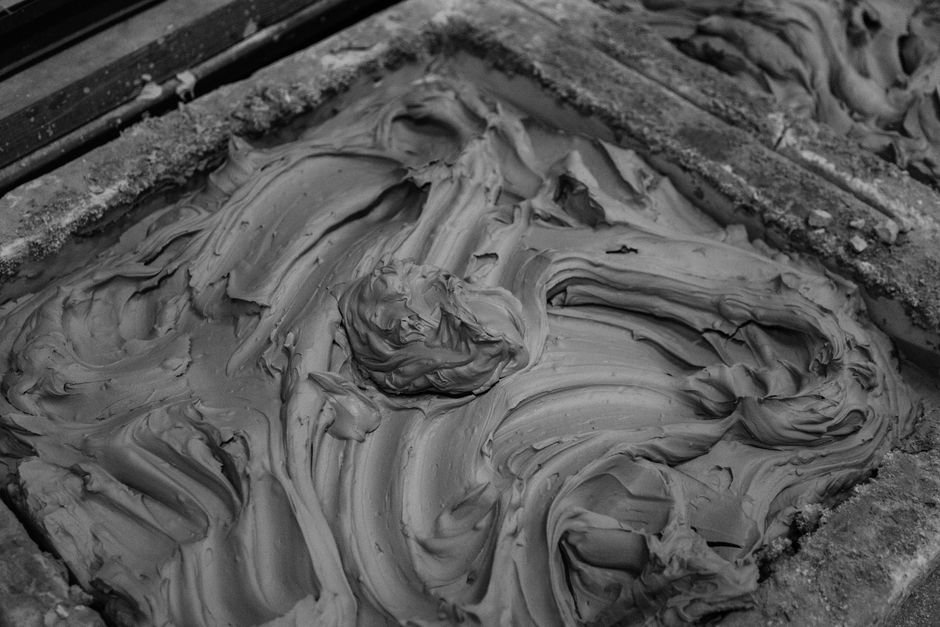
Grog is pre fired clay that’s been crushed and graded into particles. Added to a clay body, it creates texture and opens up the structure.
That open structure helps clay dry more evenly and lets moisture escape, which reduces cracking and warping. It’s why grogged clays are popular for hand building, slabs and sculpture.
Grog also reduces shrinkage, because the particles have already been fired and won’t shrink further. That helps large pieces keep their shape.
Sand and molochite are other non plastic additives that work in similar ways, with different particle shapes and sizes.
Some bodies include talc, particularly in certain low fire clays, where it helps the body fit glazes. Bentonite, a very plastic clay, is sometimes added in small amounts to improve workability in less plastic bodies.
Colourants such as iron oxide or manganese can be added for darker clays or speckles. Paper fibre, nylon fibre and other additives appear in specialty clays, such as paper clay for sculpture.
Each additive changes the feel in the hand as well as the fired result. A heavily grogged body can be rough on skin during long throwing sessions, while a fine, smooth body may feel silky but crack more easily in thick forms.
How Clay Body Composition Changes Behaviour
Firing range is the biggest difference. The proportion and type of flux determine when a body matures. Earthenware bodies mature at low temperatures, while stoneware and porcelain need much more heat.
Shrinkage varies too. Clays with more fine, plastic particles tend to shrink more, while grogged bodies shrink less. Our clay shrinkage calculator helps you plan sizes based on a body’s shrinkage figure.
Plasticity affects how clay handles. Highly plastic bodies feel smooth and stretchy, ideal for throwing, but may slump or crack if worked too wet. Less plastic bodies feel short or crumbly and can tear when bent.
Fired colour depends on iron and other impurities, and on the firing atmosphere. The same body may look different in electric and gas kilns.
Absorption and density also vary. Vitrified bodies absorb little water, while lower fired or underfired bodies remain more porous. Our clay absorption calculator shows how that’s measured.
Drying behaviour ties all of this together. Fine, plastic bodies hold more water and often need slower, more careful drying, while open, grogged bodies can be dried a little more confidently. Matching your drying habits to the body saves a lot of cracked pieces.
Reading A Clay Label
Most suppliers provide key information on the bag or a data sheet. Firing range is usually listed first, often as a cone range such as cone 5 to 7.
Shrinkage is often given as a percentage, either drying shrinkage, firing shrinkage or total shrinkage. Total shrinkage tells you how much smaller your finished piece will be compared with wet clay.
Absorption is sometimes listed at different temperatures. Lower absorption usually means a denser, more vitrified body.
Texture or grog content may be described as smooth, fine grog, medium grog or coarse. Colour is often listed for both raw and fired states, sometimes in oxidation and reduction.
Recommended uses, such as throwing, hand building or sculpture, give a helpful starting point. If anything is unclear, ask the supplier or your studio. Our guide to what to look for when buying pottery clay has more tips.
Some data sheets also list the body’s thermal expansion, which matters for glaze fit. You don’t need to understand the numbers in depth, but comparing them between clays can explain why a favourite glaze crazes on one body and not another.
What Competing Clay Body Composition Guides Leave Out
Most guides list ingredients without explaining why clay bodies are matched to firing temperature. A body is designed to reach the right density at a specific heat. Fired too low, it stays porous and weaker. Fired too high, it can bloat, warp or slump.
That matching also affects glazes. Glazes are designed for particular temperatures too, and a glaze must fit the body’s expansion to avoid crazing or shivering.
Guides also rarely explain how studios choose clay bodies for their kilns. Studios consider which temperatures their kilns fire to, what students and members want to make, how bodies behave in reclaim, and which glazes they stock.
At Le Studio, our firing service fires electric only, with bisque at cone 06, earthenware glaze at cone 03 and midfire at cone 6, and the studio also fires to cone 10. Choosing a body that matches one of those firings is essential.
Finally, competing guides rarely mention signs that a clay body is wrong for a piece. Our article on signs your clay body is wrong for your piece and our clay body selector help you choose well, and our ceramic studio lets you compare bodies in practice.
Want to see how clay body choices play out in real pieces? Visit the ceramic studio at Le Studio Art Space in Mordialloc, where makers work with different clays and fire them through our in-house firing service.
Frequently Asked Questions
What is the difference between clay and a clay body?
Clay is a natural mineral material. A clay body is a blend of clays and other materials formulated for specific working and firing properties.
What does grog do in clay?
Grog adds texture, reduces shrinkage and helps clay dry evenly, which lowers the risk of cracking and warping, especially in larger pieces.
Can I mix two clay bodies together?
You can, but the result may behave unpredictably, especially if the bodies fire at different temperatures. Test any blend before relying on it.
Why does my clay shrink so much?
Fine, plastic clays shrink more as they lose water and vitrify. Check the shrinkage figure on the label and plan sizes accordingly.
Which clay bodies can Le Studio Art Space fire?
Le Studio Art Space’s firing service fires electric only, including bisque, earthenware glaze at cone 03 and midfire at cone 6, and the studio also fires to cone 10. Ask before booking.
This article is provided for general educational purposes by Le Studio Art Space. Clay bodies vary between suppliers, so always follow the supplier’s data sheet and firing recommendations.